Why We Break Things: The Neuroscience of Hackers
Show original YouTube description
Show transcript [en]
yes and it sits right at 1:00 p.m. so I will I will let you get started here we have with us a man Elsa watt I say that right yeah yeah at the the and the reason I can do that is Amon has a podcast called getting into InfoSec and I was able to go there and repeatedly listen to him say his name so I wouldn't screw it up yeah yeah yeah my name is a challenge so I put in a little bit of extra effort there to make sure that I say other people's names correctly without further ado this is our keynote and Eamonn take it away whenever you're ready all right hi everyone thank you for coming to this
I'm really excited to be here I'm really grateful to the organizers for inviting me I am going to talk about why we break things as hackers right the neuroscience of hackers so let's get right into it so a little about me I run cloud security labs and what I do is I help startups and CTOs and founders with their security and kind of getting their security act in order but I'm also really into a coffee sorry I'm really passionate about coffee as well you might have seen this so I'm happy to talk about coffee single origin coffee Austin so if this is my actual set at home and I've started putting it up here in my office so I'm really passionate
about coffee but I also run a podcast called getting into InfoSec and what I do there is I ask people how they got into the field so that we and others can learn and be inspired of of all the different paths that they got into the field so that we could learn and be inspired in and and take that home with us I also wrote a book so it's kind of like my own guide if we sat down for coffee and what I would recommend on step-by-step approach because there's some stuff out there so you know this is kind of like a methodical approach to you know going from zero to hero and I'm really into sci-fi I'm a bit of a nerd
that I found out recently I enjoy gardening family and on Fridays I like to wear Hawaiian shirts so as you can see it is Friday and I'm wearing a Hawaiian shirt so why neuropsychology well you know for quite some time I've been you know studying psychology ever since high school and one time I one point I was gifted these two books and you know these books were kind of really pivotal in my learning and you know predictably rationale was you know about behavioral science and behavioral economics and it was really an interesting book kind of opened my world but before that I had I was given the book harnessing complexity and it made me learn about complex
adaptive systems and just understanding complex systems in many different ways and I found that book really eye-opening as well and so you know ever since then and and as of lately my hobbies have been like emotional intelligence education psychology which is a I don't even know existed and cognitive neuroscience so these are just some hobbies and again as a nerd you know you might also relate to this as well you know when you find something you kind of just like keep going and keep going down and thanks to my bro for gifting me these books a long time ago the thanks a lot buddy so enough about me this is about you right so what do we know about
hackers right well we know that we'd like to break things okay we also like to build things as well and we are really curious but we do definitely like to question things as well right so I think that describes hackers for the most part wouldn't you say well but you know is it all we know about hackers right what but you know why are we like this you know why we like this this is something that was kind of getting to me as I was you know going on my journey and so you know we like this because we are exposed to tech early on or maybe we had a privileged upbringing or maybe we were
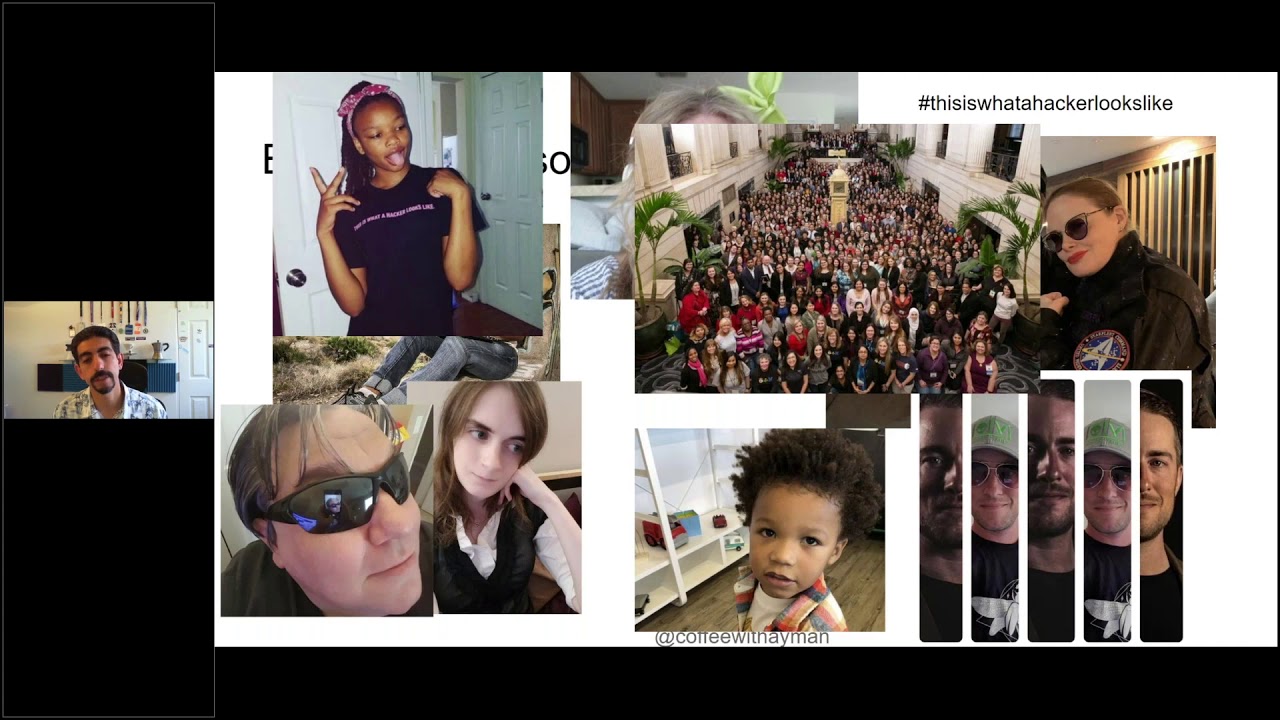
exposed to science and math early on right yeah no that's not that's not why we're like this right I going to present to you after talking with a lot of my guests and editing them you know when you're editing an interview you're kind of reconnecting with that person all over again because when you're in the moment in interview it's it's so hard to grasp a lot of information but when you editing in and you hear the little things it's like having that conversation deeper conversation with that person but so in my travels and talking to folks in hallways and and things like that I've come to learn a lot and I'm going to share some of this
with you and so what I've come to find are that hackers have these three major qualities and that's the entrepreneurial spirit okay grit and creativity and I come to find this and I'm pretty satisfied with this and I've talked about this before and a lot of people can agree on this but I was not just satisfied with this I kind of wanted to go deep and you know if you're like me when you find something you just kind of keep scratching and scratching and you just keep wanting to go down so I went deep and I kind of got lost along the way I found one research paper and that paper led to another paper and then
there was another and and it just kept on going and I'm like what is going on and I'm like what is going on here like I was just totally amazed so I had to stop I Wayne got some coffee took a break but then I ended up finding more papers and more papers and and more terminology and I was like what is going on so it was quite profound for me I had a really good time but and so now I'm going to share some of this stuff with you and so it's neuroscience time this is your brain okay it is about an average about three pounds and it has about 86 billion neurons and you know it's divided into these
different parts as you can see here right so sure but then we all know that oh sorry wrong button we all know that the brain is divided into the left and right brain right so we have the creativity side that's on the right and the analytical side on the left I think everybody that's what everybody thinks right well I'm here to tell you that that's wrong that is completely wrong you should not think of this anymore you just stop and that's it and this is dr. Barry Kaufman saying that exact same thing just like you shouldn't be telling people to change their passwords every 90 days the same thing but what is it about well it's about brain networks so
all the different nodes all those 86 billion neurons have different are divided into different nodes in the brain and they form brain networks and here's a sample of a bunch of networks that are here and so this is what we're learning and and the the field of neuroscience is going through a renaissance actually with all the digital imaging that's available now we're learning a lot more about this piece of engineering then we have ever learned before so there's still a lot to be learned there's still a lot we don't know these are all a lot of these are hypotheses and theories about how this stuff works but it's very exciting and what's really interesting is I found a
lot of terms that were similar from neuroscience and networking and I'm gonna share this with you right now so for example the brain networks we just talked about I literally found this image and these two images and they look almost exactly the same so that that's quite interesting but there's also something called the default Network and the default network is the network in your brain that is at a resting state so [Music] that's the part of the network of your brain a resting state where you're not really doing major tasks and of course we all know about the default route but then there's also something called the global efficiency factor so it's the number of nodes or paths that have to be
taken in your brain and I literally did a cut tastes from here and just changed pair of network never pair of brain regions two pair of network nodes and I found this quite profound and there's some other terms along the way that I found really similar but I just wanted to share that with you and so let's talk about the first subject entrepreneurship so what do you think when you hear about entrepreneurship do you think about these people for example well entrepreneurs are not only these people but they're also these people as well and so you know entrepreneurs there's an entrepreneurial spirit that that that willingness to do something different the willingness to persevere to to
explore and find things that are different these are also all entrepreneurs as well they have that entrepreneurial spirit so this is something to relate to to understand when you're trying to think about being a hacker or when you are when you think of yourself as a hacker but what really makes yourself what makes an entrepreneur tick so let's get into it so there's a part of the brain called the angular cingulate cortex and what's really interesting here is that in entrepreneurship what you're looking to do is to explore to do different things but then you're gonna hit failure and the idea is that you will learn from that failure so some entrepreneurs are the successful ones we hear about their
successes but we don't hear about their failures and there's a lot of failures out there and that's where the true learning is done and so if you decide to stop when you hit a failure then you might not activate this part but when you when your emotions are regulated and you decide to persevere and keep going and learning you take that feedback and it kind of activates the angular cingulate cortex there's a lot I could say here again there was so much information but I tried to dice it down into some really good nuggets for you so the idea is to learn from a negative experience and this angular single cortex is regulating emotions too that it doesn't
overwhelm you from that failure I failed isn't overwhelming but you actually learn from it and then kind of creates a feedback loop and what's interesting is the the ACC the engineer the singular cortex comes up a lot so you'll see it coming up more and so another thing about entrepreneurship the traits I guess that in the brain that happened there's the exploratory and the exploitative behaviors so there's exploratory where you're going out and trying to find new experiences new stuff experimenting try on air discovery search and novelty and then there's the other portion where it's exploitive you're taking that information that you've gathered and now exploiting it and producing and optimizing and being efficient and again
you know I feel like I was reading a hacker handbook when I was reading some of these papers but the idea is shifting between these two states is what is really creating that entrepreneurial or hacker spirit or at least one portion of it so I found this quite interesting and so when these parts of the brain are activated this is how your brain looks like in a functional MRI study where you have exploitive and exploitative shift so you're going back and forth so this is these are the brain networks that we talked about earlier that are being activated so the next item is grit what is great exactly well is grit this this might be what you think about grit it
could be I did find this Tennessee grit so I found that really interesting I did actually Google Tennessee grew and I found this so a homage to besides Knoxville for this so but no grit is this grit is a it's about perseverance and passion okay it is generally a positive trait but it is possible to have too much grit and then that could become a negative trait as well and so that's something to consider as well but in general it is about perseverance passion it's about finding something and and and moving on so a really good someone who talks at length about grit in all over is Angela Duckworth and I definitely recommend checking out her talks in her
book and she talks about a couple ways to develop grin when I found interesting were these two items as well where you develop a fascination and then but you also have a greater purpose so you know a lot of us we have developed this fascination for security and we do have a somewhat you know grater but we feel like we're doing something beneficial in some ways or some fashion maybe not all the times but you know there is something to that in any case everybody has their own purpose and there is also the growth mindset I don't want to forget about talk talking about that but the growth mindset is also something really important I have found that
personally to be very important when I talk to other people and I recommend the book by Carol Dweck on mindset the idea with growth mindset if you don't know it is that you have the fixed mindset and the growth mindset and the fixed mindset is like is is not accepting different the ability to have different outcomes or different scenarios growth mindset is allowing for those different things to happen there might be one way to to solve a problem there there might be another way like when you say oh I am this so that you know they'll never happen you're really putting yourself in a fixed mindset and that's something to to generally avoid so for example you
know staying on the mindset of rotating your password every 90 days for example that could be putting you in the fixed mindset and so you know one question for everyone in InfoSec really is you know did you choose InfoSec after finding a fascination there's a a lot of people that may have listened to darkness diaries for example or be inspired by a show they saw one time ago in there a kid or whatever maybe and and kind of had this fascination I know there is and then you know did you have a greater purpose in emphasized as well so these are you know some things to consider and just ask yourself you know is it is this something that you know I
can relate to as far as grip and then you know dig deep into integral and so grit in the brain again we have the angular singular Quartus cortex as well and so grit and growth mindset both activate these regions of the brain and so I found this pretty interesting as well and so I wanted to share that with you and here is a little bit of some brain porn I just love looking at brains and you can see the different areas of the brain that are being activated and now - my favorite part of this talk and that's creativity creativity seems to be a bottomless pit and I found it quite interesting and so let's go into it so
what is creativity or what is it not well creativity is not left brain or right brain and it's not limited to the fine arts and it's not just an introverted or extroverted thing but what creativity really is it's everywhere it's in the science arts math technical non-technical anywhere it's part of the human condition it's a little complicated and messy okay and you know you can be both introverted and extroverted if there's no one you know there's no limitation here and so one thing I did find was something called 10 habits of highly creative people and this was a really interesting article and looking at this I was blown away this is almost everything what a hacker
is and so it might as well have been called the ten Habits of Highly Effective hackers where you have imaginative play or you know you daydream or maybe you're in solitude right a lot of hackers like their solitude you know having a balance at least or having some sort intuition like we're syntax was able to figure out that you know a networking problem for example was not a networking problem but it was actually an attack that was happening so you know having that that theory of mine then there's something called and the components of theory of mine or you know this intuition there is it's called Xterra ception and proprioception in interoception so appropriate section for
example is where it's more physical but like in an interception it's being able to understand someone else's beliefs for example so having that like intuition and so our openness to experience experiences mindfulness maybe not you know I think a lot of hackers might not be too mindful I think we're getting there but you know you know i think i think we're improving on the mindfulness factor so that's that's that's good sensitivity Tania's Anka talks about how she's sensitive and and can understand it very empathetic and there's a live been finding a lot of sensitive folks out there so or being able to go through logs and and and and see the different nuances and being sensitive to that and
you know turning adversity to advantage I mean give me a break that's like everybody right and as well as thinking differently so I found this quite quite profound but what really makes a creative person or a hacker right are we born creative are we are and why are kids more creative than adults so what I found is being creative is about unlearning traditional linear thinking okay and again you could say that for a hacker as well where it's more about going multi path and not really like step by step it's not necessarily a equals B equal C or you know first a then B then C but it could be a C F and then back to B right so it's different
paths there's not one answer for something there's multiple solutions for something and so a lot of times we stand in the way of creativity as a society right there's been a lot of discussions about like kids and kids naturally have creativity for example and we actually stifle their creativity so it's something to take into consideration we're also I found that a lot of hackers had this this creativity this hacker instinct in them but it was stifled at some point one of the other you know could be due to necessity or whatever but then was reignited at some point later in their life and so I'm finding a lot of similarities between the two so the next item is latent inhibition right
and so what do we think about when we think about inhibition well for most of us we think about this inhibition we're you know we're trying to be super free but no this is not inhibition this is what Lane inhibition really is latent inhibition is the reduced filtering of noise okay so you might have heard of hyperactivity or inattention or distracted Nisour disorganization the latent inhibition or ADHD or disorganized creative imaginative forgetful inhibition is the ability to filter noise so latent inhibition is the inability or the reduced ability to filter noise and what's really interesting is that ability has been highly associated with creative achievement and so there's also been it's been shown to have irregular levels
of dopamine as well so you know if you have ADHD or you think heavy or you're you know people call you scattered or you're disorganized or mind wandering take these things as assets to yourself to your creative to your hacker profile right so these are things that we can make them into strengths instead of keeping them in the category that they may have originally been put in takes me to the next subject there's been a really strong correlation between creativity and mental illness in fact there's a whole paper by dr. Carson written on just this and if you look at Vincent van Gogh for example Vincent I go highly creative person cut off his ear we don't know exactly why he cut off
his ear but that is something to take into consideration so there has been there have been correlations shown with bipolar disorder and schizophrenia spectrum disorder or otherwise called SSD depression anxiety a variety of things and so these same areas of the brain that are activated for creativity also end up being activated with mental illness so it's kind of interesting and in fact there's been like kind of like a shared vulnerability model so for example 80 percent of writers are were said to have disabled from so it's sort of mood disorder but but the thing is here is that the shift in mental states right that you use for creativity is also soit is also associated with mental
illness so what's interesting is that it's kind of like interdependent together where you rely on some of these vulnerability factors for your creativity and then you're you know creativity comes from the vulnerability fact it's kind of a complex thing I'm still trying to wrap my head around but you know the idea is that they're very very very strongly related so something worth mentioning and you many of you out there may know someone who's highly creative but may have exhibited some of these other factors as well so one thing I do want to talk about is the so another component of creativity is divergent thinking this when I read this I thought wow this is exactly what
we are we're non conformist we're independent thinkers we have a lower level of agreeableness and a higher level of conscientiousness and what does that mean well when I say lower level of agreement is written was like we're gonna tend to disagree or we're gonna tend to question things I don't mean being disagreeable although that could happen as well as part of this but the idea is to be is that this divergent thinking is very prevalent among hackers okay and I this all this book is a wonderful book talking about creativity again you can use it on in your just life journey as a hacker it's it's quite interesting whether you're experienced or not the book is really remarkable and so a lot
of folks have really discovered for example Kia where you know she went through she was an elementary school teacher and they threw a icebreaker exercise did something and she found herself the only one in this one group and so she realized that she was divergent from everyone else and you know although she loved the passion of teaching and giving back she decided to take advantage and do something else with this divergent thinking and she's now a really successful security engineer and so you know that's something to take into consideration and here's a really good graphic that I saw about divergent thinking and all the different paths and how it's really related to creativity so it's something
to consider it's something that's a part of us right and it's something that's good it drives other people crazy sometimes but that's part of us right that's our our our gift but so do we just think differently and and call it a day is you know do I just you know buy an Apple MacBook and you know save that I think therefore Lena I'm done well not quite there's two other components called plasticity and convergence and what happens here is o so let me so plasticity is is the ability for your brain to kind of like a change in and and and and take advantage of new things and convergence is is is actually so
well I'll walk you through so basically what happens is you have divergence you have this divergent thinking and it's kind of like the idea ideation and generation and then it goes through some plasticity but then to actually get it to like formation you need to have convergence so in actual convergence is kind of like the executing I'm not kind of getting it getting your idea to actually become something so it's really interesting that these three components are all part of the the creative generation process and here's like a kind of technical breakdown where you have the generation phase of the creative process right we have past isset II and divergence and then we have the selection phase of the
creative process where it's convergence or it's actually coming out something so the same thing as in a hacker for example from a neuroscience perspective these are this is a picture of neurons here so actually divergence is a one-to-many neuron kind of connection and convergence is a many to one neuron connection and this on the right I found really interesting where you have creativity as the the culmination of all these three experiences and then if you remember the networks we talked about before you know creativity is activating some of the the the three main networks that are activated with creativity are the default mode Network the sealings Network and the central executive network and it's it's it's like going
back and forth between these items and then you have the angular singular cortex again activating here so you know there's a lot going on here but I did want to circle back with the networks and kind of identify like which networks are actually activated here and here is a little bit of a little more brain porn I just ended up loving looking at these pictures and wanted to share that with you this is a highly creative network on the left here and a quote-unquote low creative network on the right again neuroscience is ever-changing this could be wrong in five years I don't know but that's something I want to share with you and this was a really cool
high-resolution image of all the different areas of the brain so it's it's really remarkable all the different areas that are that are mapped in the brain cool so fostering creativity or in other words fostering hackers waiting for it to update it seems like there's a lag in the update so or in other words fostering hackers so how do we how do we do this how do we do this well some of the things we can do are learn unfamiliar subjects well that's what that's what security is about right we're always having to learn something new we're always having to keep you to keep up on things try new things well yeah like CTFs and and and just building
and and keep going divergent thinking I think they're you know that's that's pretty self-explanatory that's part of us watching someone else creating literally that's this was a recommendation on how to be more creative is watching out someone be creative well the same thing with hackers right we can how many how many YouTube videos are there of people just hacking and we could just like you know just activating things in a ring whether we know it or not and even watching sci-fi and fantasy films as well so you know it's it's a part of our of our nature it's it's it's gonna make us more creative and so we're creativity found well you know traditionally he was always found you
know in the fine arts domain but like I said before it can be found anywhere take for example the science and math domain right and this is a really good example of John Nash where he was diagnosed or you know has schizophrenia disorder and it was a remarkable mathematician that won a Nobel Prize and someone asked him you know why why did you believe that aliens came from outer space if you haven't seen this movie definitely recommend watching it he goes because ideas I had about supernatural beings came to me the same way that my mathematical ideas did so I took them seriously and it was quite remarkable that statement and so there's something to be said about mental illness and and
creativity and and and an acceptance of all these things but again like I said creativity can be found anywhere so you know whether you're a teacher whether you're mechanic if you're a human creativity is with you it's up to you to nurture it and bring it out but back to the science and math what if you're both right what if you're both like a super mathematician like tiny for example is highly concentrated in mathematics but she's all she also has an album on Spotify or Lauren gray where he's a pen tester but also a nerdcore rapper as well or maybe Robin Stewart where she's a threat and malware researcher but she's also a novelist as well and many
many many more there are so many examples I see out there of people being creative in all different domains and and and it's a really remarkable part of the human condition I think I hear some so putting it all together what are we gonna do with all this information ooh sorry so putting it all together what are we going to do with all this information you're probably like this right now and I probably threw a lot of things at you and so you probably feel like this as well and what I would say is let's have some coffee and take them a second to step back and just listen and and and let all the soak in and what I'm gonna
do is put it all together for you so what we have is the IOC s sorry if someone if someone is unmuted or we can go on you so what we have here are the IOC s of entrepreneurship grit and creativity we have this information and all this leads to becoming more creative or in other words a hacker they're all connected all this is connected and we need to unlearn some things you know and we need to continually unlearn things ok because that's part of being a hacker is things are gonna change so what may have been true before may not be true anymore and we know this but you know nobody like it's it hasn't been
put into words right and exercise often so all these different parts of your brain exercise them exercise them often and that will keep you getting becoming a better hacker but with all this information what can we do with this well if you're new then look for these traits in yourself ok and if you've been around for a while then discover more about yourself just keep learning you know like I said I learned recently that I was a nerd I found some article by Rand actually it was an amazing article and it was the articles written for someone else to learn about nerds but I actually learned more by myself and you know if you're affiliated with the
hacker community then use this information to understand this person that's in your life so you might find that really profound and really interesting in understanding and creating good understanding and here is a yarol for an IOC for entrepreneurship and other rules for grit and creativity as well so I do want to note that the field of neuroscience is vast and deep these are all the different parts of neuroscience and our different fields that are available in neuroscience so it's quite amazing I think some of this touched upon like cognitive neuroscience and neuro psychology as well so I just want to give you that note and with all this information you know I saw so much overlap I decided
to do something interesting I created the creativity kill chain and so this is a kill chain that basically shows everything I just presented right now but in a kill chain format and so it's something to keep aware of if you're looking or anything to kill any minoo if you're if you look at anything to impede your your creativity and then I decided to take it a step further and I think because it's a there's you know there's been some controversy about like having one kill chain so I created the unified hacker brain kill chain and so this is where you have creativity entrepreneurship and grit all combined together and all the different components that we talked about
divergent thinking exploratory and exploitative the angular singular cortex perseverance all these items coming together to form you the hacker and so that is my thing to you and so what's next what's next well if you have enough from our machine that you want to lend out to me please do so that would be awesome I'd be happy I'm gonna keep going every day I keep finding new papers and reading them and they're just so fascinating so you know the rabbit hole is pretty deep I created a link if you want where I'm going to list some of the resources that I mentioned on here as well and that's about it and so I really want to thank the organizers of b-sides
and you know thank you for inviting me and this has been exciting thank you and I'd like to open it up for questions if there's any questions yeah yeah there there's conversation going on and yeah can you hear me I can hear you yes so I hop into this board yeah yeah yeah definitely I mean my first ask is you know maybe one of the attendees will do it but I need a reading list I need a book list yeah from this talk and I'm probably gonna watch this talk to few more times yeah it was a lot you know it was a lot to take in and and it's I'm still you know there's still so much
there's a lot of stuff I left out there's like 10 slides I had to hide because it was just getting too much so yeah yeah did I I really appreciate this talk that this was something I always wanted to do because I started noticing stuff like this a while ago like in 2015 I gave a talk at besides Las Vegas called widest InfoSec play bass because I'm a bass player and I just like pattern but I kept running into other folks in InfoSec that played bass well I'm like what am I not running into guitarists or drummers like like white why that instrument you know so I did some surveys and stuff like that and and
presented what I found but it didn't go nearly deep enough to satisfy my curiosity and and I I think your talk finally did it for me like I think you finally went deep enough for me to you know really scratch that edge so I'm gonna watch it a few more times nice nice yeah yeah you know I just I have this like habit of just going deep I mean even with coffee I want to know like the exact chemical process of of the water and the interchange so yeah yeah I was glad you know I think we're really lucky that all a lot of this information is available online you know but definitely looking to take this
research further so you know at the at least in a post kovat era yeah so speaking of that we do have a few questions and one of them asks about you know is Co vid an opportunity or is it can have an impact you know as we kind of shut down societies and businesses or having to adapt like is this is that an opportunity is that going to result in any major changes along these sorts of lines I think it's gonna you know I think it's gonna allow people to do a little more introspection about themselves so you know what I'm noticing is like people are either stuck you know or like kind of like you know taking
this as like a failure and and getting stuck or they're either getting past it and making the best out of it and so it's kind of like you know when you're in the CTF right you sit there and you know get you know just you know do nothing or do you stand up walk away and try to think differently so I think from in a covert era you know it won't change how we think but you know I think we have more time to reflect on our on our on our personality traits I don't know if that answers the emotion or not yeah I think so another question did you look take a look at any personality profiles common
ones like MBTI during your research to see if that had any correlation with hacker types or like di SC profiles and other personality systems I thought about that but I didn't want to complicate the topic so I wanted to stick to pure neuroscience but it does definitely in mind as well taking a look at the correlation of some of these personality profiles to some of the stuff I mentioned here yeah myers-briggs stuff like that as a real rabbit hole yeah yeah seriously yeah you think that would be an interesting one to hear more on because I know you know a lot of HR a lot of hiring actively used some of those you know so that that
directly impacts a lot of us yeah and you know what I you know in the whole field in general I think that's something that we sometimes get stuck in where we think hey I am this and that's and that's you know it's good to understand that about yourself but you have to allow room for for differences right because psychology I mean listen you know in the 60s they used to do electric shock and think that that was like you know healthy and that was you know solving things so this field is always changing you know these three pounds in here we still haven't figured anything you know close to everything about it so you know a you know when HR
when HR v6 tier colita like that question when when when you know especially HR is a good example like if they do a personality test and like put people in these different buckets that's not what we are right you have to be able to see past some of these things uses the indicator use it as as something but don't let any a bias effect that that's my two cents on that feel free to answer the coffee questions if you want yeah so v60 I've been you know the colita I haven't been able to get it right here yeah the kalenna haven't been able to get good good out of it but it's supposed to be better for
when your grinds not good but yeah v60 for me that's my go through daily nice alright yes so I think that's about it for the questions you know feel free to jump into the the discord and chat with folks there's some good conversation going on there yeah big thanks to Farina also last year's keynote speaker so we have a tradition here I probably everyone doesn't know but the the previous year's keynote speaker picks next year's keynote speaker so very rarely have we had anybody just say yeah here's your keynote speaker typically what happens is they say here's three options or I think Farina gave me like five or six or something like that so I
still have to make a hard decision which is half of the reason that I do this is it's a really tough decision and I'm being selfish and offloading it but also I figure in what I was hoping would come out of it and it has is we get keynote speakers coming from completely different place direction then I would pick or any of the organizers would pick we've had you know I think only one of our keynote speakers in the six years now are people that I were aware of or actively aware of before they came to us so it's very cool for me it's you know opening up my network of people that I know and I'm seeing talks that would
have never seen otherwise and learning stuff I never would have otherwise so you've got some time and eventually I'm gonna come to you and say okay 2021 what what are my options here who do you think we should have do the keynote that's awesome that's awesome yeah I really appreciate the opportunity I think this has been a hard talk to get you know submitted and accepted because you know a lot of times it's hard to like kind of quantify so I I took a chance to talk about something that you know I didn't haven't I've been you know studying it for a while but like yeah definitely appreciate the opportunity I'm glad you liked it and and I want to
thank all my friends that helped me review the deck I did a couple dry runs so yeah yeah thanks Dan matt kavya and freida for helping out so shout out to them and shout out to the whole board so this is this has been really exciting yeah yeah for us to it's definitely a worthy keynote and didn't really know what the topic was going to be into like a day or two ago but but yeah I was the really awesome stuff and I'm definitely gonna go back and watch it a few more times and if you don't have time to worry about it somebody here will create a book list out of the out of the slides
that you presented and we'll we'll get like an audible or an Amazon list shared somewhere cool cool cool what I posted I posted the slides on that link that I had there and then I guess if this would be on YouTube we could update the description with the details so I just have to catch up on this lack of sleep and then I'll I'll post all the it's been a tough week man so yeah this is awesome is it you know I think yeah yeah it's exciting there's some good talks too I want to encourage everybody to check out some of the talks I'm I'm gonna be probably hanging out and a lot of the track to talks there's a lot of
AWS talks and stuff like that so you have a good conference going on here so this is a really cool yeah yeah good at speaking of the AWS talk make sure you catch that because that's one of the ones that we can't record and we can't live stream you know so you you've got to watch it through the gotowebinar oh good to know yeah yes so we already had one talk earlier you know a bunch of people I think we got some people at the last minute in there that couldn't get in there and yeah just just to warn you I think that ones at 4:00 p.m. in Interactive I'm I'm correct here let's see
yeah that's automating disk and memory evidence collection in AWS with Ryan tick in Vaishnav Murthy and it will not be recorded or live streamed so I don't have access to the GoToWebinar for track to let the organizers know ping us DMS on Twitter Email InfoSec or info at besides Knoxville comm or hit us up in the discord and we'll make sure that you get access to that all right good to know thank you sounds cool you're gonna hang out watch some talks and we will get prepped for the next call here we actually have a few minutes we'll let let people take a break soak in five minutes of sunshine grab a bite whatever you need to do and
and we will get ready for the next round of talks all right awesome thank you so much awesome thank you
Related talks
 48:11
48:11 55:12
55:12 56:48
56:48 48:46
48:46 48:56
48:56 45:33
45:33