What A Career In Public Service Is Really About
Show original YouTube description
Show transcript [en]
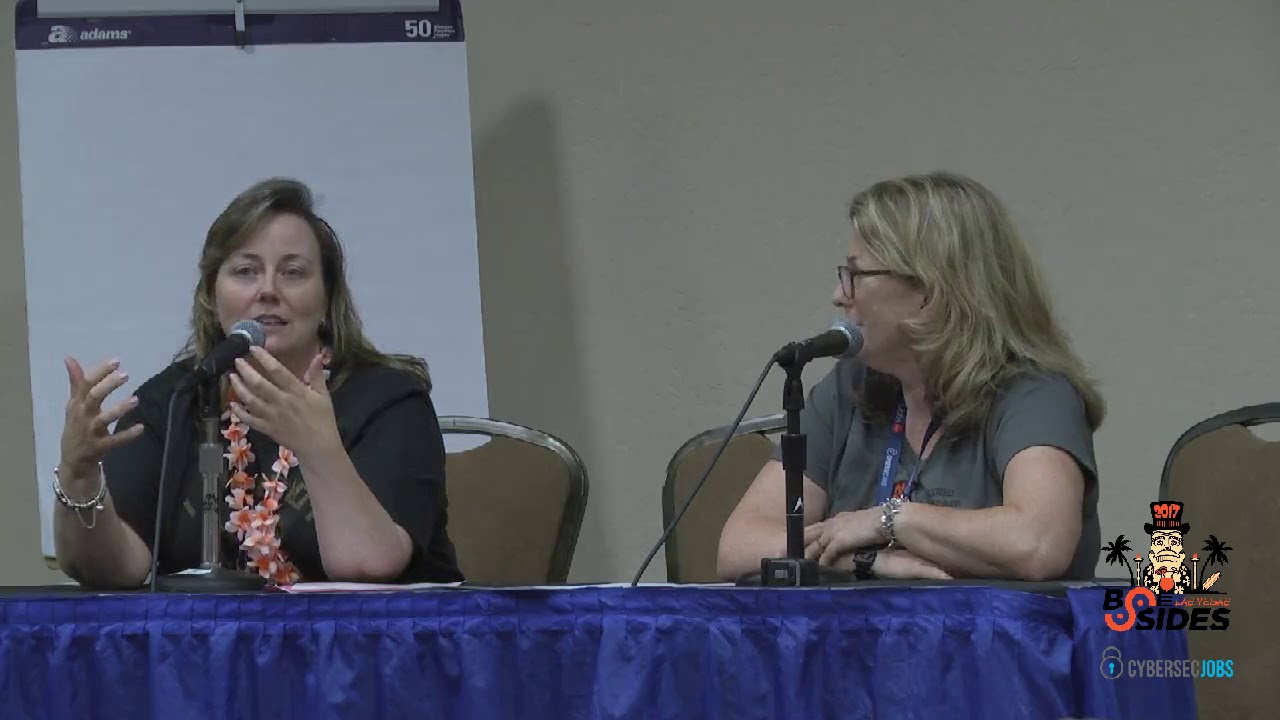
if I hadn't introduced myself my name is Kathleen Smith and along with Matt durin we're the directors ring masters for higher ground and one thing since I work in the government contracting security cleared community I interact with a lot of people who are in public service that's everything from admin you know working in public policy working in research and development and it has been my pleasure to work with Bobby on a variety of different projects I just want to remind everyone the back of the room if we could keep our conversations down you know to a dull war that would be really appreciated so Bobby has had a really great interesting career we're all talking
about getting women more into security into IT in decipher security so I want to have Bobby sort of share her story of how she got into her career in cyber security it was a mistake I would say it was a mistake right it certainly wasn't intentional in that in that regard I I graduated from a college a long time ago and at a time when engineers couldn't find jobs and people today think that that's a weird thing to say because engineers can find jobs right now and so I found the first job that was offered to me because I was unemployed and didn't want to be unemployed for very long and and that turned out to be an
engineering job in Arizona and from there it became important for us to to secure this thing that was growing I showed up my first day of work and they were actually connecting the computers to each other the network didn't exist at the time dot matrix printers were were reality and and so through a odd set of fate and finding opportunities I ended up in this security business and and have really stuck with it so it's really interesting but when you know Bobby doesn't look any older than 29 but she's been celebrated for spending over 35 years in the government community starting with your job at what my first job in public service was with the
Department of the army a very very long time ago and and and it was a really interesting place because it was me and the secretary and more guys than I can count in that space so it was really and what was your last position in federal service I was the acting assistant secretary of the Office of cybersecurity and communications at the Department of Homeland Security pretty big job yeah so what would people be interested in right now that you've you've spent some time working for an FRDC do you want to explain what an FRDC is yes so I think I think this idea of the public sector is a bit misunderstood right when people hear the public sector they they sort of
lean towards the federal government as their sort of first picture and the public sector really is any place that identifies influences engages or executes policy that improves the life of the American public and in that are the federal government state and local governments federally funded research and development centers universities academia organizations and I've now been in the federally funded research and development center community for a couple of years and think about them as organizations that solve public interest problems that there's no market driver to solve right so we do applied research to public interest problems that the market is not solving in a holistic sense and that's what a federally funded research and development center does and
I've had the privilege of working both for research oriented ones and engineering oriented ones that that really tackle all of these problems that exist at the seams and that really sounds like cybersecurity doesn't it so for example the energy community what would be the various different public service entities that someone might be interested in in the career in energy in public it's a great example so you know you think about the energy sector we have the policy making and implementing organization in the Department of Energy we have National Labs which exists to drive the technological foundation the pure science side of energy and there's some really amazing parts of that going on we have academic organizations that
exist in that space we have Institute's every EEI and others that exist in that space that are that are about taking this pure science and reality and trying to bring them together in ways that the business models will work for and that the tech will work for because the tech has to work has to work too and then you have the energy transmission and delivery mechanisms which are largely also in the public sector so most of the electricity production and transmission and distribution is it is run by whether it be a government or a not-for-profit organization that serves the public's interest and right now you work for Carnegie Mellon and I know that Carnegie Mellon
has a variety of factors that are involved in cybersecurity and you were explaining it to me the other day because I was getting confused between sei and cert and Carnegie Mellon you want to sort of wait a little bit sure so every federally funded research and development center has a parent organization they they either have a corporation that operates the center or they are affiliated with a university that operates the center and so in in my case now the Carnegie Mellon University operates the software engineering Institute which is at the FFRDC and then cert which has been we say cyber was started in Pittsburgh you think about the Morris worm and the organization that was focused on responding to and
helping really to grow the public side of of this this defensive and growth or and a growth domain that was cert in before the name actually was existed in 1988 so you've been in public service it wasn't really something you possibly thought about you know when you were going to school or when you were looking at your career so what were some of the initial impressions you had and what changed when you were part of public service that kept you in public service yes that question of why do you stay is I got that question a lot because a quick survey of the room how many of you think that public service is fun right okay a couple of folks most
people have this perception of public services being stodgy and difficult and and boring and there's not a lot of innovation in that space and I've actually found it to be exactly the opposite I fell into I'm I have a lifetime but both my parents or public servants and so I have this sort of foundation piece of it but I didn't have to stay and as as the market has grown I've had many choices over time but what I find is there's a phenomenal amount of innovation in this space because there are a phenomenal amount of of constraints you have to work within right you are you have to be unbelievably transparent you are working in the public's interest in whichever
role you play in that space you are working in the public's interest and the public is not one organization one entity and so you really have to think about what that looks like and you're solving problems no one else is solving and your measure your success is measured against industry solutions that don't have to operate in the same environment now I'm drawn to a really hard problem this is a really hard problem and it's a really hard problem that changes the world every day and that's what keeps me so you don't don't necessarily think of public services being innovation but you definitely solutely I I have seen innovations in this space that I that would not exist if if we weren't here
think about the kinds of environments that you have to operate and whether it be if you're in the defense department and you're trying to put tech into domains where there is no tech right there's no radio tower there think about parts of the United States where there is no radio tower there right you really have to bring a sense of entrepreneurialship and innovation into those into those problems it is really really an exciting space so what are some of the things people hear participants of besides should sort of think about if they wanted to consider going into public service I mean there are opportunities but are there some constraints so there's some things that they should be
really thinking about so the couple of things that are true and I resonate with Johnny's comments here but a couple of things that are really true is when you work in public service you are under a lot of scrutiny and so you have to acknowledge that that comes with the problem space if you want to work in cleared jobs you've got to keep a lot of Records and you might not think about these records that you have to keep but you have to keep a lot of Records because know isn't isn't generally the answer when it comes to these things the the the answer is give me data right when someone's looking at your life the
answers give me the data about your life and we'll start talking about how to get to yes so if you're cleared you've got to talk about foreign contacts places you've lived criminal records travel travel travel related activities the ethics considerations are significant when I left the Department of Homeland Security was the and I went to went into the FFRDC world that was the first time I could ever attend a party at a conference she could go to blackout I can go to I can go to parties now but I couldn't go to parties before because they were sponsored by a company and there's nothing wrong with that it's you know it's a great opportunity but I had
to find ways to build my networks under those cans strains and you know what were some of the other career path constraints I mean there's there's a different way of moving throughout them the public service so I think that's an important and important thing one of the things that I hear at all levels of public at all different varieties of public service whether it be the federal state and others is that the hiring processes are very prescriptive they're very different than they are in that my industry counterparts have experienced and in large part fighting them is not going to be useful right fighting them from the outside is not going to be useful they are what they are and the
people you're dealing with don't have the latitude to change them one of the most interesting things that I found when I was in government was that most of people inside government didn't even realize that the entire government doesn't operate under the same rules right so the Department of State roles are different than the Department of Defense rules are different than the Department of Homeland Security than the Department of Education and it's unfortunately more on the applicant to both understand them and to fit yourself into they're not whole to get in the door it's neither right nor wrong it just is the way the world works and you you find lots of people on the inside
just as frustrated as people on the outside in that space but you really have to you have to do that and you have to take a real sense of ownership of your own career and navigate yourself and be really perseverance about it so it's take ownership of your career no matter what if it's private or if it's personal so Bobby has also worked with Bo woods and Josh Corman over it I am the cavalry she presented it cyber 9 12 a few months ago and we really were sort of talking about what could people who are applying for jobs how could they help the process what can they bring to the table make a difference in any hiring process not
only public service but as well yes so I find that being able to understand yourself what motivates you that passions is a really great a great thing to do it that is as true in the public sector as it is in the private sector knowing what motivates you shaping your presentation of yourself in a way that it's clear to the people on the other side on both what your skills are what your motivations are and what you bring to the table for the problems that are there needing them more than halfway I think is really important I find that when you get to the interview let me say this even if you're if you're looking for a job in the federal
government or in state government what you put on that piece of paper is incredibly important and every everything you hear about about resumes in the private sector is not the same as what you need in in the public sector right you get five to seven pages to be really clear about who you are and what you can do that's a very different resume for me then the resume I have for work I do or want to do in the public sector but bringing your passion into the discussion I think is really the most important thing because in the end the public sector is looking for that as much as anybody else and that will win
the day and we were talking earlier about sort of reverse mentoring and sort of there's we talked about this security talent gap we talked about shortage but is there a way that the participant the job seeker can maybe reverse mentor reverse interview what would be some of the things that they could do so I think I I'm a huge fan of reverse mentoring I think it's a really important way for the whole community to stay relevant if you think about the world we're in right now in cybersecurity we have four active functioning generations simultaneously in this workplace and in the American workplace that's not happened before and so we have to have a good way to
communicate with each other and to interact with each other and your interview is as much of an interview of your potential employer as it is them interviewing you and so you can provide to them input in that discussion about who you are and about what the world looks like in that space and so so it's as much an opportunity space for you to do that and and bringing your authentic self to that discussion I have found in the folks that I've interviewed gets gets more value than more stifled or stilted so we've gone over a variety topics anything from all of the mentoring that you do I mean so far she's wearing one of the career Blinky's
and you've you've already mentored a few people yeah what are some of the key things that came out of your mentoring so one of the things that I hear a lot is there's a gap in cyber it's in cyber skills in this environment so people what why can I not why can't I go not get more traction right why is it so hard for me to find a job because there's there's a sort of gap in the space and and so what am I doing wrong or why aren't they just why aren't employers just lining up at the door wanting me because I'm here and I think the the common theme that I've heard both today in many of my colleagues and
and friends as they think about what they want to be next is that it's really important for you to start from a position of knowing yourself and what motivates you and then figuring out what the job is that will let you bring that to bear the easiest and the best in that space and I've even today that's been a you know sort of a common a common theme if you can't answer the question of what do you want what kind of role are you looking for what is your value in that kind of role what would you bring there it's really hard to even start so you have someone here who has an amazing amount of experience any quite
Qin's for Bobby and you're just gonna have to stand up and scream them cuz weed oh we do have do we have someone there with a mic no you go any questions for Bobby so over my career it certain let me go do it back in the last five years it depending on where I've been turnover has ranged from three to eighteen percent so in the federal government it is it was it was not as great as I had expected it to be it was about 11 somewhere between nine and eleven percent at DHS at DoD when I was at DoD it was about six percent in that space in the FFRDCs I've worked in it's
been about six percent where I am right now we've we came from from 18 and we're down retention is a key issue in this in this space and retention is as much a culture problem as it is a benefit issue and so you really have to think about the culture of the organization so it's back to motivations right and I find one of the things I have found is that a lot of people have taken what I call the shiny object route and they've said I I make this much money today and these guys have offered me this much money and I'm gonna go do this cuz it sounds really great and then they get in there
and they discover that the grass is just as brown there as it is where where they are and so I have found that being able to describe as an employer being able to describe what the motivating factors of the organization are right what the impact are we trying to drive to and lining up on motivations helps in most instances and that's where I find a lot of people who are really passionate about either the data we have access to the hard problems that are there the thing that's never been done before or the ability to really innovate in that space really keeps people there so we now have a microphone any other questions for Bobby
great hi Bobby the question is so for those contractors or people that are working within an institution but are not Federal service employees but want to be what kind of route can they take and what kind of a because I like for USAJOBS for instance when you want to submit an application what kind of keywords would you recommend using like irrelevant to the job description and how can a contractor go about you know going from contractor to Federal service right so in the federal government the truth is the federal government implements public policy as hiring policy right that is that is just the reality so everything from veterans preferences to other preferences are an important part of the federal government
there and that means that even if you are sitting in the same space with a federal employee doing effectively the same job you have no advantage over someone who's never been you know never had a foot in the door at the foundation level your advantage comes from your experience and so the so you just have to acknowledge that and realize that it's your job to present your experience in the best light possible you also have to recognize that what the job posting is on USAJOBS is the target you are shooting at even if it doesn't exactly match what you do every day going in the door so the advice I tend to give people and I am NOT a recruiter so there are
professionals who do this but the advice I give people is it's very old-school print off the job description take your highlighter highlight in the job description the things you think are most important and most different those are your keywords and the other thing that I can say as far as the difference between the federal finding of federal job versus going in the corporate world you actually have to go through HR and the not the recruiting department but the HR department first you have to meet all of those requirements and only once you've made it through there which may take anywhere from six to 18 months unfortunately then you get to talk to the recruiter so it's it's a little bit
flip whereas in the private world the recruiter is the person who is going to sort of say do you get to go or not go to the next step in the federal government it's going through all of those policies all of those USAJOBS going through the HR department once they've said okay you meet all of this then they will introduce you the recruiter it's just a little bit flipped and then the hiring manager is after the recruiter in the federal government so I don't even get your resume until you have meet met those two two filters but no wait but really read that's your target that Job Description is your target to get through those first two
steps and if Jim do you want to raise your hand so James Lynch who's back here he's actually written a book on how to get a job in the federal government he was going to present but we didn't have enough space in our agenda so if you have some more in-depth questions you know that Jim is very happy to provide some advice right Jim and he'll correct everything I got wrong any other questions well let's think Bobby fir time today thank you [Applause]
Related talks
 56:46
56:46 48:22
48:22 57:45
57:45 32:15
32:15 25:40
25:40 51:33
51:33