Derek Scheller: Resiliency & Burnout
Show original YouTube description
Show transcript [en]
Awesome.
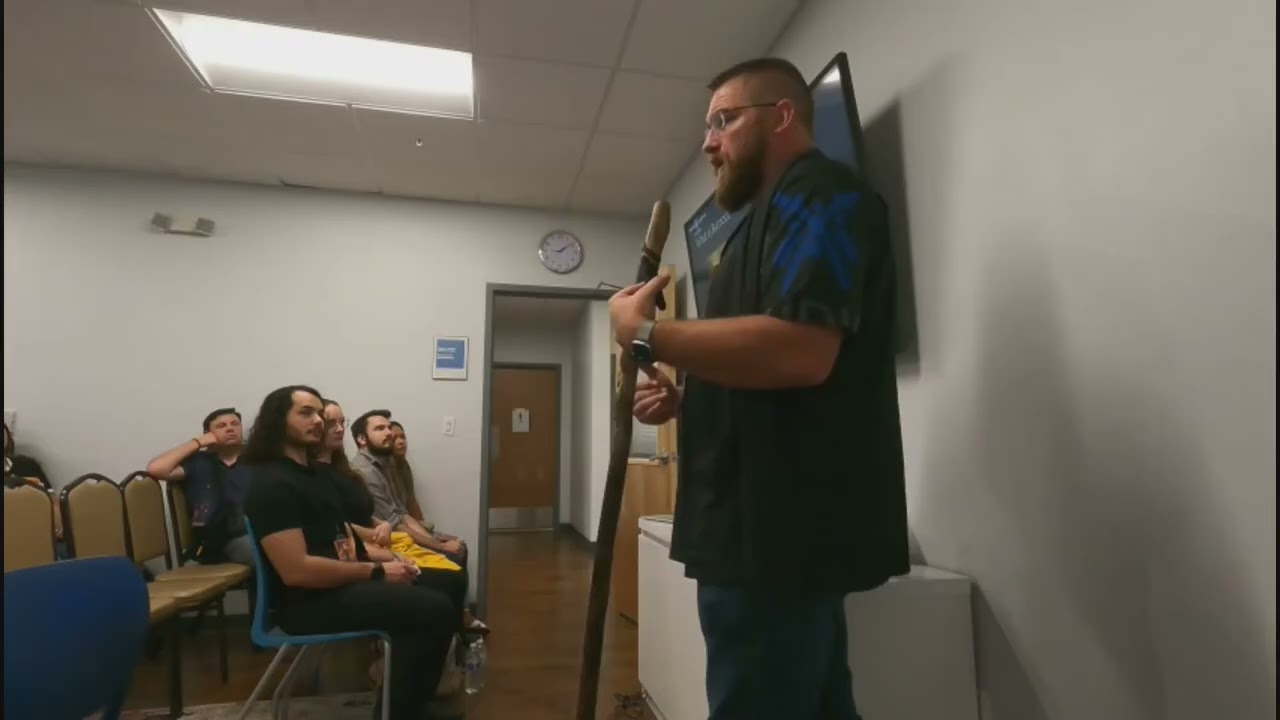
And I love you all. So truly, thank you. Um, but my name is Derek Shell. I also go by the cyber warrior. So, anybody who has seen my content, this is kind of a lot of what I talk about is mental health and motivation and inspiration, things of that nature. So, this here is going to be a very important topic. So, what we're going to cover is a little bit about me. We're going to talk about resiliency, about burnout, and how to use resiliency to overcome burnout. Anybody that's a military vet, especially in the army within the past few years, has had talks on resiliency. So, you will notice some repetitive slides just because I have pulled some
information from those army presentations. I still have friends, they gave me the content, I'll take my reuse it. So, a little bit about me. Um, I am a retired military veteran. I retired back in 2017 under disability um due to issues with my back and my neck. This is where resiliency is very important to me because due to the depression and mental issues that I sustain from not being able to play with kids or sleep and just countless other issues, um I have had to utilize these techniques to really refocus and and go about my daily job. I am a senior security consultant for a company called CISO based out of Pittsburgh. Um, I work primarily in blue
team these days, although I have done red team work. I've been a pen tester. I've been a security engineer. You name it, I've done it. Um, but for those wondering, I got my start in the military. I did my I enlisted in the military and left 3 days after I walked across the stage for my high school graduation. So, back in 2004. So, from 04 to 2017, I was serving in the military. I've done IT, help desk, system administration, networking, and then eventually got into cyber security. Fun part about it is I did cyber security before it was a job. So, the military didn't have a job for it. I was doing it at home. Uh, I use things like
Backtrack Linux and breaking into wireless networks. Wireless hacking was my my go-to because it was the easiest. Um, but that's how I kind of got started. And then as I was getting out of the military, I wanted to be able to give back to the community. Something that I I felt I wasn't able to do in the military. Um I wanted to, hence the reason for joining. Um I just never felt like it worked out for me. So I started creating content. Uh originally with Shell Cyber Security, I was going to start my own company. I suck at sales. Anybody that listens to my Walk with Me podcast has heard that before. Um, so I
eventually rebranded it in I want to say 2020, 2019 2020 I rebranded, became Cyber Warrior Studios. Um, and have been doing things like motivation Monday, tech Tuesday, security happy hour and as of 7 weeks ago, Walk with Me podcast is the newest thing that I have out. Um, a lot of what I do, like I said, is motivation for helping people break into cyber security or finding their place in life and things of that nature. So I am a father. I have five boys. God help me. Um, so I am also a husband. So I am very very busy and I'm always doing something and people are always asking how do you do it? How do you do it? How do you do
it? >> God bless him is my wife. My wife has been my my rock. Everybody like anything. Um, she'll gives me the ability to do what I do. Without her, I would not be able to have the job and and do the content and do everything that I do. So that's going to be one of the things about resiliency is your support system. So we're going to talk about that. So what is resiliency? It's an ability to recover from or adjust easily to misfortune or change. And a lot of us, especially in cyber security and IT, we have this problem with change. We don't like it. Now that could do to any number of things, but it is really just a fact of
who we are. Um, not everybody, it's not, you know, an absolute, but a vast majority of people within this industry um, have some type of issue with ADHD, OCD, autism, the list can go on. And so it makes us very reluctant to change and it makes us very reluctant to want to deal with people. Um, so resiliency is really, really big for this. One of the things I will say is that I had a talk on my show with a neuroscientist um Dr. Nikki Flores and one of the things that she had to remind me of is even with resiliency it's not absolute you still have your limits and you're always going to have your limits burn
and so you have to recognize when these things occur. So some myths verse facts when it comes to this and this is one of those fun little slides I pulled from the army um resiliency myth is that we never show emotion. It's wrong. Now, there's a lot of talk these days about men don't show emotions or women are emotional or whatever the case may be. It's just a matter of how we go about processing. Even me as someone who is resilient, anybody who knows me or follows me on Twitter, which we'll get to all those at the end, knows that there have been times that I've broken down and put videos out of me just completely
crushed. >> It happens because no one is perfect. Everybody makes mistakes. Everybody has their breaking points. Some are sooner than others. Some just never show it in public. I'm one of those people that I'm in the public eye on purpose. And so I want people to see me at my best and my lowest because I want you to understand that it happens to everybody. But one of the facts about it is we regulate emotion. We're able to control our emotions a lot better when you're resilient. You're not going to have outbursts as much or as often because you're able to recognize a lot of the signs of you're losing it. You have to breathe. get yourself back under
control. Another myth, it's only about the individual. That's what I talked about just last slide. It is not. It is not an individual effort. It takes a team. Anything else you do in life, it takes a support system, your friends, your family. It's all about individuals and relationships. If you don't have those people that you can rely on, that you can talk to, resiliency is one of the hardest things you can develop. It's not something inherent. You develop these techniques over time. You must handle everything on your own. Wrong. Asking for help. Don't be afraid to ask for it. Why? Why be afraid to ask for help? It's not a sign of weakness. It's holy [ __ ] I don't know what I'm
doing. I need to excuse my friend. I'm sorry. Um I I need help. I need this assistance. Can you please, you know, help me with this project or look, I'm struggling. Can I vent? Whatever the case may be. Always act fast. No, you need to know when to slow down. We are in a We have been in a grind mentality for so long. I've got to go, go, go, go, go. I've got to make money. I've got to do more. I've got to do more. I've got to do more. No. Slow down. Take a beat. And recognize when you have to adjust fire. When you have to make changes, when you have to adapt. If you're constantly going and you never
take a second to really evaluate where you're at, then it makes it very difficult to adjust when you absolutely need to. You're always fully composed. No, >> it's not always pretty. We We all have our issues and we're going to break down. Whether it's online, whether it's to our spouses or our families or our friends, uh it doesn't matter. You're going to break down. You're going to have those moments when you just can't do it anymore. And it happens. Again, these things are inevitable. You're going to break. It's all on how you handle it. have it or you don't. Nope. Just said this. You can develop resiliency. You can learn how to control your emotions.
You can learn how to realize that there is some things in life you cannot change and there are some things you need help with. It just takes time. It takes patience and the willingness to be open-minded to learn about these things. So much in in our lives, we're so close-minded and feel like, "Oh, I only want to learn this." Again, I was surprised any of y'all showed up. I ain't going to lie, because it's not technical. This is a B size. Most people are here for technical talks and advancing cyber security knowledge and things like that, but your mental health is just as important. So, it is something that you do have to develop. Resilient people never burn
out. Nope. I've been there. There have been days where I'll wake up, sit down on my computer, and go, I'm done. I quit. I don't want to do this no more. I want to do it. Um, but you have to find a way to rejuvenate yourself, to find your peace, to find your balance. Anybody who knows anything about me or follows me at all knows that I love the woods. I love walking outside. I love being in nature. That is one of the best things you can do for resiliency is just get out, get away from it all. Put your bare feet on the ground, get grounded, and be in the sun. That is one of the
it's we are naturally we are we've come from nature for years and decades and centuries. That's how we lived was outside. And then technology advanced. We decided to live in houses and never see the sun again. One of the worst things you can do, not only for your mental health, but for your body. You need sun. You need vitamin D. You need to be able to do these things. So, yes, go outside, get away from your computer, leave your phone inside for at least 10 minutes, please. And one of the first things you should do in the morning is not turn on your phone. >> I do it. Look, I I'll be the first one
to admit that I do it. I know I shouldn't, but I also am also the first one to put my phone down at night. Your phone should be off 30 minutes before you go to bed. You don't touch your phone. You don't look at your phone. You don't even take it in the room with you because the moment you get a notification, it's going to light back up and the blue light in the phone is going to affect your sleep patterns. And that's what's that's what helps rejuvenate you is your actual sleep. >> Who here has gotten 8 hours of sleep and then still felt tired in the morning? >> Me. >> Me. It happens. You have lights, TVs,
phones, all these things in your room. Your room should be dark. Once you turn that light off, no other lights turn on. No blue light, no nothing. because then your circadia rhythm, all these things, and you you're able to actually hit RAM and get the rejuvenation that you need. So, my wife hates it, but I yell at her all the time. Put your phone down at least a half hour before bed. >> A See, that's a beautiful picture of me. >> What is burnout, though? So, burnout itself was coined by an American psychologist. Now, I'm sure you all can read right here, but essentially what burnout is to me is finally hitting that point, that
breaking point of of depression where you feel like you just can't do your job anymore. It's to me it's a type of depression where you just feel like I can't do this. You don't enjoy it anymore. And if you've enjoyed your job for 10 years, great. But you finally hit that point of I don't like this anyway. Why? Is it because you actually changed and don't like it? It could be. It happens. But it's not always the case. A lot of the time it's because you've been grinding for so long that you finally hit that breaking point and you're just like, I haven't had a day off in 5 years and I'm done. I can't do it anymore. And
then you start looking at other things and it just doesn't feel the same. That's cuz you you're burned out. You never took that break. You never took the time for yourself to really get the mental help and and you know, rejuvenation that you truly needed. So burnout's real and and if you don't take an introspective look at yourself and the way your body is feeling, you're going to hit burnout. No matter what job you're doing, no matter what you're doing in life, you're going to get burned out. Whether it's with your spouse, your kids, your job, your hobbies, whatever it is, if you don't take the time to really look at yourself and how you're feeling and what you're
going through, you're going to hit that breaking point. Too many people in this field do it on a regular basis because they spend all their time hacking and never take a minute to look at themselves and how they're feeling and what they're going through because they think this is what I need to do. This is how I get better. This is how I get faster. This is how I do all these things. But if you're not taking the the time to investigate yourself, then you're going to hit that point where now you're not thinking clearly. Now all those bugs you found, you can't find anymore or you're not finding them as fast. So now you're not making the
progress like you used to make. And then it eats at you and eats at you. It eats at you cuz now you're slowing down more and more and more until finally you're done. And it kill it's killed a lot of people because now they they lose all their passion for for everything because it doesn't just affect your career. It's going to affect your personal life. When you get burned out and you truly get depressed and you finally hit that wall, it will affect everything you do in life. Because those things that made you happy, that gave you enjoyment, you're no longer getting. So then how are you going to find enjoyment in anything else? Because you've burnt yourself out
from what was giving you pleasure. So just something to think about that it is. So many people say it's not real. It is real. It's just as real as imposter syndrome. These things are very, very real and they are part of our mental health. So how do we use resiliency to overcome burnout? Oh, there's so much you can do. >> One of my other [ __ ] army sides. So, one of the big things you can talk to your friends. Always open up with your friends. Find that. Even if it's just one person, have one person that you can talk to. And it doesn't have to be about your job. It could just be something completely off topic, but it's
somebody that when you're struggling, when you're dealing with problems of depression or of mental health or you just want to vent to somebody about, hey man, I had a rough day and uh I really want to smack someone right and it's like it's like cool. Um so you want to go grab a beer or you want to go hang out or you want to go do something? No. No, I just want to vent that off my system. Oh, okay cool. And you have these talks and it can be very brief. It can be very long or you can talk about kids. You can talk about whatever it is, but it's getting your mind off of it and
being able to have these things. Finding a hobby is another thing. Finding a hobby, I say finding a hobby outside of what you do as your career. A lot of us suck at that, too. Um, but basically get away from your job. So, as long as what you're doing outside of work does not um contribute to work, and by that I mean you should not get off of work and then be researching things for clients because then you're still working. You're not taking time to do what you want to do. So, my my passion projects and the things that I do outside of work is this. I do mental health. I do podcasts. I do content
creation. I drink beer. I, you know, I do all these things that aren't cyber security related with the exception of happy hour, but I get to drink beer and talk to people. So, it's kind of fun. Um, read a book. And I don't mean a learning book. So many people are like, "Oh, read Atomic Habits. Great book." But you don't necessarily have to do that. Sometimes we just need an escape. I'm a huge fan of all the Harry Potter, Rick Ryordan, and every fantasy book you can think of. I can give you a slew of them just off my phone. I read books to escape. So that I don't have to be in the present. I don't have to be living
in a world in a society that has all these issues. I can find a place that's different with magic with where you can suspend your imagination. Watch movies. Marvel is great for that. Look, if you like, go ahead, watch Marvel. People like, "Oh, well, it's not real." Oh, that's exactly the point. That's the point. Cuz I wish I had superpowers like that. Okay, come on now. Write a journal. Write your thoughts down in a journal. Because if you're writing them down, then it's allowing you to feel. And that is something that we are so afraid of. We are so afraid of feeling our emotions, of dealing with them, that we run from them. You may not realize
you're running from them, but if you're not actively sitting there dealing with your emotions and processing it and working your way through it, then it's going to come back and it's going to come back in a bad way. So, write it out. Write why you feel that way. Write what's going on in your life. And it's going to help you get to a point where now you're not burning out because you're right in that you you'll recognize the signs of when you're getting to that that point and you're like, I need a vacation. Um, I'm signing off for a week. I'll see you later. Like you you you'll be able to realize it cuz you're writing it down and you'll you'll
see it. Set goals. One of the most important things you can do in your life is set goals because you have to have we all need purpose in life. As humans, we need a purpose. If we don't have a purpose, then we're wandering aimlessly and you're never going to feel satisfied. You're never going to find success. You're never going to do anything like that because you feel like you have no purpose. That is the biggest problem with military veterans today. Once they retire, once they are discharged, they feel like they don't have a purpose because their whole purpose was serving their country. Their whole purpose was going to war or doing all these different things and that was
taken from them. No one taught them how to set goals. No one taught them the things they need to do to adapt within civilian life. And setting goals is the biggest thing you could do because you find a new purpose in life. You find your way and you start seeing progress. If you don't set goals and you don't see progress, then what are you working towards? What are you what are you actually trying to do? What are you trying to accomplish? So set goals. And and and I mean set all types of goals from daily to weekly to monthly to yearly to 5 10 year goals, 20 to 30 year goals. Go as far out as you want. and as
shortterm as you want. But that way every day you're seeing progress, you're seeing movement and you're able to look at it and you don't get burned out as easily now because now you're looking at your goals and instead of like getting burned out because you feel like you're not going anywhere in life, you can take a look at yourself like this and look at what you did yesterday and go, "Huh, I actually did do something today." All right, cool. It's a good day. We're we're making progress here. But if you don't see progress, if you didn't set these goals and you're not seeing yourself move towards them, then you're going to look at yourself and then
you're going to look at yourself from yesterday and you're going to ignore it and you're going to look at the person that's been doing this job for 5,000, you know, days and you're like, I don't belong here. I I I don't belong. I'm going to leave cuz then you have imposter syndrome. All that stuff says, don't compare your day one to someone else's day 10,000. Compare you to how you were yesterday. And you can only do that if you have if you're able to track your progress and make this stuff actionable. Finally, please don't be afraid to take days off. I beg of you. So, how many here have unlimited PTO? >> If you're in school, you have unlimited
PTO too. How many people have to work or only earn so many days a year? >> All right. So, for those that earn days a year, do you actually take them? No. >> No. >> No. >> All right. So, for those for those with unlimited PTO, how many days off of a year do you take? >> 8 to 10. >> About it. About a week. All right. Even those that earn PTO sometimes let it all roll over. They'll let it build up. I did that with my military leave. I let it build up. I think I was able to carry over like 120 days or something. 60 days. I forget what the number was. So,
you let it build up. You never take leave. >> So, user loses. >> Yeah. Totally make you. And when you're when you're earning PTO, you do the same thing. People are so afraid of unlimited PTO because they're afraid people are going to abuse it or not take it, which is what we tend to do. We don't abuse it normally. We don't take leave. We don't take our time off. And so it is all about recognizing that when you work in a field and you feel like everybody relies on you, which is a damn lie. They don't rely on you. You are a team and you are replaceable. So take your time for yourself. you are
afraid to take time off because you feel like if I'm not here then what am I going to do? I don't know. Go outside, get some sun, say hi to the birds, I don't know, anything. Um, but you have to take that. So, I have unlimited PTO in my job right now. And when they enacted it, because it wasn't there initially, so when they moved it after a few months of me being there, I told him, I said, I'm taking one week every quarter. Every quarter, I'm taking a week off. Yeah, I haven't done that, but but I try. I do. I actively make it a point to try. My problem is right now we're still hiring.
So, we're trying to fill out our team. And as one of the actually I am the senior blue team lead um or consultant, I always look at things and I go, I can't afford to take time off because I got work to do. I've got stuff that needs done. Do I really? >> I do. But you get your work done before, plan for it after, and you make sure you have that week off. Take it off. If you don't take, if you have unlimited PTO and you're not taking at least two weeks a year, you're doing yourself a disservice. If you have that days off that you earn, look, I don't know if you plan on
leaving and you're hoping to sell that PTO back to the company and get paid for it, which is what a lot of people do. Me personally, anytime I work somewhere, I don't plan on leaving. So, I'm going to get my paycheck and even if I leave that company, it'll be because I'm working for another company making more money. So, what do I care about PTO that I'm selling back? Use your PTO because guess what? That money that they're giving you is money you were going to make anyways taking the time off and taking the time for yourself. >> And this is what burns you out is when you're not taking the time for yourself. You're not taking that time off. We are
all replaceable. So whether you take that time off or not, they're going to replace you the moment you leave. So take the time for yourself, your mental health is more important than a company. It always will be because you have to take care of yourself. All right. Ah, what do you know? PTO guild what we were just talking about. So this was actually put in because I gave this as a lunchon for work and I talked to my boss about it. He goes, "Hey, put this in because it's really important." I said, "Okay." Completely forgot I had to slide in there. Thanks, Eric. So, PTO kill, you always feel the need to answer emails, and we just talked about this,
having our phones on and being able to turn them off. I have every work application on my phone that I need to respond to emails, answer teams messages, or Slack or Union. I basically get it all. When I'm on PTO, I turn every single notification off if I don't delete the application all together. You have to because what's going to happen is you're going to get that notification. You're going to look at your phone. You're going to be like, "Oh, this is an emergency." No, it's not. That's your boss probably asking you to do something next week when you get back. And if it is an emergency, guess what? They can call or I don't
know, they should have someone there that can actually do the job, too, so that you're not responsible on your time off. It's your time, not theirs. Use it. Will I be looked at differently if I take PTO? In some companies, yes. I won't lie, there are some horrendous corporate cultures out there that will look at you bad if you actually take your time off and use it for you. >> Toxic culture. >> Oh, it's a horrible culture. Very toxic. But that goes for anything to where guess what? If you're looked at differently and if you're looked at poorly cuz you took PTO, that's when you start looking for a new job. You better be ready to like put in your two weeks
notice or I mean put in a month notice. I don't know. Whatever you want to do. Heck, don't even give notice because if they're that bad and they're that bad of a company, if you really care whether or not they're going to replace you, get a new job and be out there. Be done. There's no reason to sit in a a culture like that. Work will collapse if I take PTO. No, it won't. It'll still be there. >> It was there before you got there. It'll be there when you take time off, and it'll be there when you get back. It's not going anywhere. Work is not going to collapse if you take your time off.
I will be overloaded when I get back. If I take a day off or a week off, I know that is a lot of people's fear. That's always my fear is that when I get back, that means I got so much nonsense that I'm going have to deal with to get caught up on the week that I took off. Here's a little secret. A, you get done anything that you need to get done before you go on PTO. B, anything that encouraged while you're on PTO, you're supposed to have someone that can cover down. And if you don't, well, guess what? And when you get back, take your time and do what you need to do.
You're not overloaded. Manage your time wisely. Get back, play it out. You got research to do. If you got emails you need to answer, get back to it when you can. Don't overload yourself and think it has to be done the day you get back. You've got a whole week to get caught up and maybe two weeks depending on your company. Your boss or co-workers work when out of office. Oh. Oh, I let my boss about this all the time. Yes, they do. Some people do. I used to do it. I used to call the I used to call army television all the time. I called the director like, "Hey, look what's going on. What's going on
with the soldiers?" I was in training calling him and he literally looked at me and he said, "Dude, why are you calling?" Uh, cuz I'm trying to make sure your stuff's getting done. Go to class. All right, fine. Is the work getting done? Go to class. Fine. But I was I did that. I worked when I was out of the office. I don't do it anymore unless I absolutely have to. And if I absolutely have to, that's when my boss will reach out to me on signal. But if he doesn't reach out to me on signal, then I know it's not important. It's something he's just letting me know that I can handle when I
get back. My boss, on the other hand, likes to work when he's out of the office. Eric, we're going to have problems, dude. Work life balance. This is a huge sticking point for people. Huge sticking point for me. Like I said, I got a wife and five kids. I got to be able to do things. I got to be able to be there for them. When I that time when I was in the army, I was gone more times than I was home. When I deployed to Kuwait, my son called me. He said, "Dad, you need to get out. What do you mean I need to get out?" He said, "You're never home." He wasn't wrong.
Between training, deployment, more training, field exercises, you name it, I was gone. I missed out on football. I missed out on school days. I missed out on birthdays. Missed out on all of it. So when I got out, when I got a job and I got my first work from home job in 2018, it was at that point I said I'm never going back to an office before co before all that nonsense. 2018 I my first work from home job. It was the best I could do for my work life balance because now I'm there when my kids go to school. I'm there when my kids get home. I'm there when my kids need to take be taken to taekwond do or
sports or you know band or whatever it may be. I'm able to be there for them because guess what? When you're with a company that cares about your work life balance, you're going to make that time for your family or your friends or whatever you're doing because it's important to you. Because you have to take that time away because if you don't all bad communicate your boundaries Monday through Friday, 8 to 5, 9 to 5, 7 to 5, 6 to 5, whatever you work till 6 to 6, who knows? It's no longer a reality. Grind culture. We like to work 12, 13, 14, 15, 16 hour days. While we may not like it, we do.
>> Uh, when I took this job, I made it a point. I am no longer working at all hours of the night for a company. I've got projects and family that are important to me. Um, so at 5:00, unless there is more work that absolutely needs to be done, I sign off of work. I'm done. Unless you absolutely need me to finish something for the next day, which I have done. I'm coming back on the computer at 9:00 at night because there was a report that needed done the next day and for some reason it wasn't done. Yeah, those instances happen, but it's more rare now. It's not like it was before. Take that time 5:00. If you
literally work out, work with a company that says you're at your computer from 8:00 to 5:00, that's fine. 5:00, you're no longer at your work computer. Get yourself a second computer and that's what you use. Use your personal computer if you want to be online. There's nothing wrong with it. You can do more learning and training and be on try hackme or doing research or you know reversing malware or watching movies or whatever, but you do it on a different computer. Get away from work because if you're sitting there in front of your work computer and those notifications start going off, you're going to answer them. Just have it. You're going to see it and
you're going to be like, "Oh, I got to respond." No, you don't. Set a bad pressing for yourself. Plus, there's a lot of work now that is becoming more um project based, meaning it's it's the deliveries, the quality of what you're delivering, not the hours you put in. So, if you can get something done efficiently in 2 hours instead of five, you get your projects done. And so, now you're working what, 5 hours? Because if you don't have any more projects that day or maybe they're not due for another, you know, week, get them done early. Then you can work on advancing your skill set on the clock. Who would have thought it? Actually researching and learning while working.
A lot of companies these days are moving to that. We still have some that are stuck in the past and wants you to work 24 hours a day. Toxic culture. You got to get away from think about yourself. You come first, not the company. Oh, I do have a contact info page. I swear I had one that had a picture. >> Do I? >> No. All right, let's go back. All right, so I thought I had a little questions picture there, but apparently I don't. So, this is all of my contact information cuz you know you want to get a hold of me. No. So, this is how you can find me. All right. I'm on every single social media
platform. You name it, I'm there. Um, feel free to take a picture. I have a podcast that's all about self-help and self-improvement. I have my YouTube channel. Um, and then I'm also on LinkedIn, Facebook, and all that other stuff. Um, but before we go, does anybody have any questions, concerns, comments complaints? >> Are you based out of Florida? >> No, I am actually from Pittsburgh. I flew down here last night. >> Yeah. Yeah. Um, it was this is my first conference talk, by the way. So seriously, if you have any any recommendations, I am on the Discord server, Cyber Warrior. You're going to find me everywhere. Yes, I am the Cyber Warrior in case anybody's wondering. I
had a whole like intro I was going to do when I started and I just didn't do it. Um, but yeah, I go by the Cyber Warrior everywhere. So, if you see me on YouTube, that's what you'll see. It's Cyber Warrior Discord. Cyber Warrior the moniker and handle been going by for years. >> So, um, yeah. Any questions? your day off or if you take a week off, then you don't. But like what would that look like to you? >> For me? >> Yeah. >> So, for me, when I take my time off, um it really depends on where I'm at financially. A lot of times next year we're going to take a vacation. We're going back down to
Tennessee. But like this year when I take like I'm taking a week off in October and I took another week off a few months ago. For me, it's just doing everything I want for my own projects. I shut my work laptop. I don't answer any emails again, unless it's really important. Um because I like I'll read them during the day um just to see what it is, but if I don't have to respond or if it's like, "Hey, this report needs done." Okay, cool. I can wait till I get back. It's it was already established. I know the due date. I know what my capabilities are. I can do it and I get back. It's not a big deal. Um, but yeah,
I basically disconnect and you'll see me half the time I'm outside. I'll either be on my deck or in the yard or walking through my woodline drinking a beer and like hanging out. Like for me, it's just disconnecting and then just making sure I stay up with my content. And again, a lot of that content and the reason why I'm so active on there is just because if I don't do it, no one else will. I'm a oneman show. I do everything myself. So for my content, it's just I have to be on social media or else Twitter quits showing my post or LinkedIn quits showing my post or YouTube's like, "You know what? You ain't posted in a week,
so apparently you don't care." No, mommy. Come on. Um, so yeah. So it's all these things, but a lot of the time, even when I'm doing that, a lot of it I do from my phone and like I'll be like, "All right, you know what? Let me send out a few posts and then I go back to relax with my family." That's the other thing you have to realize is if you have a a a significant other or a boyfriend or girlfriend or, you know, kids or spouse, start realizing that every minute you're on your phone in front of them, you're taking that time away from them. And then they're going to see that. They're
going to recognize that your phone is more important than them. So then when they have to talk to you about something, are they really going to talk to you? >> No. >> No. Because you're going to look at your phone and be like, "Yeah, I hear you." Yeah. Yeah, that makes sense. You're not acknowledging what they're saying. Just like you want work to acknowledge you, you have to acknowledge others. And that's where your PTO comes in. That's when you really like put everything down and you realize you have to talk to your kids. You have to talk to your spouse, you have to talk to your friends and your family and take your take your eyes
away from the strength. So resetting military mindset, >> especially coming from >> jobs in the military where downtime is measured in bodies, >> it's rough. >> Yeah. >> So it's trying to separate and going from that type of position to something totally different where now it's just things aren't as important, but you still want them to be at that level because you can't turn that mindset off. >> Takes time, but you can um so I don't know what the exact numbers are. I want to say I heard somewhere was somewhere from 5 to seven years to truly acclimate to civilian life after being in the military for so long. >> Oh jeez. All right, I got to waste you.
Um, I don't know if that's true. I think it's different for everybody and how you truly acclimate to life. Uh, me personally, being that I was in the Air National Guard first before I went active duty army, I never drink the Kool-Aid. So, for me, my personal time and things like that, yeah, I worked non-stop, but I was never like, I got to go and I'm, you know, I'm a soldier till I die and all these other things. Um, that was never me. So, when I got out, it was easier for me to adjust. Now, my speech didn't. And honestly, if the little one wasn't here, I'd probably be saying things that are way worse. Um,
this is the first time I've ever filtered my speech on a on a talk. Um, just watch Happy Hour and you'll know. But, uh, the way I communicate didn't really change. Um, I still have those military phrases that I say a lot. Um, but I no longer it took for me to to see what I was doing for my to my family, for me to change. Um, for me it was I realized and I took a good long hard look on like I was depressed, I was upset, you know, beyond the physical pain and and you know, things that were causing it. I realized I was taking that time away from them. So, I had to adjust
in that way. And that's really what it took is is like you have to look at what you're doing to you, your body, and your family and decide I got to change something. And for me, it was setting my boundaries at work. It was my time off is mine. My when I'm done with work for the day, I'm done with work for the day. There is no, oh yeah, let me do that right now. If it if it's not due tomorrow, no, no, I ain't doing it right now. I can wait till tomorrow when I wake up and take a shower and get back to work. Um, so it's just about changing that mindset and it's going to take
time. It is it's ingrained in almost every military member, especially Marines and soldiers. Air Force is a little different. We, you know, we're more of a office job anyway, so we don't really care. But, um, definitely your >> when you play where I play. >> Well, you know, them Ravens are a little different. Um, but yeah, it could be it could be hard, but you just got to you you really got to take the time to be outside and really look at yourself and and be okay with who you are and then steadily make changes as you go along to make yourself better. Anything else? >> I think you mentioned the book earlier. Do you have any other recommendations on
the subject that you would uh >> so Atomic Habits is definitely a good one. Um I do not personally have any books that I recommend just because those are I I keep getting recommended to read certain books to make me a better leader, you know, this that and third. And I'm really bad at reading those cuz to me they're really dry and really really hard to read. Um I don't even read technical books. Like when when people talk about learning, I did not get my CCNA until I sat in the classroom to do it. >> I failed it three times because I tried self-studying and doing all this stuff and I suck at reading those books. I've
got a whole library like two bookshelves of technical books that I get about halfway through and then I'm like, "Yeah, I I'll move on to the next topic now." And I go and buy a new book and then I'll buy a new book. Um so for me it's like podcast. Um, I have found that especially for trying to do better, the Norse mentality, uh, is actually where I got a lot of the inspiration for some of the stuff I talk about on my podcast was really good about forcing you to look in at yourself. You are the person that needs to to make decisions for your life. No one else can do it for you. And so listening to that
and the way he talked, um, I mean, I may not agree with everything he says, but when it comes to having a better life, there's a lot that he talks about that forces you to really take an introspective look at your life and go, you're not wrong. I really should do things better. Like, so it was a really good podcast that I still listen to to this day. Um, and then another good one was pedals of support. Um, that I just found recently and it's just a mom that's kind of like, hey, you need to these are the things that I deal with and that I need to get better at, but by doing so, it can help you get better in
your life and the choices you make. Um, that's where I find a lot of my inspiration and and the ability to change his podcast. I I suck at reading dry material. I'm very bad at it. That's why I read fantasy because it's not dry usually. Then again, I don't know if anybody's read Lord of the Rings, but that was a one read through for me. >> I could not read it a second time and I got through it the first time. I was like, great book. Never reading it again. >> The similar >> I had the Simillian. I have not read it because I It reads like history book. >> Oh god, no. Thank god I
love you. It reads like a history book combined with the Old Testament. >> Oh, that's even worse. No. That's the movie. >> But yeah, so it's about 9:20. The next person comes in at 10. Any more questions before I pack up? >> All right. Got him. >> What's your experience been with imposters? >> Oh, that's a fun one. So, I talked about that a little bit. Um, I suffered. So, when I first moved to back uh back to Pittsburgh, I rented a house and when I retired out of the army, I had one, two, three, four sand certifications. I had three Ciscos, my C, my CPT. I I basically had every letter in the alphabet after my name.
But yet, you work jobs and you still feel like you don't belong and you wonder why. I never realized why until this past year. Um, so what I did to help myself is I put all the certifications behind me. So anytime I needed to feel like I belonged, I'd turn around, look at the wall, and go, "Oh, no. I do belong here." But what I didn't realize what I was doing was is I was changing the way I think. Where you want to know where imposttor syndrome starts? >> You're in school, right? >> How long have you actively been working on in cyber security? Like even on your own at home >> actively about a year.
>> About a year, right? >> So which means what's going to happen is you're going to compare yourself and everybody does it. Every single one of us has done it. You're going to compare yourself to a Dave Bumble, a John Strand, a John Hammond. You're going to compare yourself to them and be like, "Holy crap, they know all this. I don't belong here." >> When what you should be doing is going, "So, I learned this yesterday. How am I out of today?" >> Okay, I understand a little bit more. You're comparing you to you. Never compare your day one to somebody else's day 10,000. You compare your today to your yesterday, to your a week ago.
You're only comparing yourself to yourself. And that is how you beat imposter syndrome. And it's hard. You have to actively make that choice because you're going to be on social media and you're going to see all these amazing things people are doing and you're like, I can't do that. I don't belong here. I've got a reverse engineering malware certification from SAS in 2020. I haven't touched it since. And so when I see people reversing stuff, I'm like, I don't belong here. It's like, but I haven't done it. I can't compare myself to somebody that's been doing the job for 10 years. I have to compare, well, have I been working on it? No. Okay. So maybe that's not the
field of study I want to go into, but I'm getting better at vulnerability management. I'm getting better at these other things. So in my eyes, I'm making progress. Maybe not in what I see somebody excelling at, but I'm still making progress, which means I belong. And it is one of the things that I wish everybody could tell everyone along across the board. I don't give a dang who you are. You belong. You belong in this field. You belong to keep learning. And I don't care where you're at in your career. Whether you're in school, which by the way, please look me up. I'm doing a new concept for security happy hour. Um I don't care if you're in
school, first year in, 10 years in, black white gray green blue gay straight by. I don't care who you are. You belong here. you belong in this field because we need every single person we can get because we all think differently. >> I think you make a good point but also we need that kind of reassurance from company right and because they're paying our uh you know they they're paying us money and we want to make sure that we are there and not fall behind and make ourselves look bad. We need that kind of support and reassurance from our peers. That's why we keep I think this field when you talk we all keep pushing ourel
>> because that's where we are the motivated group but then we also need some reassurance and feedback without that we will just keep going do you think I I I think that's it could be I don't know >> I never realized that I cared about getting that reassurance that I was doing a good job until I got an award for from from for being the the um best security engineer for the company I worked for in 2018. And I didn't realize how much that meant until it happened because in the military I didn't chase awards. I was like, I'm doing my job. I don't care. I'm here. I'm here. If I get an You literally get an award for changing
bases. So what did it matter? And your awards were based on rank. So the higher rank you were, the higher your award was. The lower rank you were, you might get a COA. So, you know, it was one of those things where I never cared. And then when it finally happened for something that I didn't expect, I didn't think I earned. I didn't think I did because I was again imposter syndrome and feeling like I didn't belong. And they said, "Hey, you belong, you earned this." And then Infosc Institute gave me uh I got their inaugural year of doing like cyber security hall of fame. I got inducted into their hall of fame. It's not until it happens you realize how
important it is. And that is why I say if you're going up, bring someone with you. Because then that's where you get the reassurance. It doesn't have to be from the company. It could be from your peers. And it could be as you're moving up, you better be grabbing someone's hand and saying, "Come on, idiot. You're coming with me. We're going to get you up here, too. And you're going to you belong here." And then someone should be pulling you up. And that's where mentors, mentees, if you have a mentor, great. Find yourself a mentee. If you don't have a mentor, go out and find them. You need everybody needs a mentor because they're going to be someone that
can help you get through your career >> and get through life. >> All right. >> Hey, I'll be I might look I hope y'all are all going to the after party cuz I'll be >> uh I forget where it's at, but somebody knows. >> Babor Brewing, three blocks up. >> There you go. Thank
Related talks
 28:31
28:31 1:06:07
 32:24
32:24 44:28
44:28 35:41
35:41 1:01:58