Debugging Burnout: Thriving In A Neurodiverse Tech Teams - Olga Zilberberg
Show transcript [en]
Afternoon everyone. Happy Friday. Y I'm as I was introduced. I I work with organizations and individuals and anyone that wants to hear me talk as I talk about being um healthy, being able to thrive in the work space and in the workplace, being on the lookout for how we decline, our mental health and wellbeing declines. and the intersection of being neurode divergent and struggling in the workplace and maneuvering uh a system that has not been designed for ourselves for for the the different type of people different types of brains that we have. I've been working in this space for 10 years give or take and um I identify as neurody divergent. I identify autistic. I come
from a family of neurodeivergent kids and partner. So very very colorful in the sense of how we all relate to each other very challenging and coming into workplace it can be very hard. So what I'm going to talk to you about is early signs of burnout. I want to talk to you about um burnout in tech industry. Give you some statistics and then I want to really uh provide you with a set of different strategies, different ideas, something that you can take away with you that you can implement and you can be able to thrive at work to be okay to say, you know, take a step back now. I'm just going to be I'm going to be
chillaxing and relaxing because it's so much because I've been dealing with all of this stuff. So, that's what I want to talk to you about uh today. Now, thinking about reaching hands up, let's do hands up. So, I'll pop a few statements on the screen. You put your hand up if it applies to you or it has applied to you or if it doesn't. So, overeing word social or systems for no reason. Thank you. What about rereading the same email essays and still not processing it? It's a hard one, isn't it? What about feeling emotionally flat or numb when you go? It's a murder day. What about hyper fixating on low priority task to avoid?
Yes. Thank you. When I hover four or five times in my house, I start wondering why am I hovering? What what do I not want to do? So, so yeah. And the last one, more sensitive to lights, sounds, text, interruptions, people talking, someone breathing next to me. Please stop it. Can you just not chew next to me? Can you just not blink cuz I hear it. >> Right. True. So, if you put a hand up to one of those, welcome to the human experience. If you put your hand up to more than one of those, your system is running hot. So now is when we need to take a step back and think, oh, where am
I at? What am I feeling? How am I how did I reach to that point? So what we do know is that burnout is physical, it's emotional, it's a mental exhaustion. What we do know is if we don't have time to recover in between, we just don't get any better. And we don't identify we need to recover and we carry we carry on going because we go into hyperfocus mode and then we find something really super exciting and then we go do some research and then we forget to eat and then we forget to drink and then we forget to go to the bathroom and so on and so forth. There are little tiny red flags all
along the way that only us would identify, but if we don't notice them, we reach burnout really, really quickly. So, we want to be able to notice those little red flags that come along the way. So, when we talk about red flags, what sort of manifestations can we think of? What can you think of? What do you see in yourselves before you reach the point of that is it? I'm exhausted. I'm done. I I just want I want a break from life. That's what I have today. I want a break from life. Thank you very much. What do we see when we get to that point? What do you get to see? Anyone? >> Patience.
>> Yeah. Thank you. Good one. >> Anything else? >> Attention. >> Lack of attention. >> Yeah. Anything else? >> No. >> Say again. >> Miss deadlines. >> Miss deadlines. Absolutely. Difficulty difficulty concentrating, staying on a task and we miss deadline. We miss meetings as well cuz the mind the mind goes off somewhere else. Forget what you're doing. Start doing something. You go elsewhere, do something else, do something else. And it gets to a point where you just don't remember anymore what you're supposed to be doing because it's too much. The the the mind has loads of windows open just like the computer has loads of windows open and then the system just it's all on that
panic mode. These students haven't got enough memory. Um rereading the same sentence or email multiple times. We said that so we are not able to get going and not not able to to uh be productive. Procrastinating more than usual. overchecking work constantly um sleeping too much, sleeping too little, eating too much, eating too little as well. So noticing those changes in in your in your body being irritable. Who here who barks? I bark meaning that I bark at people and I'm very very irritable. I'm very burnt out. I like and then my children go and I just step aside. So I need external feedback when the kids start going like oh my gosh what's wrong with
you? um feeling emotionally flat on. We said that before and losing motivation for things that we usually enjoy doing. When we just want to have nothing to do, but the less we do, the less we want to do, and then we go into that vicious cycle of, oh my gosh, I just feel I feel so numb that I just I don't know what's going on with me. I just I don't feel myself. I hear people saying, I don't feel myself. Um feeling detached or withdrawn. So um it gets to a point when we don't want to answer to snack messages or Kajjabi or WhatsApp or whatever platform you might use or things um we tend not to maybe touch the
phone because we don't want to see who's texted or who's send messages. Uh we maybe don't open up the emails because we just go oh I'm just that because I probably have 150 emails waiting for me just because so we start withdrawing and we are less and less and less productive. So these are manifestations of burnout in general population. Now when we talk about um cyber security and some of the data that there is available out there in terms of burnout um interesting how it is very high percentages of individuals burning out in cyber security interesting the 85% of IT security professionals are thinking that they will leave their job because of the high stress levels and because of I can see
how it's taking me over to burn out right so percentages in population is much much lower in general population much lower but when we talk about the type of work that you guys do is very very demanding and those demands and not having the time to recover and the structures that are put in place of you might come and work 9 to5 and you might be in the office at 9:00 but I've been dealing with an incident until 2:00 in the Yes, but we still need you in the office for 9:00 and not having that flexibility and understandings that you might work better in the evenings, you might work better in the mornings, everyone is
completely different that leads to all these figures and catastrophic gaps in talent in the industry in which those gaps cannot be filled. And we're talking about millions of jobs being out there, but there is not enough talent coming in to be able to fill in those gaps and people leave the industry because they so when we talk about um neurodyiverse teams, why do we why do we want to think wider? So what we know nowadays is that around 20% of the population is neurody divergent and those figures keep changing because people have been diagnosed later in life and people are starting to go on the path of you know what I really want to know. There is
something that I've always been different there is something that I know is different with me I want to know. So that uh figure will change as we we progress and we we work with people we diagnose people. We know about one in 100 people are autistic. We do know that 10% of the population are dyslexic. Dispatch is an 8%. ADHD is at 8%. Lots of different figures at the moment because again people have been diagnosed very late in life and uh this calculates a 6%. So if you think about you working in an organization in which there are more than 10 people and you think about these percentages you're going to encounter neurody divergent individuals
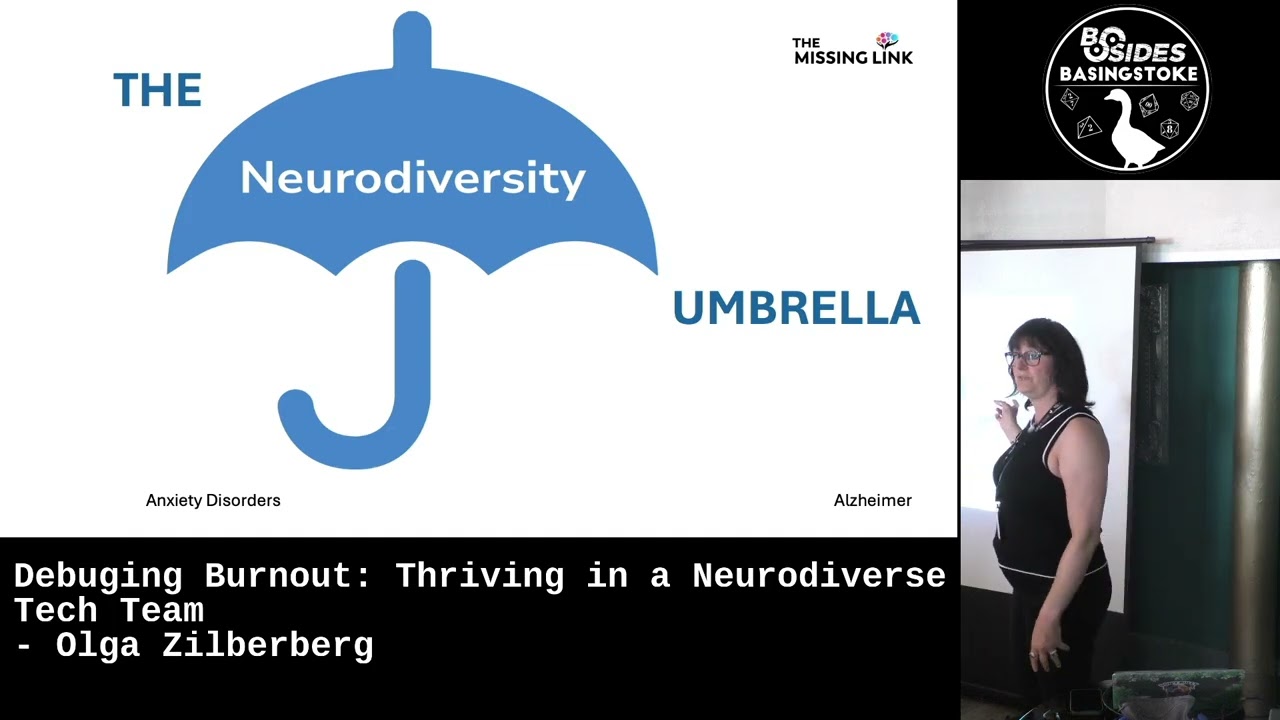
in your workplace whether you are or not whether you you know they disclose or they don't disclose whether they know or they don't know you're going to encounter different types of thinking processing information um understanding the world problem solving everyone is very different. So when we talk about neurodeiversity and the umbrella before I pop anything in there, what sort of conditions or what sort of neurotypes if we were to use a more uh defined language? What sort of conditions can you put under the umbrella? When we talk about diverse neurent individuals, diverse teams, what can we put under the umbrella? Anyone? Autism. >> Autism. One of them. Yeah. Any other >> ADHD? >> ADHD. Thank you.
>> Asperers. >> Asperers. Thank you. >> Down syndrome. >> Down syndrome. Yeah. Thank you. So, different ways of processing information, learning, different ways of communicating, different ways of um working and problem solving. So, some of them up there. I'm just going to pop them all up. Anxiety disorders up there. syndrome ADHD autism OCD dyspraxia down syndrome, you said that one, dementia bipolar dcalculia Alzheimer's, dyslexia, and one in here that people miss sometimes is neurotypical. So certain as certain bunch of population, they've got non neurological differences. They're neurotypical. They more or less process information, understand, communicate in in a particular way that is deemed by society as normal, right? And we hear people saying, "Are you normal?" They're not
normal. They're not. They're not normal. So that is that neurotypical under the umbrella. We've got neurotypical individuals and we've got neurody divergent individuals and we all we all work together. So important for us to keep that in mind when we talk about the stroke this when we talk about neurodyiversity in tech. Why I tend to work with STEM organizations and um tech organizations because individuals within STEM within tech they are drawn to certain career paths and certain ways of thinking operating learning because of the strengths and these are the strengths that individuals have. So, some individuals are very good at um attention to detail, identifying algorithms, thinking outside the box, at problem solving. ADHD is in crisis, gives them a crisis,
they love it, they will just kick in their brain because adrenaline and cortisol engages the prefrontal cortex and they just go into focus mode. They go, "Right, okay, that needs to be done and that and that and that and that and that. I'm doing it and this is what you guys are doing. Um, hyper analytical minds. Some individuals want routine and they love it and they like having routine. Some individuals like the differences in the day, not the day is the same. Today I've got this, tomorrow I've got that. So when we talk about neurodiversity in tech, people are drawn towards these type of careers because of the strengths that they exhibit the the the strengths that they can actually go
into a workplace and thrive and they can enjoy what they do. So when we talk about neurodyivergent individuals and we talk about burnout, we need to talk about the differences in the brain. And the difference is in the brain. There is no better, there is no worse, there is no, you know, you you're doing it right and you're doing it wrong. It's just different wiring. In the same way, flowers are all daisies and then they all have different shades of daffodils are all yellow. They all have different shades of. It's the same with the human brain. The wiring is different. There strengths and the challenges. But when we talk about differences in the executive function,
there are certain challenges that neurody divergent individuals will have because we are operating in a world that is not actually designed for a for a different type of brain. And some of those challenges I'll put them up here and we'll talk about um burnout and how burnout looks different in neurodyivergent individuals as well because it's important to notice that. So some of the tasks or some of your um some of the um challenges that a neurode divergent individual might have with regards to the executive function is planning and organizing. So sometimes we become very overwhelmed with far too many things in our head and we are not able to plan what comes first. We sometimes have difficulty um getting our
words in in in order to be able to say to someone this is what I want to do. We might have problems with time keeping. We might we might have problems with prioritizing. So some individual will say you know I'm doing this and why are you doing that? The priority is that but because I need all of this in place before I focus on that particular task. And people will go, but why? That's the priority because that's how my brain works and I need to go through all of that to be able to get to that priority. Hyperfocus. So the ability to focus on focus. So sometimes we talk about ADHD and we say ADHD is a misnomer really. Attention
deficit, hyperactivity disorder. I mean it can be a worse name. Is it? If you give an idea as something they really really really really like doing, they're going to hyperfocus on it. So it's not that they don't have attention. They have attention, but the attention is chosen where it goes to and I choose. Thank you very much. I don't want you to tell me what to do. I like doing that and I'm just going to do what I like doing. So the attention is there and there is no deficit to it. It's just the way the way my brain works. Um task initiation. Have you heard task task paralysis? Anyone struggles with that? Yeah. Lots of millions of bits and bobs and
suddenly it's like ah so task initiation is a problem. People don't understand that the problem is not the task. It might be I don't know how to start. I don't know where to start. Too many options. Thank you. So with that one I often say that neurotypical individuals will say and remember people saying to me although how do you eat an elephant? How do you eat elephant guys? How do you eat it? >> First thank you that one first. Yeah. So people will say one bite at a time. Chop it up. Chop it up into lots of pieces and then one bite at a time. And now everyone say thank you very much. That's very helpful cuz now I've got an
elephant into 20 million pieces on the floor and I still don't know where to start. So I have one and I can say tail first. No, now I'm thinking [ __ ] what do I do with it? How do I put it back together? Do I touch it? No. So then I procrastinate and walk away because if I don't look at it, you know, it's not there even though it is there, but I'm just hoping for the fairies to come and figure out a way forward or the or the elves maybe. Um, communication sometimes is a problem. We might say something, we might open our mouths, we might be very blunt, very straightforward. People go
or someone might tell us something, they sugar coat things very well and very nice and we just go, do I or do I need to do this? I'm not quite sure. So, communication can be a problem if it's not clear language. Um, working memory losses the keys by about 20 million times a day. Thank you. What about mobile phones? Do you not wish you had a truck on a mobile phone? I do sometimes. Who loses the keys? Back the car. I have once I back of the car there. I found them. They were there. Right. Say again. And the wallet in the back of the car. And the door. But they all forgive me why burn out hits differently. So we do
know that the executive function is wired in a different way. We do know we are maneuvering a neurotypical world that is not designed necessarily for us. We do know that workplaces have very strict type of rulings at times. You're supposed to do this and that and that and that and that. We do know that we operate in a different way. So why does it hit us differently? energy usage. It takes more energy for us to sometimes process information to multitask to have loads of windows open and then you go I don't know which one to deal with. It takes the brain loss of energy to to um um socialize to understand our internal system. Those interception issues are
things that people often talk about but this is my internal system is me understanding that I'm tired or I'm hungry or I'm thirsty or need the bathroom or I need to stop. We have problems with that sense, interceptive sense. So we forget to eat and we forget to drink and we forget to to go to the bathroom and when we want to realize suddenly we've gone down slippery slope and we down in the hole because we forgotten we've been working all day. We're really really tired and exhausted. We are depleted for energy. So energy multitask and hypocus executive function demands we already spoke about that those demands internalized abbleism we are in the workplace and we start
talking about I should be able to do this cuz everyone else is doing it any one of you have looked at colleagues and peers and they are off to do this and that and that and it's Friday yay and we're going home like oh my gosh it's Friday just going to put my pajamas on just sit down watch TV do nothing And some people go like, "Yeah, I want to do." And some we say, "I wish I could do it." >> Again, >> masking. Masking our traits, masking the way we present ourselves. So, we look like everyone else. So, we are all like nice and then no one says, "Oh, what's wrong with her? She's old. What's wrong
with him? He's old." Or why why are they behaving in that particular way? um sensory stimulation, lights, sounds, heat, cold, you you name it. And the last one is rejection, sensitivity. So, some individuals will struggle a lot um with perfectionism and will really, really, really try to get it all right and get it all perfect because I don't want to be rejected. I don't want people to give me bad feedback. I don't want someone to come and say, "Why do you do that for like that?" and then I'm going, "Oh my gosh, this is so bad. I feel so bad. I shouldn't have done it this way." So, some people are very sensitive to that rejection or what is perceived as
rejection. Lack of boundaries. Um, can I just check hands up? Are you guys okay saying no without guilt? Do you struggle to say no, I'm not doing that for you? Do you struggle setting a boundary in place? Anyone? Some of you? Yes. Some of us know it's terrible because go yeah yeah yeah yeah yeah and then we get to it we go why why why why did I why did I we delete ourselves we really do so that is why a difference in the brain leads us to burning up much much quicker so when we talk about manifestations in your divergent individuals what what you might experience and this is just um generic you need to think about what you
might experience What is it that you notice in yourself? So all those red flags, loss of skill. So when we are burning out, we suddenly have loss of skills. And that means that I'm not able to communicate as clearly. I might not be able to think as clearly. I was probably able to sit and put a report together and look through all of this stuff and find whatever it is that I needed to find in that particular report. and all of the sudden my brain is all mushy. I've gone into that foggy brain and I can't think straight. Maybe you start dropping things. Maybe, you know, you you forget you put things, maybe you can't sleep. So, we start
losing skills that we had and things that we were able to do and we were not anymore because our executive function is being impacted. Emotional dysregulation. And I was talking about barking and I was talking about you know getting angry with people. How many of you get irritable with individuals when you are going down very slow? So some of us might get very angry. Some of us might get very cranky. Some of us might get very tearful and we everything everything is a big ill. So we just become more tearful. Chronic exhaustion. No. You go to sleep, wake up in the morning, you're still exhausted. The weekend comes, you you rest at the weekend, you're still exhausted.
You still feel like you're carrying all this weight. So that physical, chronic, mental, cognitive exhaustion. I can't think straight. Inability to mask. That's when we open our mouth sometimes and we just say, I don't care. I really don't care what you think. But you know what? I'm just going to be really really really blunt and straight forward because I haven't the energy to sugar coat because I've burnt out. So that inability to ask the inability to to pretend to be the same us. So we might start doing things that help soothe and we might or we might sway or we might chew on things or we might do stress balls whatever it is just to help us
cope. Um intolerance to stimuli and we start withdrawing from the world. I don't like the lights. I don't like the sound. The music is bothering me. The the radio bothering me. People making noises outside in the street is bothering me and people talking outside in the street is bothering me or people talking in the office are bothering me. So in being not being able to tolerate what we could tolerate earlier and we could be kind of okay. And the last one is social withdrawal. So we go onto our caves I say and that's a way of restoring. Now with this one in here, one of the things that we to be very aware of is
when we get all of this together, but we we start going onto the social withdrawal. If we might go to GP or we might talk to people, people might say, "You're depressed." And often times neurode divergent burnout is misdiagnosed as depression. And people then will be treated for depression when what it is is neurody divergent burnout. So when we are treated for depression that is not depression, we don't engage with the treatment. We find very difficult to follow through. We find very difficult to to do what we are supposed to be doing to get better according to clinicians and we get put down as they're not cooperative they don't want to do it's not because we don't want to
do it's because it's not depression it's burn out the more we are forced into engaging with certain type of treatment or therapeutic approach the more we burn out because we don't have the energy to be able to do things the way we are we are told that we've got we've got to do. Does it make sense? Are there any questions or any thoughts so far with regards to what we have covered before we jump onto things we can do to help ourselves? Any reflections? Any thoughts? Everyone okay? >> I should tell you my thoughts. >> It isn't it? I wish I would have known all of this when I went down the hall. You know, I was all being treated for
depression and suddenly it's like actually it's not that I was at home thinking what's wrong with me. >> We all know that there's crisis in ADHD. >> Oh yes. Yes. >> So how bloody hell can you tell a doctor? >> Yeah. >> How stupid is. >> Yeah. I I agree with you. Look, I really agree with you. The waiting list is I think hitting the seven years now. a seven year long waiting list to be diagnosed for ADHD. It's ridiculous, isn't it? And then you go to doctor and they tell you all this kind of paperwork and right to choose and people give up because you think it's just much that I've got to do. I don't have the energy
because I'm burning out. Thank you. And I don't need all of that lay off. >> The ability to also solve problems at work because you've reached you have. Thank you very much. Thank you very much. We do we burn the candle at both ends and we start doing things in here and if I'm not able to mask and I open my mouth and I said well you can't do it because my boss has said can you do and I said I haven't got the time well it's only going to take 5 minutes but it's going to take 5 minutes you go and do it right and I've opened my mouth I go shooting off but I half open my mouth so
now they go that's not very nice is it what about loss of skills if I've been doing whatever job and all of the sudden I can't do it and they say what's wrong with you. You were able to do this spreadsheet were able to do this and that you're not. We're going to put you on a pip because because you're not performing. Sometimes that loss of skill being really really tired and withdrawing leads to people thinking we are unmotivated. They're not motivated. They don't care. They're just lazy. And that leads us to getting in trouble at work like like you say. and and then we may have chats with HR or with the manager or you know put on a performance
per performance plan or whatever it might be. It it all comes from lack of understanding from the organizations we work for, lack of understanding how individuals operate in different ways. Lack of understanding that not all brains work in the same way. And if they all were to work in the same way, we're still in caves sitting down there waiting for someone to come and feed us. Thank goodness for the ADC that got disappeared and went mammoth. Let's go and hunt that one. Exciting. And off we went and left the caves. Otherwise, we would be still sitting in a cave possibly dying for starvation or some some sort. So, we burn out. We burn out differently. It shows differently.
People misinterpret what they see. They misinterpret behavior and we get caught and we get into trouble. looking into helping ourselves. Has anyone heard of the spoon metaphor? Spoonies in here. Yay. Spoonies. Excellent. Right. So, we have 12 spoons every day. That's energy. And now we need to utilize for those of you that are not spoonies, we need to utilize the spoons in a way that are going to serve me my energy in a way that is going to serve me for everything that I want to do until the end of my day. So I'm talking about energy budgeting. The same way budget your your your income or your budget whatever you budget is energy budgeting. I want to look in my day and
say what do I have? What am I at? One day has 12 response. If you wake up one day and you are not rested, you are in pain. You got headaches. Whatever it might be, you don't have 12, you have seven, maybe you have eight, maybe you don't always start your day with 12. And that's something that we need to keep in mind. I wake up one day, I'm in pain. I haven't slept very well or it was a very short night or I'm hung over or whatever it might be. I have got seven spoons and I haven't got eight or I have got 12. Whatever it might be. So thinking of budgeting super important that you look
at your day, you look at what you've got, you start budgeting up and thinking what you can put in your day or you don't you don't put in your day. Now you don't have that many spoons. Comes 3:00 in the afternoon and you're done. That's it. I'm done. Some ideas to wash up some spoons so you can gain some of them back. Put back in your drawer. You might not have a big chunky tablespoon to put back in your drawer. You might have a tiny winny one because it's at the end of your day. But if you do something to replenish your spoons, you can keep your head above water until you get to the end of the day and then
you rest. So ideas in here internal checking in. What do I need right now? We need to ask ourselves. If you ask yourself what do I need right now, you're not going to know. you're going to go hyperfocus mode and then 10 hours later you come out of it thinking oh my gosh I'm thirsty I'm hungry I don't know what my body is feeling so checking in it's important so then you can give yourself what you need resting or sleeping or closing your eyes and listening to music or meditating or whatever you might want to do important connecting with people talking to people connecting with nature you don't have to talk to people you can connect with
nature You can connect with the dog. I love connecting with my dog. He never talks back ever. I take him out. I tell him where to go. He happily plots alone and I talk to him and he never talks back to me. Focus time one thing at a time. Just one thing at a time only because we are bombarded by 20 million things every day. So sometimes taking step back and saying I'm going to do a sudoku. I'm going to do a word. I'm going to go on some gardening. Number one, chop some vegetables for dinner. Whatever it might be, one thing at a time allows the brain to disconnect from all the other bits and bobs. And
suddenly my brain goes, "Oh, thank you. Tada! Brilliant. Now I'm focused." Downtime, doing nothing on purpose for the sake of doing nothing. Whatever downtime might be for you. Playtime, laughter, being silly, whatever playtime might be, we forget that play is also something that we can do. So, it could be video games, video gaming, if you do video games, it could be fixing a computer, it could be fixing a bicycle, it could be whatever it is that you do for the sake of just doing. So, some ideas to replenish some of the some of these spoons. Is there anything in there you guys don't do or anything in there you guys do that helps? You might want to shout out I do these
helps. >> Which one? >> That one. >> Sit and do nothing. >> Sit and do nothing. Thank you very much. >> 15 minutes before. >> Yeah. Yeah. Sit and do nothing. And give my brain a little break. Thank you. The problem with with this world, the problem with western world is that we attach a sense of worth and achievement and value to what we do. So when we say things, when someone comes and says, "What have you done today?" I just say, "Oh, I've been sitting down doing nothing." They go, "Oh, part time." Uhhuh. We human beings. We're not human doing you know. We're human beings. You you can sit and do nothing for a while. Why
not just inhabit your body? Don't leave up here. Control tower. This is what we tend to do. We are here. Control tower. And then the body just gets taken everywhere. Wherever this one said we're going, the body gets taken everywhere. Just just pause for a moment and see what you can do. So some ideas in here of things that you might want to put in into your day. It doesn't have to be hours. It can be a 5 minute thing. It could be a 10 minute. It could be something they do while the kettle boils or the microwave is warming up me or something. Couple of minutes when we talk about managing tasks. So we're going to look into managing task
and managing time. Some ideas in here are defining and agreeing top priorities each week. Do you do that in your workplace? Do you talk to your boss or your line manager or your colleagues and say these are my priorities? Do you do you have an opportunity even to talk to someone and say this? Yeah, some of you do. Yeah. So important. Limit the number of life projects that you might have. If you've got too many, can you dedicate the attention that is needed for every single one of them? Have you said yes, yes, yes, yes. Because you couldn't say no and now you've got projects that you're thinking how you going to get to them. Sometimes
that's a problem. um redefining time expectation. So allowing time for me to be able to do quality control and be able to check and check again so I don't have to go from one thing to another turn all the paperwork in and I get stuck. Implementing time checkins accomplish tasks so you don't go into hyperfocus mode. Very important. If you notice you're going into hyperfocus, find ways to come out of it because otherwise you will not eat. You will just be working on a particular project and you not be able to sleep. Switch off and your brain is constantly working. So you get to bed and thus your brain is still working. You wake up at 3:00 in the morning cuz
your brain is still working and you think of a solution. Then you go back to sleep again 6:00. You think, "Oh, I had an idea in the morning and now I didn't write it down so I forgot." But then the following day then you do that and you sit in front of the computer at 3:00 in the morning and then at 6:00 in the morning you go like oh my gosh my eyes are like this here for long because I didn't want to lose the idea and that's how we end up burning out. um use the definition of t that was something that was um I learned not not very long ago and it was amazing because suddenly I am
to ask someone what be your definition of done for this particular task or project and they will say like this and that and that and that I go okay because my definition of done is like this and that and that and that and that because I'm a perfectionist I'm a recovering perfectionist so I will go up here but someone is telling mean no no my definition of done will be done here. So that allows me to turn in and say right to my eyes it's an 80% job to your is 100% review come back to me and let me know what I need to put in place to to make it better to change or are you
happy with it so definition of prioritizing projects clearly important and assigning realistic deadlines collaboratively because sometimes we get caught up someone says is that okay to do it by the end of the month and we don't think about it we oh yeah yeah end End of the month is fine and then we get caught. End of end of the month comes and we are trying to give our head above water and we can't. It's it's it's too hard. Um and I often times say that I chew onto more than I bite onto more than what I can chew. Thank you. And and I'm always trying to get my head above water. Not nice. Right. Um one of the things that
is super important. So we talk about managing tasks. We're going to talk about managing managing um time. One of the things that is super important is transitions. Who in here struggles transitioning from one task to another? Who in here hates when someone says, "Come on, it's dinner time." Leave me alone. I don't want to eat. Come on. We need to leave the house now. We're going to do town. Go away. Just piss off. Leave me alone. I don't want to do it because it is right. We are quite happy doing what we doing. So your typical individual will say why is it so hard? Well, let me tell you what's hard because first of all I need to
transition cognitively. So I'm doing something I really like doing and now I need to stop doing something I really like doing to do something I really don't like doing. So in here I need to say okay stop for a moment. Now you need to start making dinner but you were quite happy doing that. So I start then planning cognitively what I need to put in place to get to dinner or get dinner done. But also physically I need to move from one place to another. And then emotionally I need to grieve that you guys want to drag me out of the house to go shopping which I hate but quite happy doing something. So I need to grieve. I need to go through
all the stages of grief. The anger, the depression, the bargaining. But if I take you later, what about that? just to go to the acceptance that I'm the only driver at the house and I'm going to have to take them in town as much as I want to. So thing of transition very important. I'm about to run out of time but I want to show this one across to you so you have it. I will be sending the handouts the the out to the team so they can distribute us for it. Money is in time. Anyone of you use this pomodoro technique tick tick. I love trail of Forest Siri. Alexa, we have got a 14year-old that talks to
Alexa more than she talks to us. She's an ADHD and Alexa reminds her everything she needs to do. The conversation she has with Alexa, honestly, she doesn't. Um, adding buffer buffer time in there for you. Boxing in time, blocking your time in a calendar. Box it in. Don't let anyone distract you. That's it. This is my boxing time. Um, if you're unable to start a task, start 5 minutes. Give yourself permission to drop it after 5 minutes. If after 5 minutes you don't want to drop it and you want to carry, you carry on. But you having permission to drop it, it's a starting point. You can start drop it tomorrow. You come back to it 5
minutes and drop it. Um, looking into body dabbling or or body that can help. as well and predefine or predecide your stop conditions. What does that look like to me? Because I need to be able to stop and if I am not able to stop, I'm going to be hooked and I'm going to burn out. Right. On that note, any thoughts, any questions, anything at all? Anyone before we wrap up? Cuz I've come to my limit now of my 5 minutes that I was given. Any thoughts, any questions, any reflections? Anyone? >> Go ahead, please. So, thank you for the talk. I'd like to add for a question that neurodyiverse have autism. Um, but sometimes I just like to know what your
opinions are. Sometimes I worry the more we talk about autistic oh sorry neurodyiverse firm um the more we risk alienating employers or making them think oh it's not worth hiring neurodyiverse people it's not worth um the the risk that they give them or that they'll be raising on a dismissal suit they're not able to do that do you risk do you worry you risk going back to that >> it's a really really really good question it's a question and it's a worry by many many many individuals and in fact people will not disclose. >> 65% of people will not disclose their condition because of fear of stigma, discrimination, not being given the jobs um being being pushed aside or or being
treated differently. So so you are you are very very right. The more we talk about it, the more people get to have an understanding. But we need to shift the culture in workplaces. You need to be able to say this is what I need to be able to do the job you've employed to do well. There are organizations like JP Morgan, Oticon, Dell, SAP that have programs for autistic individuals in particular because because they bring loads of talent but not every organization is at that level. This big one we're talking about. Good question. Thank you. just says divers.
>> Yeah. >> So I reached a bit and he just said it's not working. I just made sure a bit later. That's where it comes out. >> Yeah, >> that's that's that's really good. I'm putting that up there. It's a checklist, a burnout checklist I put together. Hopefully the QR code works. U if not, I'll send it out as PDF. Um if you have managers understand and have the willingness to understand, it's brilliant. But not everyone has managers that have the willingness to understand and be curious and and it is risk. I want to believe in answer to your question that I want to believe that we are not going regressing back onto let's do LAS and I want to believe that now
neurody divergent individuals have a voice and we are able to talk. We are able to say no this is this is equity. This is if someone needs that I also need this and this is equity. If you want me to do my job, I can do it. That's why you hired me. But I need these things in place. And listen, there was a report that I read this morning that 91% I think it was of the accommodations that can be put in place, they don't cost the organization any money and they benefit everyone. They don't only benefit neurodyiverse individuals, they benefit everyone. having having pens and notepads in a meeting room which was one adjustment organization did uh after
after I went in talking to them benefited everyone not only ADHD that forgets the notepad and needs to come back to the desk they can just sit and go ah I'm chill I get my pen and paper from here I don't need to run and everyone goes she's forgotten again oh dear so yeah any other questions anyone No. Thank you very much. Have a lovely Friday.
Related talks
 19:14
19:14 27:03
27:03 1:03:15
 35:45
35:45 32:45
32:45 30:35
30:35