The Payphone You Have Dialed Has Been Disconnected — The State and Revival of Payphones in 2023
Show original YouTube description
Show transcript [en]
thank you all right you guys can hear us right good thumbs up louder I gotta get down here all right hold on let me yeah you want I mean he's shorter than me though so we got a middle yeah okay this is good for you too okay so our talk is the payone you of dialed has been disconnected the state and Revival of payones in 2023 so a little agenda um so we're going to talk about who we are we're going to talk about what's a pay phone for some of you who have might might not have ever seen or used a pay phone um we'll talk about how an interest in networking infrastructure kind of led to
mapping and scanning payones uh across the country um and we'll introduce the filel project which is a payone project we both work on um we'll talk about freak net which is a cool hobbyist phone collectors Network and how that ties into filel and then we'll wrap it up with our future plans so I'm Mike I'm a professional software engineer I mostly work on UI stuff which is totally different than anything you're going to be seeing in this um I've been at the Philly 2600 meeting since 2012 so probably the last what is that 11 years I've been going to these ha meetups every month um I've been a free PBX and asterisk user since 2012 as well um so as soon as the
Raspberry Pi came out I put a phone system on it and connected up a bunch of vintage phones and I kind of never shook that hobby I've always kind of kept up with that um I started a project in 2018 called networks of Philly which um serves to sort of map local networking infrastructure within Philadelphia um I'll talk about that a little bit more later um and I founded a hobbyist dialup ISP in 2021 so you can take your old computer yeah plug in the modem and dial up free of charge and browse the web over dialup like the internet should be experienced yeah hey everyone uh I'm naen um actually also just founded a dialup ISP
like a couple weeks ago um so we're both there now um studied uh Computer Engineering um over at pen um work worked in it for a couple years uh got into the telephone hobby through telephone collecting uh in around 2016 or so uh really enjoyed hooking old phones up to pbxs and seeing what kind of kinds of things I could do uh started experimenting with asterisk and uh really really enjoyed that um so I've been working with that ever since um started getting interested in payone specifically around 2019 or so uh we'll we'll talk more about that later um and then more recently I've also been working on my own BBS package for any fellow BBS Ops out there so um uh this
whole time I've also been an environmental activist um so that's something that I like to Mel into all of this so thinking about um or trying to support people that might uh be coming from you know disadvantaged backgrounds like people that might not have Broadband access um trying to get them to left Computer Resources that can help them out as well as thinking about the environmental footprint of communications and computer Technologies so things like planned obsolescence um so that's a theme that you'll you'll see throughout the presentation today oops so what is a pay phone um if you have never experienced a pay phone they're used to be these giant phones in these sort of metal obelisks just you
know on the street Corners in the back of a like a 7-Eleven or in like a train station and before cell phones were really widespread if you wanted to make a call to somebody you had to track one of these down hope that you had Pocket Change you might have to wait in line um and you go up you key in the number you make your call um so this is a picture actually from New York City in I think the early 2000s and I don't think this was any special day like no National Emergency this is just people using the phone on a you know any given Tuesday um so we used to see this a lot this used
to be how you contact people when you're out and about and not at home um but nowadays you really don't see this anymore if you even find a pay phone locally it probably doesn't work you might just even ignore it so it occurred to me that we have like a whole generation growing up that has never used a pay phone maybe has never seen a pay phone um and it's interesting to think that the way that the the younger generation probably knows about them is through movies um so here's just a bunch of screenshots from movies and it's interesting to think that payones were once used as like a plot point so some you can't get a hold
of somebody or you know the the murderer is at the pay phone and they're trying to trace the call so they can go find them and they get there and oh that you know the handset's off the hook dangling they just missed them um so it's it's interesting to kind of think about all of these scenarios that now could be totally avoided with cell phones so what is a payone this is probably what you think of if you have an you know an image in your mind of a pay phone um so on the left there is an older style three slot rotary dial pay phone um these were mostly phased out in the late 70s I believe to make way for
the Fortress style phones that you'll see in the center and the right side of the screen um so in the center that's a western electric model and you can tell that because the coin slot is on the left side where the Right image is a GTE model that has the coin slot on the right so this is to say that you you would have a three slap pay phone typically seen with a rotary dial they made three slots with a keypad they made these Fortress style phones that had a rotary dial so there's a lot of different kinds of payones you might walk by a pay phone and not even realize it's a pay phone
because of how it's styled but this is generally what we're talking about when we're going to be referencing pay phone something that looks like this so I mentioned earlier I had started this project called networks of Philly um and I was attempting to discover and understand Network infrastructure around us uh so really this just meant that you could find me wandering Center City staring at manhole covers and Street markings and trying to make sense of them and figure out what cables were going underneath our feet all day what what Communications were being transported in this completely sort of Unseen World um so one thing that really kind of happened happened out of this is that uh naven and I got
um connected through this project actually because I had been looking up old phone central office buildings and trying to map those so navine by himself was sort of doing the same thing um and we got to talking we talked about different buildings but also we thought hey what payones are there still out there and about this time I know naine was starting to collect payone numbers so while I was out looking around I started going up to payon seeing if they work trying to find remaining ones that you could still use so to talk about payones in the city we sort of have to backtrack a bit and talk about the local telephone infrastructure uh so Bell of
Pennsylvania came to Philadelphia in I believe it was 1897 no 1879 I always mix those up um so they operated pretty much unopposed until 1900 when the Keystone telephone system came to town so it's kind of crazy to think that 20 some years after Bell the official Bell that's all over the country um setup shop arrival Telephone Company came around um but Keystone really positioned themselves as a business telephone company so they they said um when when the Keystone Rings it's business so you would have businesses that would have a keystone line for business Communications and a bell line for residential calls so if you're like a local shop you might want the people living nearby to call in to ask
something but also you needed a line for businessto business communication um so yeah they they would say oh I'm going to call you on the Keystone later they had their own slang um and they offered uh the fastest dialing in Philadelphia because they only had five-digit numbers so interesting selling point um so they actually lasted a little while in the 1940s they ended up being bought by Bell um and then we basically had Bell of Pennsylvania here until 1984 uh when the government broke up Mell into seven baby Bell companies so out of that we got Bell Atlantic and then eventually Bell Atlantic merged with GTE to form Verizon in 2000 um so Verizon exited the pay phone
business in 2012 and they sold most of their pay phone assets to this company called pts Pacific telemanagement Services um so pts was pretty much the main uh pay phone operator within Philadelphia um I think last year people were asking me how many payones were active in Philly and it was probably about a hundred which was down 50 from the the year before so there was 150 then 100 right now there's like a handful of them that are still working under pts so as the years have gone by just very in the past two-year period we've gone to very few payones that are actually operating in Philadelphia total yeah so as Mike mentioned um a few
years back we really became interested in trying to figure out where all the working payones that we could find were and something that I had been doing at the time was whenever I encountered a pay phone um you know I would note down the number and where it was maybe take some pictures and eventually I started mapping them all out into what you see here um and as you can see a lot of payones mostly are clustered on the two coasts um so places like the bay area today actually still have a lot of payones um and then you also have pockets of pay phon sprinkled throughout New England and in in places in between as
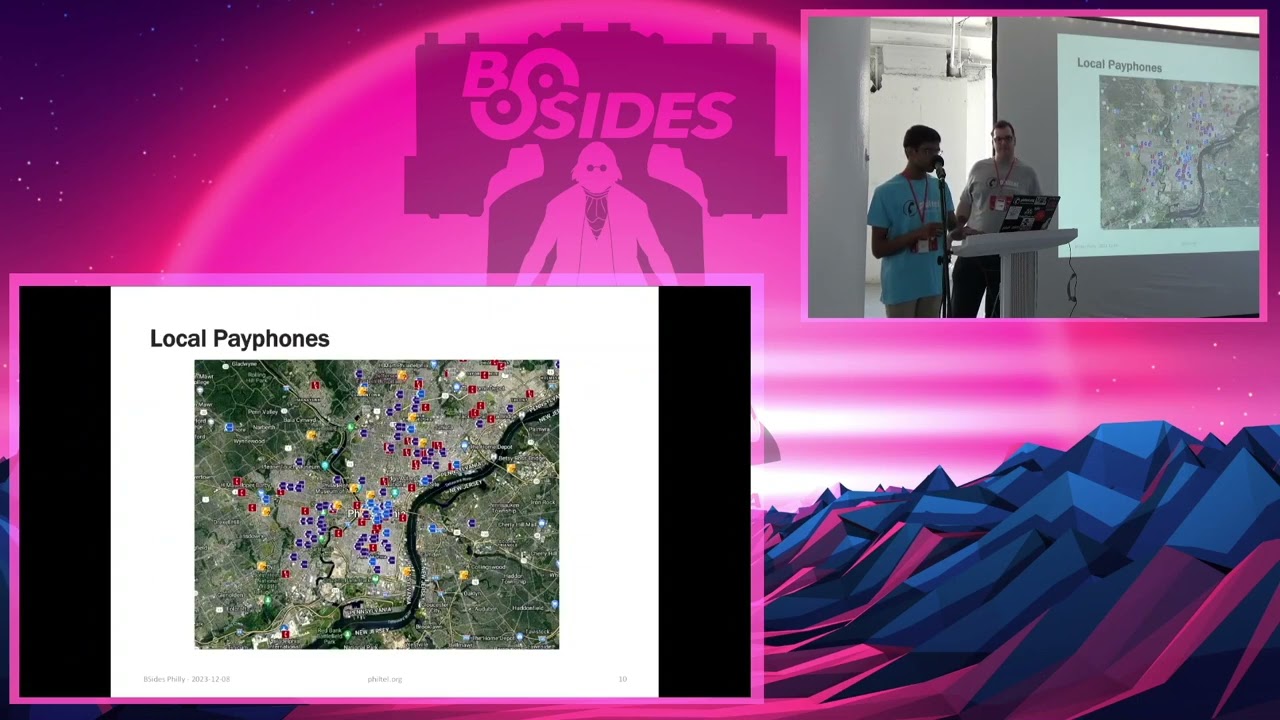
well this is another map uh of Philadelphia actually showing um payones in the city specifically uh this is maintained by another pay phone Enthusiast here in the in Philadelphia actually um and as you can see most of the working payones that are left so those are denoted in blue um the red ones are former pay pones that aren't there or don't work anymore most of the working payones that are left are mostly in the downtown area with a few exceptions but over time that has pretty much continued to shrink inward to just the downtown area for the most part so here are a few noteworthy locations in Philadelphia that you might have actually seen or or been a lot of
times without realizing it so first in the upper left we have um at 30th Street Station so this is the big ramp between um the lower part and the regional rail part of the station if you've been up there there's this big empty ramp and it used to actually be full of payones so if you look carefully at this picture you can kind of see the imprint of where there used to be payones on that ramp and so there were just Banks of payones here um and in I think the early 2010s these were all removed so in the upper right corner that is or or was actually the last working pay phone at 30th
Street station here in the city it was removed amtr ordered it removed just last year uh in October I believe um so that was in the South part of the station kind of hidden away but still getting uh a lot of usage um pretty much every time I was there using the pay fund there was a line of people behind me so um in the lower left corner that is the pay phone uh just south of City Hall um right here on Broad Street actually so if you go just south of City Hall near the subway um that is the phone there um also pretty heavily used uh in the middle bottom here we have a
couple of the payones at Suburban Station so that's actually a unique location because it's one of the few places where you have multiple working payones next to each other which used to be a very common site but today is getting exceedingly rare to find something like that and then finally in the uh lower right that is the pay phone at the 11 Street subway station here in the city um so SEPTA does maintain a a number of phones like that but they're kind of Hidden Away in just a few key stations so as I began mapping out these payones uh eventually I had the idea of uh calling a pay phone and seeing what would happen if I did that and in and of
it itself it's not a really strange idea um so back in the day if you called a pay phone it would basically just ring and maybe if somebody was there they could even answer so a lot of payones have ringers inside them actually just like regular phones so if you were to call the pay phone and somebody was there um you could answer so you might see this in movies a lot for example from the time um but these days uh it's a little bit different so back then most payones were what we called dumb phones or um dumb pay phones basically uh where they required special coin lines from the phone company to operate so there would
be uh high voltage I guess for a phone line high voltage uh collect and return voltage and other control signals for controlling the pay phone and the pay phone itself didn't really have any smarts it didn't do any of the cost rating or any of that um it was it was a much simpler device but these days you're more likely to find what's called a cocot a customer owned Co coin operated telephone and these are smartphones where they have process processing boards inside the phones themselves that determine how much a call is going to cost they do all of the billing and they can work just on regular phone lines um so you don't need
a special coin line or anything like that and these phones typically have modems in them as well and these modems are used for Remote Management so if you're a big pay phone provider and you need to monitor all of your payones out in thei field um a modem is kind of a sensible way to do that cuz the phones are already plugged into a phone line so you can call them and so these have 300 or 1,00 B modems in there and the pay phone provider can use that to monitor um how busy certain phones are when phones might be getting full and they might need to send somebody out to collect the revenue if there's an issue
with the phone they might get notified that way um so those are the typical functions of that um basically for the pay phone provider so you might be wondering you know how secure is this Remote Management functionality and the answer is the security is basically non-existent um so this is actually a print out I obtained at one point um from from a phone so if you call these phones when you have the right kind of modem um and um and the phone is programmed to answer then typically you might get uh a print out like this so this is for protel board specifically which is a very common type of board that's inside cocats in the US today and
I'll just briefly go through the different components of this so the first bit there is the 10-digit number of the pay phone itself and this is typically just the number that you would dial of the phone but occasionally it can be different due to typically a number change or something like that and then way at the end is the relative amount of money that was in the coin box when it was last emptied uh and I say relative because you have to do a little bit of math if you take the second number actually and you subtract that last value then you'll get how much money is currently in the coin vault in the pay
phone uh the next one is the model number so as I mentioned um these uh boards um have firmware on them and that firmware can often be upgraded so the 8822 is uh probably the most common type of firmer that I see but occasionally you do see the older 7,000 series of firmer as well and then these next four digits I'm actually not 100% sure about that I've talked with some other uh pay phone collectors and and people that know about this kind of stuff and we're not sure if it's a check sum or some kind of pin what I have noticed is that this only changes when the coin vault is emptied but not every time that the coin
vault is emptied so it's a a little bit strange there still working on that uh next we have how full the coin vault is in percent so 25% here and then finally just a time stamp of the local time at the pay phone when this print out was obtained so I started dialing some payones and was noticing that I was getting these printouts and I thought this is really interesting and at the time I didn't really know of anybody that was calling payones and getting print outs cuz you know who would do that kind of thing right and and so I was manually calling these payones and eventually as I started calling all the payones that I knew about at the time it
began to get kind of tedious as you can imagine so I did what all good it professionals do uh I automated it and my first attempt at automating it was using Auto hotkey which maybe some of you have used before and uh it was uh it was an interesting solution uh so the way that it worked was that the script would basically open up hyper terminal so this was running on a Windows machine and it would open hyper terminal put in the number it would enable logging because that was actually a paid feature if you wanted to do that programmatically but you could do it through the guey for free and then it would call the number and record the
print out to a log file and then I would go through later and postprocess those and so this kind of worked um I was able to get print outs this way but it was rather clunky for a few reason reasons one is that because this ran interactively it actually took over the entire computer while this was running and at the time this was actually running on somebody else's computer connected to his pots line and so anytime this was running he couldn't do anything with his computer and so uh occasionally that would cause issues and so I eventually looked to trying to get a better automation solution and so later I found out about something called
Kermit which was a project maintained by Columbia University at one time for interacting with modems and even other kinds of Internet protocols as well and so this is really nice because it allowed me to script all of this in uh an an automation that could run non interactively and so this is currently what I still use and this has allowed the project to scale much better than Auto hotkey could ever have done so this is a graph that I put together recently showing the average daily revenue of payones in the United States and this is using a sample of 447 phones uh that I've been able to make contact with and so the leftmost bar here basically indicates that about
25% of these phones are not making any Revenue at all consistently um so that's basically zero so maybe that's what you'd expect or not but I think what more interesting is that means that the remaining 75% of payones are actually getting used on a regular basis some more than others obviously so as you can see this is a heavily skewed distribution so there's a lot of phones that get a little usage and then the higher the revenue the fewer phones that are actually making that amount of Revenue um but 3ars of phones are getting used on a consistent basis and I believe the figures from pts on Pay Phone Revenue is that it needs to make
somewhere south of just south of $100 a month to remain profitable so by that metric most of these payones are not profitable um on their own and so the way that they'll do that is they will actually charge whoever wanted the pay phone there so maybe it's a business or maybe it's a public interest phone that a local government is sponsoring or something like that and they'll have to actually pay for the phone it used to be more common and still is in some cases where if the pay phone makes enough money that the owner uh of the location will get a commission on that pay phone and so there's still a few phones as you
can see here that are probably generating some nice commissions for those people but that is typically not the norm anymore so one thing you can do if you ever encounter a pay phone in the wild is determine what the number of the pay phone is um obviously this is really useful if you want to try to call the pay phone or or do other things later and so the easiest way to do that is we just call that first number just style four basically and that is the MCI AAC or automatic number announcement circuit and that will just read back the number that you're calling from which can be helpful if you're had to pay phone uh
often they will have a number card on the phone itself but they're not always accurate so this is a good way to just uh double check that and make sure that you know what the right number is um uh the second one there is also another MCI aniac that third number is another number that's set up that by a fellow freak net member where uh it will be able to determine if you're calling from a pay phone based on the class of service of the call and so um this is basically a nice way where hopefully um we can stay up to date with uh pay phone reports but you can also email this email address uh if you happen to
encounter a pay phone um as the project has expanded most of the payones um are actually sourced through the community and I've sort of been aggregating it so we definitely can't uh continue to to keep finding out about these locations without user contribution so these are extremely helpful uh if you do find a pay phone and are able to report it definitely much appreciated so at one point navine and I were sitting down um and we had both heard about this project in Portland Oregon called futel where years back this software engineer installed a pay phone made it free to use he put it right in his front lawn in Portland um and notice people actually started using
it um and it got to the point where he installed a handful more um years later now I think they're up to a dozen they have some um as far north as Seattle I think there's one in Detroit so they're slowly expanding Westward or Eastward um but I was talking to naven and I said what if we just do this this same thing ourselves because logically the next step for us is to start a pay phone company of some sort right um so we decided we want to bring payones back make them free to use because sure they could help out a lot of people and they could benefit a lot of people the community um but we think payones are
really cool we think it's something that should be preserved people should still know what these things are how they work there's something lost with them disappearing um we wanted to use as much discard and secondhand stuff as we can um so if you think about it these payones that we're finding are all used they're not really making new payones anymore so this is stuff that's really destined for the landfill if you think about it um we also wanted to use as much off-the-shelf Hardware as we could so nothing proprietary nothing fancy um and as much open source software as possible um so we realized in doing this there was going to be a significant upfront cost of about $300 um if you're
looking for a used pay phone these days it could be anywhere from $150 to $200 if you're going through something like eBay um and then we need a a little bit more money for Hardware that we're going to be adding on we'll get into that soon um recurring cost is not that much at all though um so we have a centralized server where we're routing all the calls through and that's running on I believe the most inexpensive um digital ocean droplet you can get um and then there's some fee associated with basically renting the phone number and then a per minute cost um for call time although that cost is fractions of a cent um so you can
really operate something like this continuously for the cost of what would be a couple of cups of coffee every month um so as I said before this really does benefit people without cell phones um so there's a statistic going around that 97% of people in the US have cell phones um but when you look at the population of Philadelphia that's still I think upwards of 100,000 people just documented through the the census that don't have cell phones in the city um and that's not even homeless people that's not undocumented people um so there's still a big need out there for people to have access to Communications that they otherwise wouldn't have um and also it benefits Naveen naven does not
have a cell phone he's he's going he's got his landline and if he has a pay phone when he goes out that's what he uses so he's he's customer number one so payone Hardware so this is actually the first p phone that we worked on um I bought this when I was a teenager um for probably about $20 and it sat in my basement until this project um so looking it up you or looking inside of it here you can see in that middle image on the left side is one of those smartboards that we' had been talking about so this is a cocot um on the right you can see a coin collector at the bottom you can see a relay um on
that image all the way to the right that's the back of the keypad and that's where the keypad interfac is that's where the handset interface the hook switch all comes in there and then this couples together to create your phone so if we look at a much older phone um you can kind of see some similar components here so obviously the the coin slot is a little bit more in the middle but you still have your collector you still have a relay at the bottom you still have some sort of board off to the side and on the back of the keypad you have a board that interfaces with the keypad the handset the hook
switch Etc um so I I really like to point this out because these phones can all be serviced with a simple flathead screwdriver they made these to be worked on they made these to be easily repaired it was all about speed in making these payones get back up to operating um standard so they're really fun and pretty easy to work on as a novice provided you have figured out what everything is because they just made them so modular and easy to work on okay so I have this cocot board um so it's a protel 7,000 series and I'm looking up how to program this so with some cocats you can actually program them through the keypad directly this is
not one of those this is I basically got the hardest pay phone to work on um so you need to install special dos software it could it some people say it needs to be on bare metal um some people are saying you need a proprietary modem some people it it's easily it exploded in complexity for what I was trying to do so I was really searching for ideas for how can I not use this board I would like to use it at some point but for right now I just want something to work so that's when I came Acron That Came Upon This this is a 2110 V coinless board um so these are made for armored
phones also known as prison phones um so it's similar to a pay phone in form factor but there's no coin slot um so think about just like a curtesy phone or something like that that's still armored um so these are almost a good drop in replacement for payone smartboards um you do have to change the connectors a little bit but everything has a onetoone mapping um and they're no longer made so they're still available through payphone.com they have a pretty big inventory but at some point these are going to be gone and we're going to need to think of solutions to get past this board onto something else so here's a picture of the board
actually installed um you can see there's a dangling gong ringer under there so we have a real gong ring um and everybody always asks about the paper towel tube um on the left side there so somebody gave me this funny idea which is you could donate to our project by putting coins in the coin slot and I actually don't have the vault in this phone unlocked it's still locked to this day um can't get into it so I thought let's be able to accept coins but I don't want anything to short out on this board so I used the cardboard tube to direct everything just to the bottom of the upper upper housing yeah so from this um we wanted wanted to
figure out how to actually get these phones on some sort of phone network actually making and taking calls again um so if you were at whopper or pumpcon last year you might have seen this interesting rig that I was bringing around um and essentially this is the world's most complicated cell phone and we'll we'll drill into that uh so the heart of this is a grandstream ht801 ATA uh so this is an analog telephone adapter and it basically has two ports on the back one for your like land networking and one for a a telephone a standard analog telephone um so this basically sets up a bridge between the analog phone and the Sip session initiation protocol um which
is the most commonly used uh voice protocol these days that this is how you get calls over the Internet um so this device registers as a client to our telephone exchange that we have in digital ocean so we can make and take calls um and we could really use any ATA for this but this one is really good because number one it's inexpensive it's easy to find use and two it has free buil-in Remote Management through the provider or um through the vendor so we can easily monitor things we can push firmware updates remotely we don't have to visit sites in person to fix things so we also have a glinet ar300m router um we wanted some sort of way to
get these atas to use Wi-Fi if we needed to um so this basically works out as a wireless bridge um the these are also very inexpensive they run open wrt natively so anything we need we can throw that on here um and we use as a Wi-Fi bridge but also as an openvpn client so we have all of the connection tunneled back to our server encrypted from the site um and actually in some deployments we don't need this if we have a wired connection those atas that model specifically happens to support openvpn natively So this could be eliminated from installs but if we have um if if we have an old older ATA that doesn't support that or even if we don't
get this particular router anything that runs open wrt we're able to use so the last part is we had this portable rig running over a hotspot um so these are really inexpensive T-Mobile Franklin T9 hotspots uh T-mobile used to give these away for free so they're on eBay really cheap um stock it works for T-Mobile or any carrier that piggybacks on it which is a lot of the the budget rate carriers um they're really easy to SIM unlock with this one console command you can run um and they're also pretty easy to root and you can get into a bunch of hidden um debug pages and Technical Pages you can change all the nitty-gritty details that I fully don't
understand but these are pretty good hackable hotpots in case anybody's in the market for one so putting it all together um so there's that box there at the bottom that's our payone installation site so we have the pay phone connected to an ATA connected to our router um and that's all VPN back to the server through an existing ISP modem at the site or cellular um and then from our server over the Internet we contact a vo provider that gets us connection to the public switch telephone Network so that's really how we make these phones um able to talk with the phone that you have in your pocket yeah so as we mentioned we use
asterisk um for our Communications uh server so asterisk is an open source Tel project uh commonly used Now by a lot of Enterprises for pbxs or phone systems and here we use sip as Mike mentioned both for communication between the ATA so wherever the phone is located as well as the Astro server and then we also use sip to our void provider uh sip is typically the protocol that most of them will use but Asis can do a lot more than just talk sip so it actually supports a wide variety of protocols including more traditional protoc protol so if you want to do anything with TDM um or traditional telphy so you can hook up a
channel bank or an analog telphy card uh to your server if you have a PCI slot and that would be using the Doty Channel driver in this case um so you can definitely do more than just IP telephony and astris allow also allows for interesting things like freak net which is a voice over IP uh habus telephony Network that is essentially set up to to try to simulate or recreate the way that the old telephone Network in North America worked uh so it's essentially trying to be a recreation of that so it supports uh old protocols and switching protocols that used to be possible so if you've ever heard of blue boxing or red boxing so blue boxing is
basically when you would seize a longdistance trunk using the 2600 HZ trunk tone to reroute your call to make free calls typically and red boxing would be SPO boofing the coin denomination tones in a single slot pay phone to make free calls at payones so neither of these work on the uh pstn today at least in North America but you can still do these on freak net and uh freak away as much as you want without fear of legal repercussions uh there's also some uh nice things tied into it like this maach billing system so whenever toll calls are made on the network um they're basically ticketed and at the end of the month everyone receives a bill showing
them how much their calls would have cost if they were made in 1977 uh based on the actual distance and time between the participants and sometimes this is really eye opening to people just how much long distance used to cost back of the day so it's kind of nice to get that effect without actually having to pay this bill ourselves so we got our first pay phone ready and we're able to install it in December 17th of 2022 at iy books which is a local bookstore in the area um so we had a party a bunch of hackers and freakers showed up everybody was having a great time people were blue boxing the phone people were making prank phone
calls to their friends um it was pretty much in use the whole night um so a couple weeks later we actually had to reinstall the phone because iy books moved within the same building and we're going to have to move it again soon because just this week they moved to Written House Square um so we're gonna have to do another move and we might even have another installation party I'll have to talk to Steve the owner about it um but yeah it was pretty well received the community um seemed to enjoy it there was I think 40 some people that turned out which was more than I was expecting um and everybody had a lot of
fun so something really weird is that somehow the the news or and the the media got a hold of this story and so I was getting contacted by The Inquirer The Washington Post CNN NPR like National new like it's really weird to get cold called by NPR like it's it's wakes you up in the morning um but it it really showed that there was some interest in what we were doing and I know you're never supposed to read the comments but I did read some of the comments and there was tons of people with really positive things to say so I was really happy that this wasn't only just cool to us and maybe you know a
local group of people but it it had sort of a National impact and people really seem to enjoy it so moving on to the Future um we're definitely working on more installations we only have the one phone installed it's it's been a little slow going um so you can see at this map the center pin is the currently installed phone um you can make out the blue pins those are locations that have contacted us saying hey when you're ready we want a phone here um and then there's a purple color pin which are areas that people have proposed to us saying this place they probably want to pay phone they just don't know it yet um so there's there
seems to be a lot of interest and it's really cool to see that depending on where we do installations it can spread throughout the city so it's not just all concentrated in one area we can get some pretty good coverage so we have a new phone in the works currently for Thunderbird Salvage over on Frankfurt AV in the East Kensington area um so we've been working with the the shop owner there um as well as a local hacker who has been very helpful in this whole process um facilitating this relationship um and he also donated last week A A New Old Stock pay phone um with an electromechanical breast ringer that will be perfect for
this installation um and what's really cool is that the salvage store has a red British phone box that they're going to install at the front of their building and we're going to put a phone in it that actually works so so we're really excited about this we have the location lined up we have the phone ready um and our next step is sort of fundraising um so we are navine and I are basically funding this out of pocket um and also on donations so we've had some people donate money but also other things we've had people donate those payones that are sitting around in their garage that they haven't done anything with in 10 years
we've had people donate um outdoor rated cat 3 cable which is awesome that'll help a lot um so there are tons of ways that other people can contribute to this project and aside from physical stuff um speaking about donations um we were going to get this free cocot programming line operational so I mentioned before how I had this protel 7,000 board it needed something that could run dos software it might need a proprietary modem so that picture at the top left that's a Thin Client running Windows 98 which supports do software those are proprietary modems from this vendor um the middle-ish picture we have we both now have um Channel Bank Hardware so that it's closer to an actual phone line
as opposed to sip we should have all the right tools now to be able to program these old boards that we have as well as open this up publicly so anybody with an old Payphone Smartboard can call into our service free of charge from their house and payone or program their pay phone remotely um but we've also had people donating various bits of Hardware so that circuit board there was donated by a friend um that's for an Earnest Telecom pay phone which is a weird brand um but we were able to dump all the ROMs on this board so somebody out there might have one of these boards the ROMs have rotted away we have the ROM saves
um bottom left corner I bought a bunch of protel software from eBay we had a friend who's a pretty prolific floppy archist and software cracker um image these boards on a patio um out with running on battery power and was able to in 15 minutes back these up and put them on archive.org so there's really something cool with this whole Living Museum aspect of this where we are getting all this Hardware we're getting this software and we're trying to make it easy for other people to use but make it available we we don't want this rotting away or just sitting in somebody's basement we want to make this usable and allow people to interact with
it and that's it so I I don't know if we have time for questions do we or should we do we time for questions yeah we we could take some questions if
anybody's so you can yeah yeah so the way that it works
yeah yeah so you're asking about freak net I'm assuming okay so the question was uh referring to freak net the hobbyist network we talked about can you run modems over it and and how does it work um so the way that it works is it's actually essentially a bunch of different Aster systems at either members houses or maybe in a data center something like that they might have their own phones or some kind of electromechanical switch connected to it um those can use whatever protocols they want locally between the asteros systems themselves we use the inter asterisk exchange protocol also known as eek um so this is a very Niche Voiceover IP protocol it's basically exclusively used
between asteros systems um but but it works really well for that it's very efficient works much better than sip for that purpose uh as far as modems uh we've had some success in getting modems to work over it but it it tends to vary a lot depending on the quality of internet connections um like just a few weeks ago I dialed up to an ISP in California over VoIP and I got 50.6k so um I mean it didn't last super long but it a hand Shook and everything so um it can be a challenge there are some projects out there actually where they're using GPS clocks to improve the synchronization on both ends to make
modems more reliable over voice over IP and I've heard that they've had a lot of luck with that as
well
yes so the the question is payones are cool I want one they're kind of expensive how can I get one without driving the price up for everybody else I think that sort of sums it up um I mean I don't have too good of an answer for you I know that so with the pandemic the prices for everything secondhand electronic have gone up dramatically like it's it's wild to see these payones used to go for $50 or so and now it's tripled or quadrupled in price um one thing I've seen with Craigslist is that the the listings usually go fast so again we are all competing for this stuff but every once in a while you will
have these people who have like 20 or 30 of them and and list it in a big lot and and it usually is the the situation where they say you know I want a $100 each and then you show up and there and you say I want five of them and then they give you a good deal so there's I don't think there's really any way like the the stock in the world of payones is dwindling every year like every year more get thrown away so it's becoming a scarcity so there's probably not a really good way to make it so that we everybody gets a pay phone and we keep the prices low but at least you could
try to Target these people who have a ton of them who are just going to sell them flat rate individually and and try to work with one of them but I'm sure if you buy from a guy just selling one off it's not going to make the market crazy or anything it's already as crazy as it can be anybody else no think we're
done L
time
ask I have a the most the best slides on the screen possible me spread the word the one the one has yeah there's so many with there's this one do you want one of like the beginning ones which think I mean this one's pretty good yeah like this want
picture
toet you
phot
Related talks
 17:35
17:35 30:52
30:52 21:56
21:56 45:19
45:19 14:18
14:18 43:15
43:15