Hacking the Temp Job: From Answering the Phone to Cyber Director
Show original YouTube description
Show transcript [en]
I'm Dan Bradley. I'm going to be speaking to you about how I got into computers. It's a pretty ridiculous story and I hope it encourages all of you that if this guy can get into cyber security, I'm going to be just fine. So I have to start with a disclaimer. I have a day job. I am not here speaking on behalf of my day job. The views expressed this presentation are officially the position of no one including but not limited to my current employer, any future employers besides Philly or my 16-year-old son who disagrees with most things that I say. Furthermore, I resolve I I I with I hold the right to disagree with myself and to
be logically inconsistent. So by remaining seated, you accept any consequences of listening to the advice that I'm going to give to you, of listening to some random guy at a conference. So I moved to Philadelphia. I got married and I was attending Westminster Theological Seminary in Glennside, Pennsylvania. Uh I I'll get to the cyber part. I was also working at UPS unloading trucks, studying Greek and Hebrew. And about a year and a half into my seminary education, deciding, am I called to the ministry? Is this what I should be doing? I'm like, no, I'd actually rather play with computers. And it's like, we put a lot of money, a lot of time into this. And it's like, that's kind of kind of
awkward. So, I I talked to my wife. I'm like, honey, I don't think I'm called the ministry. She's like, I didn't actually really want to be a pastor's wife, so that's fine. Go go go get a job. So, I was also played a lot of Quake, too. And I was messing around with my computers. Uh, I had a Celeron 300 overclocked to 600 with a Peltier and water cooling. Had a Nvidia TNT2, which was not the card to have at the time, but I wish I had the stock. Gosh, I wish I bought the stock back then. Anyway, it was time to find an IT job. Now, I had a lot to work with. Let's be
honest. I'm a I was a very talented individual because before seminary, I'd worked in a feed mill. I knew how to make animal chow. I was I made monkey chow, horse feed, dog food, fret chow. So I had that going for me. I'd also had my my liberal arts undergrad where I had taken classes that sounded interesting to me like this cotton monoculture in Soviet Central Asia. Fascinating topic. I also studied the religions of Tibet in my undergrad that I know some of you you rushed through your technical degrees in four years. I was much more thorough in college. I took eight years to mosey through my liberal arts undergrad. I also took a ski shooting class. I was at
Indiana University. It was great. I I it was fun class. And because I was at Indiana University, I had the opportunity to learn to ski. I took a ski class at Indiana. And I'm not saying the skiing in Indiana is the greatest, but I did learn to ski. And while I'm on the topic of Indiana University, I am compelled on behalf of the people in Bloomington, Indiana to just say this. Pennsylvania, you don't get to have an Indiana University. That makes no sense. Indiana University is in Indiana. Okay, I just had to say that back to the briefing. So with that is my technical foundation and the glorious resume that I had. I start trying to get tech jobs.
The dot bubble was going on. And so there were lots of tech jobs. I was able to get interviews with that absurd resume and background. And I crashed and burned every single one of those interviews. I was not a credible candidate. those darn gatekeepers were keeping me out of the industry. Okay, maybe that's not the best description. Um, so over the years as I've gotten a lot of experience and I've even built out teams, done lots of interviews, uh, there are three things I tend to see in successful candidates. They've got an aptitude for what I'm hiring for and and I've hired a lot of junior people. So they've got an aptitude. They've got an
interest and enthusiasm about the topic and they've been successful in a lot of the work that they've done. Now, what if Dan of 2025 interviewed Dan of the '9s? That sounds like nepotism here, but but work with me. Say I was interviewing me as that junior candidate. What would what would that look like when I think back on those interviews and my resume? I actually had aptitude, but you couldn't see it in my resume and I couldn't express it in the interviews. So, yeah, big hard fail there. Enthusiasm. Oh, absolutely. I was like a puppy dog. I was so enthusiastic. totally clueless and enthusiastic. How's that for a candidate? History of success. Well, I'd actually been
successful in previous jobs, but I wasn't able to tell that story very well. So, to put it frankly, I wouldn't have hired me either. So, I had a problem. I dropped out of seminary and we actually had our first child on the on the way to to make this story even more fun. Uh I needed to get a job and I couldn't get a job in computers, which I knew was my passion where I wanted to work. So, what did I do? Well, I broadened my search. I was like, "Okay, I don't want to go back to making Monkey Chow." So, I I at least want to be in a professional environment with a computer
in front of me. And so, thank you, Kelly Services. They lined me up with an interview with a with one of the many pharmaceutical companies around here, and I got hired to answer the phone. And so, they take me back to this desk and they say, "You see that phone? When it rings, put things in this spreadsheet." And I look at the spreadsheet and I'm like, "Can I fix the spreadsheet before I do that?" And I select it and I start changing the fonts. I rearranging the columns and whatever else. And the person that was explaining the job to me looks at the computer and looks at me. She has a shocked look on her face.
She's like, "Hold on a second." And she runs off. I'm like, "Oh my gosh, am I getting myself fired in the first five minutes on the job?" And she comes back and she's like, "Okay, never mind. Someone else will answer the phone." So I got hired to answer the phone. I never answered the phone on this job. She's like, "Go back to that desk in the back." She left about six weeks ago. So, I go back to that desk in the back and it's piled with file folders. It's piled with work that hasn't been done in a couple months. I'm not sure she was even doing the job right before she left. And what here's what the job was. This
was the transportation department. It turns out in the pharmaceutical industry, they have to ship a lot of stuff everywhere. Over-the-counter drugs, controlled substances, whatever else. And things get damaged, things get lost. So there's this thing called a bill of lading where when the trucking company picks something up and they say, "Okay, you gave us three pallets of morphine." The driver says, "I received three pallets of morphine." And then it shows up at the destination and they say, "We received two pallets of morphine." What happened to that pallet of morphine? No one knows. But the trucking company, they are liable. They are liable at $2.35 a pound, which even back in the 90s was a good price for
morphine. Maybe some of you know the current street price for morphine, but whatever it is, I think it's higher than $2.35 a pound. So, my job was to write up the claim that says, "You owe us $220 for that lost pallet of morphine." And then the trucking companies would be like, "We're not paying $220 for that pallet of morphine. You never gave it to us." And we'd argue back and forth and sometimes they would pay. Fun job. Well, the uh the person who did it before me had been using the computer as a typewriter and they would type it up and they'd take the previous claim and they'd change the entries and they they might save it, they might not save it,
but they'd hit print and they'd print two copies, send one to the carrier, put one in the file cabinet, and then they would track everything in these file folders. And I'm like, is this a computer? Because I think you can do more with a computer than that. And so, oh yeah, now I got a playground. I've got a mission to do and it was being done really not very well. And so I start figuring out how do I do this? Now I didn't know a lot but so I right off the bat I like get with it. I'm like well I need some tools. I need can you get me a development environment? What else? They're like no. I'm like okay I
need access to the database. No. Okay. Can you just give me read access to the database? No. It was the answer was was no. So it's like okay that's not going to work. I've got Windows 95 and I've got Office 97. Good old Excel 97. I'd still rather be using that than the latest version. Uh, and so I dive into the depths of what can I do using Excel. Hey, look at that. I can record a macro. And when you record a macro, it creates this VBA code that's in I've got like a built-in development environment right here in my spreadsheet. And so I start building out programs. I start automating things. And I realize this
job is highly repetitive. So I I start trying to automate it. But then I run into some problems. And mind you, I didn't study computer science in my undergrad. I'm like I'm trying to write these programs but the way I'm storing the data makes it hard to do this. And so I start learning about you know data normalization and database concepts and I'm diving deeper into this mission because I am not interested in transportation claims. I am interested in solving problems using computers and just so happens it makes it easy to do transportation claims. So well cool. There's even like I can build out a guey with buttons that make things happen. I'm I'm having a blast. Uh, but I'm
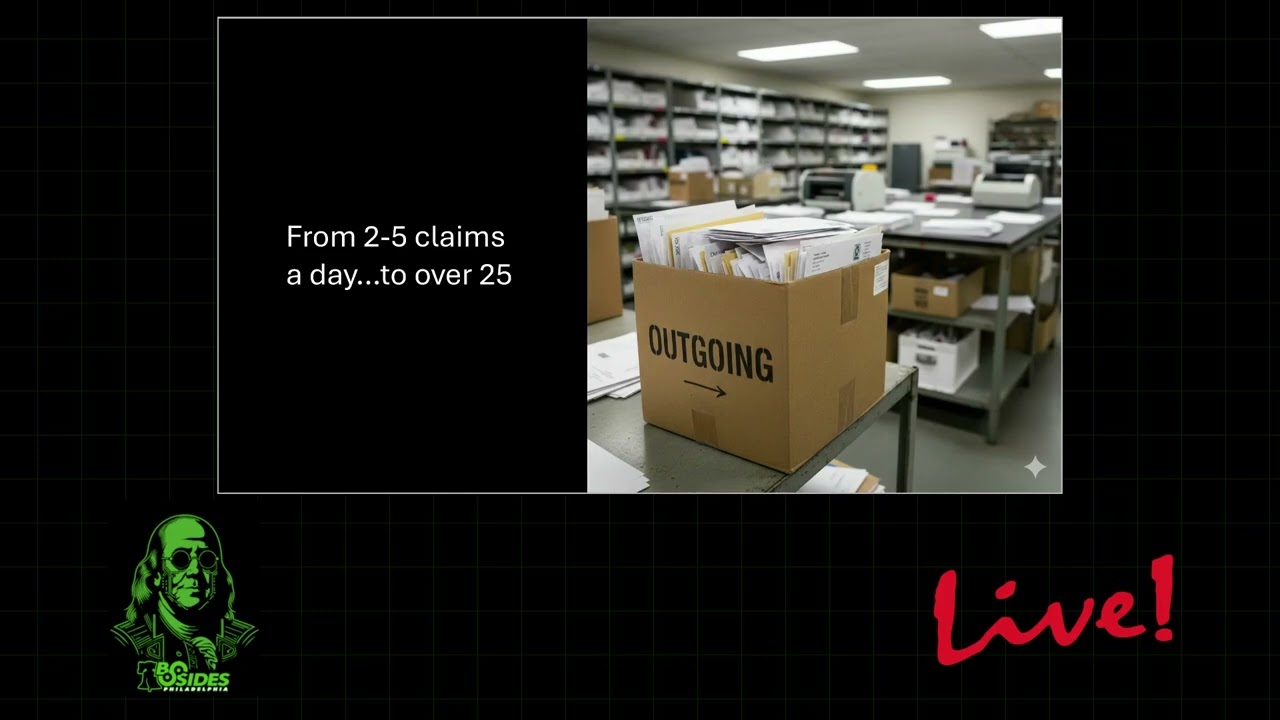
automating enough that I'm getting the job done. So, no one cares that I'm spending most of my time screwing with a computer. And in fact, the automations work so well. When this was being done like a typewriter, you could do two to five claims a day. Well, very quickly, even though there was this massive backlog, I'm sending out 25 claims a day. And that desk is empty. I am totally caught up on the claims. I'm spending almost all my time unnecessarily automating things. But there was one aspect to the job that I hadn't automated. It was arguing. You see, I'd submit a claim and they'd come back, they'd handype this response and they would say, "Well, we're not going to pay for
the following reason." And then I'd find myself having the same basic kind of argument with everybody. And I'm like, "Wait a minute. There's a pattern here." And so, initially, I started coming up with like standardized language and references. And over time, I built it out to where now when when I get an argument from a carrier, I'm like, "Oh, that's argument number three." And I push a button and I have this very carefully formatted using mailmerge. And this was the '9s. People didn't realize how well you could do this kind of thing. I create a document that looks exactly like I hand typed it, but I ran a script. And so there are like eight or 10
trucking companies and they've got these banks of ladies sitting at typewriters smoking cigarettes arguing me at typewriters. I'm running a program to argue back. And so not I had been told to do any of this. I was just told do what the previous person did which I totally ignored. And so I'm now automating the argument process. And I decide you know what just for fun I am never going to give up. I will flood them with responses because anytime I respond, they have to respond. And there's an asymmetric advantage here. They're using typewriters. I'm running a script. And so over time, very quickly, I destroyed them. There were like probably at least 40 people arguing with
me across all these carriers, and one person was winning the argument. They ended up paying all of the claims. It was so cool. In fact, one time we went to visit a carrier and uh I see these ladies in the back and when we walk in they they start whispering and they point under the table at me LIKE THERE'S THAT GUY THAT GUY THAT MUST be working 200 hours a week. He will never give up. He will never let it rest. We're in trouble with our leadership because we just have to pay all the claims. So what were some of the outcomes of this? Uh almost immediately they gave me a $3 an hour raise as a temp. Now I'd
worked at places like Walmart and feed me mills. I wasn't used to an out of cycle raise. I'm like, "What do you $3? Why?" Because they wanted me to keep doing what I was doing. And the whole time I keep interviewing for tech jobs and failing, failing, failing, failing. Uh, I hacked the process and I won against ridiculous odds. I recovered over a million dollars that they wouldn't have otherwise gotten. They offered me a permanent job. Now, they were Penn State fans. They only hired people from Penn State. and they I guess they deemed me an honorary Penn State grad. They were so eager to have me on the team and they gave me a good
pay rate, but it still wasn't an IT job. So, I kept searching. I kept trying to find the job that I wanted. I kept building my skills and actually getting a resume where actually had a few junior level things on it. And I kept failing the interviews, but every time I was failing a little bit less, I was learning some things. And then it happened. One of the things I applied for was an entry- levelvel position in the government and I got a couple interviews, crashed and burned in one of them, eaked through the other one, and I got hired to be a pen tester with the Department of Defense. Oh my gosh. I mean, like, okay,
it's a strange path to being a pen tester with the defense. And I was in fact the least qualified pentester in the world, but nonetheless, it was a tremendous opportunity. Now, I go back and I give notice. Foolishly, I give notice like over three weeks before I was going to leave because they were going to send me on this trip as a reward. They were trying to woo me and instead I'm like, I'm going to leave. So, I remember in my head this I have this picture. My boss's boss's boss runs comes by my desk and in my mind he looks exactly like Lumbberg from Office Space and he just says a very simple thing.
He's like, "Would really like you to say name your price." And I'm so glad that I had the CL because I'm not used to having people throw money at I mean like I'm used to working at feed mills and and menial jobs. I'm so glad I had the clarity of thought and I'd been mentored by a lot of people and I just said I said to him I said I just landed my dream job. It's a tremendous opportunity. I've been trying to get into not just it but cyber where I eventually wanted to land. There is no amount of money you could offer me that I would cause me to stay here. He's like we're done here. He walks straight
to my boss's boss's office and is like walk him out of the building right now. I want him out of here now. I was trying to buy a house in Maryland and we were going to move. We wouldn't have been able to buy that house. Thankfully, my boss was like, I can't afford to walk him out of the building. I need him working for the next three weeks. Please don't do that. And so, I I didn't get walked out of the door. But just a little tip for you, be careful about giving notice because make sure you can afford to be walked out of the the building five minutes after you give notice. Okay. So,
now I'm in. I got that job. Well, I'm still the world's most unqualified pentester. So, I started there. I took tons of training. I built out a home lab. I'm reading tons of books. I'm working my tail off because everyone else that's doing this is better qualified than I am. I got a ma got the government to pay for a master's degree in network security. That's pretty cool. It's like, wow, it's great working for a real employer that has benefits and they do things like pay for education. This is pretty cool. This is much better than unloading trucks at Walmart. um I took on a new technical role every few years. I'd find myself as like, hey,
I know what I'm doing. Well, this is unacceptable. I need to go find something I don't know how to do. Well, if you do that long enough, you build a diverse set of skills. And I took on various technical director roles. And that transition to leadership is challenging because you get to that point by working really, really hard and doing it yourself. And being successful as a technical leader is entirely different. As a technical leader, I had to learn to measure my success by what everyone else is doing. And the more I'm doing, the less successful I am. And I'm still learning that lesson decades later. Uh in 2022, after 21 years in the Department of Defense, I moved over to
the Cyber Security Infrastructure Security Agency. They were hiring like crazy. Uh and they offered me the ability to work from home. Like, cool. I have a great job. I love working for DoD. In fact, I had just gotten a job, another position I was excited about, but they also offered me more money. I'm like, "Cool. More money is good. I've got a kid in college." And then in January of 2025, I received an email. Surprise, the terms of your employment have changed. You've got to drive into Arlington 5 days a week, 25 hours of commuting a week for the next 6 to8 years until I hit retirement. Now, I couldn't do it. So, I immediately
said, "That's it. I'm out." Uh, the good news was I had uh 30 days worth of time off awards I'd received for retention purposes. So, I put in to take my retention time off awards to go find my next job. So, the story I'm telling you, way too much work. Some of you are looking for a shortcut. I feel obligated to give you a shortcut. So, here's a proposal. If you don't want to put in all the work, um, this this will probably work. Now, please don't do this. Do not hear me endorsing this. Um, but if you do, please submit it uh for 2026. Besides Philly, I'd love to hear the story. So, here's my idea based on
knowing myself. I think you can make a lot of money fishing CISPs for maintenance fees. So, to be clear, I took that test decades ago. I never ever want to take that test again. And if you send me a message that says, "Pay this fee or you got to take it again," I'm just going to start clicking and sending money. I mean, like, if it says pay Bitcoin iTunes gift cards, don't ask me to explain what ISC Squared is doing. I don't know if none of it makes sense to me. I will just send the iTunes gift cards. Seriously, I don't want to take that test again. You can make a lot of money this way. Don't do this. Please do
not hear me endorsing this strategy, but if you do, I I I do want to hear how it went. Um, and plus, you get the sweet, sweet irony of profiting off of the mistakes of people that spend their time lecturing people not to click on things. And um let's run the numbers. There about 175,000 active CISSPs. And I think if you assume a 3% success rate and depending on how you do it, you might get a higher rate. That's a lot of money. A single cert that's $700,000. Just imagine what you could make if you throw in C's and security pluses. I mean, like there's a lot of opportunity here. I mean, it it I'll admit it's it's
tempting, but I am a law-abiding citizen. Uh I try to follow the rules. I'm a rule. Okay, I'm not a rule follower, but I try to follow the rules. In fact, I haven't even torn the tags off my mattresses. Now, I got to be honest, to make this the perfect crime, not only do I think it would work, if you fish me like that, I wouldn't tell anybody. I'd just eat the loss. So, there's like no accountability here. I mean, like, you'd totally get away with it. Don't do this, please. But anyway, back to the purpose of our talk today, which is how you actually progress lawfully and legally in your cyber career. Um, so here's some
reflections from my experience. I'll start back in elementary school. I wanted to play the computer game and it was on the Commodore PET, but they had this little rule. If you want to get on the Commodore PET, you have to do your typing exercises on the typewriters. So, I learned where the home keys were and I learned to type against my will. I learned to type. And to this day, I can churn out content very quickly. I can think fast and think with my fingers. And weirdly, and you guys have probably seen this. I hope it's not true of any of you, but we have people working our industry that are staring at the keyboard going,
"What the heck? Spend a few weekends and learn where the home keys are. Learn how to type. This seems like a no-brainer to me." Okay, enough ranting about that one. Please, if if you don't type very fast, that's ridiculous. You're working in computers. Okay, the beaver. I am inspired by beavers and I'll tell you why I find beavers inspirational. You've heard the phrase work smarter not harder. See the problem is I've worked in places with some of the smartest people in cyber security and if I got to be the smartest person in the room to succeed, I'm going to fail hard. But if I work harder, if I I can always work harder than anybody else. And so there's
something to be said. Sure, work smarter if you can. try to try to do clever things, but work your tail off and you can do amazing things. A beaver can like flood an entire river valley, one tree at a time, and all just through their sheer industriousness. So, I don't think there's a lot of room for a big brain in there, but they're still massively effective. So, whatever gifts you have, hard work matters as Oh, look, it's Ben Franklin. Energy and persistence conquers all things. Yeah, he's kind of got a quote for everything. Okay, so let's talk about imposttor syndrome. You might guess that with my background sometimes I've had imposttor syndrome flare up. But let me flip this around.
If you work in this field where everything is constantly changing, you got all these complex layers, you got all these smart people, and you're not feeling imposttor syndrome, I would like you to entertain the thought that you are a narcissist. You should have a certain amount of insecurity working in this field. And I don't think imposttor syndrome is the problem. I think it can actually be the fuel that motivates you to say, "Wow, I can't believe they hired me to be a pentester. I better figure out a way to like make that work." So, and over time as you do different jobs, you do reach a point where you go back and say, "Wow, I'm taking on a new role.
I'm in over my head, but I've been successful in previous jobs." So, you get a certain amount of security where you can say, "You know what? I know I'm a compet competent professional. People like working with me. I get things done." And so it does start to fade. But I can tell you even here I am, you know, over 25 years later, um, you know, I was feeling imposter syndrome flare up this morning. So it never really goes away. Um, and that's fine. Um, just let it motivate you to try to to learn new things. And it's probably a good thing. Oh, look at that. I didn't turn my phone off. Shut up. Poster. Okay. So, which
searcherts should I get to break into cyber? Some of you are wondering that. It's like, okay, I see you have a lot of CSS. I saw your profile. Whichs are the best ones to get? Well, none of them. CS will not get you into cyber. You've been given bad advice if somebody said, "These are the CSS that you get you should get to get into cyber." But let let me take up a little bit of the defense on CS. They might get your resume past HR. They might get you to a technical hiring manager because sometimes HR is not very good at picking candidates. uh and they might also be required by certain government roles. So
it's not that they're not useless. Some of this is kind of playing the game. Uh they might also help you to learn some ideas and concepts. I can tell you I was working as an information system security engineer trying to design secure systems and then I took the ISSPert taught by a guy named Leo Thrush who was a phenomenal teacher had deep understanding. By the end of that week I realized before I took this class I didn't know how to do my job. That was amazing. So sometimes in studying for a cert you can actually learn invaluable things but the most valuable thing whether it's aert or a class is when you then take those skills and use them on
the job. So that particular really connected with me because I was up to my eyeballs in system security engineering and it provided really timely information. Uh now one thing I guarantee theerts will do is they will cost you a lot of money in maintenance fees and I've paid thousands and thousands of dollars over the years but all said and done I think they've been worth it. the value they provided has exceeded the maintenance fees. I reserve the right to whine about them though every time I pay them. So you might say, well, what should I study to get into cyber? Like are there any educational recommendations you have? Yes, I do. Anything other than what I study. Okay,
so let's talk about work life balance. See, I've been talking a lot about working really, really hard and throwing yourself at your career. But here's the thing. Let me quote this this old bald guy Jack Welch. He he uttered this phrase, there's no such thing as work life balance. And before you like get mad, listen, let him finish. There are work life choices. You make them and they have consequences. So what I'm getting at here is there's only one you. You can't be in the office late at night and be at your kid's soccer game. You have to make choices. And those choices in either direction have consequences on either side. So don't buy the lie that
you can maximize your career potential and spend time with your wife and your kids and be involved in the community and all these things simultaneously to the highest level. Ridiculous. I don't scale like that and and neither do you. So make informed choices and and and and lean into them because if if you focus exclusively on maximizing your career, at some point you may be very successful. You will look up and your reward is your 401k and a sheetcake from Costco and a bunch of strangers that showed up to eat your retirement cake. Congratulations. Was it worth it? So, I'll give you an example from this past October. I had volunteered to do a talk and and I I wasn't ready. I had a
had an outline and so I had a choice. I could hit print and spend the weekend where I'm supposed to be hanging out with dads and boys on the scouting trip to do climbing repelling on the Appalachian Trail. Or I could and and then I could like sneak off the side and practice my talk. Or I could say I'm going to intentionally leave that at home and we'll see how this goes. I chose the ladder. It was kind of scary and then I like crammed before the talk and it went really well. So in that case, I managed to pull that one off. But there was another time my daughter and I had planned a 23-day section hike
on the Appalachian Trail and we planned it months events. But I was working this project that was felt like the culmination of my career. I believed in it. We were going to have a huge impact for the war fighter and a critical milestone came up when I was supposed to be on that hike and there was just no way to make it work. I either had to cancel the hike or cut it in half and I just said, "You know what? This is important. I'm going to go on the hike with my daughter." Well, guess what? The project never recovered from that choice. It had a negative work impact. And you know what? I love my
daughter. It was an amazing hike. I don't regret that choice. And apologies to anybody who was on that project. I know my saying that probably stings, but I think I'd do it again. So, make informed choices. Recognize that our choices have consequences. this uh this year um I I had the privilege of um um so I was I I wanted to go to Defcon. I wasn't getting enough conferences and and it was hard to get conference approval. So I just decided to go to a conference out of my own pocket and so I go to Defcon and I you know I'll bring my boys along. What what better idea than to bring your 16-year-old to 16-year-old to Las Vegas.
And so uh so I bring my 20some year old and my 16-year-old and they latch on to this crypto challenge that's going on during Defcon. They ended up winning the whole thing and getting recognized on stage. I mean, how how ridiculous is that? So, that was pretty cool. It's kind of like an intersection of my personal life, my professional life to see my boys on stage winning that. Like, what the heck? And then they're like, you know, we didn't win the right event because I hear there are badges that give you lifetime admission to Defcon. We should totally do one of those next year. I'm like, yeah, you totally should. You you do that. But anyway, that was pretty fun. That
was cool. Okay, let's talk about job security. Um, you may have a difficult boss or it might be 2025 and you're worried about your job. Whatever it is, we can slip into thinking that job security is something we get from our job. It kind of makes sense, right? Your job can never give you job security. So, I was a GS15 in a technical cyber role working for the federal government and I didn't even have job security. You can't get more secure than that. So, I don't care who you work for. Job security never comes from your job. It comes from your skills. It comes from your reputation. It comes from all the people that would
love to work with you and will jump on the opportunity to hire you and put you on their team. So job security is you. It's not the job that you happen to be working. And you know what else? It's also empowering when you have that awful situation, whether it's a threat of a layoff or an awful boss or a difficult work, whatever it is. It's empowering to say, you know what, I don't have to take this. I have options. And maybe you don't leave, maybe you just write it out. But knowing that you can look for something, the mere act of looking is really freeing and you don't feel nearly as trapped than if you're like, I just
got to do whatever I can to get through this because it's the only option I have. If you feel like it's the only option you have, it's kind of a self-fulfilling prophecy. So own your own job security and try to build that set of experience and foundation to where your job security comes from you, not where you work. So, another tip from along the way, my own experience, help people always. And you might think, I'm competing with them for promotions. Okay, they get promoted, they succeed. Hey, that's great. That's great. Celebrate their success. Because if you are the kind of person that helps the mission succeed and everyone else around you succeed, trust me, it'll sort
itself out. Let's talk about 2025 and then we'll pivot to some questions. Um, this is what happened to me in 2025. I had one of those secure government jobs, right? Well, yeah, about that. Um, so, uh, so I get an email and it says, "You've got to come into the office 5 days a week." And I decide to leave. Now, I did some things right and I did some things wrong. Uh, there are some things that worked. Uh, I had my criteria defined. I had always when I went to CISA, I said if they ever made me come in five days a week, I'd leave. And so when that I got that email, I made the
decision same day. It looks like I'm leaving government. And when I made that decision, I thought I was not going to get my retirement or anything else. Ended up working out great. In fact, I just got my first interim retirement check from government. Yay. Thank you. Thank you for letting me retire from the government early as a experienced cyber professional. Um I flipped my o LinkedIn status to open to work. Now this is not magical, but for me it kind of was because I'd lived my life in the government bubble. by suddenly saying, "Hey everybody, hi. I'm Dan Bradley. You've never met me because I've been working in the bowels of government bureaucracy, but I'm looking for a job
and here's my experience." It was very helpful. I got amazing referrals from people that had worked for me. They're like "Oh Dan, you'd be perfect. This company's awesome. You want to work there." I reached out to their CTO. Uh, it was so cool. A couple of the best job offers that that I had on the table as I decided what I was going to do came from those type of referrals. Um, and you know what? I'd like to thank the various random recruiters and smaller companies that were extremely transparent with me. And I said, 'Well, here's what I want to do. Here's my salary target. And they laughed and they're like, well, okay, here's here's the reality. Here are the
constraints on government contract positions. I got invaluable guidance from from some recruiters and smaller companies that were very transparent with me. And I also had some slimy people uh uh reach out to me as well. Um, taking the month off was invaluable. Uh, now I was I'm spo I was spoiled as a civil servant. I had tons of leave. I was able to do that. And I went all in. I was working 60 plus hour weeks. I was working to the point of exhaustion because I had just done something crazy. I decided to quit my government job and I didn't have another job lined up. That's kind of crazy. Um, and I was on deferred resignation. So technically I
was going to get paid through the end of September. I could have just set it all aside and hiked the entire Appalachian Trail. I've section hiked about half to twothirds of it. It would have been epic and it would have been extremely stupid because the job market in February was a lot better than the job market in September. And so I don't regret that decision. It would have been nice to hike the trail, but I'll I'll own the consequences of choosing wisely. Um things that didn't work so well, submitting my resume to random vacancies. Folks, people hire you. LM don't hire you. Uh job fairs. Um for me, it didn't work well. I was targeting
more senior roles. Uh but actually job fairs are a great way to make connections. So so honestly I I would recommend them. Didn't work well for me. Uh living most of my career inside a government bubble uh was not terribly helpful. Uh waiting until 2025 to emerge from that bubble. Uh if you looked at my LinkedIn profile, you'd be like, "Wow, this guy doesn't know anybody." And like he never says anything. And then I'M LIKE SUDDENLY, "HEY LINKEDIN, EVERYBODY, IT'S ME." YEAH. Guess I'm one of those uh people that Jason was uh uh laughing at. Um, so and then act not actively maintaining my professional network. You know, it's kind of awkward when you got
all these people you've worked with, you're like, "Hey man, we used to work together a decade ago. I really enjoyed working with you. You had kids, right? How are they doing? Oh, by the way, I'm looking for a job." Not the best way to network. So, some quick takeaways and then I'll open it up for questions. There are still jobs in a weak job market. I don't care how weak the job market. People are still getting hired. It's just a lot harder to get them. So, you got to work your tail off. Figure out who you are and play to your strengths. Sometimes as you're analyzing your career, you're like, "Okay, I'm strong here and I'm weak here." And
you're like, "Okay, I should find a job that improves those weaknesses." Oh my gosh. Did you just decide to choose a job that you're not good at? I mean, seriously, don't do that. I mean, try to mitigate your weaknesses, but figure out like I'm kind of weird. There are things that I do well, and my goal is to always find jobs that play to those strengths. and I can use those strengths in a variety of different roles, but don't go out there trying to mitigate your weaknesses by taking jobs where that is the primary aspect of that job, not a formula for success. Your nonIT and your cyber skills are essential to success. And specifically, a good resume that's
written well and tells a compelling story and interviewing well could get you hired. It's a little weird. We hire people for technical cyber roles because they interview well. Not saying it's the most coherent process, but it how it works. It's how it works. You got to play the game. Uh you can brute force this though. You might say, "Dan, you don't understand. I'm an engineer. I'm not very good at communicating." Well, well, get over it. Learn that. Watch some videos. Listen to people who are better at it. Do mock interviews. Come to these type of events and get with people who can who can mentor you and help you because trust me, I wasn't good
at this either. I failed at so I mean I would love to have recording recordings of some of those interviews because some of the things I said and some of the ways I failed were pretty much epic. You'd all be in stitches listening to me fail hard in those interviews back in the 90s. But you can learn. And by the way, go ahead and take interviews even if you even if you fail them because it's good practice. Your best path to interviews is by connecting with people. having an LLM write your resume to then have some AI on the other end deselect your resume is not a formula for success. So, thank you. Uh it is it is a
privilege to be here at Philly Bides. Uh I've enjoyed sharing some of my thoughts with you. Uh I have put my my LinkedIn profile there. You'll actually see who I work for, but please do not give them credit for the crazy things I've said, especially not the fishing idea. Uh so I'm Dan Bradley. I'm a future fishing victim. At this point, I will uh uh take questions from the audience. >> Uhu. Thank you. >> You're working 60 hours a week uh looking for a job. So like what was a lot of the time? >> Uh uh manic obsession with doing everything that I could, searching various job. So let's see here. Um spent a lot of time thinking about resume,
talking to a lot of people. Uh that's a good question. I I was I was like basically working to exhaustion. So one of the things I did is I'm looking like okay um I was also saying well based on what I've done I'm strong here I'm weaker here. So some of it was like literally trying to to strengthen at least to where I could speak the language of because I've got really broad cyber experience but there were certain technologies and things that I just hadn't worked with in my government career. So I'm like oh crap like these are important technologies. I had better study these things because I need to at least be able to speak intelligently
about how the things that I know apply to that problem space. I mean I understand cyber security and and a lot of I've done tons of testing and risk assessment all these different things but you need to at least understand the basics of the technology in case it comes up in the interview so you can speak to it. So I spent I spent a lot of that time between the the the interviews, between the uh the job hunting, between a lot of networking and talking to a lot of people, you know, reaching out to folks, but then uh some of the time as well was like, "Oh man, I need to learn this. I'll take this
class. I I need to be, you know, just kind of trying to fill in the things that I knew were gaps in case they came up in interviews." Uh other questions? >> How much of your like process was like strictly reaching out to like CTO's CISOs in comparison to like finding a job application and applying for it. >> I spent a lot of time applying to jobs, but that isn't what was successful. Uh the things that actually came through were those people that knew me. They're like, "Oh, Dan, I saw on LinkedIn you're looking like one person reached out. He's like, "Dude, are you okay? Like I've got some 1099 work." And I'm like, "Yeah, I'm fine. I'm actually on
deferred resignation. So like but thank you. I really appreciate that. He's like I don't have a permanent position and you're kind of that's quite a target you have there for your salary. Um and then I actually even I even agreed to some 1099 work for somebody else in in an area that and then um yeah they ended up being a sub to the job that I took. So that so I had to stop doing that. Um anyway, so just spent a lot of time talking to people uh that I'd worked with and and uh and some of it honestly like I I actively started just sharing thoughts on LinkedIn. It's like okay, you're outside the bubble, start
thinking out loud, you know, have a presence. And so I was putting a lot of thought into content in terms of what I want to say because it's like, you know what, guess what? You're not a government employee anymore. You work for yourself now, Dan. So, you better actually have like a message and some ideas. So, um but yeah, it's actually hard to answer that question because I I I know I was busy, but but it was it was a combination of those those things. Um Uhuh. >> I guess as a followup to spitting your ideas out on LinkedIn. What is the best way or the best way that you say to your professional network? keep in touch with it all.
>> I am I am one of the least uh qualified people to answer that question, but that never stops me from answering a question. Um so uh some good ways to keep a professional network. Um
just talking to I mean like events like this are great. I mean like so I ended up having a network that I didn't realize I would have. And the reason I had a network is I'd worked with so many people. had helped a lot of people. So, I hadn't f I'm not like a I'm like obsessed with ideas. I'm not terribly interested in people. I'm interested in the technology, but I'd been obsessed with ideas with other people. And so, I had accidentally built a network in spite of my own personal limitations in that area. So, it worked out for me. But, so I'm not the best person to ask, I would say. But honestly, I'm a big
belie don't don't be fake about it. Don't don't don't like try hard to be some kind of like thought leader and be and look ridiculous, too. Um but uh events like this are great. Um you know and it's tough given some of the places I work to like keep a lot a list of contacts and keep track of people but try to keep track of people you've worked with stay in touch with people just even a personal level even if it isn't about getting a job just be the sort of person that's interested in other folks is is very helpful. Um I I don't know that it's a good question. I I I I'm still trying to
learn how to grow and build networks. I don't know. Put in abstract to besides Philly and maybe that's part of building your network. >> I like the idea of like having ideas and then cultivating network around that. >> Yeah. Well, that that Yeah, it's kind of like I like I said, I accidentally built a network. Not because I'm good at that kind of thing. Um, other thoughts, questions? Actually, no, not thoughts, questions. >> What was your uh thoughts on Besides Pyongyang? >> Uh, besides Pyongyang. Okay. So, the food the food left a lot to be desired. Uh, but you know what? I I'll admit I I'm I'm in this for the money. Um, and you know, I'm taking any
speaking engagements I can get. So, you know, it is what it is. I I don't know. It was a weird experience. other >> um having spent so much time like in the government, what advice do you have um in terms of like when to put yourself or look for a new role in terms? >> Yeah. Um so say so look I mean like I volunteered for crazy stuff. I mean like I did deployments. I looked up one point and I'm I'm in a plane over Pakistan heading into Afghanistan. I'm like what what have I done? But you know there was a job. I was a good fit. I'm like, "Yeah, I'll do that. Sure, I'll go there for six months." Uh,
so so just do things and some of those things are going to be poor choices, but that's okay. Do the best you can. Pivot and find the next opportunity. I've made a few choices where I'm like, "Oh, this job really sucks." But over time, and if if you if you're careful about it, more more of the choices end up working out that don't. So So just have a bias for action, honestly. U I I don't know how to tell you. Like I said, I I've made some mistakes in some of the choices I made, but it over time it works out. Any other questions? >> Uhhuh. >> So, can I ask you to speak a little bit
in your role at Booze, right? Um, >> I am not saying where I work. It just happens to be listed on my Sorry. Go ahead. >> So, as a hiring manager, >> uh, when you're recruiter, >> I actually have not done any hiring at Booth. So, I I'll give you my personal opinion. That's fine. >> Yeah, I'll give you my personal opinion. Uh but but yeah, I'm not speaking for anything related to Blues Blues Alen >> Hire is not very good at finding transferable skills. >> How do you how do you how do you deal with this? >> Okay, so thank you for mentioning my employer. Um so, so here's what I will say. HR varies widely in quality. Now, let me
be clear. My employer is amazing and everybody that works there is amazing. But but just zooming out a bit, HR can vary widely in quality or maybe they don't understand the topic they're hiring for. So if you're a candidate, you're the only person that's really looking out for your best interest. So have a bias for overcommunicating. Like when I was applying to stuff, I would not hesitate, you know, don't just be like, you know, harassing them, but it's okay to border on that. If you have any question to ask them, go ahead and reach out and say, "Hey, just checking in. uh you know this issue came up you know so I would say have a bias for
communication and ultimately and here's a big thing um look for people you know that work in the place it really helps to have advocates within the company because honestly and this is not a booze thing it's just my whole career um the jobs I've gotten over the years quite a few of them were because someone's like oh I've worked with Dan you need to create a position for this guy um and so it's also pretty cool. It'll definitely make you make you border on on on being a bit arrogant, but thankfully I've got imposter syndrome to keep that in check. Um, any any other questions? >> You mentioned one of your slides that you guys did find that actually added
value to your career progression. >> Uh, I did it for very pragmatic reasons. It got me on a pay scale that got me a nice raise and so I like rushed through that. I I learned way more from my career than from that. But honestly, it was a surprisingly good program. I actually uh it was valuable. I like in every single class, I'm thinking, I already know this stuff. But collectively, the way it connected the dots, I think I actually learned more than I realized. And then I actually came out of that class and like took the CISSP without prepping and or out of that masters. Took the CSP without prepping and and passed it easily. So,
>> follow question. Do you think that in your opinion does it matter where your masters comes from? >> Uh you need to have a college degree for a lot of employers. Not all. I mean, people talk about skills-based hiring, but honestly, a lot of folks are requiring you to to have some type of degree. Doesn't matter. I got to tell you, once once I got to working, nobody cares about the fact that I have the world's least impressive academic uh background. And I've been the technical director and leader for teams of people. Every one of them went to impressive schools and and and were like, you know, had amazing resumes, but but I was their
technical director. So, uh, I don't think it matters where you went to school. And in fact, I go a step further. If you're looking at taking on a bunch of debt to go to some impressive school, that's a really dumb idea. Go to a school that nobody's heard of that you can afford and you, if nothing else, you're not going to have as much debt. That's my personal opinion. Uh, any other questions? >> Huh? Um, if you were to give your 90s self advice on getting into the career path starting from trying to get into it, would you aim for yourself private network again or would you start aim for private network this time or would you do government again?
>> Uh, the government was an incredible opportunity because sometimes they make bad hiring decisions. I have no idea how I got hired, but I worked my tail off to make it work. And so so I I am extremely thankful. I have absolutely no regrets for the government career that I did. It for me it was the perfect place to be. Uh and it worked out amazingly well. And let me just go ahead and say this in defense of government jobs which is a tough thing to do in 2025. Um there going to be there's going to be a lot of hiring. There could be some great opportunities especially for junior people. I think we're out of time. I I I
see. Uh so thank you so much. It's a lot of fun. Appreciate it.
Related talks
 23:21
23:21 55:58
55:58 25:38
25:38 1:06:07
 32:24
32:24 44:28
44:28