They Don't Want to Talk to Sales—So Let the Community Sell for You
Show transcript [en]
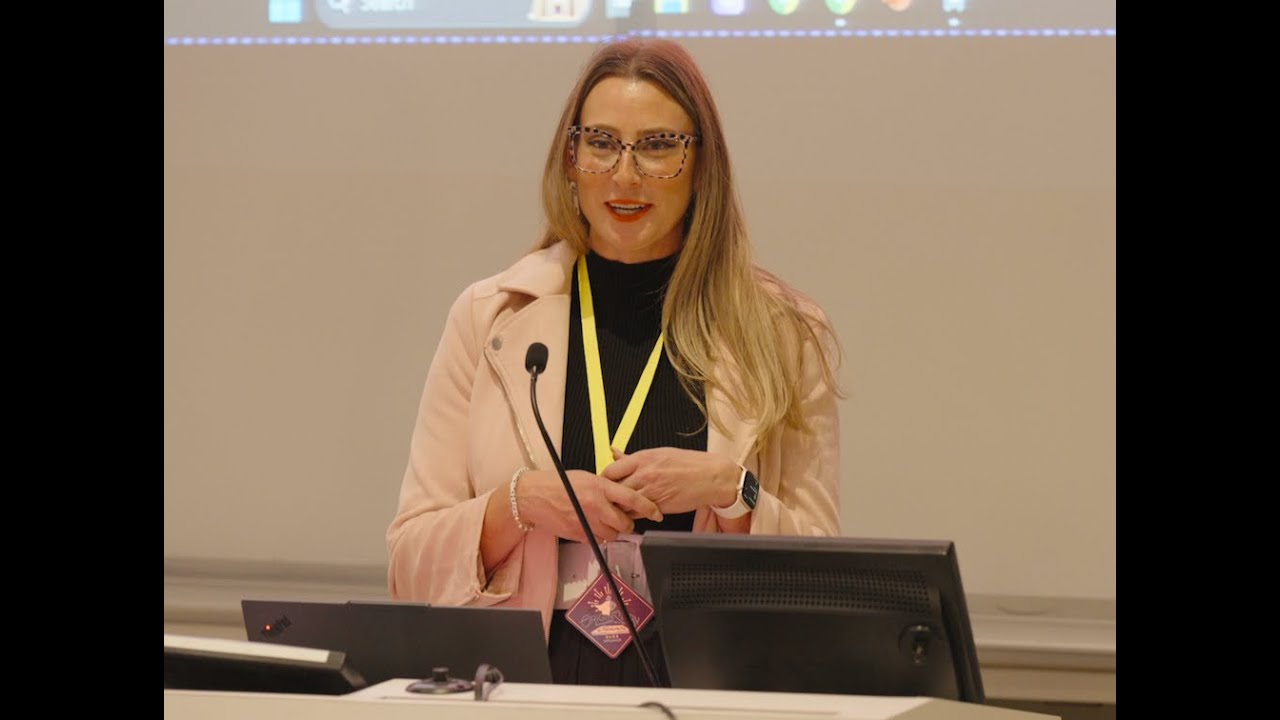
go ahead and get started. So, thank you GA for like teeing that up so perfectly. I feel like this is going to be a perfect transition into to what I'm talking about today. Um, hello everyone. I am Mariana Padilla. Um, I am now the community evangelist at Harmonic. On your program, it probably says that I am the CEO of Hackerverse. I was the CEO of Hackerverse. I'm in founder recovery mode rewiring my brain from three and a half years of trauma. Um so but I have been there in the trenches with you. Um and a huge reason that we did have the successes that we did have was because of community. And so that is
what I'm going to be talking to you about today. Um well where this is an unfortunate situation with the QR code being right in the middle there. But please find me on LinkedIn. Please connect with me. Um, also it's LinkedIn back back slash here to shake [ __ ] up. It's very memorable. It's easy to remember. Um, so that is me. Um, all right, let's go ahead and move on to the next slide, maybe. Oh, there we go. User error technical difficulties. So, um, yeah. So, if you were in here for the last session, you know the buyer's journey has changed. The Gartner map uh is it like it's wild. It's crazy. people go through a million steps uh before
they they make a purchase. Uh it takes a really long time. Um but in large part what I have found in you know what uh you know people talk about is uh that the buying journey is really starting in community uh community forums. So, it's in Slack channels, it's in Reddit, it's in Discord, it's in the pub with people, you know, saying, "Hey, do you have any experience using XY and X Y and Z products?" Like all these kinds of things. Uh, this is just like one screenshot I took from my local ISSA chapter of people asking for product recommendations. If you're in any sort of community organization, community channel, I'm sure you will find a
million of these messages between people wanting to know uh you know what vendor products folks folks are using. Um and it's because they they don't want to go they don't want to enter the traditional sales process. So um my last company Hackerverse uh we were essentially building a try before you buy platform for cyber security using AI to build cyber ranges for sales purposes. Um, and during that product we did hundreds uh or during that time we did hundreds of hours of customer discovery calls. Um, and we know that people don't want to go through the traditional sales process. Uh, they call it the existential dread of clicking on the talk to sales button. You're on the email list for [ __ ]
ever. Like even if you unsubscribe, I'm going to Gianna started it. I'm going to drop fbombs. Thank you for leading the way in this. Um, you know, you you get text messages, you get calls even if it's not the right product, right? So they don't they don't want to do that anymore. And so I think community is a great way to to kind of combat that. Um and and sell your product in a in a great way. So um just some uh just some statistics to back this up. Buyers are already 57 to 70% of the way through the buyer's journey uh before they ever contact your sales team. Uh they're showing up, they're accessing ungated
content, they're talking to their community, they're going to forums, they're doing all these things I've already mentioned. um consuming content without a trace. So if you're thinking that your sales process is going to start with your sales team, you're already behind, right? So you need to be thinking about this um in in in terms of how you're planning your sales and your marketing. Um so um obviously my title is community evangelist, which is a great title. It's very fun and funky and I'm very excited about this. Internally actually it's field marketing director. So, I'll be talking about events um as well, but I really do believe that this is the way. Um we have a lot of skepticism. Um
people don't want to be sold to. God forbid you ever cold call a CISO, you'll be [ __ ] banned for life. Uh they will blast you on LinkedIn. I've seen it happen. But if you build spaces where people can come together, um they can learn. Uh if you provide some sort of entertainment, I'll be talking about that as well and kind of my thesis on that. you will be able to lower customer acquisition costs, speed up deals, and build loyalty before a salesperson ever gets on the call. Um, and one of the things I just want to hit on here is um, customer loyalty. I'll be talking about it a lot. Um, I think as you are
building out your your businesses, obviously customer acquisition is a huge part of this. We need more customers. We need that pipeline. We need to get people through the pipeline. But a lot of time founders don't think about customer acquisition and churn just becomes something that gets built into your model and I'm not I don't believe in that. I believe that if you're doing this right from the very beginning, if you're nurturing those customers, you're treating them right, they're not going to turn. And if you're, you know, fostering that next generation of CISOs or buyers or whatever, you're going to have customers for for much longer than the average, uh, lifetime, uh, average lifetime of, you know, potentially other
companies. Um, so this is my whole motto kind of like as a human being, but also uh, you know, as a cyber marketer, which is to to give first. So what do I mean by that? like you need to be creating spaces for people to come together. Um so give first, sell later. Uh love a good gift. Uh as you can see here, um creating environments where your team and users can help each other. So what does that look like? This can be um hosting office hours, you know, webinars. You can have a Discord. You can have a Slack where where potential customers or um folks can come together and do AMAs. There's all sorts of
different opportunities to to bring people together. And if you're a scrappy startup founder, this can be totally free as well, right? So, I mean, maybe you're paying for Slack, you know, you can definitely do Discord for free. There's challenges obviously with security protocols around Discord, but I think it's it's bringing people together and creating these authentic spaces where folks can come and know they're not going to be sold to. Um, I work for Harmonic Security now. We're an AI security company, as is the rest of the world. Uh, if you want to ask me in the hallway about why our AI security is different than everyone else's, I will be happy to talk to you about that,
including our MCP gateway. Um, but you know, like if you have a space where people can come and ask questions and not feel like they're going to be, you know, sold to or feel stupid for asking those questions, I think that's a great uh way to approach that. Um, at my last company, Hackerverse, we actually did something called the World Hacker Games where we put together CTF competitions where we dropped in vendor products so people could actually use the vendor products in these CTFs. We had a discord community where people could um engage and and ask questions and then they would enter in the CTF. We actually had a partnership um with a certification company where the winners of the the
World Hacker Games could actually gain uh a cert like a code for their certification. So there's a lot of different fun ways that you can approach this. Um and one thing I kind of touched on the entertainment factor earlier. Um what I always say about cyber security people is that we are irreverent nerds. Like by and large I I I like it by and large we love like challenges. We love to be nerdy. We love all these things. So why does our marketing why do our events like why does what we're putting out into the world? Like why is it so freaking boring? So if you can find a way to build engaging fun spaces that
people want to keep coming back to. They know they're not going to be sold to. This is the this is the first step here. So, give first, sell later. So, lots of fun ideas you could run with here. The next thing, activating power users. So, this is really important. So, you need to be paying attention to who's showing up in these communities. Um, so I leverage my personal brand really well at Hackerverse. Uh, if you want to talk to me about that, that's a side conversation. I could talk uh about how I did that on LinkedIn. Gianna gave some some excellent tips there. But um LinkedIn, wherever you're showing up, if it's LinkedIn, if it's Discord, if it's
Slack, who is showing up consistently? Um it's really helpful to get to know those people. So, what I would always offer to do um was to have virtual coffee with a lot of these people. We actually end up getting some angel investors from people who are just engaging with our LinkedIn content. We we ran a go uh like a Weunderer campaign. We had several people engage in Wefunder because they had really liked our content. They had shown up and engaged in our CTF. So people who like your content and like what you're doing and and putting out on online could actually invest in your company. So you never know where these folks are going to come from. Um so activating your
power users. So pay attention to who is showing up and engaging with your LinkedIn content. Do you have like a database you can put together? Doesn't need to be anything crazy. It can just even be like a Google doc. Okay, this person consistently engages with our LinkedIn content every single time I post. um you know who is showing up in in your Discord. Can you bring them in and make them part of the product planning process? Can they give you product feedback as you're going along? I think the thing to remember here is that when people are engaged and feel ownership in what you're building, they're going to be along for the ride. It's all about that ownership piece of
things. Oh, you're a power user. You could be the only power user, but they don't know that. Oh, I'm a power user. Hell yeah. I'm going to blast this on LinkedIn. I'm a power user of harmonic security and they love me and you give them that ownership. Um that's the key there and it doesn't need to again this can be a lowcost thing. So one of the things that that we also did we we gave away challenge coins for CTF participants. Um again hitting on the nerd factor if you can like reward people like lowcost things that they can brag about. Uh that's like a a cool thing to do. um one uh and this is a
link which I'm not going to click on but if you look for uh look for this concept on Google and then Andre did kind of a spin on it but it's called a thousand true fans um and then did a spin on it called 100 true fans um it can be overwhelming to think about building a community you're like [ __ ] we need like 50,000 people you do not need 50,000 people cool if you can get 50,000 people that's that's amazing um but you only need a small number of early power users, early adopters to help elevate you to where you need to be. So the whole theory, and this was actually built uh the whole theory is for like
content creators on Instagram or whatever, that if you have a thousand early rabid fans who share everything you do and and and give you money that you they will be the the folks that kind of help elevate you to the next tier. So I what I'm trying to communicate here is that you don't need a [ __ ] ton of people to help you get to the next level. But if you build that early fan base, you keep them engaged, you have ongoing events, you have touch points within consistently, they feel um in touch with what you're doing and ownership and and and you know partial ownership in the product that those are going to be, you
know, your ride or die that help you get to the next level. So it's it's a longer blog post, but I think it's worth a read. Again, it's it's more for uh written for like Instagram creators or whatever, but I do think it's it's very helpful. And um so just just give it a read if you if you have the chance. Um the other thing here, oh founders, I'm a founder. We love we get in this like niche and we're like, I'm building the the best thing ever to to solve this problem that I personally experienced, right? But sometimes that problem is not big enough to have like a market for. So, um, what I'm trying to say here is
like these people can help give you early product validation. Actually, we're not seeing this to be a problem in our company. Actually, we've already figured this out. Um, so that's one thing is, you know, you can leverage those those power users, leverage those people who are in your universe to say, is this a problem you're actually experiencing? Um, you know, customer discovery, customer discovery, customer discovery. This this is not the topic of this conversation. But what I want to say here is do your customer discovery. Do continue to do your customer discovery. Even if you're a series C company, you can continue to do customer discovery because supposedly theoretically you should be launching new products, new product lines, right?
And you want to make sure that whatever you're launching is going to hit. So the more you're in touch with your community, your power users, those people, the the better your product is going to be aligned with their needs and the more successful it's going to be when it enters the market. Um, so at Harmonic, we're building out our Slack community. Um, we are pulling from people who are already engaged and we're giving them the opportunity to be early users of new technology uh that we're unleash that we're going to be releasing. Um, we this also means that I have like very strong relationships with both product and sales teams and I'll be talking about why that's important um on
in the next couple slides. But leveraging those people to not only go out and sing your praises um without you having to ask them to, but also to help get feedback on your product that you're launching is is really really critical, right? You don't want to be so in the weeds building something that no one's going to freaking use. That's like worst case scenario. Oh, the other thing too here that I wanted to talk about uh sorry before I move on to the next slide here uh is that when you have those folks who are giving you product feedback, a lot of times these people are going to be the ones who are shouting your praises on
LinkedIn, just screenshot it. Like save that feedback that you're that you're getting from out in the wild. You can put it on your website. Um you know, all of those kinds of things. The more people are singing your praises authentically, the more that people um are going to like, what am I trying to say? The more that people are singing your praises without like it being something that the company creates like a case study or a white paper, I think people are more likely to say, "Oh, that's really authentic. Uh this is a developer I knew at X Y andZ company and they're saying that this product is amazing." Uh this community peer recommendations matter so much more than
any other industry I have ever worked in. So if you can tap into that and create rabid loyal fans who are out there talking about you, um that's really important. That's what I wanted to say on this one, too. Um so metrics, if you don't measure it, it doesn't matter whatever the expression is. So even though uh community can seem like uh something that's not measurable, it's a feeling. It's, you know, it's something you're creating, um I actually do have some metrics that I that I do track and that are important um for the work that I'm doing. So, one of one thing could be activation rate. How often are people coming back and participating in the community? How
often are people posting um online about what you're doing? How often are they participating in, you know, these product feedback sessions? Um peer engagement. We actually in HubSpot have it set up where our pipeline um community uh is tied to the pipeline. So, we're measuring the impact of these events uh and that we're putting together and that we're bringing together. Deal velocity, retention, expansion. There's a lot of different ways you can measure it, but this is something that you should be measuring. You should not just be going out and putting things together um without some sort of KPIs and measurements um on the back end of this as well. Uh okay, perfect. Good. Just want to make sure
I'm on time. Um so, I mentioned this 10 minutes. Thank you. Perfect. Uh I mentioned this uh on a previous slide. Uh community cannot live in a silo. I'm not out here at harmonic just like you know shooting the [ __ ] and talking to people even though I'm very good at that and I love that. Um just going out and meeting people and and and talking to them. Uh I work very closely with the marketing team. I actually fall under the marketing team and and sales and the product team as well. Um so where all of that kind of ties together. So I work with a product team to understand kind of new product features that they're
going to be unrolling so that I can plug in uh possible community members to uh get some feedback on that. Also, every time I'm out at these community sessions, I'm going to be listening to, you know, pain points. Listening to pain points is super important. So what are people saying? What are the problems that they're that they're looking to solve? Right? Is that something that harmonic can build for? Um and then I report that back to products. So open channels of communication between all the different teams and myself is very very important and something that we built in from the very beginning. Um so marketing we have a director of demand genen builds awareness. Sales closes the
deals. Um and then where I kind of fall in is in different categories but I also think about it as driving retention and advocacy. So again creating that rabid fan base that cannot get enough of you and is out there singing your praises. That's the ultimate goal of all of this. Um, and again going back to kind of the measurements and KPIs, you want to make sure that you have shared goals and dashboards. So again, we know where all the different pipeline is coming in from. Attribution is very very important. Um, all of that kind of stuff. Um, so again, I mentioned externally my my title is community evangelist internally. It's director of field marketing. So I am responsible for
putting together all of our events. Um, I have strong feelings about what events uh what works in terms of events and what doesn't. Um, I uh I'll just say this twice because I this is something I deeply believe in and you should all know. A badge scan does not equal an MQL people. And I'll say it again. A badge scan does not equal an MQL. So, someone's out here doing badge scans. We have 1500 badge scans. Okay, cool. What does that mean? Does someone just want your pair of socks? Like, that means absolutely nothing, right? So you really want to make sure that your field marketing um are events where people uh you know turns community connection into
community into real world connection. Uh so take what's working in your community uh topics, champions, conversation, turn it into roundts, dinners and events that drive pipeline. I always I also have a very regional approach to this. So, Harmonic is UK based. Uh, but I So, while I have events in the UK, but I'm taking a very regional uh approach to how I build events, um, I want to make sure I know what's working in Nashville, may not be working in California. So, I know what my community wants and needs in terms of events. I know that I'm going to be putting together something super educational. We're thinking about even having like mentoring. How can we
mentor the next generation of security leaders become CISOs? There's going to be absolutely no sales that happens with that. But you know what? That next generation of leaders that comes up to become a CISO, they're going to be like, "Hell yeah, Harmonic helped me get this role. Harmonic are like really engaged in the in in in my career path. They did this because they they know these things and I have created that feeling with them, that emotional connection. And hopefully once they become a CISO, they will sign that contract and that's where that sales piece of things kicks in. But there's a lot of community building that absolutely does not involve sales in any way, shape or form. Um, so when field
marketing is aligned with community events feel authentic, not transactional. Champions show up to invite peers and the room already trusts you before um they even speak to sales. So that's that's the vision here. Um, so some key takeaways. Oh, perfect. I am like so on time. I I I'm excited about this. So um key takeaways, trust. Again, we are a very uh skeptical bunch of people. Also, irreverent nerds. Remember that in everything you're putting together, how can you make it fun? Uh but trust drives every deal and community is where that trust begins. Empower your customers to lead and selling follows naturally. Um and you don't, you know, and these early stale these early stages, you don't need
massive scale. Again, you don't like need some of these programs like Giana was talking about in the last session. you need connection and a few true champions can change everything. Um, so with that, I will open it up for Q&A. I would love to hear from you.
>> Hello. Go for it. >> I do have a question about the uh does that apply more to SMBs and large? I'm just wondering if uh is there a difference depending on who your ICP who you're targeting. >> I don't think so. I mean, if you're targeting SMBs, um I mean, you still want to know what their what their kind of needs in terms of products are, but I'm very focused on on enterprise and everything that we're doing. It's just going to be based on the users within those enterprises, right? Um I think at the ultimately at the end of the day, the thing that I always say, I I really hate the term B2B because it removes the
human from the equation. at the end of the day, you're still selling to a human in said enterprise organization and they want to have that connection with you. So the more you're able to build that connection, um, the stronger that's going to be and they're going to be, you know, your potential advocates. So I don't think that necessarily matters. >> Hey, couple of online tactics because it is human, but a lot of us are virtual now. What are your what are your favorite tactics? >> Yeah, I think you can definitely if you can put together a webinar the right way. Um you can absolutely lean into that. It can be online conferences. Um I think there's a lot of different
opportunities to engage online and I would be I'd be happy to share some of those with you. Um but just making sure you're doing it the right way so it's not just like talking heads yapping at you for like six hours or something and no chance to engage. But I think the more you give people the opportunity to engage with speakers and engage with each other, the better the results are going to be. >> Hey Giana. >> Hi. So you said that community fuels events, right? So how are you choosing what where to put events based on what the community is saying? >> Yeah. So I'm actually putting together my 2026 field marketing strategy right
now. It's a giant list of things. Um, I think a lot of it uh is going to depend on the the folks who are going to be attending those events in terms of conferences like your checklist of like whether or not to invest in in these specific things. And then outside of that, it's going to be hey, you know, we have a great uh brand a great uh ambassador board that I'm going to be collaborating with to put together out like side events outside of that. So, uh, a lot of it's going to be glomming on to these larger things and then putting together something specifically for potential ICPS in collaboration with like our ambassador board that we have
as well. >> You mentioned that you marketing budget organization. >> Yeah, it does because I Yeah, field marketing. Yeah, it does. >> Yep. >> So, if I'm running a hacker organization or programming club or something, how do I get your attention as someone like you want to invest in our events are >> you I'm sorry I didn't hear the last part. >> How do we get your attention such that we're worthy of being sponsored? Do you need track do you need to see like raw numbers of people or what what are the kind of things you look for? >> Okay. So as like as the field marketing director to to sponsor your type of event. Yeah. So I would say a track
record like who has shown up. I want to know the breakdown of people who are attending uh the percentage of people who actually showed up like what are the other companies that are going to be in attendance. So, if I know that like my competitors are going to be there, that's a strong signal that I should also probably be there. Um, it's also helpful to me, this is me personally, because like I'm a big fan of like gorilla tactics and doing things very differently and disruptively. Um, are you doing something new and engaging and fun that gets my attention rather than the same old [ __ ] Um, so do something fun. I challenge you to do something fun.
Last question. you mentioned like the uh taking ownership and like being a power user and there's a really sat funny satirical video on Instagram this one guy is making where he's like a a viewer of famous streamer and he's like commenting like and the streamers like he's part of a community giving the streamer the money to buy his million-dollar house and he's like yeah feels like he's part of it living in his shack. So how do you give ownership without giving equity or what is it that they're I would think I want my friends who are part of my early startup I want to get make them take ownership but I feel like none of them are as
hardworking as I am. So how do you give ownership where they actually feel like motivated or you just got to find those people? >> Yeah I think you do have to find them. you do have to seek them out by paying attention to who's engaging and that's where I think lowcost things like challenge coins, CTF certifications like all if you can keep them engaged and give them some sort of like ownership on the product like if you can say hey like I gave product feedback on this and like you know this helped shape the direction of this product I think that that's a great way to do it. So it's like like psychological ownership not real like
skin in the >> No no no no no it's not unless you want that then you can do that but no we haven't given anyone like equity for like participating on weekday or something like that >> motivation to give them like does it like a challenge coin versus another and are you gauging how much it impacts their willingness to give more you know >> you could have like a program with different layers of like I I want to say rewards but like rewards for participating in and like that's definitely something you could set up. I haven't seen that done, but I'd be interested to chat about that for sure. >> Cool. >> Thank you. I think we're up on time.
Thank you. Appreciate it.
Cut.
Related talks
 26:22
26:22 10:10
10:10 14:29
14:29 25:02
25:02 26:40
26:40 25:40
25:40