Sudo Confidence - Learning Cybersecurity the Hard Way & How AI Makes It Easier
Show transcript [en]
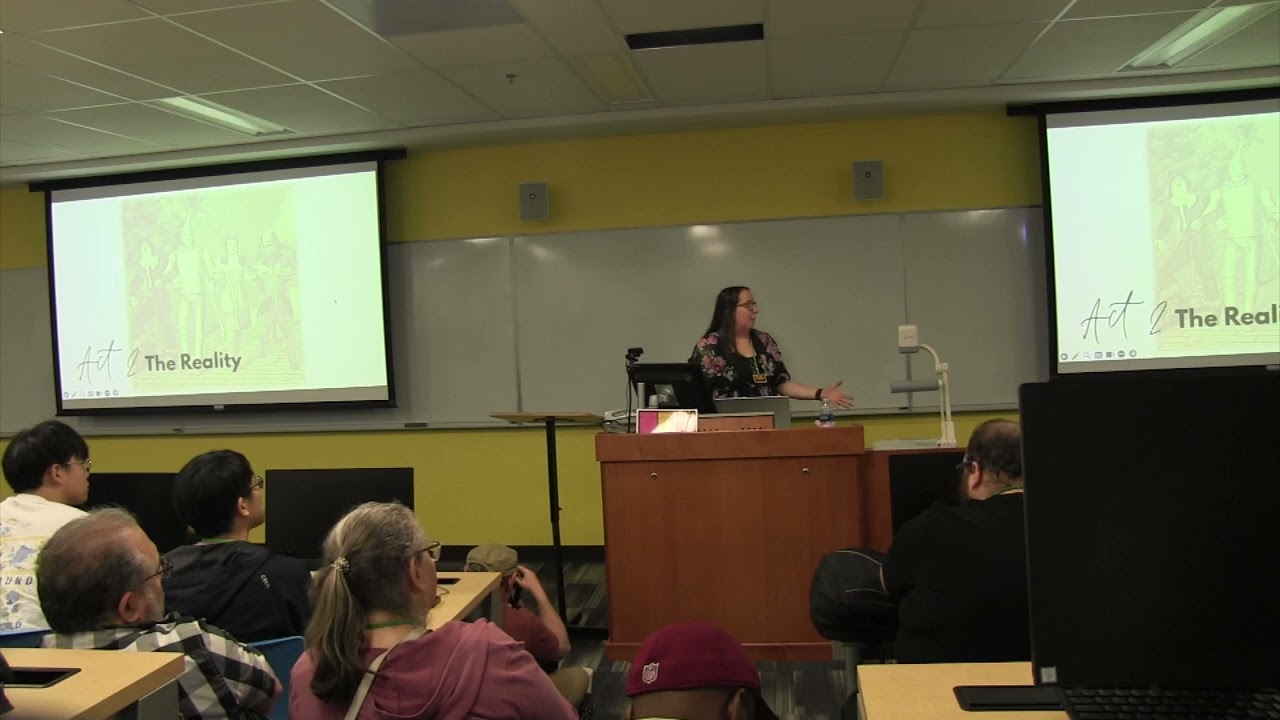
Well, everyone, we're going to get started with our next presentation. Thank you so much. Packed House, bring your own chair is our new uh head for the conference. So, uh I I want to introduce uh Bonnie Martin. So, uh Bonnie's got a ton in her presentation that's going to give some background. So, I won't uh really go in depth here, but as a former Secure Works employee, uh she has a ton of information is going to share today a little bit about how AI uh can uh make learning cyber security a little bit easier. So, with that, I'm going to turn it to Bonnie. Big round of applause for her. Uh thank you for coming. I'm Bonnie
Martin and I will endeavor to take Rowan's advice of not speaking too fast to heart because I do do that. So, but lunch is next. So, if I end early, it's all good. Um, okay. So, uh, welcome. A little bit about me. I have worked in cyber security for 14 years, but my path to get there was a little bit windy. I have a undergrad and a graduate degree in liberal arts. Actually, I was an archaeologist. That was me and the Grace Butcher at one of the digs I was at for a long time. I did that for many years and I my master's degree is actually in something called public history which is like a fancy word for museum studies. So
I worked in museums as a curator, educator, uh all the things. Um but uh and I also own a digital marketing company and design company. So I help small businesses do websites and digital marketing and all of that for uh that's kind of a passion I have of mine. Um so how did I get here? As I mentioned, I was an archaeologist, museum studies, and then uh 2008 recession hit and my museum job disappeared. A lot of museum jobs disappeared. A lot of jobs disappeared. Uh if you're older, I'm sure you remember that time. And so I kind of bounced around looking for what to do. Museum job, this job, that job, assist executive assistant. I I I you
know, I struggled as many people did during that time. Um and my path kind of it isn't a straight line at all. It kind of winds around. Um but in 2011 12 something like that uh my husband who also works in cyber security uh he's talked in a couple of the quick Q&As's earlier uh he I I I met his boss at a company different and it turns out he was looking for a technical writer and that is something that I have a ton of experience writing and researching and that's something I really love to do. Uh so I decided to apply and the only reason I decided to do this because cyber security was totally new for me uh
is I had a little bit of knowledge uh we always joke that I learned it over the dinner table uh because as many people know the best way to solidify your own knowledge is to teach it to someone else. So uh Ed would talk to me over dinner even he'd even get out on a little whiteboard and as he was kind of learning things and you can't help but absorb some of that. But once I decided to apply, I did a ton of self-study. I had to like what is an OSI model? I don't know. What is PCAP? I don't know. Uh so it it became a lot of self-study. Uh but eventually I did get that
position. I did a lot of tech writing in an operations center. Uh I moved I discovered that I really loved this this uh industry. It was super interesting. It really dug into my research puzzle solving kind of uh passion. And so I became a soft security analyst. I moved into vulnerability anal analysis. Um and then I uh most recently was a detection researcher doing web app u detections uh and at secure works uh in their uh CTU their counterpart unit research. So that's kind of where I where I ended up. But you know why why am I giving this talk today? Um Bod touched on it a little bit. Uh you know AI is kind of
it's it's changing the face of how we work. Uh it's changing entry- level jobs. you know, they're still there, but they look so different than the entry- level job that the Bonnie of 14 years ago had. Um, so how can we how can we break into this? You know, new a lot of new college grads here, people looking to switch. H how can you how can you bridge the gap of those true really entry- level jobs of just that can be automated today? Uh, and so that is of course leveraging AI, the exact thing that is kind of automating entry-level jobs. you can use that to your benefit as well. So, we're going to talk a little bit about the
fears I had uh coming into this industry and kind of how I overcame them because while we now have AI, a lot of these techniques are still super important and still still relevant. Uh and then how AI could have helped me uh a little bit. So, uh some of the fears I had were uh they were internal fears. You know, I had terrible imposttor syndrome. you know, people were going to figure out that I don't belong here and I'm just here to like write documentation, but you know, I I want to do more. Uh, and I also dreaded not knowing the answer to things. You know, what if someone asks me a question that I don't know? Uh, so
we'll we'll talk about a few of those as well, but some of them were very real. I didn't code. I didn't code at all, like nothing. Um, except like if you count HTML like websites in the '9s for your favorite bands in high school, like I could do that. That is that is what extended my experience there. Um, but in this industry, you know, not being able to code or script something, it really feels like you're entering this like, you know, NASCAR race or Formula 1 and you're on a bicycle. Like I felt so I felt so far behind immediately because the people, my co-workers, they could just, you know, script something super quickly to make it faster. and I was
sitting there working through my pivot tables and trying to manually do things. So, I I felt at a real disadvantage. Um, and I wanted to learn, but I was also afraid of breaking things, you know. So, uh, yeah, CTFs, they felt out of reach for me. Uh, they were super stressful. Uh, just the idea of them. And I will show you I love them now, but we'll talk a little bit about that. The the first time I ever heard about a CTF was, um, some of my co-workers were going to participate in a red blue like tabletop exercise. RIT and they were talking about it and I was just this was over my head. It sounded terribly stressful. But
as we will talk about, you know, uh CTF, if you don't know, it's a capture the flag game and it's they're really made to help you learn. They can be all different formats, Jeopardy style, um kind of red blue exercise kind of hacker style. Uh but they're made to help you learn. But at the time it felt like a locked door and I didn't really feel comfortable, you know, taking that first step to try them out because imposter syndrome. This is something that many of us struggle from. I do. I still do. Um and when I didn't know things, like even when I did know things, I had this thought of maybe I don't, maybe I
shouldn't know them. At one point I was on I got asked to work with a more advanced research team. I was super excited about it. I was on one of their teams calls and uh someone was talking about an automated pent testing tool they were doing or something like that and they were they were walking through this attack and it was a crossite scripting attack and you know at the end he was like hey does anybody know what attack that was and I I'm sitting there thinking well I do web app vulnerability stuff that's a crossite scripting attack well no one else on the call said anything and I thought well I must be wrong it must not
be that because if all these brilliant people that I'm working with aren't speaking speaking up, then I must be wrong. And I wasn't wrong. I was right. But it it and I think about that often because not because they didn't know, but because all these brilliant people, they but they weren't web app researchers, they did other things. And the industry is so broad and there's so many different niches you can have and be successful in. And it just it's it's a reminder that not every no one can know everything. So I I try to keep that in mind as well. Perfection paralysis is also a thing that I really struggled with a lot. You know, I had this fear
that I shouldn't touch anything or do anything unless I understood it end to end. And in many cases, you just can't know that. You can't know everything end to end. Uh so when I worked in the sock, I'd be prepping for these client calls that I had to do to talk about their security posture and the alerts they had and all these different things. And I would I would prep over prep for them because I thought what if they asked me this and what if they asked me this and I wanted to make sure that I sounded like I knew what I was talking about and I was an expert and most of the time
they didn't ask any of those things and it was just a vicious cycle you know tied to this imposttor syndrome. Uh so but I tried to keep up this disguise that I felt I needed to have to be have a place here. And so in a way like I had a lot of missed opportunities. So if you take away one thing from this talk and I'll probably say that multiple times but if you take away one thing from this talk you don't need to be an expert before you start something and that is that that's AI no AI like that's super important and to take that first step to publish that blog that you're worried
about publishing because you don't want to say something wrong like Bod has said it I think every talk has said it you know you're going to make mistakes and it's okay and it's part of the learning process and everyone makes mistakes And so like as these entry- level positions are changing and feel like they're disappearing, uh it can put even it can put a lot of pressure on new college grads and people looking to get into the industry. So, but don't let that stop you. So, the reality of how I overcame some of these and I'm working towards overcoming them, uh it wasn't easy. It's not overnight. It's 14 years in and I still I still have those days of like,
oh, should I be should I be giving this talk? Like, will people find this useful? Do I really know enough at this point to do that? And yes, yes, you should do give the talk. Give the talk, write the blog, do all the things. Um, and the biggest thing is mentorship and community, which everyone has also talked about, but I I think that just illustrates how important it is. And that was I would say the biggest game changer for me. I have been blessed over the years with some amazing mentors and co-workers. Even the gruffest person I ever met in the sock who you just didn't want to talk to, they never said no if I
asked them a question about how to do something or point me in the right direction. Like never said no. So in a way I kind of regret well I don't have regrets but I wish I'd taken the step sooner um because I did have help and encouragement. I'm also an introvert as many of us are. And I was nervous to even ask someone to talk to like to talk to me and to kind of get that relationship going. And so I had, you know, I had help. I had encouragement from other people to be like, "Hey, you should talk to this person, talk to Bonnie or talk to Dan." And uh so so and once I did once I got that first
relationship going and they were working through me and working with me and helping me you know do a tack the box challenge with and challenging me to try something different or new. It got easier to talk to the next person and reach out to the next person. Notes uh notes are extremely important that saved me. I had notep you don't even I wish I had a screenshot of my notes from my sock days and notepad++ like a million tabs this it was it was a disaster but I used them every day I c you know commands that I needed or topics I needed or little blurbs about a virus or malware that you know I had to
communicate easily and quickly like it was bad and then it moved to one note and now it's in Obsidian this is actually a map of one of my Obsidian uh vaults I think I I think it's my OC studying. Huh? It's real. It's real. That is that is the mind map of my OCP studying. Um, and I I I use it a lot. There's a million note takingaking outs out there. You find the one that works for you and that you love. Uh, and it it has saved me four times I can count. Uh, and more obsidian repetition. Uh, just doing it over and over again. you know, doing that difficult upgrade on a device
that I was worried about that it came back, it didn't die, I didn't have to call the guy at the data center to reboot it, you know, and those are stressful, but you do them over and over again and it becomes easier. And offering to take on those hard things that you don't know, like your manager says you have a a project and it sounds cool, but you don't know anything about it. offer to work on it. Offer to help on it and it will only broaden broaden your knowledge and your horizons. CTF myth busting. So, as said, CTFs, there's one going on here which I would love to love to work on maybe a little
bit later. Uh, you know, I I felt like I was going to be thrust into this black hole with no help and, you know, hacks or guys, the myth and AI decided that that's what the reality of me doing a CTF would look like. And it's not wrong because I do have a golden retriever and he would sit with me on the couch. But I attribute this to one person specifically um that I worked with at Secure Works. Her her name is Marcel Lee actually. She's super awesome. um she I think spoke at Besides Rochester last year, but she's a huge CTF enthusiast and she's so open and uh encouraging and we during co we did this like remote
kind of culture thing where we had did an all company CTF and uh she really encouraged all of us to take part in it and I just I fell in love with them and I love them and they're they're they're for the curious and if you have curiosity and uh you know and you just want to try and everyone just just every CF person I've ever met has been super excited to help and they they're super fun. So, and you you learn that's what they're made for. So, uh that uh Marceli really really uh credit with that. And then traditional learning paths, you know, how did I overcome this uh the big elephant in the room? You know, I
couldn't code. Well, there wasn't AI at the time. I didn't go to school. I didn't have a traditional degree for coding. I wasn't a programmer. Uh, and so I did learn Python the hard way as someone pointed me to. And uh, and that was hard, but it really gave I don't even know if I finished it, but it gave me the basics that I needed to kind of take the next step and learn and know and really understand what what my co-workers were talking about. And uh and then a lot of these uh other learning paths, you know, SAM certificates, offsec, the the OCP is probably my absolute favorite training that I've ever done. Uh it's it's
awesome if you like pentesting type stuff. Um so if you can get your companies to pay for that, I'd highly recommend it. But some of these they didn't even exist when I started. there was no Corsera, there was no Try Hackme, but so so these traditional kind of platforms of uh of gamified learning and even you know certifications they're still super valuable um and they helps me a lot during my self-arning. So I would say that structured learning still really matters. And so I wish I had a magic answer like all of those for how did I overcome my imposttor syndrome and and things like that but you just build on small successes and my mentors would encourage
me and my co-workers would and it it's an odd thing to say one one of my mentors when I was first starting out I I asked him I said hey you know what I'm going to do this hack the box you know what what is what's a good like beginner tool set for like hacker tools you know cuz I didn't know where to start and he said Google. I went and I I initially was a little disappointed that that's what he said because I had this idea, this expectation that he was going to say, "Oh, well, Avoid and Nap and and TCP dump and you know, all these all these tools that I could just kind of put this
little bag and use to be successful." Um, but he was totally right. Google is the most used tool that I know that anyone has used uh you know up until maybe AI but uh but and Google also it it kind of it's open it you're not stuck you don't have to restrict yourself to this tools that you used you know a couple years ago because everyone's always putting out new tools and new ideas and new information so Google is is the most used pester tool I think um so the antidote to my imposter syndrome wasn't becoming perfect, but it was realizing that I wasn't alone in my doubts and that, you know, just trying things is is important. So, all those
things that still matter. Uh, but AI can make easier. It's not magic and uh the other methods of course are still really important and work well. Um, but they can kind AI can help smooth the path and make it a little easier for you to take those first steps. So, So, I'm going to do a quick demo on just three ways that I use AI uh to learn faster and they're pretty they're pretty uh beginner friendly. Uh if you are not in cyber security at all, we'll walk through them. You can but this is something you can iterate on and become more advanced with uh and just really take it wherever you want to go. Uh and
of course, chatbt I'm going to use chatbt for all of these. You don't have to. There's so many out there of course that are specific to coding and picture generation and all all the things you know you have Gemini and Llama and the ones you know people other people have mentioned u but they all have different strengths but there's probably someone is coming out with a new model today you know so there's always going to be a new new one to try um and it's important to understand in these that we don't want to have AI just blindly give us the answer to things uh the real important thing about AI is kind of giving us that
leg up and not letting them do just the work uh for us, but to really help it jumpst start our understanding and our deeper knowledge of different concepts or things that we need help with. And as a disclaimer, I want to put just be careful what sensitive information you use. If you're at a company or a school, you know, a lot of them have internal facing models uh to use for sensitive information. Don't put client information in chat GBT. Um, so while we're going to do some security kind of analysis with it, just be careful of where you are putting your information. Uh, or you can also set up your own model locally, which is getting easier
and easier and super fun learning experience. All right, so uh, first one you're going to do is going to talk a little bit about the biggest gap I had. I couldn't code, I couldn't script. Um, so let's hopefully this will work. All right, we're going to take a um a log a log file and we're going to have chat GPT write us a script to do some uh some information pulling for it. So, see get this out here. Okay, so let's say here's our log file and we have it's just it's 500 lines of just random logs and in real life this could be just you know a th000 lines 2,000 lines 10,000 lines who wants to
read that no one wants to read that. So we're going to what we want them to do is we want them to write write Python write Python script that takes a text file log entries counts the number of error warnings and debug messages and prints a summary and also return the last three messages. So we'll see hopefully see what it comes up with. So we have all right see I actually don't like this one. Oh here it is. There we go. All right. So means the requirements. It makes a couple of assumptions. Um so that might be something if we have to go back but it gives us you know the the summary of what it did and then here's our script.
And then it also gives us how to use it which is interesting because I've been on many open source pages where they don't tell you how to use a script. you're just stuck trying to figure out how to use it. So, let's see how this works. So, we're just going to copy this up. And all right, and we have to change our name of our log file. So, it's TLDDR log text. We're going to see. We're just going to run it here. Oh, it doesn't like where I am. See, this is why you spelled TDLR. Aha. Thank you. Let's try it again. There we go. Okay. Excellent. Thank you for saving me from looking at the wrong thing. So, we have
our log summary and printed out every single type of error warning that we asked for and it gave us the last three logs and there is a critical failure in the stack dispenser module. So, um we can take that and so so I mean we didn't do it. It wrote us that code super fast. Um, and uh, we can also take that and kind of do other things with it. Let's see if it'll update it. So, do that. So, let's see if it'll update the script and pull out some logs for a certain time. And when, and now I'm kind of just blindly uh, pasting this in and running it, but if this was real life, uh, I
would do a couple things with it. I might ask it to review its own code. So really good at reviewing its own code uh and finding errors and you know proper coding practices and things like that. So it will actually uh make updates to itself based on that. And um I also will do I'm a new coder and you walk me through this line that And so it does a really good explanation if you're new to coding or scripting. It'll give you a line by line breakdown of exactly what it's doing and why. Oh wow. And it is really this is super helpful. Um I've I've done this with things I haven't written sometimes, you
know, if I find it on GitHub and I'm trying to figure out like why why do I need this? What's what's missing? Why do I want this? Um so it'll it'll walk through color green line by line which is super awesome. Um, so let's see. All right, let's go to our next next thing here. What do we got? Turn my thing. Okay. All right. So, it did a bunch of things. Helps us extract a lot of data very quickly. You know, someone with a lot of Python experience could probably write that maybe just as fast, maybe faster, shorter. Um, but it can really give us a good start on completing our work faster. But also uh
this I think the most important thing is the summary of you know explaining it to you so you can you can uh kind of deepen your understanding of of Python the easy way. Um so if you are working in an operation center or pentester you are going to run into a lot of pcaps and network traffic and that needs to be analyzed and wireshark is awesome. You should definitely learn how to use Wireshark. I've taken a whole class on wire sharkark. I still don't know like all the things you can do with it. Um, but sometimes you don't have time or what I run into a lot have run into a lot is a detection researcher is you are
reading a grainy screenshot that a researcher put up on their blog of network traffic that they did uh or a screenshot of wire sharkark and you have to take that and kind of make it usable in your tool or make and it's a big long pcap and no one has no one has time to make that you know pro programmatically useful. But uh so but AI is really good at taking screenshots and uh and interpreting them and also converting like transforming them into text that you can uh type out which is pretty cool. So next one we're going to do my tab here. So we're going to take this find my screenshot here. There it is.
So, we just have like a screenshot of it's probably hard to see there of just random web traffic and it's a bunch of lines. I think it's like 250 lines I made or something like that. Uh, and it's just this is pretty simplistic. You don't have any like bodies or anything. Not a lot of, you know, it's not a huge amount, but it's still kind of annoying if you have a huge amount of huge peak to look for. So, we're going to add just that. Find the There it is. So, we're just going to attach a picture there and see what they find out. And these prompts also are very short. Uh they're very straightforward, but you
can make your prompt super uh specific. So, I just said on this one, you're an experienced cyber security analyst. Analyze the file. Octane network traffic. Identify if there's any suspicious requests. that first sentence, you're kind of targeting where you want the model to go and you can make them long and specific and really, you know, really nail in on what you're looking for. Um, but for these general uh demos, I think we're we're good with just this. But let's see what it let's see what it comes up with.
This is the one that took most.
Okay. Oh no. Okay. So, and you get this sometimes where they want to enhance their image. Didn't like the image that I gave it. So, it's going to pre-process it. Well, let's see. In my test, I didn't guess this response. So, we're going to see.
So, it wants me to do it manually, but it did notice that there's a suspicious command execution or command injection, which is what exactly what I was looking for for this. Um, so it also, you know, little Sherlock theme there. Okay. Talks you through why it's suspicious and then so this is interesting because even though it said it couldn't it couldn't actually uh do a good job of analyzing it, it gave everything I was expecting it to give. So it gave us the command execution. It gave us the um the brute force kind of patterns of suspicious web activity uh all different, you know, so it gives us some some possible suspicious uh information, gives us a nice summary. And then some
of the ones I put in, it would give us give me like um recommendations. So this is a great example of it gave us information. It gave us correct information, but is it complete? You know, sometimes asking it again or giving it a better uh a better quality image might improve our response. And uh you know, just they love the disclaimer. They can make mistakes, which is true. Um, but one thing I do love to do, which I do with coding, is I'll I'll ask it to look for its own mistakes, and a lot of times it'll actually come up with stuff. And so, we were able to find our uh command injection. And so, we've solved our case with a
suspicious post request. Uh, and then it also did a few things that I didn't initially expect it to do. I really wanted it to find the command injection. Um, but it also found those anomalies and gave us summary of those and give us some additional uh additional paths to kind of track down stuff. So, which is pretty cool. Um, this is kind of command you might see. It's a really long end map command. Um, and it might be something you see on Stack Overflow or in a Discord or something when you're working on a project. And but it just kind of looks like a wall of flags. I use NMAP a lot. I've used it a lot and I still am like what
is that again? What are all those things? Um, so we can have AI help us break down this command. And so let's see how it does
it. All right, let's see what comes up this. So we're going to tell it's an experienced cyber security analyst again and explain this end map command flag by flag. aggressive comprehensive scan just is. And so it gave us the scan and it's giving us every single flag, what it is and what the purpose of the flag is, which is very helpful if you like me don't like to sift through man pages all the time or Google things for forever. Um because some flags, even when I read the man page, I'm like like can I see that in action? I don't really get it. Um, so it's going to give us everything. It's going to give all
the nse scripts. It's going to give us the arguments. Um, and the one thing I wanted to call out was this unsave equals 1. So the first time I ran this command through uh chat GPT, it didn't actually mention unsave equals 1. It like skipped over it in my in the summary. And so if you're doing it, you know, remember to go through and make sure it's actually telling you all the things you want to know. um because that is super important on the Zenmap scan uh NMAC command because it can start using kind of uh disruptive scans which you do not want to use uh and so you know without without proper knowledge of your network and
environment you're running it in. So um it saved us from some potential copy paste disaster because that would have been uh super bad. But now you know the next time you see nm mapap command with that unsave equals one you know immediately uh what that means. So I think it's a a perfect example of you know why blindly copying and pasting is not the best choice. Um so writing explaining scripts and decoding packet captures and so that really helps you know that I had to do all that manually uh or find things or Google things and this would have made things a lot less frustrating a lot less a lot faster for me as I was learning and so of course uh
knowing things is just half the battle. You know a lot of us are here because we want to get those new tech skills. There's a lot of really cool talks coming up about Mac OS and application security and and those are super great ways to learn and to learn get your tech skills. Um but as the earlier talks also talked about uh the other half is communicating yourself clearly and confidently uh to interviewers and to companies and to clients and everything like that. So I also use it for not just the tech stuff. So it's great on reviewing resumeums uh giving you study paths. you know, you want to learn something about Mac OS and you went to
the next talk that's in this room and it was really interesting. If you want to know more, but you're not really sure where to start. It can it'll it'll come up with a great study path for you and kind of direct you to resources um and kind of give you that syllabus in a way for what to what to learn next. Uh and like many people, I have terrible interview anxiety. Like we say the word interview and I'm like breaking out in a cold sweat. Um, so I have most recently used it for interview prep. So I was applying to a program recently and I had to do a little interview. It was casual, but to me just the interview was just no
good. Uh, so what I used is I used the cho voice feature on chatbt and I described a little bit about what the program was I was applying to, what I thought they might talk about some topics and I had to do a mock interview with me and I said, you know, do a mock interview with me and rate my answers. And it it wasn't perfect, but it gave me really helpful actionable like steps I could take and things I could include. Uh, and I did this on in the car on the way to the interview, you know. So working with, you know, another person, a colleague, a friend to help you do in person, you know, mock interviews is
awesome. But if you're by yourself in a car, you live alone or, you know, people aren't available, it's it was really really helpful to me. Um, and so it was also it was like no, it was a no judgment zone. You know, that it was low stakes. It was very, you know, it was it was AI, but they they did a really great they came up with some great questions uh and gave me some great feedback on the answers I I gave. So that was uh super helpful. And so I think that's the main point I want to get across is that it AI doesn't replace the work that I did and all those avenues are still
super open and super available. Um but it would have made it more accessible, less stressful. you know, you have this non-judgmental AI to talk to and talk through things uh and to to help you, you know, teach those little nuances um that you you don't know. Uh so it definitely can't replace real world mentors or real world practice. Um but it can get you there faster and more confidently uh and hopefully with fewer late nights Googling things. Um and so uh like and and I wanted to call on something Bod talked about in the first talk. He gave these great ideas for AI projects and hiring insights. You know, he had a couple great slides there. You
can use AI to help you get started. You know, hey, I want to set up a cloud environment in Azure to play around some stuff and I and Microsoft documentation, no offense to Microsoft, is it it is intense. It's a lot and it's sometimes really hard to navigate. Um, and AI can simplify that for you and they can kind of give you, you know, I want to set up this, show me how to start and it can really kind of jump start you that way to get some of those projects up on GitHub or on your blog or YouTube or whatever. So, um, so it can really help with that. So, you don't need a computer science degree
and even if you have one, AI obviously can be super helpful. Um you don't need to be hacker prodigy uh to be here and to have a successful career. Um you know everyone doubts themselves but uh but taking the first step is the most important thing. And so like I said I don't regret the path that I took. I've met I I love the work that I do. I love the work that I found that I enjoy. Um but I think I could have moved a little bit faster. And most importantly I think I could have moved forward more confidently sooner. uh and and and to have the right mindset from the start of my career instead of kind of wondering
if I really belonged. So yeah, I would have I would have embraced it, I think, a little bit. So um yeah, and human connections are so important. I can't stress that enough. that really, you know, once you find those mentors that I I can visualize in my brain the trajectory that my career took and when I really found some good mentors, it just like I just felt like I skyrocketed into what I really where I wanted to be um a lot faster. So, while I'm a huge advocate of AI, you know, helping your learning and supporting you, I don't think it can really replace the uh the value of people who believe in you. And
so, finding those people uh is really important. So, if anything I said uh resonated with you, um I'd encourage you to try one thing this week. Uh if you haven't played around with a model, try it out. Try to use it for, you know, use try CTF. Uh you know, just even if you do one challenge or you pop into the CTF room today and talk to some people to get started, uh that's awesome. Have TBT walk you through a script that you don't understand or have it, you know, use the voice feature to talk out a concept you're trying to grasp. uh and to find find a mentor, a buddy or someone that you meet here today uh to to kind of
work with AI stuff. You know, you you can work on it together and kind of work through uh the best ways to use it for you. So, and I I created a lot of images uh using AI for this talk. Um and I did use it actually to help me with like timing uh and you know how to structure it maybe gave me some advice when I was uh struggling. But um but I also had my husband who had some ideas that were way better than chat GPT. So sorry Chat GPT. Um so those real people are are still really important. So uh remember that it can definitely accelerate your learning but it shouldn't replace your real
understanding and people have talked about this earlier as well. You know ask why. Ask those five W's to get that deeper knowledge so that when you're asked what the difference between UDP and TCP are in your interview, you can not only answer that, but you can go deeper uh and and really explain it, communicate your expertise that you have. Um so ask ask chat GPT ask chat GBT how you should explain it. Yeah. And then then take that in and really really internalize it. Uh and and I think you know only good things can happen for you. So, uh, thank you so much and I've my email, I'm on LinkedIn. Uh, and I guess if you have any questions, um,
yes, thank you very much. [Applause] I'd like to say that you did a really effective job at crafting your prompting and your examples. And if there's anybody here that's new at using AI tools and doing those kinds of things, there's acronyms that you can learn to be better at your accounting. Yes. Like care or co-star or ACES or bunch of others to focus your prompts and get the results in. Yeah, absolutely. Yeah, you can make I mean some of the prompts I've done um at work like full disclosure I actually was laid off from my job at Secure Works a couple months ago and uh they were acquired by Sofos and things you know uh kind of moved around but one
of the last jobs I did at Secure Works was creating AI agents and models to automate the job that I was doing. And I knew that was you know like I knew it was happening. I didn't necessarily want it to happen because I love doing my work. But I I realized that if I take on that job of doing AI and automating this, it's only going to propel what I can do next because I have that experience with AI. And to to pivot off what you said, some of the prompts we would write for what we were doing were long. They're long prompts, you know, to do very specific datadriven kind of things. So, the examples we had
here were super simple, but you can really get into it a lot and get really specific answers to what you're looking for. Oh, yeah. Yeah. So, like um I get that uh AI is a really good thing to start learning, but like something I believe most people have already faced as well is like a lot of time AI hallucinates. So, like I even read an article about this. So like uh you know like especially in the learning phase you you pretty much don't have any idea on what you're doing. So is it not like easy to like do something wrong as well like sometimes let's say we're studying code and we're working on something serious
but uh there is a potential that AI gives me some package that doesn't exist or even worse maybe a package that potential problem could be long term. So like how do you like really pull that ride it? So when you're in learning phase, I think that goes back to um the people that you're working with too to have this monitor, but also um it's getting better, but asking asking it to review its code. You know, if you're a and when you're testing something like don't do the testing in production, you know, set up a VM so that if you want to test out something, you're not you know, you kind of have this controlled environment to
play with and then if it doesn't work or you know, you can go back and be like, I've done this. I've written things and it does says it'll do something and it won't and I go back and I say hey you were wrong like what what's what's going on here and it'll be like oh yeah let me review all this code over again here's something that will work and so you just kind of iterate on it so I think being safe about where you're testing is important um but also knowing that you know hey do a code review chat gbt on this you know you can even do it right away like do a code review for best
coding practices make sure you can put that in your pump make sure you're not using any packages that are don't exist or make only use packages that do exist in this library or whatever you want to. Uh so that can that expanding your prompt to be more specific can help you avoid that for sure. Did do you have a question? Yeah. Um you you showed a demonstration of like some you were talking about wire sharkark. Um, there's actually a package out there for sanitizing your wire shark data before you do a presentation or dumping it into chatb that strips out all of the some of the problematical stuff that you would to to do that. So, you you want to
look at if you're sharing stuff with AI, make sure that you're sanitizing what you're doing it with. Yeah, that's good to know. I didn't know about the wire shark. um all these logs I just had chatting to team me so which is totally big but uh yeah for sure definitely yeah that's that's excellent knowledge because yeah you do want to be careful about what you're what you're putting in and you can set up LM Studio to run your own model and then set the configuration so that doesn't have access out and so it's self-contained that helps as well so that you're not putting yourself behind sure anyone know I'll be here so the rest of
the day So, uh, I guess enjoy lunch. You guys are probably all wondering where launch is, but first we'll give a round of applause. [Applause]
Related talks
 50:07
50:07 53:45
53:45 50:55
50:55 52:57
52:57 37:04
37:04 46:19
46:19