When the Night has Come
Show transcript [en]
When the night has come and the land is dark and the moon is the only light we'll see. Most of us in this room know what it means for the night to come. Not just the literal kind. The kind that sneaks in after a 16-hour shift or when you're the only one who sees the risk. no one else does. When your brain won't shut off at night because it's still threat modeling every scenario. We are hackers. We are defenders. We are deep thinkers in a world that often skims the surface. But here at this conference, we see each other. We recognize the signal in the noise. And that's why I want to talk today not
about zero days and malware. Sorry, but about something much more vital. Our humanity. The connections we build, the identities we embrace, and the people who stand by us. There we go. When I was first invited to a hacker conference many many many years ago, I wasn't sure what quite to expect. To be honest, I am not a hacker. I'd been on the sales side much more than uh the hacker side, so to speak. So, going to a hacker's conference, I wasn't sure what to expect. I had my own concerns over one, would I fit in? Would anybody talk to me? would it be a good experience etc. And what I didn't expect to find was a
lot of connection acceptance and finding a bit of my own tribe. It wasn't about packets and payloads. It was about the people and the connection. And in a world that often labels us as too much or too intense, finding a space where your mind is not just accepted but valued is revolutionary. So let's get real today. Let's talk about something that doesn't often get a lot of attention, but let's talk about being neurospicy. A lot of us in this room are neuro neurode divergent. ADHD autism dyslexia OCD sensory sensitivities. The industry doesn't talk about this nearly enough, but we know we experience the world differently. And that difference, that's not a flaw. It's a superpower.
I know there are people in this audience because I know some of them well who have spent 8 hours building a threat simulation engine, didn't eat, didn't move, didn't notice the sunset until about 10 p.m. You stood up lightheaded and thought, "Oh, right. biology, hyperfocus, pattern recognition, and deep curiosity. Those aren't just quirks. Those are gifts, and they're often misunderstood. And let's not sugar coat it. Sometimes it's hard. Sometimes you walk into a meeting and your brain is racing three layers deep and deeper than the rest of the room. you get labeled intense or difficult or not a team player. But the truth is your brain is playing 4D chess in a world of checkers.
And while the world doesn't always know how to handle that, it's exactly what makes you invaluable. We live in an industry that breeds complexity. It needs people who question assumptions, who see risks others don't. And that's the gift of the neurode divergent mind. The pattern matchers, the rapid context switchers, the wait. Did anybody else notice that anomaly? Folks, I've coached teams where half the members didn't realize they were neurodeivergent until somebody said, "Hey, maybe we're not broken. Maybe we're brilliant. It's a paradigm shift. And let's be clear, neurode divergence is not a diagnosis of deficiency. It's a declaration of diversity. We have sensory sensitivities, yes, but we also sense threats before they emerge. We may struggle with small talk,
but we're fluent in root cause analysis. And we may lose our keys, but we'll never lose sight of your weak access control pro protocol. This is why spaces like this matter. Because here we don't just tolerate neurodeiversity, we rely on it. We're the people who keep asking why does it work like this? Until someone finally says, oh [ __ ] it shouldn't be working like that. And even though that difference can be isolating in some places, in this room it's unifying. Your brain is not too much. You are not too much. You are enough. There we go. Right. Right. Um there's a myth in cyber security. The lone genius. The solitary hacker saving the world
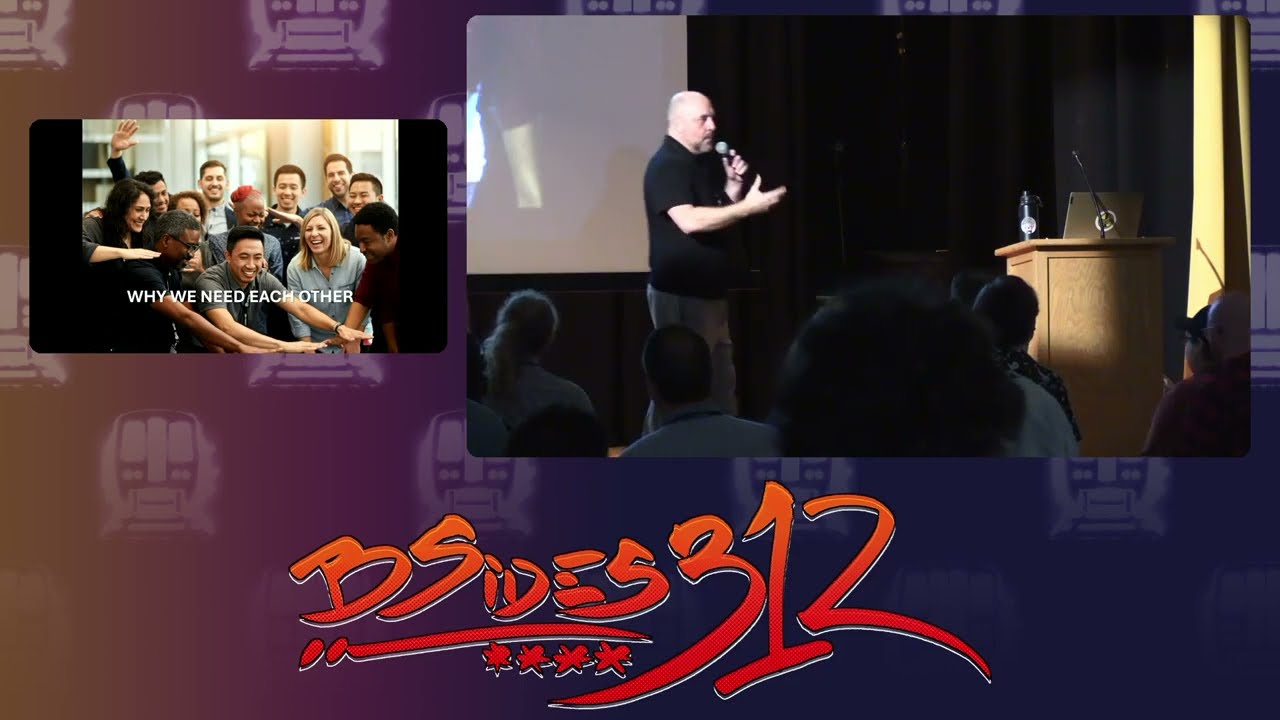
from a dark basement. It's dramatic and it's wrong. This field is too hard to go alone. This idea that we should be able to take on all of these hard things individually without asking for support because that's seen as a weakness is [ __ ] To be frank, nothing amazing gets done alone. It gets done with other people around you. So the fact is we need each other. So, I want to share two stories about some friends of mine. And I'd like you to think about who do you relate to and who do you think is in a better situation. So, my first friend, friend number one, is an incident response professional. That may already elicit some thoughts
and feelings and some judgments on that, but the idea is he started his own business, IR Consulting, some years ago. He has some very large, complex, and challenging customers. He works at all hours of the day and night. It's really hard for him to set some boundaries on his personal time, his private time because of that. And there's a variety of reasons why. And he's also on marriage number three. He's told me some things that he's seen during his client work. And this is some very, it's confidential work, so he couldn't give me the full access of exactly what he saw. But when he started explaining and trying to iterate and express some of the really horrific
stuff that he's seen, I could see his body tense up. His voice started to crack. His skin ran flush. And so seeing this, I offered to give him some time and some space just to to vent and be heard. It's based on what I do. if you haven't picked up already, I help people manage stress and burnout. And so giving that space, just a vent is a big deal. So his response when I said, "If you need some space, I'm happy to give that to you just to be a friendly listening ear." His response was, "You know what? I'm sure I should do that. It might help maybe, but I really don't have the time.
Let me reach out to you next month and we'll definitely schedule some time." That was six months ago. Still no time scheduled. Friend number two suffers from imposttor syndrome. She feels like she continuously needs to prove herself to everybody, like she's not good enough. She has a variety of accomplishments, certifications titles etc. And so anytime she gets introduced to somebody new, she comes off very timid, voice shakes, and then she goes through her background like a resume to an employer. Years ago, she would have avoided coming to events like this out of fear of being judged by people she doesn't know and being judged is not good enough. And one of my favorite country musicians
has a line that people don't change or the only reason people change is because they either they either see the light or they feel the heat. So she definitely was feeling the heat and decided that she had enough of living a life that didn't feel empowering, full of joy, that type of thing. So she started putting her hacker skills to work. So, she started investigating online trying to understand what's creating her imposttor syndrome, what's getting in the way of her feeling her self-worth and confident. And so, it the answers kept coming back to she needs to do the work on her own, the internal work, which is not very comfortable. So, she re reached out to a
professional, a therapist, has been working with a therapist for the past couple of years, and it's gotten to the point now where she's able to go to events like this to start to reach out and get outside of her comfort zone because she now believes that it's possible that she is good enough and that possibility gives her hope and a reason to try. So, I'm curious by a show of hands, who can relate to friend number one. Some reluctant hands going up. Show of hands. Who can relate to friend number two? A lot more. I dig it. So, the reason I go through that is because I think most of us can relate to both friends,
right? this idea that we have a bunch of reasons why we work so hard and put in so much effort and energy to the jobs that we do because there is meaning to that. The challenge though is moving into that mindset with friend number two because what happened was friend number two felt more empowered to step out of her comfort zone because she had somebody there that was supporting her. that connection and that belief in somebody that you can do these things even though they feel uncomfortable and hard.
So with that being said, I am also big into if you have not seen me talk or been a part of one of my workshops, I'm big into immersion and experiencing this stuff and not just being talked at. So what I'd like you to do is I'd like to invite you all to try something. There's a common belief in this industry largely because it's true that hackers and cyber security professionals are introverts. Raise your hand if you think you're an introvert. There's a lot more extroverts here than I thought. So, I define introverts as those that gain energy and build up their energy by being alone and having some solitary time. When you go out into a social
environment like this, you're spending your energy. So, I am very much an introvert. I may pass out after this talk because I'm spending my energy quite a bit. Right? Extroverts then get their energy by being in social events like this or spaces and they lose their energy being by themselves. So, what I'd like to do is kind of highlight this concept of getting outside of our comfort zones. And I'd like to show you what it feels like in this moment to truly connect with others here. So, what I'd like you to do is all please stand up. Already uncomfortable. The hell is this guy making me do? So, what I'd like you to do is I want you to
find somebody to partner up with. Whether you know them or not, doesn't really matter. Somebody next to you, especially right away. But the idea is you're going to need a partner. What I'd like you to do now because this is going to the whole point of this talk is community, right? And the space that we have here. So, what I'd like you to do is I'd like you to turn to your partner. Look your partner in the eye. One person is going to choose to be the speaker. One person is going to be the listener. All you got to do as the speaker is look that listener in the eye and say, "I've got your six.
I've got your six." If you don't know what that means from a clock standpoint, the 12's in front of you, the six is behind you. So, it means I've got your back. I do a lot of work with military if you can't tell. Right? So this idea is one person is going to look in the other person's eye and say I've got your six means I've got your back and then the other person after you take that turn you're going to switch roles. The other person's going to say it back. Give it a shot.
I hear rules being broken already. I gave very distinct rules. All right. So, by show of hands, how many felt that was uncomfortable awkward weird forced interaction? Right. So, the challenge is we're going to try this again, but I'm going to give you I'm going to induce you. That means I'm going to do some Jedi mind [ __ ] to control your minds right now. Okay. So, the idea here is that this is your tribe, right? I'm going to get into this more from a psychology standpoint, but the idea is this is your community. When we know that we have somebody else's back and they have ours, this is a stress management burnout prevention concept.
Like friend number two who reached out for help and support and found it. You all have the ability to offer that up in this space. Right? So the idea here is that you are utilizing this and being intentional. So many of us go through life unintentional and not mindful, mindless. So I want you to think about a time where you have felt really supported and cared for. What did that feel like? If you are somebody that feels like you have not been supported and cared for, I want you to imagine what that might feel like. How good would it feel to be fully supported and cared for as part of this community? Now, I want you to go back because the
challenge here is one in our society, especially especially in Chicago, you ever walk down the sidewalk and somebody's passing you? Do you make eye contact with him? I'm I'm the only weirdo in this room that does that. Right. So, in 8th grade, my sociology professor or teacher rather, not a professor, my sociology teacher told me people will go out of their way not not to make eye contact. Right? It's awkward. But the reason it's awkward also is there's a feeling like somebody is looking into your soul and can see exactly who you are. How many of us want to reveal the [ __ ] that we don't want to show people? Right? No one. Holy crap. Let me gnaw my
own arm off to not allow that to happen. Right? So the idea here is that we are amongst our people. So I want you to think about how good it feels to feel supported and get support from somebody else. Let that build up inside of you. And then I want you to look at that person you looked at, look them in the eye, intentionally believe that you have that other person's back, and specifically say to them with that energy, I've got your six. And then switch the other person goes. Come from full belief, intentionality, and mindfulness. And let that energy connect with the other person. Give it a shot. All
right, I'm gonna interrupt because I hear a lot more than just I got your six going on. But how much difference does that feel than the first time you did it? I get a lot of head nods. I saw high fives. I saw hand shaking, different body language because you were intentional about it, right? All I did was to give you a few words to explain how to feel, how to act, and how to execute it. And you took that and ran with it. The idea here, Bnee Brown, if anybody's listened to her or not, she's a sociologist by trade, she's got one of the biggest listened to or viewed YouTube TED talks, whatever, but she's
got a lot of great nuggets in terms of like how people operate. So, that one of the things that I really love is this thing called an FFT. It means first [ __ ] time. I cuss a lot. Sorry. I know we don't cuss in this room. I'm just kidding. Um, but anytime we try something new or that we've not done before or maybe we did a long time ago and we just lost practice with it, anytime we try something new, we usually suck at it, right? So this idea that as human beings and especially in this room with a lot of intelligent human beings, if we suck at something the first time, like we just tried I got
your six and everybody was like, "This is the dumbest [ __ ] I don't know why this guy's making me do this." But the second then second attempt with a little bit more information, a little bit more intentionality, there was a lot more smoothness and engagement to it. Right? This is the energy. We're going to build this up until the end of this. You're going to leave here with such high positive energy and you're going to take that energy, even if you're hung over, into the rest of the conference. Right? So, you can go ahead and have a seat. And we're going to go into a couple other things here, but as I mentioned, this is what
fights burnout. This is what turns burnout into resilience, community, belonging, not paying lip service to it, not wellness webinars, community engagement. In a high trust environment, teams move faster, they handle pressure better, and they recover from mistakes quicker. And the only way to build trust is to show up, speak truth, and stand by each other. That's the real zero day fix. People who care. And just like code needs peer review, so do our lives. And if you're carrying a burden right now, you don't have to carry it alone. I gave a workshop in St. Lewis a couple months ago to a bunch of cyber security professionals, variety of different roles and that type of thing. And I we
talked about like what helps you manage stress effectively. This 26-year-old young woman, I'm 47, so I can say that now. This 26-y old woman said that she uses AI as her therapist. Me being the psychology professional and cyber security pro gasp and I was like, "Holy [ __ ] lady. Like, do you not realize the hallucinations and the things that can go wrong with that? Like, please, it's a tool. It's not a person and a therapist. Please don't use it that way. I get it's an easier way to approach this stuff, but easy is not what humans do. There's a reason that life is hard for human beings, and it's because it's part of our experience.
So, let's talk about identity for a second. Who are we? We're the ones that never stopped asking why to date myself if you've ever seen Big the Tom Hanks movie. And he's like, I don't I don't get it. Just raising his hand. Thank you, sir. Appreciate the shout out connection. But the idea is we broke toys just to see how they worked. Johnny Christmas keynote Cipher Con and talked about as a seven-year-old he learned how to hack into his parents' TV and put words on the screen, albeit not appropriate words for a seven-year-old cuz he got in trouble. But that sparked curiosity and a yearning to understand how things work. That's a common thread for a lot of us
in this room, right? And society doesn't always get us. Hackers have been portrayed as threats, as criminals and lone wolves. But real hackers were builders. We're protectors. Being a hacker means never settling for surface level answers. It means believing that everything, every system, every policy, every injustice can be re-examined and rebuilt. Hackerculture at its best is about giving power back, about protecting those who can't protect themselves. It's about justice, creativity, curiosity, and that curiosity, that principledness leads to sometimes being a little bit difficult to manage. a little dangerous, but that's because we care deeply about the truth. And truth tellers have always been a little inconvenient.
So, let's talk about tribes. Humans are tribal creatures and we are gathered in our sanctuary. This space allows us to find and connect with our people. Hacker culture is one of the last place where the misfits, the misunderstood, and the deeply brilliant come together and just get to be. We get each other. You can't always explain your work to your neighbors or your family. You can't always explain how your brain works to your boss, but here you don't have to explain. So, think back to the first time you went to a hacker's conference. Do you remember the energy, the strange sense of safety in a sea of black hoodies, glowing laptops, and stickercovered paraphernalia?
This tribe was never about conformity. It's about connection. I'm going to hammer that point home. You may have felt like an outsider your whole life. School didn't get you. Work doesn't know what to do with you. But here's the secret. And I want to make sure this lands. You were never meant to fit a mold. You were meant to break systems and rebuild them better. And when people like us find each other, we don't just build code, we build culture. Think of this conference like a mental VPN. You route your identity through here so you can show up in the world more securely. That's not soft. That is resilience architecture. So I want you to take a moment right now
and think about this conference. Maybe there's somebody here, either those that have put the conference together or somebody that you've come to get to know who's had an impact on you who at this conference or maybe even another conference who's impacted you for the better. If you need to write their name down, write it down in your notes app and your phone, whatever it is. But the idea here is I'm going to encourage you and invite you to reach out to that person. If that person is here, let them know how they've impacted you in a positive way. Hopefully, not a negative way, but let them know. That's what tribes do. We lift each other up.
And acknowledging these things, sharing these things draws you closer together.
>> Yep. >> Yep. There we go. So, anybody know this movie? There we go. Just checking. I got my master's degree a few years ago. I'm 47. Everybody was like 25 and 26. So, none of this landed with anybody. Um, so years from now, when you look back on your career, on your work, what's going to matter the most? It's not going to be the alerts you've cleared. It's not going to be the bugs you squashed. It'll be the nights someone was breaking and you reached out and said, "I've got your six. I've got your back. What do you need?" We talk about saving data or protecting data. What about protecting people?
One thing that's come up recently with a lot of folks that I engage is this concept of legacy. Maybe it's my age, maybe it's the state of the times, I don't know. But legacy is not your GitHub repo. It's in how people talk about you when you're not in the room. It's the mentorships, the late night conversations, the encouragement you gave when someone was doubting their worth. We're all just walking each other home. What will matter most is who you stood by. It's the whole point of the song. So, I want to bring it back. Uh oh. Blank screen. There we go. Bring it back. Bring it back to the song. So, throughout human history and every
culture, through every generation, people have gathered around fires, in halls, in temples, and under open skies to sing together. Why? Because singing together binds us. Our hearts synchronize, our breathing falls into rhythm, and our brains release oxytocin, the binding chemical. Singing isn't just music. It's medicine. It says, "You're not alone. I'm with you. We're in this together. When we sing, we become a tribe. She doesn't need to run you. We become a village. We become a team. It doesn't matter if you can carry a tune. What matters is that you carry each other. This song, Stand by Me, was written in 1961, and it's echoed across decades. civil rights marches, weddings, funerals, concerts, moments of
heartbreak, moments of joy. And now here in a hacker's conference full of brilliant neurospicy minds who maybe for the first time feel truly seen. No, I won't be afraid. Just as long as you stand, stand by me. So, let's end this talk the way humans have ended sacred gatherings by singing together. I love the fact that I got some laughs on that because the idea is we are going to sing together. Yes. Now, let me get out of this.
So, what I'm going to ask of you is one, you've all done a phenomenal job engaging me and humoring me with some of these activities that we've done, right? I have extreme love, admiration, and respect for all of you and what you do. I'm very fortunate to be a part of this community and help serve this community. So, what I'd like to do is I'd like everybody's participation. Even if you can't sing and carry a tune, sing with whatever you've got. Even if it's off tune. >> What was that? >> Yeah. Listen to that voice and choose to still stay here and participate because this is your community. And I guarantee you when you give that feeling of
intentionality and belief that you've got everybody's back in this room that that will come through and the level of energy and vibration in this space will lift this roof off maybe quite possibly literally. So let's make sure the sound works on this. We're going to go through this and I know we've got some singers in the room or at least musicians. In fact, I'm going to invite you to stand up because we're going to get the energy moving in this place. I know a lot of nos in your heads, but we're going to do it. So, when we're ready, I'll kick things off. When the night has come and the land is dark and the moon is the
only light we'll see, it's a good start. Warming it up. No, I won't be afraid. No, I I won't be afraid. Just as long as you stand stand by me. Now, let me hear you. Let everybody outside. Darling, darling.
[Applause] [Music] Awesome. Love it. Now, when you leave here, you go back to complexity. Oh, we're still going. should tumble and fall or the mountains should crumble to the sea in the back. I can see you. I won't cry. I won't cry. [Music]
Now when you leave here today, you go back into complexity, into systems, into stress. But take this with you. You are not alone. Stand by your teammates. Stand by your values. Stand by the parts of yourself you used to hide. And when the night has come and the land is dark, remember this room, this moment, this tribe will stand by you. Now, let's sing with everything you've got cuz this is the ending part and then we're taking this energy outside. Ready?
Stand
by me. Stand by me. Whenever you in trouble, won't you stand by me? [Music] Stand. [Music] Stand by me. Thank you all very much. Enjoy the conference today.
Related talks
 25:29
25:29 24:18
24:18 46:03
46:03 53:55
53:55 44:26
44:26 46:11
46:11