Learning How to Innovate 'Inside-the-Box': Cyber Defense and Deterrence for the 21st Century

Show transcript [en]
[Music] done a great job and I want to thank her and her team for allowing me to speak today when I found out was gonna be the first speaker I was gonna do a big introduction but I'm I'm actually gonna save my intro as I go through this entire class so you actually get to learn a little bit more about me as it's tacos long so my talk is learning how to innovate inside the box and it's really I'm actually trying to encourage everything to think outside the box okay I use that inside the box as a cute way of defining really why I think innovation is and hopefully from this talk you get a sense for what we're
doing for cyber defense from the US Army's perspective and I work at the army cyber Institute it's at West Point New York I teach system engineering that's my sort of my part-time job now and what I want to do here is give you a little background what the ACI the army cyber Institute is before I get started with the talk and there's a three-minute video here that seeing it did on us that was really nice so again this video gives a little bit of instruction West Point self the curriculum cyber education and then the army cyber Institute we visited West Point the Army's prestigious 200 year old Military Academy to watch the annual cyber defense exercise dubbed CDX a yearly
competition among service academies to see which teams can protect their servers from NSA hackers people are starting to realize that we've built all these things that we're now relying on but we sort of built it out in front of the idea of security and so things are kind of getting away from us and now we need to take some time to kind of Ratchet it back in and figure out how we're going to manage this really complex world we build the West Point team spent months creating a server that could handle email file transfers and other services for thousands of simulated users for several days the group of two dozen cadets huddled together in a computer lab to guard
their systems against exploits from the NSA cyber is the new frontier always learning new things always developing new things and being able to protect something that's so important in our everyday life is definitely crucial a scoreboard was projected in the front showing how well army was faring against competing teams with grades based on how well any maybe affiliates here my brother's which call the Air Force he takes home this big shiny trophy this year the hoardings Army's big rival Navy one we're also here to visit the army cyber Institute which is a new think tank here that asks all the different questions about what the future of cyber defense may look like we met its
director Colonel Andrew O Hall he talked about the Army's efforts to predict potential ways the country could face an attack a concept called threat casting now that internet connections are just about everywhere with threat casting you're trying to put yourself into what the attack surface would look like in ten years because we know the attack surface is going to be huge he went on to describe a series of potential cyber threats we may face in the future such as a personal care robot being hacked and harming its owner or a hack on a dam that causes a catastrophic disaster Pulse think tank is also considering the potential of some pretty sci-fi concepts like augmented soldiers and autonomous
drones one of the main efforts we've been doing is trying to figure out how the army will bring cyber and cyber effects to the battlefield I don't know if it's terrifying or comforting that high-level army officials are thinking about robot attacks and Bionic soldiers and sure cyber attacks may worsen but efforts like these should help the military prepare a little more for what's coming
so hope that gives you a little bit of idea of what the army side wear suit is again it's in three minutes hard to tell the whole story but Colonel Hall please we saw on the video there my boss he's the one that actually got me turned on to besides the first cyber class I attended was besides near city in January of 2015 I was new to the cyber world than the user my entire life I'm not worried about the old cyber security issues right only speaker we have all these IT folks that can figure it out for us and then way it started attending these consoles on that wow this is actually pretty serious issues and
that's the great game buddy you're here today you're gonna hear some great speech talks today go into some of that more detail and what I really want to talk about today is this notion of revolutionary innovation yeah I tell you talk was really thinking inside the box about track from Oh outside the box thinking and I don't think of innovations at this monolithic nd what I do is I break it up into two axes so in order to snoop innovations I first draw a technological complexity or sophistication how complex is it how tech-savvy is it the more it is or the less it is finds the type of innovation on the other axis I define whether or
not that innovation is to argue a new market or underserved market or some existing market I'm gonna come up with this on the low end little quadrant we have sustaining innovations these are the new missions there is simply meeting custom meetings right there's a taking place over time but you can think about most parts right they plot differentiate the add features to it just to give a flavor that's continue to improve on the high tech side but still targeting existing markets I call that evolutionary innovation right you can think of Darwin notion of improving based on what your competitors are doing and using technology to help you with that on the high-tech new market side
all right these are harder do I call that breakthrough innovations or jumping the curve and you'll see in a little while why I call this jump in the curve and finally the title of my talk abilities try and get towards this portion here what I call revolutionary innovations or disruptive innovations and this again is now the low tech low tech offerings but new markets and the way I think of this though is I'm using right pop culture I grew up on TV and movies so for me to make sense of this analogies I use right for me Spock epitomizes sustaining innovations the logical person I don't see any star expectancy shirts and I don't wake on
these cogs I didn't let me see at least my person let's start oh we have a Star Wars Star Wars ok ok no let's start horse TV no Star Trek teach if I'm sure there's some Star Trek fans in here though so Spock right he's very logical he's gonna recommend the most the highest probability course of action that saves the most lives I at the expense of his own life and it's in Star Wars to write the movie okay so Spock is the sustaining type of innovator for evolutionary innovations again for the for the notion of you're trying to compete with someone else I'm thinking Mad Magazine spy versus spy any Mad Magazine fans here I think
everyone's old enough in this audience to remember Mad Magazine right actually went to my nephews house and they actually have the magazine's gone right I don't see but they have actually books now I'm from Mad Magazine which is interesting so again with spy versus spy writes the white spire trying to kill the black line right that's this notion that evolutionary incremental innovation now breakthrough I'm thinking James Bond so I called breakthrough innovations right very expensive a very technology complex right James Bond has seen high resources of the poor master division of mi6 the entire wealth of the British Empire that's bestowed on to and I particularly I chose Pierce Brosnan's picture because that really was the epitome of a
breakthrough right he had the the watches I could cut through diamonds he had the BMW that I could drive with his with his Nintendo device or actually was cell phone right and so yeah I'm not really thinking Daniel Craig but if you think about it right when Daniel Craig evolved they were trying to get him towards being more revolutionary but asked to write he's using a lot of high-tech gizmos so yeah he's in the breakthrough category as well so revolutionary I'm thinking MacGyver right MacGyver is making do with whatever tool sets yes Americans right MacGyver right he's got the Swiss Army knife yeah that was not American it was a Swiss Army knife so he's guy Swiss Army knife and he's
using his wits to outsmart his opponents or at least and to defuse the nuclear bombs about to go off now I normally put this other picture yeah we hate to you have some younger folks in here so if you don't recognize MacGyver right now it is on CBS Friday nights I think at 8 o'clock there's a reboot plug for CBS 3 so if you don't remember MacGyver it's Jason Bourne okay so that's the character I'm thinking is doing things rep with revolution right using his own resources to outsmart his opponents right the mini coop that was driving a little to the left right didn't brake very well okay but he was able to do that right she's
do you think everything as opposed so if you're looking at this again I'm trying to make sure you understand these quadrants and what I'm calling is these different types of innovation now one of these I took I'm a military intelligence officer so what most folks think of military intelligence officers they're thinking spies right these guys up here it's a Spock sword doesn't fit the mold okay so yeah so if Spock doesn't fit the mold so let's get rid of em I don't want Spock okay so any Mission Impossible fans okay I'm not thinking I'm not thinking Tom Cruise Mission Impossible right he's got the breakthrough innovations remember that glove that he's climbing that the Burj Al Khalif the tallest
building the world gives away a little time it gets a little fritzy well high-tech stuff right can fail I'm thinking again still Aaron Nimoy mission impossible again for the young folks you can find it on Amazon Prime Mission Possible it's black and white Leonard Nimoy spoke Eric characters Paris right if you remember most of the characters in Mission Possible they use deception so Spock here are in this case Paris he spoke 10 different languages granted it was a for an english-speaking audience so it's just different I liked every time he spoke but he was fooling his Krasny Levine and her Russian wherever a country that are trying to feel at the time and it was not just him
right he had a cohort of folks that were trying to fool government agencies into thinking right they're doing certain things for them let's see yeah not from meThe Mac perspective again I told you I'm so I teach this engineering so I tell my cadets I always want math to prove right what their thesis is so I don't like that I don't have these no numbers on my scales right any business majors any business majors okay some business goal right you can actually in business school they teach you you can categorize the world by a two by two matrix right so but I don't like these for that hug no scale says mathematician I mean I'm
gonna I want scale so let's think about really what if I add one more quiet one more axis now offset potential right what innovations have the greatest impact for changing or potentially change the environment if we think about it's really those top two right the bottom two they happen almost by nature right by a human nature with a that happens so really if I change a scale I'm just looking from offset potential it's really this is probably more realistic representation of what I'm really talking about where evolution and breakthrough innovations are the the innovations that business books are talking about doing taking risks doing this they're not taking about time but taking risk in sustaining evolutionary
innovation right that happens is naturally human beings already do that now the other way of looking at instead of looking at potential fur for change how about probably success is the opposite now right now it's revolution to breakthrough innovations very small chance of success okay I still have no numbers so you again all you math majors out there yeah hold on I'm gonna justify in just a little while okay but this would be a more representation look of the graph itself so if I go back now now it wasn't too long ago 2010 2011 like six years ago everyone remember the Arab revolt revolts the Green Revolution the other spring right a total of actually star
all started off right in Tunisia the Tunisian police they confiscated the fruits and vegetables of this vendor some streets how was his live even what the guy did was because of that he set himself on fire he self-immolated itself and so that's pork right with social media sparked that's amazing r-13 revolts around the Middle East North Africa so does anyone remember how many these revolts were successful not that long ago right we still us we have still some going on right serious still going on yeah we had to diva that government fell we had Egypt fall the king of Egypt was replaced Yemen felt that's why there's law of problem still in Yemen right there's still a lot of the
military fighting in Yemen because that really hasn't been resolved the government's following but hasn't resolved and we also had Libya right Gadhafi was taken out of power that he got killed two years later so for 4 out of 14 not good odds right at least it's giving us closer I actually do not count Egypt Egypt there was a military coup okay being a member of military I can tell you the US military is inefficient because Congress doesn't like this everyone remember the Romans Julius Caesar whenever Julius Caesar marched his army was it across the Rubicon that was bad news for the Senators right because that means the army you know pledged his loyalty to Caesar is now under his
control don't play close to the Senate they don't pledge later Rome okay so so when I talk to my host come these coppers just always you usually as a talk about how efficient the government is I can tell you that it's not true the government is at least the military's inefficient for primarily this reason we don't like military cues that's okay so in my personal case we generally move about every three years so my 22 years as a military officer I've moved 11 times so well higher than normal so once every two years on average I move that's probably either a good thing or a bad thing I'll let you guys figure what so again in our military tents not be
very efficient it's okay so again here's numbers right so if you actually look at it 71% successful revolutions right revolutions are tough yeah one military coup 7% and then about 21 percent so about 20 percent success rate okay I actually through that's pretty high I pretty much think it's probably in the teens or lower low single digits I'm willing except 20% has a pretty good rough figure for successful military or any type of revolution so if we look at again I told you all this Star Wars a Star Trek then I'm also a Star Wars fan again do not let Hollywood convince you that revolutions are easy because again if you watch Star Wars you probably think and even write the
more recent one the rogue one the prequel the Star Wars you think revolutions are easy yeah a lot of folks died but the main characters lived right so you think revolutions are easy right we can do this any company and if any startup company you can do this all time but if you really think about it it's the folks on the evolutionary side right again I still think it's majorly bang apps at best right I actually think that Empire Strikes Back was the better movie of all the moves like kinda like Empire Strikes Back of us because when the umpire figures out there's a revolution bad things happen to the RIP brothers that get killed so the reality
is evolutionary innovations right much more successful higher probability success that's why in Syria personally as a conocerte practitioner I do not think Syria will fall now that they've got the Russian back even with the u.s. backing right we're getting a lot of resource to the rebel forces whoever they are that just there's a whole bunch of them out there but that's for a different talk okay let's see another way of looking at this instead of the quadrants is through a timeline okay so if we look at these green innovations right sustaining evolutionary innovations there is improvement over time it's not like it's static right people demand innovation demand improvements demand new features right your cars are getting better your
computers more power faster processing speeds right your cell phone it's bigger well if one time was getting smaller smaller and now they're getting bigger bigger I guess that's what the people want so those are the new features okay but where so where does braking breakthrough and disruptive fall well I told you brakes he was jumping the curve and so breakthrough was actually jumping the curve cuz it's talking new market and it goes above what the market expects but again I told you major league bang average at best what about disruptive innovations not built that's below right disruptive innovation is fall below the market expectation line how is it possible that you can never sell something down here
to a market that's already up here doesn't that seem counterintuitive well that's the whole notion of these these two Harvard Business School professors or Joseph bow and Clank Christians they studied the failure of leading companies to stay at popular game when technologies and markets change they study this thing right here they call it disruptive innovations and there's history it has tons of examples anyone remember Xerox we still call it xeroxing right namely for a clap you something you still called xeroxing yeah they invented the photocopier Boyd's deluxe focus on they focus on the main big markets right the universities the big corporations does anyone remember the size of the print rooms or print divisions did you have print divisions
back then there are the size of this room printers huge printers right they could do everything you wanted I hope on staple collate everything that small printers can do these days back then was gee whiz stuff especially for universities right they're printing lots of pseudo textbooks for students so it's cheaper but that's the notional so what can come along with food Canon folks what is their market they weren't marketing the big universities they were marking the fortune 500 companies whose can focused on first of all you've got the home-based business right inferior right initially far worse and one to make you Mario's zeroes laughing or their rinky-dinky home base runner and I said quality's terrible thoughts
per inch wherever they were using that time inferior say so Xerox that that Kenny pecans say we're gonna we're gonna target new market non-existent market it's far inferior in this case it was far inferior Xerox left him but enough people have bought onto it my home-based businesses there were a lot more of them apparently than Xerox thought about that it initially peeled a small emerging market but then as it improved over time right all the value criteria improves right as more people in the emerging market no longer become the murga market is the market so displaced Xerox all the time what about Apple versus IBM very similar very similar story right iBM has claim to fame back then early 80s late
70s they focused on the mainframe Apple said shaima's can and we're gonna focus on personal computers right I don't want people who go to the mainframe let people have the autonomy to work how they everything they want car industries the big one this one this one actually took a shocked to force the change back in 1979 anyone remember what happened why there was a shift from the Big Three automakers in the u.s. to the Japanese companies 1979 gas prices oil embargo Iranian hostage crisis the president President Carter said you have our hostage guess what we're not gonna buy your oil so that the oil embargo so all of a sudden right fuel prices shut up
what was the valued criteria now right it wasn't the big cars with the great acceleration was now fuel efficiency quality wasn't initially there I we think of han-pan Toyota's quality quality was not there they were on par with the big three but over time fuel efficiency gain over and then quality start to exceed than the big three who's beating out honden t oh now who's disrupting Honda ah Tesla Tesla do you think Tesla is as a revolutionary sense I think title is more on the breakthrough right pretty expensive how about South Korean company Kia Hyundai they're the same company right here's a subsidiary of Hyundai yaki and Hyundai right what about their quality quality of Hyundai and Kia who remembers
ki and Hyundai about ten years ago terrible right the Hyundai Excel that was a terrible car but now they're getting rave reviews right they've they've essentially yeah Toyota Honda they've come up this line gone to the Green Line now it's Hyundai Kia that's now displacing Honda Toyota now who's gonna displace Hyundai there are companies out there looking to display Sunday possibly it's hard to do right we call it 30% there's a company in China called cherry they're doing the same thing they're producing cars at the low end they're producing the one India Tata they're producing cars at the low end we're not they succeed Mays to be seen but this pattern keeps getting repeated right car you'd think they figured out
we want market share we don't care about quality market share but again even Toyota trying to write Toyota try it with Scion they were trying to target Scion is no longer in business right so again this notion of disruptive innovations revolutions it's tough do can't be failures last one I had a I gave us talk before someone asked me well where is it happening today I thought this whole notion of disruptive innovations was blase I was pretty high-tech or you got new thoughts about 10 years ago worth where is the disruptive innovation taking place it's taking place all over I can tell you that much here's something anyone still use a blackberry I use a
blackberry government gives it to me efficiency right I told you that's what's great no it's still pretty good to have some pretty good security features but they have their own smartphone now but yet they're at blackberry rims height back during President Obama's first administration in the middle verse verse 21 21 percent of the market share they've got one percent of market share now they're not getting it back it's tough so iPhone and Android ones pretty much disrupted blackberry what was blackberries what was the feature that BlackBerry thought they couldn't live without people can live without keyboard yeah right that typing contests right text contest so you can type the fastest BlackBerry couldn't get away from that yeah you can still have
it right you can still use the big keyboards yeah you got your laptop you sleeves laptop so a billion this notion that it's easy to break through in revolution I just want to highlight stuff right 30 percent at best major-league bang average I'm thinking closer twenty ten percent okay sector thinking about doing revolution or disruptive or breakthrough and Gemma curtains information think very serious about because it's a that's a cutthroat industry it's a very tough sixteen let's see I don't wanna talk by here so really when I want why I want to talk about cyber defense for the nation for this century so what innovations I've been harping on disruptive innovation there at the start ah well disruptive in
nations are critical all right we need to be doing it we need to be doing these probably three times innovation we also need to be doing a breakthrough okay plus you also need be doing sustaining involution we need be doing all types of innovation right there's right now the US continues to say that we have a core comp scene innovation well I'm hoping this talk does is it puts a framework I have heard some folks come after I give these talks a nice thing yeah but you know really innovation is more of an art than a science yeah I would agree with that right I think innovation is more Mellark to it because you can't really hey start
invading start thinking right you really can't or someone innovate but isn't it great to have this framework in mind so when you start targeting especially for small companies when you start targeting your innovations I'm hoping you're really not talking breakthrough because who's doing great breakthrough innovation the US government right we use taxpayer money right lots of money we have the time to do it so let the US government figure this out right NASA great example right Kings folks in the space getting folks to Mars they're expensive proposition so let the US government do that yeah maybe SpaceX might be doing a little bit of that too but that's okay system be failures I want folks to be focused on
revolution er that's what our that's where our resources are you use whatever's our disposal you the great thing is talks today I all of them will be on revolutionary innovation so I'm sorry about the rest of the day now I am concerned about this from a u.s. military officers perspective the reason I like talking about this and using this presentation for military is because if you think about our last major conflicts the ones where the US has lost or not really wanted right it all started with the Korean War right the war that President Truman never called the war was a police action even though you know MacArthur had at least 200,000 soldiers learners command
the United Nations command oh yeah Korean War if we don't think about disruptive innovations right that's what our enemies doing they know where the superpower they will not attack us right if they're smart they will not attack our military with a frontal attack they will not attack us with military might in the Korean War the Chinese army will not they figure it out whether or not was deliberate they negated MacArthur's intelligence again this is back in nineteen nineteen fifties the Korean War star 1953 what was the great invention intelligence invention 1950s has something to do with TV right wasn't TV very popular photography John MacArthur relied on photography right arolea sir aerial surveillance we had air dominance over
Korea all right we control the skies North Korea no airplanes by the time the UN forces came in we dominate the skies we could see everything that was happening right MacArthur just set the planes out what's the problem with wet film photography one huge problem with film it needs light so everyone's seen that yeah all his new movies coming out how you defeat all these high-tech satellites and now yeah there's ways defeat almost every innovation in this case the Chinese moved at night okay in the again I'm an Intel officer so I felt sorry for MacArthur's Intel we call it the j2 his joint Intel chief the estimates are of a severely underestimate the Chinese strength by a
factor of 10 for every encounter you can't win a battle I don't care how technology be advanced car you can't win a battle 10 against one it's tough that was every battle against the Chinese ten against one actually it was actually worse right their estimates were five guessed one the reality was ten against one that's always Vietnam War air power again right so we have who's there air force air power love air power right but it couldn't stop the Ho Chi Minh Trail we dropped more bombs the u.s. dropped more bombs over the Ho Chi Minh Trail than we did all over Germany during World War Two it's amazing when you see those videos of bombings of Dresden
bonding of that's a lot of bombs being dropped over Germany I turn war two we dropped more during Vietnam and we never stopped the hope she pinchelow the Ho Chi Minh Trail is never initially was not dependent on infrastructure it was not a road network there was a path right was all people carrying munitions carrying logistics right people transport so if there's a crater in front of you where did you as a human being around it that's what happened right was all ratlines trail lines so the Air Force bombed it folks folks just mark right let go around it they hack their way across the North Vietnamese view of the economy Hathaway across there or bombed Ho Chi Minh Journal okay
Iraq Afghanistan most recent conflicts IEDs not very sophisticated initially they got to be some of them but I was stationed in Iraq in 2008 it's crazy a government efficiency again here's the US Army we have this plaque here in our vehicles we're supposed to do a call every time we see unexploded ordnance on the battlefield or on the roadways so they can get the Hurt Locker yo D folks in and disarm them there was so much over though I thought was a joke why we having to have this in our why do you so if you can imagine that Iran ever knew it was the Iran Iraq Wars back in the 1980s they bombed the heck guy Beach a
lot of dud admissions to office still littered across battlefield so most of that law that stuff became IEDs during the first part of the war before they started manufacturing out so it's really just a lot of unexploded ordnance that became what about cyber warfare that's really we're time right here right my contention is that nearly all malware especially with new malware resides in the disruptive disruptive wrong there's no need for them help where to be in this space right it's so easy right we're gonna have talks all day we have one that's someone's talking about malware then now in today or something like that that's gonna be great I think I like you didn't like that one I'm
containing all malware starts in the disruptive space and that's concern right for me as a cyber professional now because it should be concern for all of you as well because guess what I told you this more enemy is not an attacker strengths how they can attack our use of military with cyber weapons sure they can but I are gonna attack us first I don't think so alright now the chief of staff I know it's being required now the chief of staff the Army has told me that we are not at cyber war so I'm reiterating that right now Sarah we recognize that we are not war inside however have the battle started target OPM Sony Sands Casino right the list
goes on and on we we see it every day so the battle started whether or not we declare war I told you we'd never declared war in Korea right three years no war declared because a policing action so I'll let you decide I'm telling you the official position is we are not at war in cyber okay so here is my concern with the way our cyber defense is right now because right now right I told you most of the cyber offense starts off in this revolutionary space but yeah yeah it also becomes sustaining right versioning control right them better they stop they start using the same attack vectors attack different companies they're smart right it goes in the staining or someone puts
the defense up yeah and then they'll figure out okay it's intense but I can get around that right let's just do this this other my kung-fu is stronger than yours right that's all they're saying here so there really is no reason for the defensive guy to be in that breakthrough space all right I know what you're saying yeah we have some breakthrough cyber innovations NSA has most of those okay so hopefully it's finishing yes right hope this is the NSA's purview my concern is our cyber adversaries again this place too so if we think about right there's no really need for these guys to get into space but what happens when they do we call me a bath versus the ruts after
all right the China's the Russia's Iran's even North Korea it's amazing to call it North Korea and best persons threat I think they have at most 100 computers they use a lot of Chinese computers that's what it is here's my problem if we look at cyber defense from particular from the US side we are focused here breakthrough innovations every time I hear got us through Kerry conference and the first word that comes out of CEOs mouth we automation to me automation gets closer to breakthrough right that's going to solve all our problems Automation they might are you willing to wait that long though right this is the gap yeah there are some revolution we're gonna hear about the revolution
revolutionary types of Defense today I know of definitely two talks that definitely will be a revolutionary types of Defense the problem is this gap right as a military officer military tell Excel I'm looking for the gap here's the offense here's the defense these are coming faster right if the revolutionary innovation is coming faster they're doing what they can the breakthrough right oh she takes a lot of time takes a lot of resources we're giving the adversary a whole bunch of time to play around experiment with all this stuff before this can even be successful how much what I tell you what success rate for this yeah best baby League bang average right 30% at best
okay so we're hoping what we're doing now is going to stop all this that's hopping now okay that's a scary proposition for me right you're betting 30% will stop all that third percent chance I'm not too comfortable knowing that so that's why I'm advocating more revolutionary or disruptive cyber of defensive innovations now if you're convinced that you need to be doing disruptive so I revolutionary innovations I do want to caution you once again here's the warning sign right surgeon general's warning most revolts fail okay just remember that but if you do want to do revolts revolutionaries right if you do what lurcher says there's four ways really of doing it the best way is trying to be an adapter of promix
experimentation that's what I'm trying to encourage your army and our military to do I don't want to do it ourselves because we are great at breakthrough I don't want our organizations start doing disruptive I want experimenters folks in this room you experiment will fund your research you have a great idea will fund it that's why I'm encouraging we actually have a couple organizations that do that now defense innovation experimental right great named EIU X that's the name acronym of the organization dukes song in Silicon Valley they just started weapon Dallas we have a small group in Boston and that's what they're trying to do again 30% that's what they should be recognizing and finally if you're going
to be doing this type of experimentation make sure it's small fast and cheap we learn much better from from small failures than we do from big failures okay human nature tells us that okay make sure it's small fast machine make flotsam so make lots of experimentations recognize most one will fail that's okay and you want to do two things right a lot of folks in the operations field you're in your business case studies can't forget the business case study you still have to have business that runs right it has to keep generating money or whatever it is that you're doing in our case in the military we still have to be defining the nation but you're also
looking at the future want to tie those two together and the risks okay here's the problem if the military especially is not doing disruptive or revolutionary innovations or experimenting with it this is what we risk right we're more ok with evolutionists sustaining right that's our core comedy you would say the military's has core composition yeah that's my life we do have some organization that do a great job with breakthrough right Air Force I think they do write satellites GPS stealth lava came from the Air Force tarplin drop but there's a great great thing NASA they do great things with breakthrough innovations right they have that in their DNA what but disruptive right disruptive is tough there are a
few military grant organizations that do it okay I asked the song was from the Marines the Marines right we give them reams the crap the leftovers from the army they have to make do with what's available so they Marines I think have it in their DNA to do breakthrough all right - dude revolutionary Special Forces RV they have that in their DNA someone actually met my brother in the Navy he mentioned me the Coast Guard that's the same thing right the Coast Guard gets all the leftovers from the Navy so the Coast Guard I think has that in their DNA so we do have some organizations that can do it I just don't think we do it well enough as
better from the civilian organization civilian companies okay so the risk is if we never experiment we never have that quadrant to play with and for cyber defense that's a large quadrant to be missing especially when a lot of the malware is coming from that quadrant okay I just want to close this by thanking Beth and the b-side Springfield team a big thanks right that's my big thanks with the underlined and the great thing here is that it's great that you're all here because I come these conferences I told you my very first b-sides you saw Colonel Hall in the the video he's my boss he was the one that turned he was the one that turned me out to be sighs
so be sighs New York was my very first cybersecurity conference two years ago and I encourage you so if you're doing the timeline right January 98 2015 you should be talking up here in two years at these sides all right if you drive down these sides 2023 sighs 2019 2020 you and this audience will be up here okay but the rest of the day the reason I like come these conferences it's not just giving a talk the talk star you have a range here for the morning I've already plotted where I think these talks belong for the afternoon do you get a trend that all these talks are in the upper quadrants and tends to be back
here yeah that's why I'm trying to encourage there's the whole notion of revolutionary innovations it's already happening it's coming from this audience okay that's why I want to capture and hopefully if you guys are doing a great job I'm gonna be here for the rest day listen these talks because I'm excited about these talks and keep doing disruptive revolutionary innovation recognize that you're gonna fail someone will be failures that's okay but get the good ideas out there I'm trying to courage more military folks to attend these conferences because right we attend them these military congress's with other military folks and they're telling us they're telling us these things this is 90 percent of my day so
my kind of conference like these and here the great ideas that are happening I get excited this is I'm trying to strive for folks to keep talking about these types of breakthrough and instructive innovations and so with that I do have one more video but I think I'm gonna close it here for questions yeah yeah I'm mitre mm-hmm yeah so yeah so no one's not familiar miter miter is this a think tank there's a bunch of think tanks that do military research RAND Corporation miter the reality is it's okay I actually don't like pigeonholing folks right just like what I've done here I do show that they sort of stand right there understand but mitre really
is doing stuff in the center they're doing what they're the bad thing with mitre is right they're not they can't come up their own good ideas and research but they're getting funded from folks that are down here and so a lot of the research they're doing by default comes from down here do they have great thinkers yeah I can tell you that they publish a lot of papers which I encourage everyone here not only come to come think about talking publishing as well so first yeah get up here and talk try it out if it's a great talk think about writing into a paper and if you're thinking about trying to find a place to
write it we have our go back to my yeah just come back to this website here cyber army mil we have our own journal cyber defense review it's becoming the number one journal I think we're number five right now it's become the number one cybersecurity journal in the world and so I would encourage you to take a perusal at it take a look at the types of articles we have a print journal and we have an online presence and we actually have our own speaker series we have our own conference called sorry cyber conflict us that's taking place in DC 7th and 8th of November we used to have a cyber talks very similar to this
conference which is why I thank Beth again her team we know how tough it is to put these garments on oh I've been on the other side where I'm working it I was working the registration desk so that last conference so encourage that thanks Ben yeah but again a lot of a lot of places ran corporation another one does a lot of good good good work yeah push in the back yeah I have not yet so question was do I do I use that for qualitative chart for innovations to pigeon countries I've thought about doing that and the reality is I could give this talk to different countries to encourage them to do innovation because
I think their problem is they don't have a framework so I've affinity with the Koreans I was stationed in Korea for six years I can tell you that the Korean mindset I know I'm putting myself good enough a little bit of Jeopardy here you know the Koreans they do the hard working folks but there clearly I would say there clearly in the evolutionary space they're just trying to one-up the North Koreans that's all they're doing and they're doing a good job at it yeah they are well ahead of North Koreans but North Korea still comes up with these crazy ideas right nukes for country as poor as it is it's incredible how much of how powerful a nuclear force they
have they figure out how to stop the u.s. it's not the South Koreans or worry about for nukes the nukes are directed against us there are past their deterrent for the South Korean is the North Koreans already have enough I don't know if you realize the soul is just 50 miles from the Demilitarized Zone it's crazy they have to over 20,000 artillery pieces is pointed Seoul so in one second right they ever need to watch the attack Seoul would be devastated that's why for Korea it's a conventional force that tours South Korean attack a nuclear right all this cyber stuff nuclear it's directed against us they didn't want the US and UN forces to come in that's my personal
view yeah yeah just break through yeah yeah good yeah yeah so the question is I said I thought automation when I heard that I concert' more breakthrough type of innovation and the question really is if is really automation breakthrough or can it be sustaining the reality is I told you if things don't fall nicely and nicely into one of the quadrants I'm okay with putting automation right in the center I think automation can be sustaining right we have process assembly plants that make a sustaining revolution can be revolutionary if we do it the right ways it can be evolutionary right if another competitor is doing automation and we just want to compete in automation so it
can be thought of in different ways but I would agree I probably through automation my gut reaction is just whenever someone throws off automation will solve all the Cure's of the lows of the world I'm usually think they're thinking breakthrough right they're thinking that it's magic bullet that's up here that's gonna fix everything and that's why when I went here of multi prong approaches right leveraging community leveraging a lot of brevity I write papers on this as well and a lot of times I get rejected all right I'm okay I'm I'm okay with 30% success rates if my papers the common criticism I have is you know the innovations you're talking about they're not what I would think of
as innovations right and I know what they're talking about they're thinking yeah it's not high tech innovation I'm talking about things like education I'm talking about things like community I'm talking about things like social engagement I'm talking about things like cyber hygiene yeah I'm not right low tech I told you this stuff is low tech I'm gonna improve my slides next time but the mass vast majority of Westerners Westerners think innovation is on these two quadrants right high tech I'm pushing Easterners right Easterners tend to think there can be innovation that is not high tech so I would agree with that I would definitely agree with that yeah thank you any final questions before I turn it
over I think we have to well with that I thank you again and encourage you I think of trying to especially I know we have some newcomers if you have a great idea especially from the oscillator day right all these talks they just showed you yeah if you think you can do a better job or as good a job as some of these yeah come up get your ideas out and Beth will entertain those ideas and I think it'll be better for it and this will be great ok with that thank you very much [Music]
Related talks
 35:08
35:08 37:00
37:00 16:31
16:31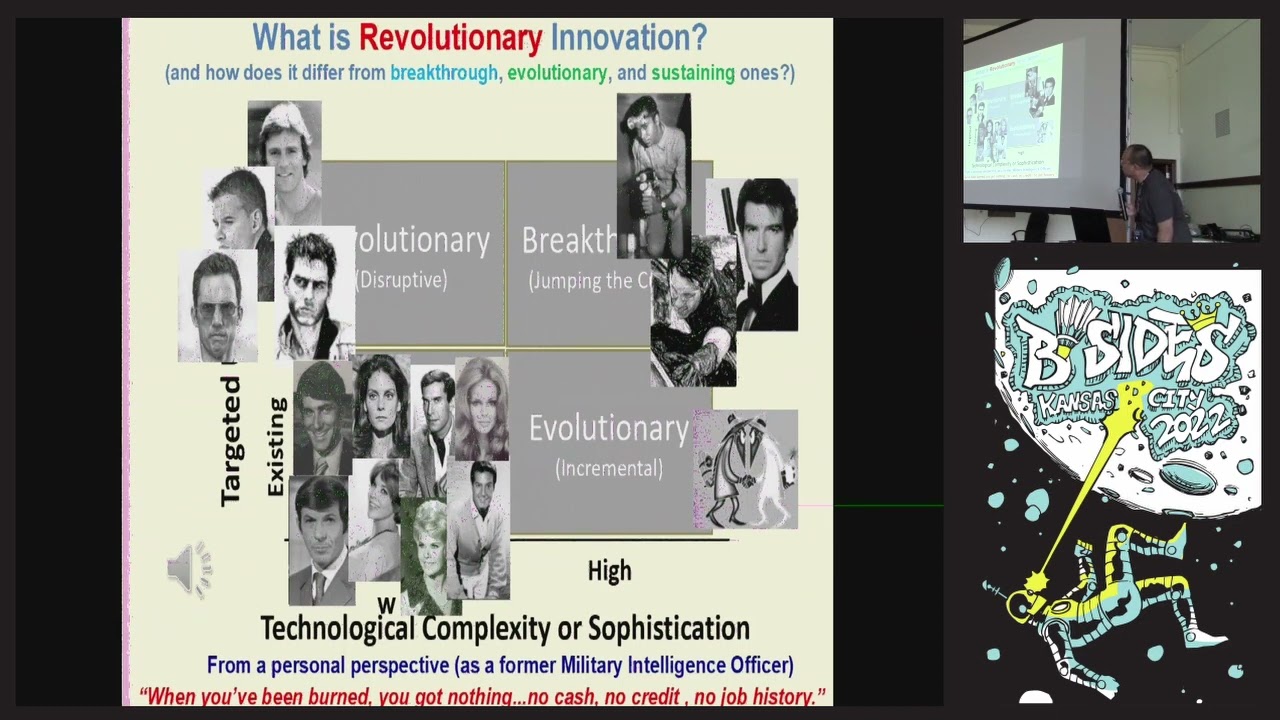 54:13
54:13 19:18
19:18 33:22
33:22