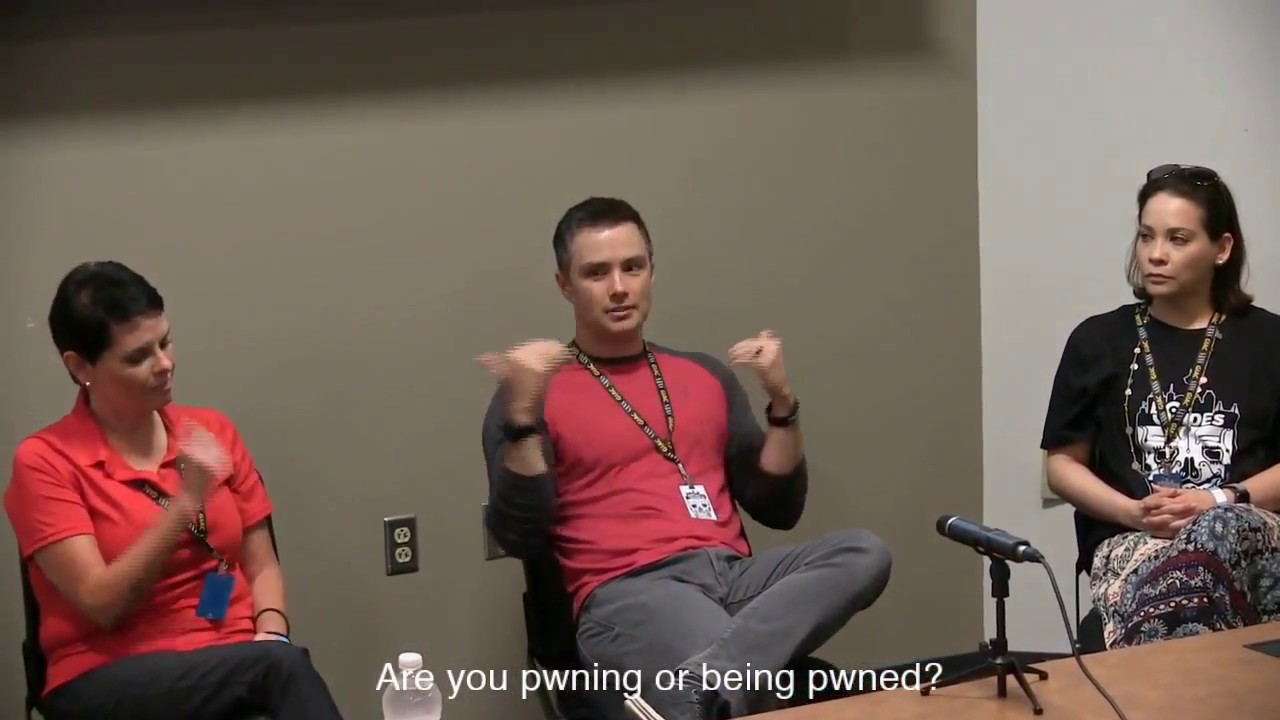
Are You Pwning Or Being Pwned?
Show original YouTube description
Show transcript [en]
uh here at b-side san antonio i this is our my third time here for v6 san antonio my name is kathleen smith i'm the chief marketing officer for two companies one clearjobs.net and the other cybersec jobs.com i'm on the planning committee for nine different b-sides and i'm also on the senior staff for besides las vegas for the large conference that happens during hacker summer camp i actually run the two-day career track that also has career fair but also sessions career mentoring and resumes so i might know something about recruiters working in this community but one thing that i've learned is that there is this huge misconception about recruiters in the community so one thing that i've
done for as many b-sides as i can possibly do is find a local group of recruiters who i know are doing a really great job and introduce them to the community so that people understand that all of those memes you see about recruiters like this one are not really true that there are different levels different kinds of recruiters out there and one of the best things that you can do for your career is to develop a relationship with five or seven recruiters who truly resonate with you who understand who you are you may have had an interview with a really great recruiter may not have gotten the job but you have been able to say i really
like talking to that recruiter and you'll want to keep up to date with them keep in touch with them and say yes this is you know a recruiter that can help me in my overall career so we're sort of going to go over some of the myths and misconceptions that happen between a recruiter and a candidate and also open this up for some questions so i'm actually going to have each one of our panelists introduce themselves introduce what how long they've been in recruiting what kind of recruiting that they do and maybe something not everyone knows about them so irma hi my name is irma simons and i work for a company called ipsecure here in san
antonio a small company about 175 employees we're a government contractor we do a lot of work for the department of defense primarily supporting the air force and the intelligence community i have been doing human resources for about 20 over 20 years is how i'm going to keep it and i've pretty much been in a generalist role where i do a little bit of everything recruiting has been one of the functions in my job as an hr manager but i do have other job duties and responsibilities but recruiting is one that occupies a lot of my a lot of my time and and a lot of my efforts so i'm glad to be here and this is irma's second time she was
here uh with us last year bill branstader is also um this is his third time here at b-side san antonio we met uh three years ago when he came out and did resume reviewing so bill is also doing resume reviewing for us over in conference room c and you'll also be doing resume reviewing at the cyber texas event in august so bill tell us a little bit more about you so i've been recruiting for about 13 years i work for a company called abacus solutions group and we're about 140 employees we do mostly homeland security probably 60 homeland security 30 dod and various other agencies uh the other part um they make me do other things just
because we're a small company so i've i've been a facility security officer so i can talk to talk about security clearances and maybe do some hr i don't really like that i just like recruiting um what else am i saying and what does someone not know about you uh in two weeks i've i got a full life outside of recruiting in two weeks my wife and i are going to the border of rwanda and congo to meet with a bunch of church leaders to put on a conference about trauma just because they're still recovering from the genocide so excited about that awesome excellent awesome kj so i'm kj howell and i am with abacus technology corporation
so um different company different company um we're actually located a corporate out of dc um but i have been with a company about a year doing recruiting in fact it's kind of my anniversary right about now but i have been in the san antonio area for over 25 years so i've been entrenched in the local community in fact that's one of the reasons i was brought on was to have that local networking capability so i've been in the business community for over 25 years and i've actually worked with a another local dod contracting company so abacus technology corporation we um here locally we perform for the air force customers specifically and so i specifically recruit for san
antonio but i have a sales and marketing background so that serves me very well but we perform engineering i.t logistics here locally and um we do have um engineering i.t services throughout the us through advocacy technology corporation and what does someone not know about you um i'm actually a former uh cast member for the walt disney company awesome so what character well i actually worked as an account executive for radio disney am 1160 here in san antonio so um part of my background is marketing and sales and so i bring a lot of that to the table here in san antonio so i do produce the local marketing on my social media and so that also helps you as i'm
networking and so a lot of those skills and assets i bring to the table as well so we have recruiters who are in different roles in their company and that is one thing that you need to understand when you're talking to someone who reaches out to you as far as a potential job is that they may have other things that they do they may not just be a tech recruiter they actually might be a recruiter for a variety of different jobs or they may be like irma recruiting nhr so irma tell us what a typical day is like for you well every day is not the same when it comes to the recruiting aspect recruiting is very fluid and dynamic so
we have opportunities that become available whether it's something that you're working on for a bid and proposal and you're being asked to start getting ready to build a pipeline of candidates for when a contract is awarded to hey we've been waiting six months for this contract to be awarded it was just awarded today let's move forward with hiring 20 people a lot of my time is also spent just talking to people um you know the all the other you know administrative clerical stuff that i do from an hr standpoint you know that kind of sometimes has to take the back burner because you spend a lot of time investing and talking to people and getting to know them and
what it is that they're looking for and seeing if you have a good match so bill your typical day you're just you're you know sitting in a hammock and you know the right work from home so i'm in my oh well maybe you are in your pjs but you know a lot of times when i talk to job seekers they think oh you know a recruiter's life is eight to five they only have to fill one or two jobs and they get this big fat paycheck i think it's a little different what's it like for you yeah i'm still waiting on the fat paycheck but um probably it's if i'm not interviewing candidates for positions it's the other
i could classify the other part as moving the ball forward so um checking in on candidates that i sent to a hiring manager hey did you have the interview how did it go check in with the hiring manager what did you think of so and so if we're processing the clearance hey did you finish your eqip did you go get your fingerprints checking in and make sure that they're moving forward or or just see all the administrative things that they go into it like answering their questions all the emails that come in the phone calls the text updating our reports because we have to do a lot of reporting and tracking metrics um so that's how i split my day kj your
typical day um well my husband gets up early and then so i'm usually up by seven because my guys um i work remotely from home as well so i um get up early my guys we don't we we don't have a local office here so um i'm up at seven my guys usually are up at six out at the customer site and so i do work in my pjs a lot and i'm there on the laptop and i'm following up first thing i do is go to my company career site platform and i'm looking at all of the new resumes so i can start vetting those but we have a very much team approach the way that we vet and so i'm doing
things hand in hand with my team my team leads and my hiring manager so i'm always reviewing things initially and that's usually how i start my day i'm i'm previewing the resumes so i know how to start my day so what i've got to kick over to my guys so there are many different steps to the interviewing process to the recruiting process to the hiring process and what what's interesting is there are a lot of places where people drop the ball or they mess it up so billing and have you started what are some are one or three places that job seekers tend to mess up the process and they don't even know that they're
messing up the process um i'd have to say communication with me is is a big thing so if if i've set forth expectations of hey i need you to go and do this by this date and they they don't do it or they they do it and they don't circle back with me and let me know it slows down the process and i'm sure it's the same thing for you guys we got to get the positions filled as quickly as possible because we've got people that are checking in with us saying hey where are these candidates where are they at when are they going to start i've got performance metrics i have to hit where i have to have people start
within a certain period of time or else i get in trouble so i'm constantly on these candidates hey where are you at are you moving so when i don't hear from a candidate for a while and they're not checking in with me that really hurts them and because of that i typically will have multiple candidates going through a process and whoever's first they're going to get the job so there's candidates that won't get the job because they didn't hustle through the process and communicate with me and i decided to go with someone else what's one mistake people make it's very close to what bill mentioned for us we have a two-part application process so if we reviewed your resume
and a manager has expressed an interest in wanting to meet with you the next step is launching the second part of the employment application so generally we ask candidates to you know complete that before they come in for their interview sometimes the applications don't get completed before they show up and we try to schedule interviews believe it or not you know with ample notice because we understand that a lot of individuals are currently employed they kind of need to make arrangements but you know not completing a second half of an employment application i think is a little bit telling of of your of the candidate that you're dealing with um so i would say it has to do with
communication and just not following through with certain basic requests and nowadays you know applicant tracking systems you know there's all types out there but for the most part i know ours if when you upload your resume the applicant tracking system is going to populate a lot of the fields for you to make the application process even easier and you don't spend too much time you know investing too much time in that and i think sometimes applicants they're a little apprehensive about maybe investing what they think is going to be an hour of their time completing an application online when that's no longer really the case when you have a robust you know applicant tracking system it'll it'll
take a lot less time than you think sounds like you have a really good applicant tracking system i mean an applicant tracking system an ats is you'll upload your resume but you also have an application to fill out which some of them will ask for the exact same information that's on your resume this is not to create a hurdle for you it is to gather information in specific data sets so that the company can evaluate where they're getting their candidates from what kind of experience are they getting should they be recruiting at one particular school or not but there is not one ats fits all there are several of them out there so you know if it's for irma's company it
sounds like it's going to be easy other companies it may be a long process and you just have to be prepared for that kj what's one place that you see job seekers really mess up the process well our system's you know fairly easy you just upload your resume we don't we don't have anything that scrubs for words or or anything like that so you just upload it and and we review it so um probably my my biggest pet peeve is when when you get through the process and and you're we're ready to interview you i have a very simple request of um i ask for you to choose two times to come in because i'm trying to
schedule you against my hiring manager schedule and i i request two times and i give you all these time slots and all i ask her choose two times and i i don't know why but uh it always comes back they give me one time slot and i've asked for two because i'm and i'm juggling all these so so when when a hiring manager or you have an option and they please follow the instructions there's a reason they're asking for something so it's just because i i'm asking for two slots for a reason because i'm juggling all of these schedules and it's quite frustrating when i'm only getting one slot back in so if i can make it fit
with one slot but there's never you know sometimes they'll say well i can you know they've got a very tight schedule themselves and i appreciate that when they they give me a reason but there's you know people don't think ahead so that's really my biggest struggle is not following well there's reasons why and when i give you 12 time slots and you come back with one i just think you know please be a little flexible and these are like a week out so you know it's that's my biggest struggle is people not following that type of of a question some of the other areas where people have sort of messed up the process and they don't
understand is the technical interviews or the phone screens so you know this is your first opportunity to talk to a recruiter or talk to the company understand that's the first impression that they're going to have for you if it is not a really good time to take that call ask to reschedule for a time when you can take that call it's not when you're at a soccer game for your kids or when you're you know in the middle of some kind of other work meeting please just ask to reschedule that and if you're going to be taking a technical interview it might be helpful to sort of brush up on some of the skills that
they're going to test you on because i can't tell you how many times recruiters have told me that they've gone they've had a technical interview and they can hear the person typing on the other end what is the answer to this if you don't know the answer just say it you know they're going to hear that pause looking looking oh it's this no don't do that it's a technical interview brush up on it if you haven't you know you may have used it eight nine years ago maybe go back you know run through a few tests so that would be great oops um what's interesting is a lot of people get mad at recruiters they say i didn't get a job because of
the recruiter but they don't understand that this is a multi-stage process you heard kj saying you know we're trying to schedule different tests so just a quick question in each one of your companies how many decision makers are there in actually bringing on a candidate irma for me it really depends on the contract that the candidate is being interviewed against uh generally it's a minimum of two sometimes three often it's two bill same same okay um one to two so it's the recruiter who's going to be doing sort of the um initial screening then there's the hiring manager and if it is a client-facing contract so you know you have a lot of client-facing contracts
within the government contracting community but as we heard in the previous presentation with rapid seven they have a lot of external customers they have a lot of other consulting that they do so you're going to go through three or four different interviews to actually get to that final hey am i going to work here now one thing that i'm just going to throw a question that i don't have on here maybe i do if someone doesn't fit and you say that they don't fit what do you expect because the candidate to do do you expect them to flame you or should they check back with you i mean you know there's sometimes there's not a good fit for one job but
what about others comments bill i think it depends on on how well i like the person um i mean if they're not a fit because they just are not someone that we would ever want to hire i might give them a different answer but you know we can't hire everyone that we like for a single position so i would sincerely thank the person for applying and i'd say please keep an eye on our career site we want to try and get you on the team down the road as soon as we get another opportunity and i may call you back as soon as i can to get you on the team a different way i agree it depends on the the candidate
as well you know we have people that come in and multiple candidates that come in and interview for and are competing for one job sometimes it's a tough call that these managers have to to make sometimes and i think that if you establish you know a rapport with that recruiter what may not have worked out this time around again because recruiting is so fluid and dynamic and positions open and close almost on a daily basis it seems like what may not be a fit could be a fit tomorrow and at least we've kind of established a relationship already a rapport there's a file there's a record so that when that one position does become available you'll say okay i
remember you know the this candidate that we interviewed this is going to be a good fit for this new wreck that opened open if it's an individual that i think maybe either you know the skill set just wasn't a fit and i don't see it being a fit for the organization for example it could be that you know a lot of the jobs that we hire for require top secret sei clearances and i'm dealing with a candidate that may not have that and you know that those aren't easy to come by and they don't they're not granted from one day to the next what you do is try to help at least personally i try to help them network
with other companies or recommend other companies that they may want to follow up with or check out those career sites to help them in their in their career um our philosophy at ipsecure is just trying to help people whether it's an opportunity with us or somewhere else just trying to pay it forward and help them kind of accomplish those goals so refer them to someone else that could use their skill set kj how about people who aren't a fit but maybe fit later or not a fit later um we're very much the same philosophy as as irma at abacus technology and any candidate that i meet um i invite them to connect with me on
linkedin um there's there's a lot of business opportunity here in san antonio and so and i work with a lot of transitioning military so i start with them as as they're starting their job search so um we have the conversation initially that um we we we are growing at abacus with with our programs and we started out with 60 and we're now at over 120 positions and we're growing and the programs are growing with the customer so um as we grow we do realize you know we're not going to be able to hire everyone that we bring on board but as we we do find the right fit and um and as you say you know our all of our positions have
to have clearances so as we do come across those qual those quality candidates um if we don't have something today we have what we call the hold file and we let those candidates know you're you're not quite the right fit today but we will keep your your file um um on hold and we what we do is i encourage them to create um on their career on the portal um and where they can get a notification and that they should keep checking back and by also being on linkedin i push out all of my new job postings so that they can see also see that flagged immediately but i also do uh referrals to other
companies and i have an internal networking where i can also give them referrals and i also encourage them to come out and network with me and help them in the community when we do face-to-face networking because a lot of the candidates they're very uncomfortable with those first initial meetings so i hope in any way that i can for that so you know even if you're applying for a job at a particular company and you've gone through the interview process and you've decided that this is not going to be a good fit for you still go through the entire process one because it's going to give you expert experience as far as interviewing answering difficult questions because
we're not all really great at interviewing and the more that we can practice out the better but then once you hear that you're not accepted for a position don't go you know and and get mad at the recruiter it just wasn't a right fit send them a thank you no thank you please consider me for the future and then as i said earlier if you really enjoy talking with them if you really enjoyed the process enjoyed the company keep up to date with them every six months just check in with them either on social media or just sending them a quick email i just wanted to make sure that you know you know that i'm still interested i
just finished new certification that's part of your responsibility in career search is to be reaching out and cultivating recruiters to help them find you when they have the right opportunity for you so what's interesting is that resumes are a part of this overall process so we wanted to get into a little bit more about you know resumes there are lots of studies out there that says you know a recruiter is going to look at your resume for maybe seven seconds so i wanted each one of our recruiters sort of talk about how does someone stand out for you on a resume and what are some of the big mistakes i'm going to start with kj and
then we'll go the reverse direction um how does it stand out for me um i guess uh a well-organized resume with your clearance at the top really stands out for me because those are so few and far between um but um what was what was the rest of that question i just had to think about what stands out i suppose but so what stands out you know a lot of times i mean how is someone going to grab your attention other than being organized um what does is there some key information that people tend to bury in their resume that you end up having to look for um yes i think well we so again we hire a
lot of engineers cyber engineers we're cyber centric and so um what what would be great to see is um your certifications and again um i know i know a lot of the transitioning folks they're they're coached to not put your your your clearance on there but if if you're applying for a job that you a security clearance is required um you'll get called back a lot quicker if you put your clearance on there um so um clearance and um also um certifications are really key and um not so much um details in the work history but whatever is germane to the actual position that you're applying to is really key so even if it's just acronyms
so when i review these resumes i am not a seven second person i scan at least a minute to two minutes initially on every resume that comes to my career portal or that is emailed to me directly i am the eyes to everything for my guys so i'm scanning and then if it hits the major points i actually download it to my desktop and then i highlight everything for my guys that's how you get in to the front of my guys because i have key guys and then my also my hiring manager so if you make it past me then you'll either get as they'll then they review it and then we have our own little process and then that's how
you get a helicon or a face to face nine times out of ten irma you you've managed many different hats what are some of the things yeah so so for me i would say you know a clean resume that's not very cluttered number one that kind of hits the high points i agree that i'd like to see maybe at the top an initial profile of x number of years of experience clearance status or level certifications and then the other thing is when it comes to work history or professional um history i think what happens sometimes is candidates they will copy and paste what their job description is today and just put it on the resume and
um that kind of makes a long resume and that's when managers kind of start sometimes or recruiters will start kind of getting you know losing a little bit of interest there because um you know what you're doing today at the company that you are working at today may kind of be different from how we do things so try to just kind of hit the high level point of what position you're applying for if the position is you know requiring a unique kind of skill set or a certain operating system or something to that effect mention that in the resume but don't give me your full job description of the job that you're in today um is basically what i would say so i
mean if i could have it you know it'd be brief profile you know x number of years of experience certifications clearance and then we can kind of deal with the job history uh you know at the tail end but not too much detail about every single little thing that you do in your job right now so one thing that i've seen as an interesting trend specifically in the tech community is what's called the tech skills certifications grid so a lot of people will put this big grid at the top part of their resume that says i have a c-plus and an a-plus and a security plus and it's in this either microsoft table or some kind of table
please don't do that i mean it's it's really interesting but when it gets scanned into any of these applicant tracking systems you have absolutely no idea what's going to that computer scanning software is going to do to it so it's also very hard to read when it ends up being scanned and you don't know what kind of computer program or computer the person is going to be reviewing it on sometimes the recruiter is going to be reviewing this on their phone and they're not going to be able to see all of those different skills in there so bill you seem to be the resume expert so what are some of the things people should and
should not do on their resume so i actually wrote a guide called this six second resume yep and i am a six second resume kind of a guy we just can't hire you um unless you have the the check boxes like clearance and certification and sometimes education so we always want to see those up front because if we don't see those maybe we won't see them if they're buried so i'm agreeing with with these two i'd say one of the the big mistakes that some people will make is they have this section right up at the top that's very subjective so if you have results oriented team player dedicated dynamic great communication skills i i've just i i don't do it
intentionally but i don't even read it so it's just a waste waste of space so like what irma was saying you want to have concrete things like i'm a cyber security professional with 20 years of experience top secret clearance and these are my course pen i'm i'm very strong in pen testing those sorts of things like those maybe three key buzzwords that ought to be your summary section i tell people if the rest of your resume burned up and all i saw was that summary section i want to see enough there that i want to pick up the phone and call you and then just just to say some of the other things in my own words you want
your resume to tell a story so i was doing a resume for a guy earlier this morning and he had a bullet set up access points on his resume and i said what what does that look like and he said well by myself i set up 56 access points around the campus i'm like that sounds like a better bullet than just set up access points so he's using numbers and he's talking about how he was the only one he wasn't part of a team so as a recruiter i'm kind of getting a picture of this guy the scope of what he's able to handle by himself which is way better than set up access points you can imagine all the different
things that he does he could make more unique to him by adding numbers making it sound like an accomplishment and not just i showed up to work and didn't get fired you want to present your business value you know what is the value what are the accomplishments that you're going to be able to bring to that company also realize that you know thanks to google if everything is going to be based on keywords match so if you're looking at a job description and you're sending in your resume and it doesn't have the keywords that are in that job posting there's not going to be a match you're not going to come up higher in the
search when the recruiter is doing the search so making sure that you've done your due diligence on looking at the job posting and making sure that you have those same keywords in your resume please don't do what a lot of people are doing now which is putting the keywords that are in the job description but may not be in your resume and white font on your resume so it comes up because it does highlight and so the highlight will show that you decided to hack the system now some recruiters might like that some recruiters may not but realize you take the chance if you do that also realize that when a recruiter is looking at a
resume more often than not they're looking at it through a preview pane so they're only looking at the top two inches of your resume if you have taken that time on that space to put in your address and put in stuff in large font and italics and bold and lines and stuff like that you have totally wasted that two inches of space they're going to want to get that top information they don't care about all the fancy stuff give them the meat right there at the top a lot of people don't understand that the resume is to get the phone call it is not to get the job it is to tease it's to get that interest going a lot of
people feel that they need to put this you know i've got 25 years experience i need to have this seven page resume it's not getting you the job it is getting their interest to call you so be sure you're looking at your resume from that standpoint and also realize that you don't have just one resume fits all you have to make sure that whenever you're applying for a different job you are taking your skills that best apply to that job and focusing that on your resume so we've mentioned social media just a little bit let's sort of talk about how you network with candidates on social media i know kj you've talked about it a
little bit that bill what do you do as far as social media what do you recommend candidates do on social media so i'm a i'm a big linkedin user although admittedly i don't i don't do a lot of correspondence with candidates through linkedin i mostly do it through phone and email but i i always like to check people out on linkedin just to see if their linkedin profile says something different i actually like to check people out on facebook just because i've seen some people that i definitely don't want to hire after seeing them on facebook that's really the extent of how i use those platforms i use linkedin more than i would facebook and i don't even have a twitter account
we'll get you there sorry i printed out my pass to to get here today i actually have an i.t recruiter that works for me now we hired him less than a year ago and so he kind of does a lot more of that than i do um so i mean again i mean i have a linkedin account you want to connect with me i'll connect with you you get to see who i'm connected with uh you know people do message me through linkedin um and it's it's just part of the the networking like hey we met at these sides and you know want to stay in touch with you or they'll you know we went to
a recruiting event i met you at this table recruiting event that kind of stuff but i don't do a whole lot of social media um i'm more of a telephone email kind of person and that's and i'll let kj talk to this as well but one thing you have to realize is that you're never going to know how to truly connect with the recruiter who is responsible for that first phone call a job posting isn't going to say the best way to reach the person to make this connection is facts snail mail phone that so it is your responsibility to make sure that you have a network so that you can actually get to the decision maker so
that you can understand the process more so kj what do you do on social media you do a lot well i'm all over linkedin because i i find that's like the professional you know medium um and um other than the cat memes i don't see a lot of cat memes on there but um i just like it because you know you've got your your job postings and then you know your uh your job fairs it's just a great way to connect with folks and i and i do find it's it's it's kind of the new business card um transitioning folks and then they don't have the business card it's a great way to promote yourself
as as that job seeker that job candidate you put your picture out there you put your resume up there um it's a great icebreaker in many ways it helps them create confidence for themselves um you guys do i think you host free linkedin pictures a lot of times um it's just a great way to really um encourage candidates and there's just so many ways that you can that you can just slice it so i i love it um but you know that's just me everybody's got their own way but everyone has if i can just finish this thought and then we can know their question so one thing i always recommend when you've established a linkedin profile is that you can
customize your your url for your linkedin profile so instead of it being linked in at 65 different characters you can have you know mine is uh linkedin at you know kathleen e smith and i had i recommend having that on a business card so that when you're at a networking event you can say hey you know let's just connect on linkedin because you're not going to have your resume in your back pocket you're not necessarily going to want to get your cell phone number out to everyone or you your email address it's a nice sort of interface to be out there and also realize that all of us resonate very differently with different social media
so some people i know a lot of recruiters who are much more comfortable and much more prolific on facebook than they are on linkedin and specifically in the tech community i see a lot more people doing recruiting on twitter than they do on linkedin or facebook but it's also where you feel most comfortable establishing the relationship sir so are you like one of the recruiters that contacts people to like connect because i've got a job in san antonio and i'd really like to talk to you or i don't really recruit uh i don't reach out to people on linkedin like i don't go to your profile and recruit you on linkedin i kind of draw the line there i don't solicit i
don't do a lot of unsolicited like i don't hit you up on your linkedin profile i don't do that what i do is i post job i do my po job posting there i don't come knock on your door necessarily but i push my job postings and i create my job advertisements and then if you find me that way i will come and find you at a networking event and i'm very low-key about it i don't have hundreds of jobs that i'm trying to fill i'd be a lot more aggressive if i did but i don't and so um um but i do have a lot of people that come to me on linkedin and knock on my door
because of the outward marketing that i'm doing so i don't have a need to do that but i meet people at job fairs all the time and when i do or i meet them in a networking i say hey connect with me on linkedin and you can find you see it on my feed all the time when you connect with me about all the different jobs that i have so i'm just one of those types of a recruiter but i do know recruiters do they'll they'll ding you and they'll say connect with me or they'll send you an i don't even have i am the instant messaging or whatever it's called so i can't really unless you
connect unless i connect with you i can't really send you messages so i don't do a stalker bill yeah i mean i head hunt yeah i i don't know i won't use it for like lower level positions but if it's a senior level position or specialty skill set i think linkedin is probably one of the best ways to find those people now there there are recruiters out there um there that use linkedin to specifically you know cut and paste i mean a version of uh that will happen you'll get a lot of messages from people that say you know i've got a hot job for you and you'll want to take this right away that's the
first indication that you don't want to you know connect with that person we actually have on besides las vegas there was a presentation you know sort of the telltale signs of a bad recruiter reaching out to you what are the things they'll do and some of the things are you know that they'll use linkedin to do a lot of spamming but also realize that there are many different levels of recruiters out there you've got the recruiters that are direct recruiters you have staffing firms you have head hunters you have executive recruiters you have call shops that are based out of you know india or something like that that is going to happen in any industry
i mean as kj said if you if you're someone who's active on linkedin i can't tell you how many people have reached out to me who are the front people for business development for our marketing agency finance real estate rodent fields cosmetics i mean i get all of the kinds and i also go and get a lot of people reaching out to me that have very very obviously fake account so yeah it's going to happen it's going to be out there it's part of social media there's good parts and there's bad parts so in our last few minutes um you've got the job it's great you finally made it through the process what about the first few
months of a new job what are some of the things because this is the one thing that people really don't think about you put all that work into finding a job you put all that work into making it through all the tests and the interviews and then all of a sudden you're there at the first job and there are some things that people don't think about so irma well that's an interesting question for us i guess the first six months i would say our new hires are still learning um you know they're learning the contract they're learning the job i mean they can come in seasoned or skilled but at the end of the day we have a unique contract
each one has its different i guess you know way of handling things or maybe a slightly different culture or the skill set's different so for me i think you know our employees are still busy learning the first six months um and we have like an education reimbursement program at our company and you have to be with the company for six months before you can participate in it and then the next step i would say is start talking and having a conversation not even at the six month mark but you know before you get there about any additional development opportunities certifications that you might you know be interested in pursuing to kind of help prepare you for next level
personally i can tell you for for ipsecure our philosophy is that when we hire someone we would like for them to stay in that job at least one year um because again our hiring managers are investing a lot of time in getting that employee on you know board and acclimated to the contract so if you're coming on as a new hire and you know three months into the job you're already looking for a promotion opportunity that might not be the right fit for us and sometimes we we kind of we interview for something like that as part of the interview process you know we'll ask a little bit about what the the career goals or aspirations are and
and sometimes if we get that response where you know i i want to be in a different position you know in six months or in a year that kind of is a red flag for us bill what are some of the new kid on the block kind of things to tips yeah i i agree with everything she said and would say that again um i would also add maybe find a mentor hopefully you're not taking a job uh just because you can do everything that's in the job hopefully you're taking a job because it's to expose you to new things that you haven't done before so find someone that knows those things and say hey will you
teach me how to do this function so i can be really good at it and show me what what's it like to work for this boss you know find somebody that can help you navigate the the culture as well when we onboard a new employee we usually team them with someone on the program that is obviously experienced and um but we we try to also you know we partner them with someone that they're going to be compatible with so that it makes a smooth transition um so but personally i i like to recommend that usually within the first 90 days that you get to know everyone and that you make it a point to learn their names and that you also
review your job description and you review it with your your manager your immediate manager and so that you're really clear on the expectations um so it's one thing that you know you've got the job but you really take time to go over that job description again but you make a point to sit down with them and and you address the expectations so that you're clear on it because sometimes you know it's a whirlwind to go through that process and sometimes the hiring manager is not necessarily the manager you might not have met that manager but um and and the onus is really on you to um take that time the manager will get with you but sometimes um you have your
expectations and so does that manager and it speaks to all of you to take that leadership um that leadership role and and have that meeting so sometimes uh they'll get with you but um to to have those things in line and let them know what what you expect too as well because you'll have your own expectations so we have one minute left um anyone have a question because i'm sure the panelists will take questions afterwards but does anyone have one question that they would like to ask yeah yes yeah well i'm on the i'm bill teams and recently was at apple and did a lot of hiring here one thing that i keep hearing is you put a lot of
stock and certifications i have found over 10 15 years that the more certification certifications everyone has the least qualified they are for these jobs they they spend so much time testing and they're very good at testing and getting certifications but working in the real world i find that i'm hiring the people that don't have the certifications that have a drive and they tell me you know i'll ask them why don't you have whatever certification so my person again this is my personal you know thought or opinion but when i see a resume and there's 10 different certifications tied to it it's a red flag for me sometimes because i wonder if this individual is just really good at studying
and taking exams and getting served but then how how are they going to perform in the real world so we we do put a lot of stock into certifications only because in in my case my customer which is the department of defense requires them you know there are a lot of great qualified people out there that i wish you know we could move forward with and you know the one thing i can say is you know depending on the job a minimum of a comptia security plus you know should be able to help help you get that baseline certification to qualify for you know some most jobs at my company i can't speak on behalf of anybody else
but um i mean i i agree with you um we are required just because it's part of the the uh the contract that we have with the government that the certifications are necessary for someone to perform the job do i necessarily believe that no it's just a box that you need to check off um but i what i do see a lot of people with tons of certs i kind of wonder a little bit about and and some of the things that we talked about in the earlier sessions is realize that it is sort of a balance between having the education degrees having the certifications but also having the experience and understanding that you can get that experience through
competitions you can get that through having a home lab you can get that through being on open source projects but you know those are things that you not only have to do on your own you also have to journal and make sure that you're able to present that to a recruiter or to a hiring manager what are you doing on your home lab what open source projects did you do if you went through a competition what was the challenge that you overtook and what were some of the skills you learned so we actually have run over i've been told that i have to keep on a time schedule let's thank our panelists for being here this morning
and um that's it i think we have another session coming in here at 12 but uh bill is available for resume review and conference room c and career coaching and careers i know half of you didn't bring your resumes so come talk to me about your jobs
Related talks
 45:00
45:00 52:47
52:47 52:59
52:59 28:09
28:09 44:17
44:17 36:26
36:26