Finding the Right Tools and Codes for Your Career Search
Show transcript [en]
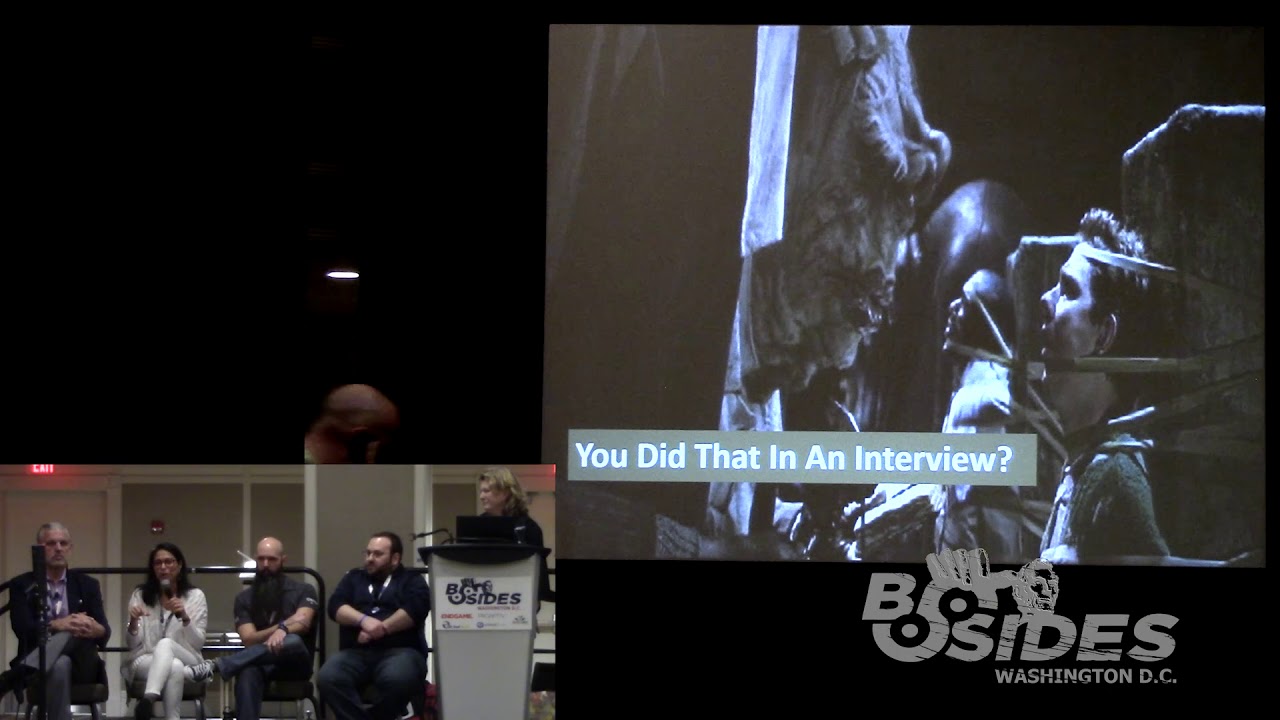
besides DC would like to thank all of our sponsors and a special thank you to all of our speakers volunteers and organizers for making 2018 a success so good morning everyone thank you for those of you there's about five of you who decided to stay in the room from our earlier presentation that's wonderful thank you so much my name is Kathleen Smith and I'm the chief marketing officer for a company called cyber sex jobs calm and clear jobs net we've been involved with besides DC for the last three years please come back to this room at 3 o'clock where we will be doing the hiring happy hour not only will we have employers who are looking to talk
to you about future jobs but we will also have six absolutely fabulous resume recruiters who will give you advice on your resumes and any other career search questions you have so I've been fortunate to have recruiter panels or moderate recruiter panels for the last four years there was a conference that Doug and I were was we were at in September and the theme was the Hitchhiker's Guide to the galaxy so you will see a lot of references and this presentation because I just thought it was a lot of fun so we're going to introduce our presenters first is Kevin and then we're going to do Doug and then we're gonna do Susie and then Matt so
Kevin hi I'm Kevin Berlin may I run the technical recruiting team before fireEye for us most of that hiring is around instant responders red teamer security analysts all the really fun stuff that happens when a breach occurs and I'm the director of talent acquisition from mag aerospace formerly same role with coal fire and various group really shocks me I never tried to recruit Kevin because we need some recruiters there but got a few back and Kathleen's point I haven't had the opportunity to do some of these panels before and it is a wonderful opportunity because there is a real lack of conversation between recruiters and candidates as to what the process looks like from our perspective what's going
on behind the scene and for that matter we very often don't have a real sense of what the candidate pool is up against and experiencing so I welcome every opportunity to come to one of these events Susie hi my name is Susie Greco I am president of st2 recruiting we are a firm that supports both small and national organizations in their hiring I my background is a little bit of agency recruiting and corporate recruiting so I hope to be able to bring some of those two pieces to the discussion today and everyone Matt darn I manage the technical recruiting efforts at tenable I worked with in the past and the audience please no heckling especially
in the front here I've done a lot of things within the recruiting community I work with Kathleen on another board and Susie actually for a recruiting community here in DC but I've also helped out with besides Las Vegas I've given a couple talks locally on from unallocated as well front just on some of this topic right just understanding what you can do to engage with us what we can do to engage with you with things we screw up what things you screw up so we'll talk about all that stuff I like kind of pulling back the curtain and talking with everybody about ways to improve the communication between between our groups and so that that's
been sort of my role as the chief marketing officer for cybersex jobs.com is to get the conversation going because I would always hear about people being upset with recruiters and posting them on the Twitter handle you know [ __ ] recruiters say or making jokes about them about all of the awful LinkedIn posts and unfortunately everyone then thinks that all recruiters are like that and I have the opportunity and privilege to work with so many great recruiters that I go to every single conference and submit a proposal and say let me bring a panel of recruiters up so that we can talk about that there are really great people who like making a difference in
people's lives by helping them get a job so looking on Google you will find that this is what people think recruiters are a lot of people think it's happy-go-lucky a lot of people are not really quite sure what they do a lot of people think recruiters are lazy and a lot of people think that you know this is this is an easy job well I want each one of our panelists and we'll start with Kevin and go all the way down to Doug sort of talk about what is your typical day like who do you interact with and what is the thing that sucks up most of your time so first off there is no typical day every day is crazy insane
for recruiters and quite honestly we're always plugged in I mean any recruiter who's working you wish you weren't 24/7 but you are 24/7 and that includes a lot of different things and we talked to a lot of candidates and truthfully we talked a lot of canit's that never make it any further in the process I think for me probably the greatest time-suck is the fact that you know when folks apply to everything I love the people a lot of jobs but you know apply to the right roles and you're gonna get a better response from us instead of 50 roles I think there was a comment about things people wouldn't know about us all I'll just share right now wouldn't
expect you to know about us I know every word to the frozen soundtrack that's great you want me to belt it out I can't yeah I tried that once and I got shut down you know my day I used I manage a team now you know so I'll speak to that a little bit and I actually up until recent had two people in Dublin so my day started at Dublin Ireland at Ohio my day would usually start about 6:00 a.m. with their responses right they're there they've been at work for a couple hours at that point they had things they need to do so I'm I'm on I'm watching ESPN or something like that it eatin eating my
oatmeal or drinking my coffee but I'm still you know engaging with them on a regular day I do get in the office a little later on I do make a nice list of things I need to accomplish through the day and as soon as I finished that list something else pops up that wasn't on that list and so yes I do I finished the list so you I try to plan out my day I just know things I have to get done and then stuff hits the fan and things people come with me but I think what's what sucks up a lot of my time this is gonna be the dumbest thing in the world so administrative but it's
scheduling things it's terrible you got candidates whether you want to bring them in you want to get them faster the process and the managers the hiring managers executives are talking to you about hey when's this person coming in it's like I got a juggle six people's calendars plus availability of the candidates and and I have to do that two three times four for one job during a day it sounds really boring I know I'm sorry but it really is I think a senior recruiter out there it's it's getting those scheduling pieces together your typical day I know you're you know I get emails from you at midnight so I know it's a long day I don't think it's a day
day you were on 24/7 because I'm doing not I'm not a corporate recruiter per se I'm actually spending half of my time talking to my hiring managers for different companies so they reviewed a resume they like it or they don't like it and they're telling me to shift my focus because they already hired the person that they asked me to search for them so it's getting information from my hiring managers finishing my client calls that my candidate calls I'd already scheduled thinking I knew what I was looking for because the hiring manager said this is what I was looking for and then perhaps you know finishing those calls and then starting to source for the new requirements that the hiring
manager had shifted to and then the administrative tasks there's a lot of scheduling there's a lot of sourcing figuring out which way I'm gonna find the candidates how I'm gonna find you are you gonna be someone who's hiding in social media are you gonna be hiding in plain sight on LinkedIn so it's big sourcing is a big I would say a big portion of my day I wouldn't say it's the hardest part of my day but it takes the the largest portion of my day sourcing means cyber stalking you guys absolutely correct absolutely correct that is how I spend most my day so in the time that I've known Doug he's been at three different companies and at one
time you were the sole recruiter with part time with Chris I believe and then you moved on to another company and managed people and now you manage people and do a variety of other things as the recruiter so your typical day I do I lead a team of nine people and geographically dispersed and some of the programs that we support in fact we have more people in our company working downrange in Afghanistan than in the United States so for me it's time zone management but it's also managing up and managing sideways I'd like to say it's managing my team making sure everyone knows what they need to do knows what their goals are for a given day but it's
also and this is the hardest part managing up every single hiring manager thinks that you should be working solely on their requirements and no matter what those requirements are how bizarre how incomprehensible they expect the to have happened yesterday so it's managing their expectations managing their role in the process to get things done and then it's the it's managing candidate expectations it's managing the process to be sure that everyone is getting what they need out of it and then it's managing to the c-suite because at any given time and it just happened to me this in the last couple of days brand new program Board of Directors is looking got to get this done oh we should have had it done two
weeks ago but that wasn't communicated to us so it's managing all those expectations and that biggest time-suck goes into the level of communication that's going top down sideways invariably things get lost and trying to make sure the least amount gets lost and when it does that we're able to pick it up put it in the right place and run with it quickly and that with all about we go to meet ups at night so we can eat pizza and beer with you so Suzie since you shamed and I'm going to ask you to start the next question what part of the job process inquiry Tech interview face to face interview job offer negotiations what part of the process does the job
seeker the job seekers you work with when do they mess up the most what is the one mistake that they make and is there been any time when a job seeker has just totally impressed the um I'm gonna start with the first one I hate it when they are not honest about where they are in the job search with other people so if I'm talking to them and I'm talking them about what the process is for me and my client about the technical interview then the technical screen and then the you know the panel interview I'm going through that entire process and saying this is gonna take maybe a week and a half and then I ask them okay where are you in
your job search like I'm sure I'm not the only one only recruiter who found you where are you oh I'm not looking you're the only one I'm talking to and only to find out when we were going through the process I can't make it I accepted another offer so that probably is the one thing that really upsets me the most because I I'm candid candid with my expectations of them and I'm hoping that they would be candid with me there's no one impressed you yes okay when I'm talking to them about a particular client and that client has a github account and they are telling me that they before the interview with me even me the recruiter I checked out the
github account I know what they're doing I'm pretty impressed I'd like to I'd like you to tell me what they're doing more on the micro services piece or the languages they're using even though I can't answer that question it just demonstrates they did their homework especially for a technical company that the github account is available and they did it before they talked to me to people and I've been doing this for five and a half years to people I've done that Matt what do people mess up I think one of the bigger things and this is something for ready to understand I think when candidates don't know their value I'm talking salary here so it's a
little bit on the negotiation piece or the salary conversation so the pain point for me is when we've talked about a number you know this numbers was good last week when we talked it was good the day before the final interview only to get that piece of paper and say these are the words that I hear all the time I did a little more research and then numbers 10k 20k whatever it is you know it's more than what I was able to go back and get for for that person so I mean people have different opinions on this that's why I like the salary discussion early on you have things document and people understand and it
may incite you to go do that research before we get to that last interview so that to me is it's kind of the big big mistake but flipside so I I do some fun stuff with my LinkedIn profile cos LinkedIn is really boring and it sucks a lot but I have hex code in it I have some Easter eggs in it and and they've got Simpsons references and things like that so somebody actually a job seeker is a young kid just graduated college found all those things that I put in my profile and and framed the entire email to me from the subject line and he found my personal email address which is not that hard but
still interesting found all that referenced the the stuff in the subject wrote a whole paragraph about it and then referenced something about beer afterwards which was really good I would have gone for beers just for the email he applied I looked at the resume earlier and I didn't think it was great but I'm like they did that much to get my attention I'm gonna call him okay I interviewed him passed him on and that person a couple weeks later started with us there are things out there that you can find a connect with the people in the organization find those things if that's what you want to do you really want to go there find those things and
use those to engage with the people that you're going to talk to I say adding on the one that's I think preparation ends up being where a lot of people mess up you know don't necessarily just apply to a job with the exact same resume that every single job you apply for you know going there actually tailor what you're applying for go in understand what you're actually talking to the recruiter about the role you know unfortunately a lot of recruiters if you don't impress us you're not getting further in the process you know you have to understand that we are we are still evaluating a lot of us actually have a pretty good idea of what we're talking about from a
technical perspective so I think that lack of preparation tends to hurt a lot of people that are out there I think the ones that have been impressed me are the ones that kind of go above and beyond for in preparation standpoint so I typically like to ask questions at candidates even the technical ones that are more scenario-based and have them walk me through how they would tackle certain things in particular how they would go about doing a red seam assessment and the guys that come up and have all these crazy off-the-wall ideas that does something different than everybody else is more impressive than the guy tells me I wrote use this tool this tool this tool this tool like show
me something that no one else is doing and that's gonna get my attention really fast so Doug how about you know what do people mess up the most and what has someone done to impress you in the process it's gonna be a little redundant here to Matt's point that is the biggest pain in the neck that I run into do your best to know your value before you ever get to an interview process if you're dealing with a recruiter who won't give you a sense of what the job does pay then you're not dealing with a very good recruiter it is incumbent on us to be transparent and early in the process as Matt alluded to but if we get down to
the wire and you're the person and all of a sudden that number changes significantly it doesn't look good and we may still be able to get you in the door but you've already set a negative tone so get that out of the way right off the bat and be consistent if you think it's a job that you want and you get it there's gonna be plenty of opportunity to increase your earnings and move forward on the positive side again it is that preparation nothing impresses more than somebody who from an initial screening as genuine well thought well researched questions about the company while I read that you did this assessment for this company that's really cool they're huge you know what
was that like something anything just the recognition that they have done at least the cursory website search and see what we do and if you want to go to the next level along the lines of what Matt described I've had people ask me about blogs I wrote now yeah it's kind of sucking up but to Kevin's point we are gatekeepers and if you can suck up to us you're gonna have a much better chance of getting a rest of your story told and who knows you might find that we do have something interesting about us that you might want to ask about so absolutely the preparation the research and the consistency and transparency in terms of
what you want so yes Susie's done blogs Matt's done blogs I think Doug you actually there's like eight or nine blog articles that Doug has out there so you know one of the ways to learn more about recruiters is actually see if they've written a blog a lot of them have either written a blog for their company or they've written it for someone you know else in the community but you know they're not just people who sit behind desks so what's interesting is when people get angry at recruiters they'll say well the recruiter didn't get me the job the recruiter did not hire me and I think this is interesting that a lot of people
think that the decision-maker is the recruiter they may be an influencer but they may not necessarily be the decision-maker so Matt and the rest of the panel please describe what is the decision-making process in your company because each one of you has a different process and what a lot of people think about or don't think about is how long it's going to take them to find that next job you may do a ragequit at 350 on Friday afternoon and expect to have a job that following Monday then you are pretty ignorant about what the current job search process is all about and how long it's going to take you to find that next job because a lot of people don't
realize you have you know a mortgage to pay and bills to pay if you're really frustrated do a ragequit and then it takes you six months to find a job that's no one else's fault but your own so Matt you want to talk about the decision making process and the interview process for your company sure and to something that you said a second ago is is the recruiter didn't get me the job I like to think of that when you were in school and you you I got an a but the teacher gave me an F right just think about it in that context like what it is it's the same thing you got at
grade did you earn the grade or not so that's to cover that point but as far as process it's going to vary by job so I'll give you at least one that we have this is kind of our technical support team which is very you know relevant to the group here but we have a core set of questions we'll ask about ten technical questions we have the answer there's a yes or no there's a black or white there's an a B or C right so we know that and we're scoring against that we have to have somebody get at least three out of five or the first half three out of five in the second half to be minimally
qualified all right so those are going to be technical questions you get past that there's a technical screen with one of our team leads on the team again that's not as black or white with that it's not like they're scoring assess but we're testing Linux knowledge we're testing scanning knowledge things like that and then there's an on site as well with another about three or four hiring managers that come and we have different shifts so it may depend on on what chef we're talking about and then it's a very technical interview there - you can be grilled on networking you're gonna be grilled on security there's a lot of things that you're gonna have to know so
there are a lot of people in that process there's the recruiter there's a tech lead and there's at least you know at least two managers maybe sometimes more than that they're evaluating you at that stage obviously if you got to that last stage you've done well enough but just know that those are a lot of things that you'll need to prepare for the questions that you get ahead of time you're gonna know you you're gonna want to know your stuff as you walk into the recruiters screen and that's that's a phone call if you're talking about something more software oriented or a research oriented we have challenges we have we use hacker rank for testing for
code testing we have certain research-based things for if you're going for security research to understand plugins those are things you got to take back and do it may take you an hour it may take you three hours understand that those are and you may have to do that over a couple days too so understanding the process of the interview that you going for you're going to want to know that that'll give you a better idea of how long this is probably going to take Susie you represent clients right you have an entirely different process with every company it's different so I'm gonna go with Red Hat since it's a big company that you probably heard of their initial
process is to do a preliminary tech screen half hour and then if you make it past that cut you get green-lighted to get permission to take a hacker rank assessment that's designed for either platform or for middleware and then if you pass or get a decent number there then you're invited to do a panel interview a panel interview where you are doing a presentation you are delivering a presentation anywhere in any format you want to a panel of technical and non-technical individuals so they can assess your communication skill sets all that that entire process may take anywhere between one to three weeks and so that is the the process but ultimately someone on the client team is
making a decision at every stage whether or not you move forward so if you're moving forward you're getting the green light for me and like hey great you're going neck forward next you're getting that the you're not moving forward it's because someone on the team had said the technical skill sets or the communication skill sets we're not there so Doug you represent you have your clients but then you also have customers right well my clients and customers are the same they are the folks that work for Maggie aerospace and other companies I work for before so my client base is internal in terms of process it's fairly consistent with what you've heard there'll be a recruiter screen there'll
be a technical screen they'll be an in-person interview depending on the role there may be either assessments or presentations and that all varies according to what the role might be but to the the decision-making process ultimately I don't know of very many companies that the recruiter plays a huge role in the final decision we can be influencers we are information peddlers we may be asked as far as just soft skills how did we find this person but ultimately the hiring manager is going to be that authority but in the difference between corporate recruiting that I do and the work that Susie for example does if you're working with an agency a firm that's representing a
client that recruiter is truly an advocate for you it's a little dicey on the corporate level because we want to make sure that while we are advocating for what you bring positive to roll we're also letting you present yourself as you are we don't we're not gonna try and sell you to hiring that as your necessarily but the Advocate on an agency side they want you to get the job they want you to be the right person for the job and they can coach you in a wonderful way to be better prepared to get it and that goes both agency and corporate and I think it's been alluded to here but as soon as you talk to the
recruiter ask about the process what is it are there challenges are there assessments how long is it gonna take they'll tell you so get a real picture going in so that you can be better prepared any one of us wants you to put your best foot forward so we'll give you remand I'll give you the answers to the test but will tell you what the test looks like so that you're you're prepared and you can put your best self into it so ask the questions up front how long is it gonna take Who am I gonna talk to and look them up if you can get a name of the Ironman is you're gonna interview with check them out and see
what their background is who knows you might have a connection to this person you don't even realize worked at the same company four years ago all of those things are very valuable to you and keep in mind the process is not just contingent on us either it's contingent on you a lot of cases we're talking technical assessments if we send you a technical assessment and you wait two weeks to complete it you know already we're worried about are you actually interested in the role you actually motivated for this type of position you know there is that back and forth there you know we have to understand that hey you have an interest in the role as well
as went from our side I would say for us decision making I think we actually differ a little bit in the fact that I've actually rejected candidates I've gotten to on site it's night I've been the decision maker to make that decision because of something they did and then I let's say interview in particular I have wanted to candidates who quite honestly their attitude was one that was not going to fit with the organization and we had to make the call hiring team loved the guy loved the background knew for a fact that they came in the door half the team would leave and I think sometimes that's a perspective you know recruiter can give is that you know we
have a much better attitude or but shutter understanding the attitudes and culture aspects across the organization to understand who and what's going to fit you know across the company as well so do you want me by saying that you made me think of something that I never really before a question to ask the recruiters what is what is your decision-making role I mean just ask them straight up but I do play a part in this process and normally sometimes they don't they are just you know pushing people around but sometimes they do I've had at the executive level you know I have a last call with the VP or the C C suite they say what did you think are we
making the right decision here is this something that we should be doing is there anything that you saw in this process that we should be aware of so I I would ask the question about you know recruiter what is your role in the evaluation process and what's interesting is that a lot of people do not take advantage of the recruiters expertise as Kevin said they're going to be able to answer a lot of the questions that you might have even though you're going to ask those questions further on in the process what is the culture fit what is the sort of decision-making process within the organization is it very bureaucratic are you very driven by
the customers you represent a lot of us in this space are working for government contractors who then you know serve the Veterans Administration or DHS and understanding what that culture is about because yes you may have the technical skills but if you don't have the culture fit with the company and then if they support another customer you're definitely you know going the wrong way because you're not understanding that process the other thing that a lot of job seekers don't - and I am really really surprised about this is they don't have a network of recruiters so if you are going to find a vacation spot or go to a movie or go to a restaurant you have a network of
people that you value their opinion you value where they you know what movies they see and what food they like to eat and they are your go-to people for those important things your job is very important why would you not have a network of recruiters who would be your go-to people to say hey I'm looking for a job now a lot of people wait until they're looking for a job to actually start enough working with a recruiter I would say it's the reverse you should find eight to ten recruiters that you really get along with that you have you know some kind of connection with they may be at a company like Doug was at
varus and he then moved on to another company he's going to remember him remember you because you had a connection you had a relationship Matt at one time was working with Geico and you know you may have been interviewed by him for Geico and then all of a sudden he went to go work with tenable he may not have been able to hire you at Geico but he definitely will remember you if you've kept in touch and networked with him and then be able to find a job a tenable and all the recruiters they want to make a difference in your life by helping you find a job so even if they don't have a
job for you if you want to give them a call any one of these people if you give them a call and say I'm feeling uncomfortable in this hiring process or I have a question about you know this kind of company and what they're going to do you're going to answer that question for you they're going to you know help you because that's what they're all about and this is the one thing that really frustrates me is that people don't find recruiters to work with them and touch base with them every six months you should have eight to ten recruiters that you really like working with and you just have a calendar notice that says every six months you just sort
of do a hey hey how's it going I just finished my CISSP or I just moved to another you know company or I just took on this new challenge you know what's going on in your life it's a short email but it's something that the recruiter is going to remember and if they remember the things that you're great at and what you're looking for and if that opportunity comes available within their company you are going to be on their I need to call this person list so you won't have any comments on that or do I get a name in but the one comment I'll make is there's no there's no time to early to start that either you know
there's way too many students right now to wait to wait till they're a junior senior to start thinking about what is my job who do I need to reach out to where do I need to go you should start thinking about that as a back in high school maybe middle school [Laughter] yeah that's right crypto kids right one thing I will clarify I feel it needs to be clarified my day job is to hire the right people and build teams at tenable right that's that's what I get paid for that's what I do what I think Kathleen and correct me if I'm wrong but finding the person the recruiter that actually can help you even though you may not get
the job at that company I think is key here it's it's almost an advisor now if you've come to me and and and you know we've tried and it couldn't happen if you think I can be helpful to you somewhere else I will be you're not gonna find a lot of recruiters that actually do that there are a lot of them out there you can find some but knowing that they might actually have your interest at heart I may not be able to hire you in my company but I can try to get you somewhere else because I'm here on a Saturday at a security conference and you know there aren't very many other recruiters that are here doing
this kind of stuff so find folks like like all of us up here that actually care about the community first sometimes I'm sorry not first sorry community has to come second sometimes because my paycheck is its first the bank the bank is first you know the mortgage is first but for those that actually give up some of their time to go out and do stuff like this so we're gonna touch on resumes and do Susie and then Doug I'm actually gonna give you a break because the next question it's all you so you can lots of pressures we're gonna get some coffee you can take a nap okay so let's talk about resumes what you know
there's surveys out there that say that a recruiter only looks at a resume for seven seconds there are things that people bury on their resume there are things that you find on a resume that drive you nuts you have as you said earlier people who submit the same resume 50 different times we have students in the audience we have transitioning military should we bring our resume to the interview pick any of those questions you want to answer go see if there's one thing that I would recommend to include in your resume or your own personal achievements because I am looking at a resume in volume because the nature of the work that I do I am
probably spending no more than six seconds on every resume in my initial review so if there are achievements highlighted somewhere I know that's what I'm going to because anything that you've spent time or thought into highlighting on your resume that's what I'm gonna use probably to talk to my hiring manager to say I'm not gonna say 20 years of experience and doing ABC technology so I'm gonna say this guy accomplished ABCD in such a period of time under budget that's what I'm gonna highlight so if you take the time to include two or three bullet points that I as a recruiter can share with my hiring manager that is to your advantage so that is the one thing that I rarely
see on resumes which is surprising because it's what will differentiate you from the you know that the 100 people I had to look through to find the right fit I would say on the seven seconds continuation it absolutely unfortunately does happen we have so much volume so when you think about a resume for me what what's most important at the front of your resume whether that's your degree your certification your actual experience don't bury something significant at the very bottom of your resume put it up at the top it there's no set order for a resume in this day and age and please fill of a guide don't feel limited to one page whoever has
been telling students that needs to stop because if you have enough information for two pages or more make it more because there's enough information that we want to know about earlier about community involvement where do you want to see community involvement and what do you want that I folded t-shirts or do you want that I presented at a conference I competed in a competition what about community involvement so I think any of those are great the more stuff you can do that's hands-on is great isn't even better folks are involved in you know CCDC in college or CTFs or they're developing their own tool on the side I mean it's whatever you're doing that's beyond your job or your educate
is significant you need to highlight that and that that's honestly how you make the next step in jobs is doing more than just going to work and clocking in and out a couple things again on the timing perspective just to give you some context around maybe some of the jobs we have to work on i had one recently where I had 852 applications do the math if I spent more than just a little bit of time on that I would have been my entire week just looking at every single reading every single word in those so so yeah there is a scan right and then you kind of filter and do that so there are
a lot of people that come in for very particular jobs to just understand that side of it so making yourself stand out is good and that's how you do that a couple things about what how you can frame it and is if you come out later tonight to the the happier thing we'll talk more about this I'm sure but the resume you know think of it it's a digital document now write it unless you're going to a career fair where you have to have a physical copy of your resume think of it in context of it's going to be on somebody's computer screen you can add links to it it doesn't have to tell the whole story
okay you can you can say in your in your top you know here's some things but if you want more go to my LinkedIn you can list everything on your LinkedIn and I suggest people do that put it all out there if you have as some people don't want it but put as much as you want to there and that way you can kind of pick and pull from parts of that to build a resume more suited to that job that you're looking at but I would I would use that that resume especially in a digital format to say here are other places you can find me if you want more on this because if you have a lot of
background and you think your resume is getting too long and you're pushing in two three and four pages that's where you can start kind of trunking some of that stuff and saying find more here find more there one piece of advice I'll give and I tell us everything every time I do resume review the the objective section of your resume is antiquated all right objective statements mean here's what I want from you company summary is here's me here's what I do and here's what I want to do so and you can change that and make it something related to the job a little bit every time that you do that so give your professional summary at the top of your
resume maybe two sentences three sentences if you know don't want to get too verbose with it but you add that to the top replace your objective statement with that I do like objective statements but only when you're transitioning so if you are transitioning as a student and a new you know you're educated in one area but looking for another job in a different area you need to explain to me as a recruiter why I'm reading everything I'm reading and your objective statement is gonna help me understand why are you looking for another job in a different industry or a different profession or a different career path I need that but if you just give me the traditional resume that just
has everything that you've done and you've applied to my you know my systems engineering job and you've been a project me to draw all your life I'm gonna say no I'm not even going to ask why I'm not gonna call you and say why did you said no I'm just gonna move on to the next resume so the objective statement helps me follow or understand why you're applying to the job that is non-traditional to your resume and I think going back to the summary less is more sometimes those of you that make half your resume every single skillset Under the Sun that you've talked to we're not looking at the skillsets we tell us what you did not the single
technologies do you know in there you want skills on that have a captured and resume searches put at the bottom of the resume have it in there captured you put in the top we've already skimmed through and we've probably skipped your resume at that point so one of the things that pops up a lot in this industry is I have great skills but I'm unhireable I am socially awkward I have anxiety I can't get out meet people so we actually had this conversation earlier in September and Doug and I talked a little bit more about it and people are saying well if I consider myself unhireable and what we mean that is a definition that was given to
us by a conference organiser who actually had an autistic child who is trying to find the way to put them through the job search process so you know socially awkward depressed anxiety what are the things that Doug we sort of did some research on you know what are the things that we recommend to people who may find themselves or consider themselves in that place the unhireable z-- you know who you are it's it's actually it's a very broad spectrum and speaking first to folks who actually are on the autism spectrum it's fascinating to learn that there are major organizations that are targeting people on the autism spectrum to hire and not just as some diversity box to check but
because and this and this goes to a tool whether you're on the spectrum or just have similar anxieties that you may bring to the table what is typical of folks who are going through that is that they have other skills that are very valuable to employers there's an attention to detail there's a focus we all like to talk about creative out-of-the-box thinking it's a great phrase and damn near none of us uses it because we are rope people we know how we've analyzed something before we know how we've approached it and we will tend to do it over and over again but for people that are on the spectrum they can truly see things in a different way and
that is invaluable to an organization so there are organizations like Google Booz Allen Deloitte all have targeted programs trying to bring more of those folks into the workforce but just for anyone looking at what those strengths that come out of those challenges can be is a key but also understanding that if you have social anxieties if you do feel awkward in interviews it goes very much back to the preparation we've talked about and some of this sounds a little bit goofy but when you want to get that job you can Google all the behavioral questions all the weird questions that energy may ask you can Google a bunch of them and then practice in your car when
you're alone ask the question in your head give a response ask your friends your family to conduct mock interviews stand in front of a mirror and watch yourself not just hear the words that you're saying but watch yourself how do you appear alright do you have a nervous tic that you might be able to work on but that preparation it becomes a matter it over time those questions that are asked and frankly outside of the technical questions which are typically the easier ones for folks in this in this industry those other questions become there's only 20 of them we just couch them 300 different ways so you'll be able to recognize this is the same
question than I practiced and I've said it so many times it now just flows out of me naturally you have to practice you have to get someone else to practice with you and if you do that enough you get a comfort level and that lowers you learnt your nervousness as you get into an interview and none of what I just said is what was working for you in the moment before the interview take your hand squeeze it really tight I mean drive your fingers into your fist it's a physiological reaction you will call may not last forever but it's a moment I wouldn't do it in interviews because that baby looks a little bit scary but before the interview to calm
yourself those deep breaths that people talk about absolutely work these are physiological rules of nature that are not impacted by any social anxiety the other details you're going to an interview if you have any sort of social anxiety you're going to be you're going to be nervous about everything plot the route drive the route make sure that you can get there no matter what time of day 10 to 15 minutes early go into the interview that early go in about 5 minutes early but get there early take that anxiety out of it if you're gonna be doing a phone or a Skype interview make sure your phone works make sure skypes gonna work for you do it over and
over again until you have the absolute confidence that they're not going to be any technical glitches anything of that nature so it becomes truly for almost all of these suppose unhireable traits a matter of preparation and if you're in the interview setting if a question comes up that throws you for a second take the deep breath take a pause no interview or worth their salt is gonna be upset by that we like somebody who considers an answer so take a moment collect yourself and then move into the answer don't tell them more than they've asked for stay focused on the questions and if there's something that you don't know or you're confused about ask ask for
clarification admit I'm not familiar with that I have not worked with that flavor of Linux but I've worked with this one and I think it crosses over so I think the preparation is absolutely key but also know that whatever you're perceiving to be an anxiety or a challenge for you to get the job that you want first of all chances are it seems a lot worse to you and it does to us we are probably not going to pick up on it nearly as much as you might think and - there are undoubtedly inherent advantages to that there are things there are tools you've already developed to overcome it that you just need to accentuate practice and remind yourself
that again even to the extreme of well down the autism spectrum you actually have gifts there are things that you are bringing to the table that likely very few the people on this panel have and focus on those focus on how you can present them and how you can let someone know this is an absolute strength of month thank you actually if I could add one thing in terms of preparation you talk about the job that you want I think too few people when they're actually interview interview with more jobs than they should here's the thing you're gonna stress the most out about the job you one interview for a job you don't want and tell you what you actually get the
same amount of experience in that I feel a lot more comfortable when you go for that ideal job so what's interesting is a lot of people think a big part of the preparation is getting the job and then they plopped down in the in their seat or their cubicle and they're like okay it's it's easy going from here but a lot of people don't use the first few months of their new job to expand upon sort of their career and expand upon you know what they're going to do there so I'm hoping our panelists we're sort of you know once you've hired somebody what are some of the things that they should be doing and what are
some of the things that I mean any unique I know I I'm probably the last person you should be answering this question because I'm not a corporate recruiter however during my tenure at Booz Allen when I was part of that team the first thing that we sort of when I hired someone to the team I was like it's gonna be important for you to remember what it was like for you in college so everything that you learned about being in college trying new things introducing yourself to new people check out new clubs something that gets you engaged in college is what you're gonna do when you're here at Booz Allen what do you want to be known for and that's
the that's the mentality I would coach them coming into their first three months of Booz Allen and it's important because what you think you want to be known for are the people you're going to engage with they're gonna sort of recommend you for your next job your next assignment I said that's gonna be important for your longevity within the firm that would be true from any scenario it's something that I've carried with me ever since my tenure there it's I tell my kids this what do you want to be known for when you get into that organization talk to the people who are gonna help you achieve those goals don't wait for you know your
job to come you know to your current project to come to an end before you're looking for what's next how do you want to be known as an individual within that firm so that would be advice that I would give it's what do you want to be known for and and for what's next for you and before Kevin talks on this one I would also say use that first few months to listen because I know a lot of people come into their first job and they're like I'm the superstar I'm the rock star I'm gonna be able to solve all of these company's problems that's why they hired me and lo and behold you stepped on
everyone's toes you pissed them off no one wants to work with you and you're out trying to find a job again I've learned this was something that someone gave me as a bit of advice 15 20 years ago was used the first six months as a learning opportunity your eyes are wide open it's all new landscape you don't need to correct all the problems and fix them you just need to sort of gain that knowledge Kevin I do think in the beginning you almost need to reaffirm what you were brought into doom what the actual objectives are you know a lot of folks come into a role and realized three months later oh this isn't what I
thought it was I mean make those objectives figure it out quickly with your boss because you don't want to be in the wrong role for six months you want to be you want to be making that change early if you have to I know for your career development you want to move on to things quickly just just try to temper the hey those jobs real interesting I've been here two weeks I want to apply for those all right do do well in the job that you're in be clear and and understand that this is how I'm performing this is what I want to do and how you're doing at that and do those check-ins with you hopefully your
manager is good enough to have those regular check-ins with you but temper that that's the job I want I'm going to go after that after two weeks listening to my friends these recruiters who obviously are willing to give up their time to get back to the community all of them are also going to be at the hiring happy hour at 3 o'clock doing resume reviews so we're going to be available up here for questions afterwards or one-on-one either now or later at the hiring happy hour so let's thank my panelists you
Related talks
 50:51
50:51 51:21
51:21 38:31
38:31 50:47
50:47 19:49
19:49 53:39
53:39