Raspberry Pi SDR: Software-Defined Radio Projects

Show original YouTube description
Show transcript [en]
experience as an information technology professional prior to joining guidepoint jonathan worked at central florida isp specializing in web application policy and compliance and red hat linux system administration and hardening currently jonathan leads the sim and soar professional services team for the south east region and is a certified splunk architect jonathan participates in many speaking engagements throughout the east coast currently currently holds a ceh and several sans certifications and a master's degree of cyber security from the university of south florida with that being said i present you jonathan singer thank you so much ernest all right well let's just kick things off here uh i believe my slides are up on the screen already so we'll just go ahead
and begin so welcome everybody this is sdr base stations with raspberry pi's and again my name is jonathan singer so the agenda for today is a little bit about who am i we'll talk about the basics of radio and some history we'll talk about what is an sdr uh how about some radio hardware and software because that's always fun and i actually have fun three little fun projects you too can build at home so our first project would be something called a freak show you'll see the second project's an adsb receiver maybe some of you've heard of that and the third product is an aprs uh you know kind of base station so we'll get into some of those
details and then finally i like to wrap things up with legalities and learning so where can you find more okay so who am i i do things right so i got a masters of the cybers from uh from a bowl school i got a bachelor's from a night school i do stuff at def con and o wasp and besides orlando and and we mentioned guidepoint and i apparently have some search from sans uh i do lots of presentations i love this stuff so this is fun um and uh you know i hope to to see everybody on more conferences in the future so let's kick right into it the basics of radio and history because we definitely need
to know what our foundations are right and so let's take a look at this idea right we have two things we have rx and tx rx is short for receiving this is listening this is passive it just happens to be existing my co-worker and i were having a conversation earlier and he said he listened uh to passively listen to somebody read off their credit card number on a phone call in a public space that's never a good thing but the idea is that you're just simply listening tx or transmitting is when you're sending stuff you're adding to those airwaves it is an active experience uh it also may be illegal in some cases and we'll get to
that and so we have stuff like a radio transmitter for instance when we're talking about rc cars and then you have a radio receiver right something so so one is sending one's receiving and then that little controller the flight controller all right and so just want to kind of build some groundwork and baseline here okay another thing that's really important too is just you know understanding the concept of modulation right and so we have am and fm modulation and just kind of these these basic so amplitude modulation is going to be more about like you know the the height of that you can see in the am signal in the bottom left right that that amplitude is greater or lesser
whereas something like frequency modulation of the carrier wave where it's how often those waves exist and you can see it on the bottom right now this is not a test and neither you you don't really need to memorize a lot of this stuff i just want to kind of iterate the basics and now that we've got that out of the way let's talk about what is an sdr a software defined radio right and to really simply put it wikipedia describes this as a radio communication system where the components have been traditionally implemented in hardware so it's a radio is an appliance it's a big piece of machinery but we've taken all of that we've abstracted that into the means of a
software or a computer right in our case our computer is going to be the raspberry pi it's a very small computer but it still is a computer and so now that we've taken that concept of we don't need big machinery anymore we can solve all this in software let's see where we came from and so real quickly the history of this is that the first digital receiver was the concept was like coined in the 70s right by the department of defense and by digital receiver we mean that a computer was programmed at the software level to work with data and from the airwaves right and and this whole concept in between and so definitely super cool stuff um
from there we kind of got into the 80s where the the actual concept of software radio was introduced um and that was building software specifically to perform stuff like demodulation of this airwave data without the necessary bulk hardware that you know you used to need in legacy environments this eventually led to additional research that was published in ieee in the 90s and so it took quite a few decades to really catch up to the concept of no longer needing specialty built hardware to solve something with code and software finally the software-defined radio that we know it today was coined in in 95 and it started out like all good things that we have military research efforts
uh that have made their way into the public space so from there that research project was called the speak easy program this is the first public software radio initiative right and this is help put on by darpa right and so the speakeasy program was really cool had this goal to be programmable of processing data and and the idea was that it could emulate and if not replace over 10 different existing military hardware systems so imagine physical equipment being used to do radio communications and if we can convert all of that down to a piece of software we're solving so many things and we're shrinking the carrying requirements of soldiers i mean there's so many benefits
to converting a hardware implementation into a software and code finally you know speakeasy was you know what we wanted to um make this also publicly available to get in the hands of as many people as possible because that's how you start to identify opportunities for improvement and growth and it continued to advance like through different techniques and people found different uses for it and just kept adding to it it was just like super cool that this this concept started growing and again this is back in the 90s so now that we've established a nice baseline of what's going on and where we're going with this let's talk about some of the hardware right um what i love about this and i'm a big
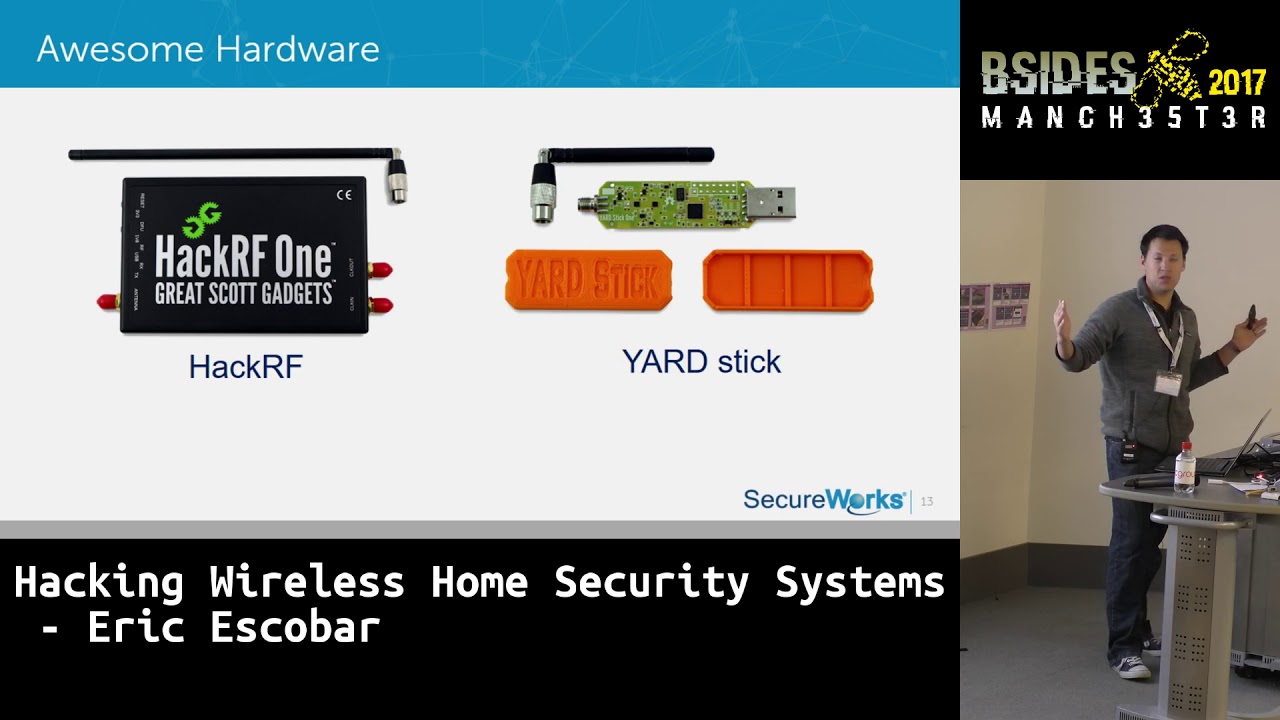
hardware fan if any of you know me and so the first one i want to just kind of give a nice shout out here is to the hack rf1 and everything i'm going to talk about today's stuff that you can go out and buy online now i know your wallet's already crying but trust me this stuff is really cool so the hacker f1 is a very unique device right it's what's called half duplex transceiver that means it can only send or receive uh but not at the same time but it can send right and so it has an operating frequency of up to six gigahertz 20 million samples per second i know a lot of this doesn't
mean much to most people but what's interesting at the end of the day is that this little you know device here is a usb piece of hardware that plugs in your computer you plug into your antenna and you're up and running already sampling the data from the airwaves and all these different signals and you also have the ability to send uh it does start around the 300 range for an original great scott hack rf but you can probably get a clone these days from china for about a hundred not condoning it but they're out there point is this is a great place to start when it comes to really getting into the research of software-defined radio and the
capabilities of it i do want to make an honorable mention to the very well lovely portapak i happen to have one right here this is my porta pack and it is super cool and so what happens is inside this device is a hack rf1 and it's got a full interface uh with a screen touch screen and a dial that allows you to make on the fly modifications so it's a great update to your hack rf1 if you get the opportunity to uh build one out and so it comes as a kit and an addition but so far what's what what i'm talking about is these are very purpose-built pieces of hardware and they're also you know kind of on the pricey side one
of the other great pieces of software-defined radio hardware out there is something called the lime sdr and this is definitely one of my favorites what's really cool about this piece of hardware it does full duplex that means you are now capable of using software to not just receive radio data but you can also send radio data and now that can be dangerous at times and you need to make sure you're in the right place but this is the kind of hardware that can be used for all different kinds of things for instance you can use it for radio astronomy and radar but what i like the most is the fact that these are one of the pieces of
hardware how you build like a femtocell or a cellular base station so pair this with a small computer like a raspberry pi and you can actually run your own cellular network um you would need to look into the the legalities and the operating of that but today hardware is within price range and achievable to do these kinds of things so it's not just the people building stingrays that can do interception you have the ability to so definitely very cool stuff all their hardware or maybe stuff that's more familiar and more i don't know let's say affordable is the great rtl sdr and so one of these little guys here is within reach and what this device is going to do is
it's going to give you a usb interface to a radio connector and allow you to pick up very common frequencies right up to about 1.8 gigahertz range and that's going to cover a lot of the things that you may be receiving for stuff like advisory messages in your community fm radio am radio so you can listen to music and also some television channels this is a great introduction into getting into software-defined radio these pieces of hardware are very cheap and readily available online and so uh definitely really cool to check it out i do also want to mention this very interesting tool called and you can see that it has four antennas it's actually four of these little rtl sdrs built into
a single unit but do you see that little thing on top there that actually happens to be a raspberry pi header so this device is built specifically for mod like adding a raspberry pi to it to be that software controller a fantastic little device definitely on the more expensive side but one of the benefits to having multiple antennas when it comes to a software-defined radio is you can do direction finding and passive radar and by direction finding i mean you place four antennas out and basically you can measure the signal strength and determine in which direction based off of which antennas are getting stronger signals from a device so you can do like scavenger hunts in the real world with
little devices that are broadcasting uh messages you can also use it though to find pirate radio stations so again i'm going on about some really cool stuff and let's uh let's start to show you what you can really do with this and i promise you there's a lot you can do with an uh software-defined radium this list goes on but i've highlighted in bold a couple of the cool things uh tracking aircraft is a fantastic hobby that i love to do decoding poc sag or flex pager traffic is also awesome did you know we still use pagers today yes we do and you can pick it up with an rtl sdr sniffing gsm signals yes cell phone
signals are absolutely within range receiving noaa satellite weather images there's actually noaa satellites passing overhead everywhere in the world and they're broadcasting down image data from the satellite and you can pick it up with one of these little um software-defined radios you mentioned you can listen to fm radio and music and finally the international space station is also part of this game so lots of cool stuff out there hardware done let's talk about some software this is the part that you can explore this is the part where you get involved now there's a ton of different tools for windows and linux canoe radio is one of the most versatile tools i personally use a gqrx on my mac
and then for the windows fans out there sdr sharp is also a great uh tool sdr the sdr play team that also makes hardware does have their own software called sdrnl but these are some great places to get started when it comes to comparing your little dongle with your computer and seeing what you can start to pick up first build project as promised this is what i like to call the freak show well i mean i didn't pick the name this is the name that was assigned to it from the developers but i do want to share it with everybody so i'm not just kind of looking away i'm actually building it up and powering it
on let's talk about what this device is so a freak show or a frequency analyzer right we take a raspberry pi we pair it with an rtl sdr dongle right these very cheap 25 ones and so as this boots up in linux what it's going to do is it's going to run a piece of software and it's going to give us the capabilities to do frequency analysis on the fly so this is a full mobile frequency analyzer that's touch screen it's a really cool device it runs on um raspberry pi os and so i have it up and running right here and so the whole build kind of looks like this and you can see here it's already
scanning the airwaves so pair this with a battery pack and a raspberry pi and you're ready to go so you want to build one yourself super simple all you need is a cheap uh pie touch screen and a case right anything will work slap it all together a nice cheap rtl sdr an antenna would be helpful you absolutely need one of those and i found that sometimes using a stylus with the touch screen gives it an extra bit and this project was put out by adafruit so all the documentation is available online for this freak show uh the setup is really simple you get your memory card you get that uh the os installed uh you get your screen drivers for that
touchscreen again that software is from adafruit it's on github and then you simply just run the freakshow python file i personally like it to auto start but it's a fantastic really cool fun tool you can set the frequency that range that you want to monitor and a way you can go and it also has a couple different views so right now we're in the bar and like the graph and if we simply touch it uh oh sorry if we go to switch mode we can also get a waterfall view and we can see all those red parts are actually i have it set to fm stations like radio music and those are actually stations and so that's the
signal strengths of this stuff in my area so first project hope everybody enjoys it and thinks it's super cool hopefully this is something that everybody can build out and achieve if they want to have a handheld frequency analysis tool that they can take places with them now uh while we're kind of talking about the idea of software that you can start working with on a project there are some really cool pre-built tool stacks right i talked about using um raspberry pi os or raspbian to get this up and running um but there actually is a pi sdr image so this is a complete image that you can flash onto the memory card of a raspberry pi and you're up and
running and ready to go and it's got all of the tools pre-installed we mentioned earlier stuff like a new radio and gtrx but also it has the tools capable for some of the lime sdr stuff um and multimon to allow you to handle multiple pieces of equipment and so it's a really cool pre-modified raspbian image and it's compatible with every raspberry pi so if you don't want to start from scratch and install the software yourself go ahead and check out the pi sdr image pre-built with everything you need to get you up and running with your favorite hardware our second build project as promised this one is going to be a plane spotting device and so i've been running one of
these in my house for about five years now and it's called a pioware and pioware is put out by the flight aware website and it's a pre-built operating system and you flash it onto the memory card like anything else and it gives you the opportunity to plug in again another little usb dongle into a raspberry pi and yes for those that are fans this is an original raspberry pi generation one that's how long i've been running this um and so you pair that and you plug in the antenna and i stick it in a window on a second floor and it gives me a broad range that i can see all of the commercial aircraft and other
airplane vehicles and helicopters that are broadcasting on these signals specific to plane communication in my area so let's talk a little bit about this right we what we're doing here is we're taking our ground station we're giving we're making it available to ourselves and we're updating or uploading this live flight data to flightaware.com as part of their support program and so that's how they get the opportunity to see where all these planes are live in the air it's because there's thousands of little base stations all over the world running on raspberry pi's it's uh now when you're running it on your local network yes you get access to up to the second live data received by the device and so
that web interface i had up is actually a screenshot of what's like it looks like from my house right now here over in saint pete um and then uh you can then track all this additional data on flightaware and again uh floyd was a really cool site uh and to get started with this program they have a lot of great documentation on there about how to get your raspberry pi set up what hardware is suggested um and how to get the most out of it and actually my favorite part of all of this is you get an enterprise account for being a contributor and so by running pioware on your raspberry pi you're not just seeing all this great
data in the airwaves but you are also um contributing to the website and helping them live plot all this information and compare all the data they're receiving you get an enterprise account which i'm a travel bug when work sends me out places this helps me know exactly where everything is all my inbound and outbound flights so i just think it's an extra benefit so what do you need to build this thing up well adsb runs on a very specific frequency it runs on 1090 megahertz but also has a portion of it on 9 78 but we'll focus on the 1090 and so what happens is adsb or also known as nextgen is airplane communications or
pretty much anything floating in the sky these days and uh and we use a piece of software called dump 1090 again it's pre-loaded on the image from the flightaware team and you use a little dongle now you can get a dongle from flightaware or you can just get one of these super cheap ones um off the internet and we decode this information so we're passively listening we're not transmitting anything and the plane is constantly communicating all different types of data about where it is and what direction it's heading its velocity and its altitude and its tail number all kinds of great information right and you can compare that online and even look up the individual planes
and where they're flying from and where they're flying to and so to put this together super simple you don't even need a case i mean i have a case but it's a little acrylic thing you don't need a screen all you need is a raspberry pi any model will do a little sdr dongle you can even use the antenna that's included with it right a little cheapo antenna although getting a more upgraded one is better because initially you may only get about 50 to 100 miles of visibility from your location if you have an upgraded antenna you can see up to 300 miles from your location all of the airplanes in the sky and so
very cool uh concept here now um you do want to make sure you do have a clearview sky that you're not like under anything or any kind of debris or trees in the area so you want to want to give it a clear you know unobstructed view um but uh but fantastic fun little project like i said i've been running this myself at uh at my house for many many many years and i really do enjoy um participating in the flightaware program and just kind of get an idea of what's flying overhead i happen to be in a flight path and so it i can immediately take a look on the raspberry pi's web interface and see
what plane it is and if it's jetblue or whatever where it's coming from and all that fun stuff so really cool project uh the software is also very easy as i mentioned it's a pre-built os so you just go ahead and pull that from the pi repository or from their website at flightaware.com then once you get the device up and running you have to claim it on their website so you create an account and identify your device calling home and then from there stats away so jump in uh and have some fun i want to also give a shout out to boats like to have fun too uh also shout out to the suez canal
and so like boat or like planes boats also are very talkative right and so equally there's software out there that you can use the same setup to pull in port data so if you happen to be near a port this may be of interest to you to track live boat communication and location data god the suez canal probably looks like a mess right now but um but what this is is it's called ais that's the name of the system that is used by maritime tracking and it happens to operate on 162 megahertz and so this chip tracking there is an image this r pi a i s image that's out there and available and you want to check out the
the uh dispatcher right and so this is going to be the active decoder and it's going to help you identify some of those things and so what people do is like uh myself when they set them up for airplanes people go along the coast in all different ports and set these systems up to track where boats are live in the real world from radio waves and again you know planes and boats what they're doing is they're constantly communicating with each other they're sending information back and forth who am i where am i going how fast am i going right um and and what's my gps coordinates and all this great stuff and so so this is happening live in real time
all over the world from all these different uh maritime ships and storage uh container ships and and boeing planes and airbus planes like it's really fantastic and crazy how much data and communications are happening in the airwaves around us and something as simple as these little devices like a raspberry pi paired with an sdr we can start picking this information right out of the air and decoding it and seeing what they're saying and plotting this data on maps and doing research it's really really really cool you know so on to our third project you two can build it home now i'm gonna kind of preface this this is definitely not my specialty this kind of goes out more to those ham folks
right and so we're gonna talk about a project that is focused for the the cam community um and i'm just gonna say first off i am not uh a ham radio uh expert by any means um but this is gonna be really interesting right and so there's a system called aprs right the automated packet reporting system and what it is is it's a real-time communication system um digital right through the airwaves and it gives you the opportunity to share information and share messages um and so what's really cool about this is it's like having your own private mini radio network right now oftentimes aprs is used for plotting locations of moving objects like vehicles so cars maybe somebody who's
out hiking or on a bike ride um uh but essentially the concept is those devices the information they would be transmitting is this is where i'm at this is my gps location this is the speed i'm moving right other uses of of this you know kind of short digital real-time communication is going to be stuff like radio station telemetry or weather station telemetry and so these are places that are broadcasting the weather all day and all night just automatically sending it out over the airwaves for other people to pick up and analyze and read and so i kind of throw this in there think of it like a short messages like an sms for ham radio stars um
and so so what we're doing here is we can use something called an eye gate and a digipeater right and we can build a base station so we're now moving from the fact that all of these messages and bits of information exist within the airwaves around us and we can collect them into our computer and start to decode them and start to analyze what they're what they're sending and even maybe even send ourselves and participate if we have the proper licenses and so these digipeaters they listen for these radio packets and the airwaves they receive them and then they repeat them so they can help you know expand and broaden the network like almost like bouncing points across
a vast system or network of base stations you know if you can't reach a certain distance then you can have digipeaters to help broadcast and rebroadcast it farther and then there's the concept of an eye gate this is taking it to a whole other level we're taking stuff that exists in the airwaves radio packet data and we're capturing it and forwarding it over the internet and then brought re-broadcasting it on other eye gates so now suddenly a ham radio person using a standard radio can send a message it gets picked up by an eye gate sent over the internet and it can be rebroadcasted as a radio message in another country i mean this is super cool stuff here and
you have the capability of sending and receiving data on a global scale all thanks to the help of a raspberry pi right and so what does this look like um i mean let's just think of it this way right you have passive right we talked about this earlier with the concept of rx and tx receive and transmit it right and so passive eye gates are going to essentially listen um to all these airwaves and you collect it with your raspberry pi and sdr paired together and then you can rebroadcast online and rebroadcast the other senders so even you without a ham license can participate in this stuff by being a passive listener and um and capturing this information and
making it useful and available for others to pick up so what does this look like well you take your fantastic cheap little raspberry pi again any model doesn't matter you use your rtl sdr um and you want to have some kind of uh device right especially if you're transmitting you can use some kind of a radio device and again if you have a ham license transmitting is going to be just fine but if you want to participate and just kind of listen to some of the data packets that exist out there and and be a part of this really broad community i think um you know uh some of the the passive experiences are going to be great but
it doesn't take much to kind of just get set up and to listen in on the aprs uh you know frequencies and some of these messages and again this isn't going to hit home with everybody but for those ham folks hopefully you get something good out of this the software setup is fairly simple you use a piece of software called direwolf it's right there on github and um essentially the idea is that the software is going to help you decode the data that's coming in out of the airwaves on your raspberry pi and you can again uh broadcast this out over the internet to other eye gates you can decode these messages you can even
um you know start to break down some of the packets because this is going to be data center you can potentially send images you can send voice you can send codes you can send all kinds of really cool stuff so be sure to check it out three projects as promised but there's more right what can you do with a raspberry pi and a software-defined radio okay i like this one noaa and meteor which by the way meteor is the russian weather data system um but noah right uh they are i mentioned this earlier the weather set of lights are taking pictures of earth from space and then broadcasting that picture just captured by a space satellite back
down the earth to be picked up by the average people like you and me this can easily be captured on like 137 megahertz and uh all you have to do is just download one of the pieces of software to decode this information plug your raspberry pi uh into your uh rtl sdr any kind of passive listening device and again we're only listening here but you too pick up passing overhead weather satellite imagery as it's happening super cool project lots of fun did i mention the international space station is also sending out messages so there's a protocol called slow scan television or sstv and the international space station says it's passing overhead um which only happens you know on a
particular interval is sending down television signal or essentially just you know images and you can go outside at the right time of day or night and pick up the images coming from the actual international space station so you're like almost we'll call receiving or passively communicating with an international space station as it's sending down fun little pictures uh year around and so this is a recent screenshot from um from a bit ago and there's a website that archives this but just check this stuff out super cool fun projects especially if you got kids this stuff is is right up there here's one for you the radio sonde all right also known as weather balloons in
this country at least and what these weather balloons do is they're sent up by researchers to collect all kinds of atmospheric data but they're constantly broadcasting and they're they're sending their location and all of their measurements and so if you're in an area where radio signs are often sent up into the atmosphere and used by researchers you can actively track them and also pull down some of their live transmitted data regarding what the weather balloon is picking up and all those environmental variables you may also stumble across one or find one in the wild now you should return it to its owner but another awesome cool thing that you too can do at home with a raspberry pi
and an sdr did i mention good old fm radio yes we um you know most of these sdrs operate within that frequency range that supports standard fm radio but we're not just talking standard anymore you have stuff like rds where it embeds that small data like have you ever seen where maybe your car or something is able to tell you the name of the song um and the track information and the station information and even embed like a picture or something like that and so you can decode data along with sound these days using a software-defined radio now more recently we have stuff like hd radio which i'll tell you what not the same by any means it's a
completely new standard um but it is uh it just so happens to be running on the same frequency uh it's just a little it's just very different it's truly revolutionary compared to the way frequency modulation um was being used for music uh at the time and so because it's very technical and because it's very deep um you know using software to help decode hd radio is a very cool technique it's a very fun process and there's so much you can learn about how data is being transmitted today when it comes to something as simple as music so great research opportunities there now i've noticed that the question that q a board is starting to grow um and uh and so i want to kind of
just knock out a couple of the frequently asked questions and then we'll we'll get to those right and so let's start out with uh some important questions do you need a ham license um and the answer is no if you want to participate as a passive listener you do not need one it's because it's already in the air there's technically nothing stopping you um but there are still caveats it's definitely not that simple but for the most part we're going to go with no you don't need it to listen now yes if you want to broadcast do you want to participate in adding things you want to be active in that sense and it also depends on what frequency
you're broadcasting on because different levels of your license uh allow you to broadcast on different frequencies and different strengths for those that are very interested it's very fun to explore and get out there again i'm not but i've considered it um we'll see maybe one day but uh but no to get started in any of the stuff that i talked about today here you do not need a ham license this is stuff that you can build and play with at home now where's that caveat i mentioned oh it's buried deep in some stupid freaking you know lawyer jargon uh well i've already highlighted it here for you section d says as follows transmitted over a
communication system provided by a common carrier unless the communication tone paging system or communication wait wait unless it's a paging system huh what the heck does that mean well it just so happens that the only thing you technically are not supposed to be listening and decoding is pager data all right good old way to fix things right um you uh you don't encrypt or scramble it because that's highlighted in a obviously if it's encrypted or scrambled you're not supposed to decode it i get it right somebody's trying to hide something but they didn't fix the pager system they just wrote a law to tell you not to decode the pager system it's still unencrypted don't do this
um so let's talk about the illegal stuff decrypting encrypted traffic section a we just mentioned commercial page data poc sag flex uh you know uh oftentimes uh encrypted information is also gonna be uh police law enforcement government um things of that nature uh they they have the opportunity to encrypt it uh and um they ask you kindly to not decrypt it uh it's also kind of difficult initially unless you really know what you're doing uh the other illegal stuff i mentioned do not transmit without a license that goes out to all you people that are trying to be a pirate radio host people trying to interfere with emergency services uh adsb is cool plane tracking is fun but do not
transmit that you are a plane right that's how you get in a lot of trouble uh now there are exceptions right there are there are still some use cases where transmitting is acceptable uh when it's stuff like super low power cross range think of your router your wi-fi router at home is broadcasting it is so low power and so close range it's it's acceptable right or those little fm transmitters in your car that people used to use so that you can um convert your music to your radio without like any kind of like i don't know cassette adapter the point is is things like wi-fi things like bluetooth um you know anything within your vicinity you know stuff that's not going
miles and miles it is still perfectly acceptable to transmit we just don't think about it in that context because it's kind of just we're used to it but uh but don't do any of the illegal stuff um and if you do want to transmit you do want to communicate on the ham frequencies do check out getting a license uh and stay away from anything encrypted and stay away from pagerdata um yeah just just don't do it um because uh you're gonna kill the fun for the rest of us and uh nobody nobody wants to be that person so so thank you um don't be this guy uh this is a an art installation in new
york where it's called the holy pager and they used three software-defined radios hooked up to a small computer like pi and they listened to the pager data um in the vicinity of all of the hospitals and i'll tell you right now hospitals are the guilty player when it comes to pager data today and imagine what kind of information is transmitted in a hospital environment if you guessed hipaa you are correct um and so so this this printed out all of the pager messages with all of the patient data on them um and and it just goes to show that um wrapping a law around something without actually fixing the problem isn't exactly the best way to go about
it um but but keep in mind again i'm not condoning this this is definitely still illegal uh but there is technology out there if you are curious so uh so as we're starting to round up um you know i always like to leave um my uh my guests in the attendees with the thing places that they can go learn more right i talked about a lot of information very quickly today but uh but i didn't learn all this you know magically out of thin air uh i have a couple of favorite youtube channels that you can check out so andrea spies is fantastic he's a great hobbyist and he's really fun educational videos and he has entire segments
on um you know raspberry pi software-defined radio capabilities um and things around that tech minds is also a great tutorial um for for all kinds of stuff that you can watch and and work along with and it really just does great job at breaking down um how sdr works and how a lot of these things particularly work and then there's modern ham um and that's a great place to kind of get a nice soft introduction to the concept of uh getting into the hobby of uh you know riding the airwaves right and so uh some just some great places to check out that i absolutely always suggest um and with that i would like to say
thank you and open up the floor to question so um looking over here earnest
all right so ernest took off i guess i'll answer the questions myself and he's back sorry i'm i'm multitasking have a chat have a chat okay um let's see anybody have any questions i don't see there's a ton of questions i don't know i hope we don't run out of time let's get some questions in i don't see all right so i'll read them um so i mentioned earlier about creating your own cellular network um so what you want to do is is in on the software side of things uh yes you're you're you're hooking into some kind of existing internet network connection um but the idea that yeah you need to have you can run a
cellular network as like an isolated thing and not hook into anything else or you can backhaul it over the internet um hopefully that gets into it and and then again i haven't made my own cellular network but there's a ton of great research out there on how to build your own cellular network um this is a good one coming in from uh from our very own derrick um what is some of the legal issues uh we need to be aware of when we start scanning on this thing and so yes i covered a lot of that uh towards the end where um listening is is is no harm no foul unless it's uh encrypted information then you want
to just kind of stay away from it and page your data right and you have to make that extra step to decode the pager data uh and so just don't do it um all right uh we have a question here regarding uh for those that are starting out with sdr do you recommend a multi-purpose antenna for different projects so you want to have a variety of antennas i actually have a bunch of different ones um some of my antennas are these long weird adjustable ones i have much bigger antennas than this and then other antennas a little bit more like a like a hard wedge that's set and so what happens is the antenna is really important to setting the
frequency that you're picking up um and so you can buy purpose-built antennas that match uh the frequency that you're trying to listen to or operate on whereas some of these other more collapsible ones or flexible ones allow you to tune into the frequencies that you're trying to work with tons of great stuff online in fact when you buy an sdr oftentimes you get the opportunity to get it as a kit with different types of antennas with it all right uh does rail use similar communications like ah so uh yes there are communications surrounding rail i didn't cover it but um but yeah you can listen to to the whole myriad of planes trains automobiles um it and boats it's you'd be surprised
the things that um our modern infrastructure is blasting out on the airwaves on a regular basis um our slides will be available through the b-sides community um any opinions on the yardstick one so yeah yardstick's another piece of hardware there's just so many like there's so many great pieces of software-defined radio equipment out there that i can't even um you know cover them all so uh but yeah uh yardstick is also a great one um there's there's even stuff focused specifically the bluetooth there's all kinds of stuff like that uh does the tsa ever stop you no i've never been stopped by the tsa in my life um and i wonder if it's all security
theater then in that case um any licensing requirements to use laura no laura wan uh in lore in general is close range uh low power transmission it falls in classifies under the same thing as wi-fi and bluetooth so have a great time um and uh greg i grew up on the same street you did so i think that covers all of the questions that were asked during this session and we're coming right up on time so again thank you everybody go out buy yourself raspberry pi go get an sdr go um you know ride and surf the airwaves and see what kind of great information you can download pick up transmit if you're licensed and just have good save fun thank you
Related talks
 42:21
42:21 42:47
42:47 46:08
46:08 37:43
37:43 35:28
35:28 42:28
42:28