Cracking Encrypted Telegrams of the British Empire for Fun and Profit
Show original YouTube description
Show transcript [en]
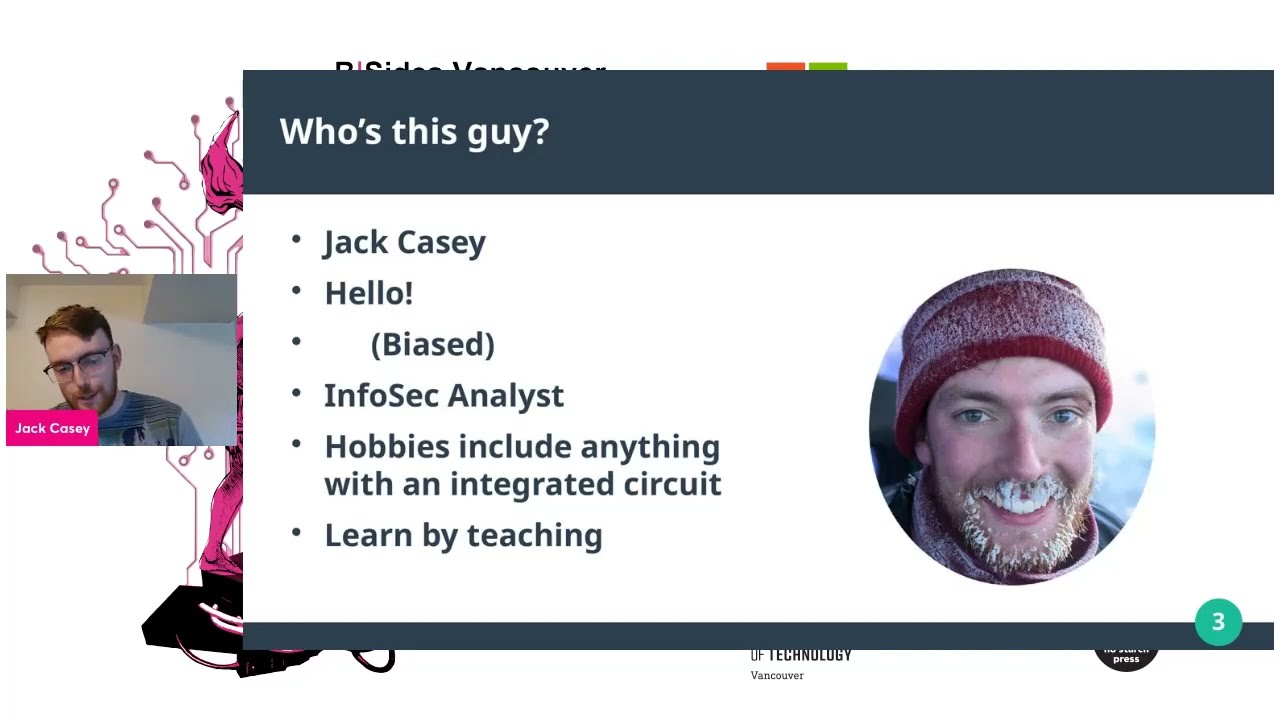
all right so hello everyone and yeah so just before we get started it's probably important that we oh where's my button there we go uh important knowledge that uh the land i'm on and you have is unseated territory of coast salish peoples here in western canada uh specifically where i live is the territory of muslim squamish and labor tooth nations uh what we are going to be talking about too before we get to that hello uh my name is jack i'm originally from ireland there's supposed to be an irish trifler next to that word biased everyday unicode moves further from the light of ascii but we're going to be talking about irish and english relations from british
relations today and it's important now to acknowledge that because of my background there's going to be an inherent level of bias we'll try not go into it too much but you know it is what it is uh i grew up with computers and was kind of got into it at a young age and it's gone from one place to another at the minute i'm doing kind of information security and of course as with any of these things any opinions today are mine not that of any employers and personally i'm a big fan of learn by teaching um in my off time i teach some rock climbing classes like rope safety and it's a great way of keeping skills
up in that regard and so uh put this forward on the osha said i'm relatively new to this so if there is any mistakes or or corrections needed just bear with me we are very briefly going to talk about where these telegrams came from why we're talking about this at all and then we're going to look at cryptography itself where did it come from um what followed cryptography was cryptanalysis because if somebody's made a bro made a code it's worth breaking uh so we'll see how that developed prior to the invention of computers some basic approaches to code breaking uh we're then going to take a look at the telegrams themselves and then we'll take questions at the end
uh these telegrams are courtesy of this guy me all casey he prefers if i call him dad but you know he is very into uh irish history um and is writing a book on the suffragette movement at the moment and so while he was digging around in the archives during kovic that's where he found these encrypted telegrams um there are many places you can start the story we are starting the story in 1913. uh it was around this time that there was a strong push in ireland and in the uk for uh women's suffrage the right to vote um and things had progressed past the peaceful protest um point of the discussion and um a few
women were going around breaking windows of dublin castle uh to try and escalate the process protest and five were arrested um as with any civil rights issue this is a pretty sensitive topic uh you don't really want this getting willy-nilly into the press it can cause all sorts of kerfuffles as we see today uh that story never changes uh and so because this took place in ireland uh which was uh had kind of colony status um at the time you had cases where the british um establishment were employing locals to help with whatever it may be like farming or communications or transport and so you end up in a situation where um one group of british officials will need
to get a message to another and so they'll use telegrams given the era but these telegrams would be sent by irish operators and for that reason anything sensitive would either need a different route to to get uh to to headquarters or would have to be encrypted to avoid leaks um and this was such a or was considered such a sensitive issue that the prison was asked to send daily reports to the castle just to to ensure that there was no mistreatment and that there was no issues that they weren't aware of um to do why do we care about british telegrams um we don't um it's well we do uh it's more of a case that
the story remains the same uh any mistakes that are made in cryptography today have been made for the last 2000 years and it's much easier to talk about uh military communications that are a century old because uh if i was to do this for anything in today's world one it would be a lot harder and two i'd probably end up in prison uh so best avoided uh why do we care about cryptography at all secret messages are cool we we knew this as children um this book was my introduction to the concept this is a book by an irish author um we made a great series of kids books i'm told someday it'll be turned into movies
but uh that remains to be seen uh and along the bottom page of pretty much the entire book there is these series of symbols um and if you manage to decode them there's a second story in there so one it's good value and two it's just kind of engaging uh in particular this one is not based on the english alphabet which is interesting because some of the techniques we're going to look at later rely on knowing what language the uh plain text is in and just as a bit of lingo plain text just means the message the thing that you're trying to say ciphertext is the encoded message that you actually send the idea that if somebody captures that
there's no problem here uh the key is the password to to uh either create the ciphertext or to decode it and then cipher or code is um used to refer to like the type of code or the the paradigm or protocol that we'd use um why overall like it's it's why do we use this because it's one thing to keep children engaged it serves very serious um purposes for for militaries to be able to communicate securely amongst themselves but also that uh worthy is to fall into enemy hands that you don't let the enemy know what you know is the whole game that gets played there uh less seriously there's secret societies make use of these um be it the
freemasons they have you know i'm very told very secret pancake recipes there is a or there was a pottery recipe found that was encoded from like i i think it was pre-roman like it was it was ancient but um it was considered important enough and was enough of a competitive edge for the a clay maker that he didn't want that to become public public knowledge love notes we've seen that throughout the ages um it's so useful that even evolution has come up with it i'm not a biologist uh i'm pretty far from a biologist but there is a line of thinking as to how the sclera in human eyes developed in that we are such absurdly social
animals that being able to tell where somebody is looking is useful um because they might be hunting something or what have you whereas prior to that there was enough of a downside in the information you give away that animals tended not to to develop a very visible sclera and i don't know if there's anything to this but uh it's certainly a theory that uh kind of mirrors the the utility of it um as we said before this thing has been around forever one of the most famous ciphers is a thing called the caesar cipher as far as i know developed by caesar or developed certainly used by by caesar um it remained unbroken to the as far as
i know and as far as the records i've been able to find uh until about 800 years later there was a um arab scholar whose name excuse me al kindy apologies now if i mess up pronunciation up but around 900 ce broke the caesar cipher um but it remained in use uh certainly until many centuries later um and even after it was broken and even into the kind of the modern age it's such an easy for to use computationally it'll get used even though it has been broken and decided the cipher we're gonna look at today is even simpler than caesar so there's a time and a place for this kind of thing [Music] yeah this continued largely
without too many developments up until kind of the turn of the 20th century uh at this point uh there was very much a culture of intelligence in europe and the various intelligence departments would have been using different ciphers uh then world war ii while hell broke loose with the development of enigma it was such a new class of cipher that to break it computers were pretty much required and so that's what we saw with with turing and and the gang at uh bletchley park um and then typically this part is let me say into the future um which i think is unfair because i've been hearing about like quantum resistant encryption for as long as i've been paying attention and so
it's kind of here there is like shores algorithm was developed in in 1995 and we just didn't have the computers to run it it's here i'm not here to talk about it but uh there certainly will be interesting developments in the in the very near future if not already happened and will come to light we'll see uh so caesars and and and ciphers uh sometimes they don't have to be crazy complicated if uh it's easy to implement and it's hard to get it wrong then it's useful um especially when anybody trying to decrypt this is probably illiterate so caesar was dif dealing with a different threat model at the time uh on the slide here we have uh what's called three to
the left which would be e becoming b uh caesar himself was fond of three to the right so the letter c would become the letter f and his nephew i think used one to the left there's a few variations on it and on the right hand side here you have another cipher that was made popular by the wire great tv show if you haven't seen it and it was used to encode phone numbers to not give the game away as to who you're calling at a given time and that one is absurdly simple you you take the number you want to dial or you take the number that's on the the sheet of paper you hop over to five and that's
the real number that you dial five and zero swap places and then bob's your uncle so on this particular example we have uh oh two four five seven that would be your plain text and then why you'd write down a bit of paper would be five eight six zero three um so yeah quick note on these apologies for the uh pictures uh these are taken through i think a display case with plastic packaging and these are then screenshots of a you know it's a chicken drink of it we haven't been able to go back and get better better ones and also to note we had a head start with this given that the telegrams were
stored with a clear text and copy of the minutes of the meeting uh typically that won't happen but sometimes it does uh there is a huge vulnerability in any crypt uh cryptographic system if you have the plain text and the ciphertex at the same time it makes analyzing it a lot easier um we also saw different copies of the same telegram so this one might be slightly easier to see but the letters seem to be grouped into groups of five um there is definitely uh ciphers that rely on that that that only work um on on messages that are of length five or are otherwise would would be related to this this is a bit of a
red earring in this case as we'll see in a minute so i've just transcribed the message here and there's a few things we can have a look at one is that groupings that we look at before um so i've i've just spread them out here to kind of copy that over and the other parts are some of these are english words um so referring to themselves uh there's a few reasons why this might be um i'm inclined towards human nature being lazy uh encrypting is is work it slows down it takes time if the word doesn't give any information away do we have to encrypt it it's the same logic behind the words that are left unredacted in
classified documents or rather documents that have been unclassified um it's possible there's a human error here um but i i i go for the the idea that like we're just going to encrypt names places things that are useful to people who might be reading this um i think that's all we'll get from this two approaches we're going to take to code breaking one is frequency analysis and the other one is a known plain text which may seem like cheating but not all of the time
so here we have frequency analysis on the left hand side there in that table uh i've counted up all of the instances of each letter and we have the top eight and then on the right hand side we have the top um eight letters that get used in english and alphabet and you can see there's a little bit of a mapping you may be maps to e then there's a few that like are kind of similar values that could get mixed up um through the magic of editing presentations we're going to see how this approach does um and it turns out two of them are correct and the rest are just wrong uh so u in fact does map to e h does map
to n uh which is to say that like a u in the plain text or u and the message that you're sending becomes an e in the encoded message that you transmit um but it's not great it turns out that this particular cipher is what's called a monoalphabetical substitution cipher which has many words to say all of the letters are encoded with the same key with something like caesar each letter is encoded slightly differently so like an a would become one letter but then later on the message it would become a different letter and because this it only uses one alphabet we can try and solve it piecewise where we put in letters that we know or suspect and see if words
words emerge because if you get like elementary and you get all of the e's you can have a look uh a little bit of a guessing game a little bit of luck but uh another approach we have is we if we know these telegrams are referring to specific prisoners or to a specific location um we can use that information to try and uh make our lives a bit easier this is actually part of how enigma was cracked uh whether you're signing off a message with hh or you are including a weather report there's going to be specific words like cloudy rainy what have you in this case we have some prisoner names with very useful um letters in it for example
barbara there at the bottom we have three a's in one word and spraced in a very like kind of noticeable pattern and that would be useful for a unknown or guest plain text analysis in this example we're looking at kathleen emerson uh we got all them e's there and it turns out if we say referring to something we have used in the exact same uh location and so if we have a look back at our frequency analysis here okay we can be pretty reasonably sure that that e matches up and then taking from this we can extrapolate k probably maps to k y probably maps to a and and so on and so forth um
to do so if we proceed accordingly we can kind of work out a key and start decrypting the message uh and it's it's uh kind of like uh spot the difference uh that you do as a child you see what fits and then um amend the key that you are i've come up with and keep going so here we have referring to kathleen emerson in today's free man prisoners themselves made any complaints about the so that can't be right what's what's going on here um there's a few different reasons uh that this could be uh there are certainly ciphers that have a limited size of key uh so there's two in particular uh take keys of 25 characters english alphabet
having 26 characters doesn't play ball very well and so i and j are usually combined on the idea that like you should be able to tell if it's supposed to be an iraj i don't think that's the case here because the cipher in use doesn't have that limitation it is possible that this was just part of the culture i and j are equivalent when you're doing encryptions and that way it's one less decision for the human to make and one less error for the human to make uh personally i am guessing that the i and the k in the key were supposed to be swapped because a letter mapping to itself might try you might try and avoid that
um i think this one is an open question uh but certainly for this message uh i'm going to say that any j in the message that makes no sense that should probably be an i and this can be confirmed because there is no i in the cipher text like at no point is there any letter that maps to i and for this particular cipher that means you can't have the letter in the message so hence we're finding js um this would not be the first time that a notable cryptographer has made an error uh here we have kryptos which is a very famous uh sculpture in the central intelligence agencies um like lunch garden uh it's split into four quadrants
uh the fourth one relies on the previous three being broken there's a hint in the message that will help you decode the fourth and it turns out there was an error he the guy that sculpted at jim sanborn he missed a letter when he was uh creating the second quadrant that led to an incorrect uh decoded message and led to the fourth one being impossible to solve so he issued a correction in the early 2000s to make this public so that the fourth one could at some point be broken it has yet to be broken so it's uh it's one it's a little mystery on a side note if anybody would like to buy me
lunch at the cia you call me you call me so here we have the final telegram um referring to kathleen emerson in today's freeman have the prisoners themselves made any complaints about visiting box as alleged and is not the visiting room the same as that was used by ordinary political prisoners cattle river etc um so this may or may not make much sense uh cattle drivers were a type of protester at the time um political activist uh and part of the friction at this time was that the suffragette prisoners wanted to be treated as political prisoners because they didn't see themselves as criminals breaking windows they saw themselves as [Music] political protesters demanding change and so that's why it was important to
them that they'd be treated in one way rather than another and they were very successful and they certainly won the fight um and they were one status of a political prisoner uh they were allowed visitors and they were given things like flowers in their rooms or like better pillows they got to wear their own clothes as opposed to uniforms um visitors who brought cameras this is some of the in here and long term it had a huge impact um it was part of the zeitgeist for for that decade um er women's suffrage and the right to vote was was promised as part of what ultimately failed in the the easter rising in 1916 uh but canada's markovic
was elected to westminster being the first moment to do so and then uh after irish independence equals like parliamentary suffrage was granted in 1922 and has been ever since so uh we have the the centenary this year and that's me um yeah if you are looking to get in contact i'm not so much on the social media these days but email is a solid i will eventually see it on twitter um but yeah we'll go from there if anyone has any questions um
i see one that was asking how long a modern computer would take to crack such code um and i didn't actually check but the answer is like microseconds uh there is really a very short number of of possibilities even the length of the message is quite short uh any modern ciphers will use rounds and iterations um and that's part of what helps bring about their security um yeah it would it would be seconds
and there was a question that was just any resources to learn more about cryptography there is a really good book called applied cryptography that gets a bit heavy but is is quite good uh otherwise i would honestly say get an artemis file book and figure out the the story along the bottom uh you know i honestly i can't even remember uh the story itself but it's uh that to me give me the basics of like the idea behind the whole thing and then certainly you can look at more modern um diverse
i do look forward to uh the aes 256 crypto talk uh from 25 from 500 years from now um oh sorry i probably should have mentioned it was not kilmainham jail um it was tullamore prison or tillamore jail uh so it would have been in county awfully uh i think we actually have another map here
and so telegrams would have been between uh tillamore prison in uh kind of the middle of the country to dublin castle over on the east coast just having to scroll through in case i missed any
alrighty i think that's me thank you very much to besides for having me and uh yeah enjoy the rest of the conference thanks so much jack that was really awesome all right so if anyone has any more questions for jack uh there will be a q a and you can just uh go on in there and reply directly otherwise just enjoy the rest of the conference and uh we will hopefully see you tomorrow you shall see me i am yeah i'll get back to y'all happy for sure all right have a good one take care bye
Related talks
 50:42
50:42 48:24
48:24 16:06
16:06 31:09
31:09 28:37
28:37 36:09
36:09