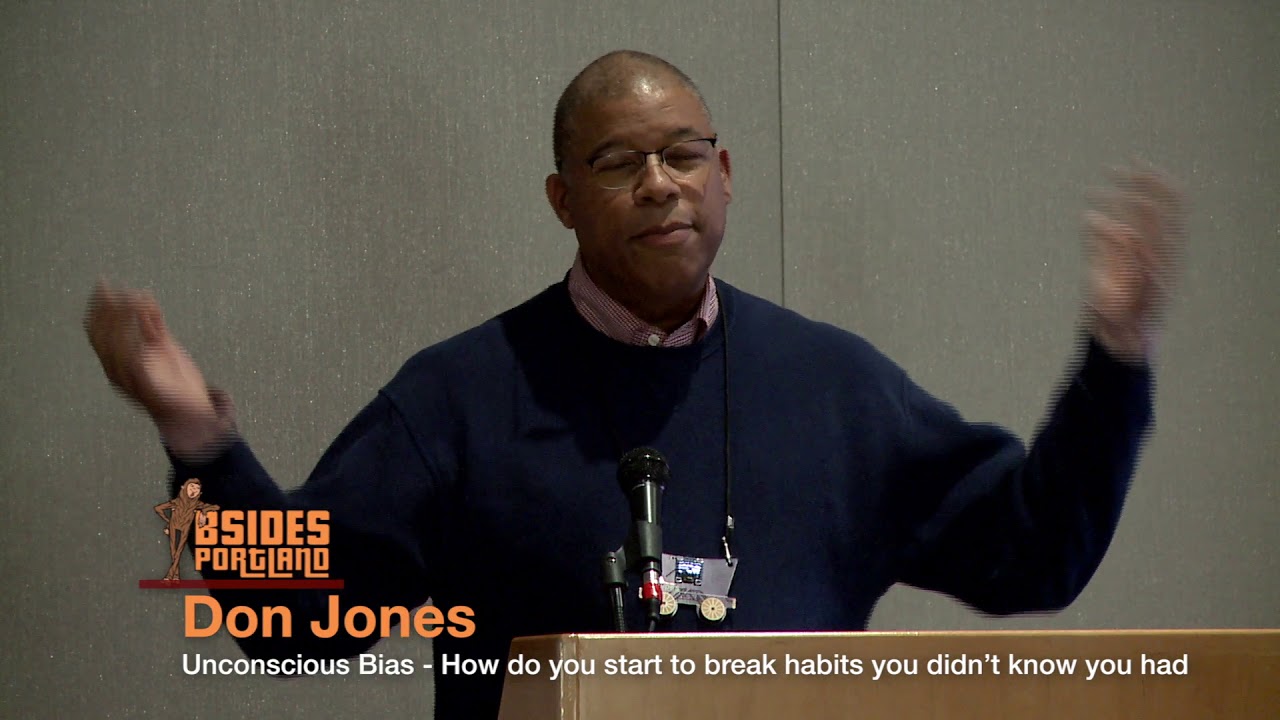
Unconscious Bias — How do you start to break habits you didn't know you had
Show transcript [en]
is how many of you have you're in a relationship raise your hand how many of you have been in stinky relationships raise your hand I'm raising my hand because I've been in one too so in stinky relationships there are interactions that happen stuff that goes on things that are happen how many of you are in a much better relationship now you're a better person for you're a lot easier to live with you're a lot easier what happens with someone that you're with in your good relationship behaves or speaks in a way that reminds you of your stinky relationship what's your reaction it's visceral its immediate and the person that you now are with is saying what's going on I
don't understand what's happening here why are you reacting this way and you have to explain this is for me beans you will do X you will be this you do that and if the person cares about you and they care about they're gonna say oh I got it okay so what do I need to do differently what is it that we need to know I need to learn this and I need to find this out so for me this was a very clear journey because I'm talking about something that happened to me 28 years ago where I was in a really stinky relationship all kind of goofy stuff happened you know how relationships go I
go into a new relationship the person I'm still with now and I had to figure out Who am I what is it about me that makes me who I am that I care and that I want to be for this person who cares about me and understands me very well so for me that was a journey into what are the unconscious things that I'm carrying from my experience with that stinky person that I now have that are could ruin my current relationship so that's a small example of an unconscious a learned thing right and I think it's really important for us to think about these types of mundane things because we also have things in our environment
things in our culture things in our media things that are surround us that we have no consciousness about whatsoever yet they leave an impression they leave a vision they leave something inside of us that we take to be the truth and that's what we're going to talk about today is finding your way through these things so that you have a sense of what can I do about this so there's work here to do for everybody me included still on a journey doing this so I'd like to some where they take you through this so you get a sense of this I like this statement this is from a group of people that were in Ireland in
1791 and they were very very much affected by the the different organizations that were around right there were lodges around there were Brotherhood's around all this other stuff and they said I'd like to have the benevolent conspiracy that cares about everybody everybody matters that's what I'd like to see here that's what I'd like to have I consider our lives and the world that we live in to be that benevolent conspiracy I approach myself and my life in a way that I understand that this is what I'm here for to be a smarter better human being and that's a good place to come from so what's the learning environment for doing that your life the lives of others
I know we're all busy I know that we all have a lot of stuff in our minds we're busy driving towards things we're busy doing things I know how that works believe me I understand what that feels like I understand what that looks like and what it sounds like when you're in the middle of your day and what's happening there that is that is not foreign to me whatsoever so this is so that you can take better care of yourself is what we're going to be talking about and by taking better care of yourself I'd like to think that if you follow some of the things that we talked about today you'll be taking better care of
others as well so what sucks about unconscious bias give me anything it's hard it's hard what else it crops up when you don't expect it yeah it's invisible you don't know it what else influences thoughts and decisions even when you don't even plan on it doing so yes it makes you do things you didn't want to do what's the number one defense you get from somebody when you when you point out that they've exhibited something that is a bias it wasn't my intention
we're gonna talk about that that's great that you brought that up yes yeah get defensive right you get it you get a sense of wow why am I being attacked why am I being the one called out on this what about when you experience this and it's not directed at you it's directed at somebody else how do you feel in that situation uncomfortable yeah I don't know what to do what can I do what should I do so we're gonna answer a few of those questions as we go through here so all of that and even more is what you're going to have a sense about here's the thing we're wired this is how we are
wired the DNA that we have the synapse is that we fire the things that we skip over because we learn them as we're growing and we're becoming bigger better humans are things that create unconscious bias bias is everywhere we need to accept that the bias exists whether you're conscious or unconscious or whatever it is the bias exists and understanding that that is something that we all have is the key to understanding what can we do when we're encountering it when we exhibit it when we see it when it's pointed out to us what can we do when that's the case so we need to accept a certain amount of responsibility I'm biased it's like a
12-step meeting hi I'm dawn I'm biased right that's the kind of thing we need to think about you carry biases they're very beneficial in some ways they're not all bad but there are a few constants and these are my constants these aren't from any empirical study these aren't anything else but these are the constants that I want you to think about biases and consciousness so they're useful sometimes right that's great also you know we know about them sometimes they're expected sometimes somebody said they're unexpected but they're present all of the time in your consciousness well unless you leave this body but is your consciousness really gone there's a lot of young times right and it's known
and expected but it is present all the time we have the constants to do something when we encounter are exposed to or are witnessing any sense of bias being directed at ourselves or at somebody else so what rocks about cons conscious bias give me some examples it does right we were able to move quickly we're able to skip over the details and get to the crux of it right what are some of the other rocking things yes yeah you can actually make a connection with unconscious bias that you would not be able to make in the same amount of time if you went through it iteratively and you'd probably go left or right if you
did that there are a lot of advantages to it so what we've got is we've got a situation where we have something that we accept that we have it has pluses and it has minuses right there are advantages things to it and then there uninvent Aegeus things to it so you're like what do I do right what can I do about this then what should I be thinking about awareness this is what makes the difference is the awareness that we have and your awareness cannot be your awareness of only yourself your awareness has to be the awareness of others the path that you walk is not the path that everyone around you walks your neighbor your
coworker your boss everybody else has their own point of view so what should I do right what is it that I can do when I experience or I see NEC bias and what happens with that there are four helpful mindsets that you can keep in mind things that you want to have in your mind so that you can be the person that can do something and make a difference when you encounter unconscious bias humility it's really important most of us only exhibit it when we are caught in a lie when we're caught in something that we're feeling under the rug all kinds of reasons we can feel it I want it to be a cultivated thing when can I
turn on my humility when do I need to adopt the sense of humility right when there's something happening that has unconscious bias I encourage you to have humility there and you do not have to be the hero right you don't have to be the one to fix it can we all fix everybody here no we can't however we can inform everyone and do something about that and you might not have the answer right a lot of us feel I know what it needs to happen here and you need to do this and you need to do that that may be true that may be the wrong way to go about it your humility will help you not try to
be that empowerment right I need to have people that think similar do I do and I need to know who it is that I can work with that I can know I've got some backing I've got somebody to help me I've got something I can do know what your team strengths are right we all build teams around ourselves when you're talking about unconscious bias you shouldn't be the one doing that alone you should be having others with you whether it's in the moment or is after the moment or whatever it is that's what you want to do and be willing to let others solve the problems there may be somebody that's better equipped to take
that to the fruition than you curiosity this is my favorite one if we are curious no matter what the situation no matter where we are if we're curious we're going to get to an answer we're gonna get to something that will help us come to a conclusion that is very helpful that is very important for us to understand curiosity is one of the values where I work it's one of the things we interview people for and talk about and it takes a lot of different forms but I can't stress enough if you are curious about why you think what you think what who said that bothered you what you saw that made you feel funny if you when you
get curious about that you will find out more and if you exhibit and somebody comes to you and says hey when you did this here's what happened there get curious about why would they say that what was it they're telling you what is it that they'd like to know what is it can they tell you more about what it is you've done that's really important to do and think about likely scenarios and trade offs right you don't have to jump into things you can actually think about if I say something now what happens if I say something later what happens what's the reaction of the person I'm talking to right you have lots of tools
available to you curiosity is a really good one and then adaptability how many people here are adaptable raise your hand how many people have to be adaptable or they will lose their minds there is a natural tendency to adaptability however my version of adaptability in note I can adapt to is predicated on Who I am where I am where I've come from and what I'm how I'm wired and that's very different than yours very different than yours very different than yours everybody sense of adaptability they tailor it to what they need and what they have I think that when we're talking about unconscious bias adaptability is knowing when to pivot and to do it boldly that's the big one
we are always afraid to be bold and I can't stress enough if you are honest with yourself if you're curious if you have the adaptability to take that step that you normally don't take you'll be successful even if you're not successful in that moment you're forwarding something that's better so these are some of the mindsets that you can have these are some of the things that you can do they're not perfect they're not all employable to every situation you have but I'm telling you no matter what side of the equation of unconscious bias you're on if you exhibit and internalize these things and show them you're going to come out being a smarter better human being thank
you [Applause]
you
Related talks
 45:24
45:24 28:04
28:04 43:40
43:40 47:26
47:26 52:23
52:23 49:03
49:03