Keynote from Shahid Buttar, EFF Director Of Grassroots Advocacy

Show transcript [en]
by three-letter agencies as well as what we describe a street-level surveillance by local police departments we'll talk about why that might be a matter of concern to you thank you regardless of your political persuasion and I'm particularly interested to get into a discussion about why will pardon me both why it might matter to you and how you might engage this arena as change agents in your respective communities [Music] what you love these new MacBooks yes me see you all me I'll let you know I want to thank I think it was Cyrus who lent me the cable that I of course left on my dresser when I left San Francisco yesterday morning see that yeah okay
there we go so again thanks for having me I will be looking forward to taking questions and pardon okay happy to hang on just for a minute good to go all right thanks so much again for being here this morning we're going to talk a little bit about privacy this morning and particularly why it matters that's where I want to draw your attention stepping back a little bit from the day-to-day tactical and strategic questions that you might be facing in your respective practices I want to just round us in how privacy and security are related and why they have constitutional significance and then we'll get into how you can help in your own work and Beyond it so one of the
things to note about privacy in terms of its constitutional valence is that the word does not appear anywhere in the US Constitution yet it has immense constitutional significance and at least two different ways we'll talk about one of them in passing and the other one in some detail so first the Supreme Court acknowledged the rights of privacy in a line of cases that essentially recognized the right of women to control their own bodies and it started with the line of reproductive rights cases in particularly the access to contraception arena where that's the the Supreme Court's jurisprudence in this arena acknowledges privacy is existing within what the court describes as a number of the numbers like the the
corona of the Sun the the the part outside the main body that is visible and in the same way that the First Amendment in the Fourth Amendment and the Fourteenth Amendment might not name the word privacy the courts argument in this line of cases has been that the rights that are protected by those amendments and we'll get into some of those in a minute can't be protected unless privacy is instrumentally acknowledged as a vehicle to those further rights another lens through which to recognize the constitutional relevance of privacy is through the First Amendment and we'll do a little bit of a short deep dive on the First Amendment there are five rights that the First Amendment protects does anybody
want to shout out what one of them might be I heard assembly and religion and speech those are all right that's three thank you any other guesses there's a couple more the petition Clause right and the press so let's just each of those rights there's there's a professor at NYU Law School by the name of Burt newborn has a book out a few years ago called Madison's music and he describes the First Amendment as essentially laying forth an escalating set of rights to engage in a political process if you think about the First Amendment as protecting not just the rights of someone who might enjoy each of these opportunities there is something else beyond the individual right that these
five rights aim to protect any guesses at what that might be single word start yeah that's a good one yeah starts with the D it ends in democracy so let's let's talk it let's talk a little bit about why the rights to belief and speech at assembly and the petition Clause matter you know the first issue here is that the rights that speakers enjoy under the First Amendment are not exclusive to speakers there is a reciprocal issue an element of constitutional theory embedded in the First Amendment which is to say not only do speakers have a right to their own conscience to articulate their beliefs to disseminate their beliefs to gather people around to support those
beliefs and then deploy together their voices to seek changes through our government but you each of you have a right to hear from each of those people so there's a there's a there's a reciprocity here in terms of the right that we acknowledge and the key here is that for you to be able to hear anyone as you are constitutionally entitled to do in a free country everyone must have an effective opportunity to speak and that's one of the reasons why privacy particularly matters and we'll get into a few different elements of that first so the opportunity to speak without recrimination and without retaliation is embedded in this theory and it also speaks to the opportunity for anonymity
and speech anonymity is critical to protect the opportunity for powerless people to raise their voices if you're an undocumented American you have the same right to speech as anyone else the up the the need for anonymity to protect those speakers who might be vulnerable in their respective communities you know other examples that well before we get to examples I want to just note a few ways in which anonymity can be abused offensively leaks to the press by government officials that play loose with the classification rules and selectively cherry-pick facts to put into the public are an example of the way that anonymity can be abused within a constitutional framework and also within the context of social media
online online harassment in a predictable vector is a consistent and recurring issue that we dff do not I don't want to chase this rabbit but I'll just note that there are lots of places where government regulation might not be the best answer and one reason I'm noting the phenomenon of women being harassed online is that a tff our our gold standard our hope is that communities can self moderate and and police each other to keep the government from intruding in spaces that would destroy discourse and at the end of the day ensuring that women have access to spaces online to a large extent rests with everyone who has access to those spaces to guard the opportunity for
everyone to participate the core uses of anonymity though I want to bring us back to whistleblowers to dissidents two heretics this we live in a country that was founded by religious heretics who based the very first amendment of the Constitution on their right to conscience the right to your belief whatever the official orthodoxy is at the center of what it means to live in a free country and we'll get into a little bit later than to what extent we do live in a free country but I want to save that for a bit down the road so everyone wants to be safe and I'll just note that there is a really easy way to guarantee
public security and it would be just to lock everyone in our houses you would all be safe if you were locked at our in your houses and recognize that that compromise is a very central value namely liberty right everyone might be committed to any number of things you might want to do like coming to b-sides and maybe going to work meeting up with your friends so security can very easily undermine liberty and we're going to talk about a range of ways in which that's happened in our country unfortunately one of the cruxes in this arena is the the understandable and predictable attempt from law enforcement and people charged with Public Safety to get in front of events you can either
solve crimes that have happened or particularly in the last 17 years there's been an undeclared public mandate to stop crimes before they happen which then leads to this potentially furnished estate where we might be looking at people based not on their haves but based on the impression of their propensity to commit an act as determined by some external observer and I want to just note here that over our country's history we have observed a pattern of politicization infecting every era in which we have embraced surveillance and going back to its very origins who one of the FBI's very first acts was to round up labor organizers and union activists in the Palmer Raids in the middle of the 20th century speech
and dissent and the right to conscience were frontally attacked you know McCarthy's Red Scare is an example don't forget that the FBI was part of it as anybody in the room not familiar with COINTELPRO is that a new amalgam - anyone in the room don't be bashful I see a few hands good it's very good that we're having this conversation this is a crucial part of US history and it appalls me quite frankly that it's not taught in schools I talk all the time you know law schools to engineers to community activists and it is amazing to me even the people who lived through this history don't remember it in 1976 the US Senate in the house concluded a
two-year investigation that was initiated when essentially a group of draft-dodging hippies from Philadelphia broke into an FBI office during the Olly Frazier fight went into a paper 1.0 filing cabinet took a bunch of files out of it and drove them to Washington dropped them on the desk of several members of Congress who said what is happening here and those documents confirmed what a number of people in the peace movement had been alleging for years which was that the FBI was engaged in what the US Senate described in writing in 1976 as a quote sophisticated vigilante operation aimed squarely at suppressing the legitimate exercise of First Amendment rights of speech and Association COINTELPRO stands for the
counterintelligence programs I want to just note a few of the communities that were impacted and then we'll talk a little bit about just some of the examples of what the bureau did in this and the CIA at the time through this arena folks and you know it's it's poignant to be talking about this in North Carolina the movement for civil rights was one of the most prolific domestic social movements that in the fbi's words was successfully neutralized by using paid undercover informants by writing fake letters encouraging essentially warfare among competing groups there is a documented plot and the historical record the letter exists and is available in the public record attempting to drive one of our nation's
greatest heroes to an early death we now celebrate his memory every January there is massive monument to dr. King's memory and in Washington DC and it is striking that the FBI took it upon itself for a period of years to monitor this man essentially to blackmail him and encouraged in a letter that was sent to him him to commit suicide this is far flung from law enforcement this is much closer to thought police of the sort that you might have thought you didn't have to within the United States but the fact of the matter is the COINTELPRO era went on for 40 years and African Americans were not the only people impacted other social movements that were targeted for
neutralization by the FBI included the American Indian Movement the movement for a Puerto Rican independence the movement to end the war in Vietnam the movement for equal rights for women a broad swath I mean if you put those communities together we're talking about a majority of the American public was effectively targeted by the FBI for Thought crimes and this is not an abstract future fear this is documented American history and if this history is new to you I would just encourage you write down COINTELPRO and do some research later there's some great documentaries lots of books a lot of writing about this era that has crucial implications not only for our president before our future and the different
paths that it might take in the 1990s many people might have internalized the narrative that's described a constitutional crisis is starting on September 12th 2001 and I just want to know that domestic dissidents have been charged as terrorists for speech crimes well before that in the 90s a number dozens of mostly white born in the u.s. dissidents found their way into prison as accused and convicted terrorists based on effectively in the worst cases you would describe their acts as vandalism or in the most extreme ones arson at great pains to event any loss or threat to life and these were basically political crimes animal rights activists have been accused of being terrorists since the 1990s it's
interesting that the FBI has flagged groups for scrutiny as precursors recruiters of groups of individuals who might engage in violent acts later that include Food Not Bombs as anybody here worked with Food Not Bombs Food Not Bombs basically collects food that would otherwise be thrown away and feeds it to homeless people I'll note that before the word bombs and their names is the word not and yet it's a it's a perfect example of the over breadth of government security and this arena and then we've lived in a fairly overt constitutional crisis for the last 15 years I want to talk a little bit about some of the values that are undermined by surveillance you might think that
privacy in a personal sense is the primary value that is affected by surveillance and I think that presumption is what drives what passes for discourse in this arena but I want to expand your view to consider some of the other things that surveillance undermines one of them obviously is the public's right to know surveillance isn't just the practice of monitoring people it is also a secret zone of government activity that you and your elected representatives get very little visibility into so the public rights to know is a first aspect here and as a consequence is the legitimacy of those efforts secret government action in a nation that predicates the legitimacy of government action on the consent of the governed
has an inextricable problem because you can't consent to something you don't know about right there is a circularity in the presumption of legitimacy to conduct these kinds of operations but that is not the least of it by half personal privacy matters also and again I wanted us to note this is what most people reduce the values to impacted by surveillance we're gonna get to another big one in a second you have the right to be left alone yet still participate in the life of our country the First Amendment spells out Madison's music you're escalating set of opportunities to engage in citizenship but you don't have to give up everything that you might you know potentially want
to keep secret in order to avail yourself of public life you shouldn't have to live the life of a reclusive hermit to protect what you might want to be personal from prying eyes that's also part of what it means to live in a free country but there's a bigger aspect here privacy has a public dimension that is not about the right to be left alone it's not about the right to keep any zone of information private it is the right to ensure that your vulnerable neighbors can speak so that you can learn from them so that we can all live in a meaningful democracy democracy I think is the most crucial value that surveillance offends so the next time
somebody asks you why do they have something to fear if they have nothing to hide you might ask them do you want to live in a free country or not it's a it's a aspect of the debate that I ese has been thoroughly papered over and ignored and I'm very happy for the opportunity to be here to share this with you if there's anything I would invite you to take away from my remarks this morning it is the last bullet there that surveillance undermines democracy by inhibiting speech by vulnerable people and communities it is a very important aspect of this debate to keep in in view so let's talk a little bit about mass surveillance and how it fits
with or does not fit within the constitutional framework we talked a bit about the First Amendment and the rights to political participation the Fourth Amendment is also a key aspect of the Bill of Rights and it protects you or anybody else from unreasonable searches and seizures and the jurisprudence in this arena has focused particularly on what is a search and what is reasonable you'll note that reasonability is a subjective calculus and an object that invites the subjective assessment of judges about what is reasonable and what is not I won't dive too deeply into the case law that we will talk about one particularly important case from the 1970s I don't have a slide on it but we
could talk about a more recent case that effectively repudiated it gives me a great deal of hope for the jurisprudence here but I want to first go back to the history why do we have a Fourth Amendment in the first place because we revolted against the British crown when it practiced arbitrary searches general warrants were the authority announced by the British crown to search anyone anywhere at any time for any reason with no particular limit to the things they might search that might sound familiar to you because that's exactly what three-letter agencies do to you every day today we have taken the Fourth Amendment and effectively thrown it out the window without accompanying jurisprudence based
on secret government action that doesn't have any legitimate basis and your consent or that of our elected representatives the Smith versus Maryland is the case I was going to describe this was a case involving effectively a pen register trap-and-trace monitoring a particular individual in Baltimore of whom police had more than a basis for reasonable suspicion of criminal act and that case was doctrinally important in the evolution of the courts jurisprudence and it was also important in terms of how it showed up historically so in within the four corners of the case this was the evolution or the emergence of the third party doctrine the pretense that if you share information with someone else then you can't like a phone provider you
can't then reasonably be expected to keep it secure from the government now anyone who's anybody here use the Internet we we all know that that is preposterous because you have to give information to third parties just to participate in online discourse right every time you sign into a social media platform you're giving information to a third party is that to say that you then are asking the government to peer into all of your papers effects and things I suspect not and the key aspect of Smith versus Maryland was this disregard and the limitation of the warrant requirement and I want to just note a few ways in which Smith versus Maryland has Bears effectively no relationship to
the mass surveillance regime that has emerged in the years since in that case there was a particular basis for suspicion of a targeted individual what the National Security Agency and the DEA and the FBI and CBP and I studio everyday knows no such limit there is no need for a basis for suspicion for your information and correspondence to be the object of government collection similarly Smith versus Maryland was about a time bound exercise and surveillance as opposed to the indefinite ongoing monitoring that the rest of us are subjected to today and then finally it's the indiscriminate nature of mass surveillance the fact that it is mass and not targeted that's one essence of its unconstitutionality
targeting is crucial the Constitution requires that if you're going to be the object of government scrutiny there has to be some individualized basis or suspicion that was true until well until the entire litany of surveillance operations that we talked about before starting with the Palmer Raids over a hundred years ago but the it should make it no less offensive the the need to establish an individualized basis for scrutiny is what lends a security operation legitimacy and when there is no targeting when it is the entire country indefinitely we are talking then about protecting something very different than security of the nation what we are talking about then is empowering agencies at the cost of your security and democracy for the
rest of us you won't hear people say this on television you certainly won't ever hear it from someone who works for the government I'm encouraging you to think about these issues independently because that also is part of the the crux of living in a free country is maintaining your own view of these issues so one of the quick and key questions that emerges in any specific case is is a particular collection a search and look at this from the government's perspective from a legal formalist perspective you might say well we can collect any number of things from any number of people but until someone looks at it we can't do anything with it so it's not a search
until we look at it right it's just like the Schrodinger's cat theory of surveillance perhaps but look at this again from a different perspective that of the target if you've just taken or at least made a copy of data but exclusively before was in my possession there is a problem there and the question is is it the application of the search to some of the the the application of the objects found in a search to some subsequent act that is the problem or is it state omniscience that is the problem and there is a distinction here in legal analytical frameworks formalism is the pretense that we can separate these questions realism is the recognition that they all
where the rubber hits the ground if your data is taken from you or copied it's no longer exclusively within your possession that is a search for all functional purposes from the standpoint of the target and again the question is whose standpoint does the law privileged who are the judges listening to and there's a an aspect here I just feel the need to suppress at the moment there are lots of different aspects of diversity on the federal bench that people pay attention to demographic diversity tends to take precedence there is a remarkable lack of experience diversity on federal courts the the single most common job that people come from and to become judges particularly the federal level are those of prosecutors
and I won't chase this rabbit too long but in the Federalist Papers Madison in particular talks about the need for judicial independence it is basically the the crux of freedom the courts are the last line of constitutional defense judges are supposed to be unbiased how can you be an unbiased judge if you've spent your entire life prosecuting crimes on behalf of the executive branch that you were then called on later to adjudicate when you're sitting in judgment over your former colleagues can you be impartial and I'm not even talking about the theatrics that went on recently in Washington and the erosion of judicial independence and the latest appointment to the Supreme Court just know that practice diversity and
experience diversity is a crucial aspect of preserving impartiality on the bench and that is another aspect of the rule of law that is eroded dramatically within the last generation and then mode of interpretation this question the formalism versus functionalism are we talking about legal reality or are we talking about legal fabrications and artificial distinctions among ultimately fused sets of considerations you know are we talking about the government's view of what is a search or your view of what is a search these are and I'll note also these are in historical flux legal realism was the dominant mode of interpretation in the federal judiciary for 30 years and the erosion of legal realism and its replacement by legal
formalism was absolutely object of a concerted campaign I worked for three years in Washington DC on the senior staff of the American Constitution Society that which was founded in the wake of the Bush versus Gore decision ACS the American Constitution Society regarded itself as essentially a countervailing response to the Federalist Society has anyone heard of it the Federalist Society is basically like a feeder network of conservative judges who I dare say have taken over the legal system since the emergence of that network in 1972 there are a few other key questions to which none of us have good answers how many Americans have been monitored by government agencies this was a question that for me holds
particular importance in the spring of 2013 Senator Ron Wyden from Oregon asked exactly this question of the vendor Ector of National Intelligence James clapper mr. clapper gave an answer which he later admitted was too cute by half it was a few weeks after that exchange in the Senate that the Supreme Court in clapper versus Amnesty dismissed a case challenging mass surveillance which had found its way to the Supreme Court and the holding there was if you can't prove that the government is watching you you have no right to be here to challenge it and a few weeks after that Edward Snowden gave 300 million American standing the Snowden leaks didn't happen in a vacuum they happened in the wake of this
exchange in the Senate they happen in the wake of the Supreme Court case both of which effectively said there is nothing to see here move along and you all know thanks to a whistleblower that in fact there is a great deal to see here and among the people who were alarmed were the very authors of the Patriot Act that the mass surveillance regime rests upon this is another key question which I have never even heard anyone ask you know we talked about the way that surveillance undermines democracy by inhibiting speech by vulnerable people so just complete the syllogism if we've been living in an era of mass surveillance for the fast in 17 years how much constitutional damage have we
already internalized none of us have any idea certainly no government agency has no idea because nobody tracks that Congress has never even asked that question of anyone and so I would just invite you in the going forward climate and then going forward era to think about that question and do everything you can to minimize how many Americans are silenced by virtue of fear effectively of being watched and then another question that confronts each of us as change agents and I dare say all of us as a community or what do we do when the law fails to protect rights I was a teaching assistant for Larry Lessig when I was a student at law Stanford Law School and one of his great
contributions to our understanding of law is the way in which it's set from multiple different sources code is law architecture is law and law is law but when the law fails to protect rights code can effectively replace it right you can guard rights through the platforms that you develop through the work that you do guarding individual and security you can do the work that the law has effectively abdicated all right so now let's talk we talked a little bit about mass surveillance I want to drill down to and maybe the last thing I'd say before we get to this is that mass surveillance by federal agencies is a very lucrative enterprise that employs lots of people you might remember that
Edward Snowden himself didn't work at least at the time that he made his revelations for a government agency he worked for an accounting firm one of several that have hundreds if not thousands of people employed effectively supporting government surveillance operations I'll come back to this again I don't wanna get ahead of myself but so let's talk a little bit about how surveillance finds a more pernicious realization not just at the federal level but at the local level at the state county and municipal layer in the hands of police departments if you compare the number of agents across federal law enforcement with their local equivalents there are something on the order of eighteen to twenty thousand FBI
agents and there are other agencies in the intelligence community the if you put them all together you might be talking still about under a hundred thousand there are nearly a million law enforcement agencies if you aggregate all the local and state police departments around the country so we're talking about orders of magnitude more human resources available and the part here I just want to note is that the local police are monitoring communities increasingly in the very same way which is to say pre-crime indefinitely without basis for suspicion in the same way that their federal counterparts are when we talk about the erosion of democracy and the emergence of thought belief we're not just talking about
three-letter agencies based in and around the beltway we're talking about your local authorities who also practice mint in many cases the same secrecy will get to an example of that in a second with the same set of potentially horrifying constitutional harms I want to rewind the tape down in 1961 and talk briefly about Dwight Eisenhower so this is the last US president who was a commanding general in in a in a war he was the supreme Allied commander in the Second World War he built the interstate highway system which was the basis for the post-war economic move around the country and his very last act in public early in the days of national television was to make on live
national television an incredibly important warning which we have effectively forgotten I'm not going to read you the whole thing but I want to just read you an excerpt from I talking about the need to create a permanent armaments industry and what that implied he goes on as I say our toil resources and livelihood are all involved so is the very structure of our society this is a US president talking who led the world's military in fighting the Nazis he said in the council's of government we must guard against the acquisition of unwarranted influence whether sought or unsought by the military-industrial early versions of his speech added congressional complex the potential for the MIT Department the potential for the
disastrous rise of misplaced power exists and will persist we must never let the weight of this combination endanger our liberties or democratic processes we should take nothing for granted just think about that warning in light of subsequent events let's talk about what happened next what were the things that Eisenhower feared among them were spending on military equipment and personnel that might eclipse domestic social needs war for profit would be a perfect example whether that's war at the aegis of private military contractors whether it's the privatization of natural resources that might lie under the soil of countries that we might choose to supposedly liberate mass surveillance is a perfect example of Eisenhower spheres being disregarded and realized we have
effectively let in the council's of government the military-industrial complex not just gained unwarranted influence but to gain all the influence this isn't something a tff we particularly work on but just to demonstrate the the political valence of this it was 28 either 13 or 15 right around there where senator dianne feinstein u.s. senator who represents the state where I live California took to the floor of the Senate and decried a constitutional crisis because the the Central Intelligence Agency had hacked her staff and was stealing documents from a Senate investigation that was documenting us human rights violations when the CIA turns on the Senate as it is conducting offensive cyber security operations to steal documents from elected civilian
overseers it should alarm all of us he gets doubly alarming if you think about how that investigation related to the history we talked about the COINTELPRO era and the two-year investigation in the Senate in the house that uncovered the FBI and the CIA infiltrating and neutralizing all these domestic social groups it was in the wake of that investigation that the house and the Senate created permanent intelligence committees so the intelligence committees are fairly recent Dianne Feinstein at the time that she was decrying the CIA hack attack on her staff was the chair of the Senate Intelligence Committee when Congress's intelligence committees when you're elected civilian overseers of these operations are not only excluded from opera from from the information that
they need to do their jobs but when their staff is then threatened with criminal charges from the Justice Department by national security agencies that are basically trying to hide their own criminal trail we should all be alarmed there was a constitutional crisis then it has not resolved itself it might have grown less visible but the crisis has grown only deeper with every passing day and mass surveillance of course is one way in which that affects you and again at risk are both the democracy and the liberties that Eisenhower told us to not take for granted you might take them for granted because we have words on paper right the dr. King pleaded with us to live up to
and you know if you were to boil my remarks down into a very you know TLDR version we have not lived up to our words on paper by a long shot all right so let's talk a little bit about the local dimensions of surveillance and militarization and the reason I raise this this is going to come back to one of the dangling questions I left before what are we to do about this the local metastasis of surveillance presents not just a grave threat to your liberties and democracy but also an enormous opportunity as change agents to recover the constitutional promise that was left to us by the founders of our country so the Pentagon has a program that basically
provides to local police departments used and otherwise unused military equipment to the tune of several billions of dollars 13 at least 13,000 agencies within the United States have received material from the Pentagon that includes armored personnel carriers grenade launchers assault rifles body armor and surveillance tools many of them developed originally from military application that are being used here within the United States on effectively a peaceful populace and let's talk about what some of those technologies are sell-side simulators is anybody here heard of a stingray among the threat vectors you might be called on to address in your own cybersecurity work cell sites simulators are tools that mimic a cell tower in order basically to suck up the voice and data that might
otherwise go over it one underappreciated aspect of them is that the way cell-site simulators work necessarily require a non targeted phase there is a point at which they can identify a target and then isolate data and voice transmissions to wit but in order to identify a target they first collect signals from all the phones within their area which is to say these are mass surveillance machines however much they might be after the application of mass surveillance than zoomed in on a particular target another aspect of cell site simulators to really seize on is that they were deployed for 10 years in the United States before any civilians knew about it and bananas say civilians I mean judges and policymakers who were
affirmative ly kept in the dark because the FBI was requiring device manufacturers to sign NDA's with the local police departments they were selling them - we're talking about weapons contractors remember Eisenhower spheres here we're talking about weapons contractors selling to local police departments military surveillance tools without anyone else knowing with the agreement a forced agreement by a federal agency that you can't tell the judges in your community that these tools even exist what legitimacy does that have in a country that prides itself on supposedly being free come back to that in a minute it's important to note also that stingrays have been used in First Amendment settings I was part of a demonstration in Miami in 2003 as
marching in solidarity with steel workers whose jobs have been globalized and we were monitored we found out 10 years later by sell-side simulators in the hands of the Miami Police Department at the time in 2003 I just graduated from law school neither I nor anyone else knew that they even existed and come to find out not only do they exist and not only are they used but they're used particularly to monitor dissent which is not only an unreasonable search through the Fourth Amendment but a burden on the speech assembly and petition clauses under the First Amendment we're talking about a multi-pronged attack on very basic fundamental liberties and just briefly on Southside simulators the the federal
Justice Department and 2015 imposed a warrant requirement for federal agencies to use these tools most states have no such requirement where I live in California had there is a warrant requirement for the use of cell-site simulators there is also a similar requirement and nearby Virginia as far as I know North Carolina has no such legal protection I might ask you why not and maybe we can come back to that Nebraska on the other end of the spectrum introduced a bill that was not ultimately approved in 2016 I might have in 2017 it was 2017 and that measure had it been successful would have prohibited the use of cell-site simulators entirely even subject to a judicial order just to
indicate you know how in california and nebraska don't have a great many things in common politically right we're talking about concerns that animate all parts of the American political continuum and you can see states and figures within them mounting this resistance automatic license plate readers are another example of technology that local police departments deploy you might think of a LPRs as a time machine a geolocation time machine and it might they they I think they are likely quite useful for law enforcement purposes now just think about them in the First Amendment context you know the I'll just take the a recent example of other grassroots uprising in the Occupy movement and I only cite it to know its
experience of violent suppression of the hands of state agencies but if for instance in the future there were something like it and a local police department wanted to know who was at the meeting we're some number of people planned whatever it was that that went on a LPRs have the opportunity to rewind the tape it's one thing to monitor dissent in real time it's an entirely different thing to then enable the government to monitor dissent retro actively remember the FBI's documented campaign to neutralize dissent that went on for 40 years give these kinds of tools to the bureau and then watch what happens in LA alone in a single city within the United States every week authorities are
collecting 2 million data points from stationary and mobile license plate collection I'll tell you a quick story also that demonstrates some of the concerns around the corporate corruption in in this arena vigilant solutions is a device manufacturer that sells ALPR I described it as one of leading manufacturers they made a deal with law enforcement authorities in Texas several years ago through which vigilant was giving these tools for free it's a law enforcement agency so that when they found people who might have absconded on a warrant and you know they're basically paying a fee to their court system they would then pay an added fee that would go to not the local police not the local
court system but the device manufacturer when weapons contractors are Tony police into debt collectors we should all be very concerned and it's not as if that contract was the object of public scrutiny or approval we had this we had to go through the process of seeking those records to unearth that that was even happening which is just a way to note that it's not just dissent and democracy that's undermined here it's also the interests you know in a very real way of working people biometrics are another example of surveillance I don't want to say gone awry because it begs the question whether it is a feature or a bug but there was a very controversial program controversial in
places including North Carolina several years ago the 287g program was one through which federal agencies and local agencies were collaborating in enforcing immigration law it turns out that the the the ruse of immigration enforcement was a farce because at the same time that the FBI was saying that it was collecting biometrics namely fingerprints from people who were booked after being arrested but not yet adjudicated for inspected crimes it wasn't the case that that was just a deportation machine that was the thin edge of a wedge to create the next generation initiative this is a biometric set of databases through which the FBI currently holds at least 400 million sets of biometric records this include co-opting data from State
Department's of Motor Vehicles you might wonder why you have nothing to fear if you've done nothing wrong well you can have done nothing wrong and still end up in a government database particularly because many government agencies including the FBI and ice have been building biometric databases with no regard for suspicion or criminality and without any public mandate and this is this is way outside my the things I normally talk about but just to remind us the 9/11 Commission noted after a set of horrific incidents that one of our particular security vulnerabilities in the early part of this millennium was the failure of intelligence agencies to share information that they already had which then turned into a supposed
mandate to collect everything which bears no relationship to the recommendation in the wake of the prolific attack right it was a sharing problem not a collection problem so we didn't fix one problem because stovepipes re-emerging across the intelligence community while we've now solved the problem that apparently did not exist at the time in seeking state omniscience other examples of surveillance technology in the hands of your local police ShotSpotter is audio listening devices face surveillance you might hear this described as facial recognition its facial recognition for white people and it's mistaken identification for people of color and you know that might sound like a laugh line except that mistaken identification in a country that kills unarmed people
every day is a matter of life and death for many communities and we flirt with this dystopia at great risk to the lives of individuals aerial surveillance drones are at other vector and then think about facial recognition on top of the CCTV footage off of drones right I mean these either these are compound Abul instruments with respect to drones it's worth noting that just a few weeks ago the Federal Aviation Administration gained the authority for the Justice Department and DHS to shoot down drones being flown by private operators like for instance journalists who flown drones over for instance factory farming operations or any number of other targets you know drones could be very useful in the hands
of civilian journalists but we and as we do in many arenas we are closing down the useful uses of some tools while preserving their their potentially dangerous ones and the real question I'd ask you is what is next or better yet what is already being used that you have no idea exists and I do think that in a in a in a country that practices federalism it's very important for our local officials and judges to understand what tech police are using and that's going to get us to our next phase here there are lots of things you might do in a local community if you wanted to limit the use of surveillance tools by your
local police you might impose a collection limit by California and your Virginia did with respect to cell-site simulators and say if you want to use this tool get a judge to sign off on it first just a brief digression there why does the judicial warrants matter so much warrants aren't hard to get for any investigator with a reasonable lead it's not as just a it's a process but what warrants are very effective at stopping our witch hunts and fishing expeditions and discriminatory exercises or police vendetta's or police gangs right these are all real threats and fears a judicial warrant ensures that there is an independent arbiter between the point of investigation and the community it's
all it is it's not the end of the world it wouldn't undermine any legitimate investigation but it would ensure that investigations are legitimate use limits there could certainly be with respect to any tool requirement that the information gained from it be used only in particular settings like protecting national security but not identifying undocumented workers to deport them or their families retention limits are critical there is a vast distinction between collect at all and hold it all indefinitely forever versus collect what you might have a reason for and purge data you're not using after some amount of time and then finally dissemination limits there are lots of ways in which information gained by one agency or
contractor finds its way into the hands of others I want to focus us less on the substantive limits than the contrast here we're talking about substantive limits and I want to focus us on process there's a campaign moving across the country about half a dozen jurisdictions in the country several counties many cities Oakland California and Seattle Washington or the largest that have embraced a model requiring civilian oversight of surveillance technology in the hands of their local police departments and it's neither is it complicated nor should it be controversial it's simply the idea that if you a police department want to buy a military tool to monitor your community you should get permission first that shouldn't sound like a
controversial proposition in a free society so informed by the history of cell-site simulators where people didn't know that they were being used for a decade this model would require a documentation of the security rationale for any attempted surveillance technology purpose a documentation of the privacy impact an opportunity for the public to articulate its concerns and then the right of local civilian elected legislatures City Council's or County boards or state legislatures to make those crucial decisions do we need this cell-site simulator in this community or not is this proposed acquisition just a racket to put money and some weapons manufacturers pocket or is this actually a tool that's going to guard security in our community and
subject to what parameters remember the use dissemination and collection retention limits this kind of process reform is incredibly important you might think of this as a foot in the door to prevent secrecy from crowding out your rights and so I do want to very centrally encourage activism around a campaign like that here we're just sort of reflecting on some of the implications here the transparency that local process can lend is crucial not just to enabling decisions about whether or not any discreet surveillance technology is appropriate but also to building the constitutional awareness of the era in which we live we don't hear about these issues because of executive secrecy and if there are news cycles in
any discrete community as these issues are you know being discussed behind closed doors those are hooks for journalism they're hooks for advocacy they're hooks for activism they're hooks that we don't have anything to attach to in an era of secrecy secrecy precludes not only checks and balances but it also precludes a civilian response and so what we're inviting you to do here is to take aim if not at the surveillance take aim at the secrecy to enable the civilian response to the predictable litany of acquisition requests that will ensue at which at the moment you never see because there's no process right any Police Department can get more or less anything from a federal granting agency
without needing anyone's permission simply requiring civilian oversight would unlock enormous opportunities downstream in terms of recovering some of the rights that we've lost just thinking about this at the federal level we talked about Snowden's revelations the alarm from figures including the authors of the Patriot Act two years after his Revolution revelations Congress did in the USA Freedom Act enact what I would describe as important but ultimately cursory reforms the beginning of a much longer road that Congress needs to travel and has not yet the internet surveillance that Edward Snowden revealed has been entirely unaddressed in the years since so I want to just shift gears now and talk a little bit about technology and a hazard
relates to users technology or tools and the question is who do they empower they can empower users or they can prey on users or they can empower users like law enforcement agencies to prey on the public the goals for technology could be Liberatore or they could be not Liberatore and and part of I think all of our jobs as technologists and people interested in technology as lawyers or whatever you identify is to ensure that the tools being developed for use in our society are Liberatore and not vectors for social control some of the principles that this means in terms of making sure the tech empowers users are noticed in the context of content moderation if
Facebook's going to take down a post by a foreign head of state featuring an image of an iconic world-renowned image of a young woman fleeing a napalm attack in Vietnam you know Facebook shouldn't be able to take it down as violating a nudity restriction without any notice to the person whose content is being affected consents to data collection this is a big one you're going to see increasingly in Washington and state capitals debates about effectively whether or not corporate platforms can presume consent from users before collecting information there's a recent law passed in California which is still being implemented which should the Train stay on the rails will will require corporations to respect opt-in rights
which is to say if a user didn't affirmatively opt-in to your service you can't collect data about them I mean that would be an earthquake and it's an earthquake that shouldn't be limited to California right I mean if we're talking about technology that respects and empowers users these are some very baseline concepts data portability so that user-generated content on one platform can be migrated to another as important and I want to make a point here about competition a tff the Electronic Frontier Foundation we are very concerned not only with your rights but also with preserving space for future innovation and half-baked ham-fisted government regulation often will crowd out space for innovation if you're concerned about the dominance of
major Internet companies one of the surest ways to make sure that they can't run amok with the rights of their users is to ensure that they might be disrupted by new potential entrants many proposed regulations would take the form of requirements that would require huge resources for a tech firm to satisfy and that might be fine when we're talking about Google and Facebook and Apple it might be much harder to launch a startup that would disrupt those companies in the face of regulations that are very resource-intensive so you know when you talk about content moderation for instance there are many many proposals to strengthen the content moderation framework would require platforms to just have armies of people and and the
big companies are doing that but what about the small startups that are starting in someone's garage a resource dependent restriction is the kind that can not only attempt to restrict tech companies but also effectively freeze the landscape by shutting out new competitors and that is a concern that we have among many others it's one of the reasons why we favor net neutrality as a very light touch government regulation to preserve space for innovation and user choice alright so now we're gonna turn again I'll try to do this quickly so we can get any questions you might have Martin Luther King explained in his letter from Birmingham jail a great many things but among them were the need to pursue
justice in the current time slice and not defer it to the future for the sake of perceived expediency and you know a correlated opportunity is that to examine yourself or your settings and your communities and just identify where your privileges might in here not to beat yourself up about it but to redeploy those privileges in the service of people who might not have them each of you are relatively privileged just by virtue of being in this room today right relative to a global population you have internet access you have some degree of training experience awareness use it for good you're not just a passive actor in a neutral system you are a hyper empowered actor in a system with grave
problems and and you can go long to get along or you can find ways to activate within those channels and these are some of those ways each of you probably are employees of an enterprise or an owner of an enterprise but you're also citizens you're mothers and fathers and sisters and brothers you are members of a community probably any number of communities the local community in which you live the community with which you recreative the ways you recreative are arenas in which you can be an agent not just your enterprise and so things you can do you can hold the door open for other people by ensuring that your enterprises are diverse you can share
your skills and mentor people who are trying to seek the same opportunities the ones I really want to focus you here are working behind closed doors among your privileges are the opportunity to be in the spaces that you have unique access to raise the crew questions when development decisions or security events implicate them should we give notice to our users or not that might be a controversial question within an enterprise it has grave implications for the users themselves if you don't raise those questions who will more importantly if you don't raise those questions before the controversy hits when the controversy hits if you raise your voice then you might be isolated you might be at risk so to think about
your threat environment you know one thing you might do is raise these questions in advance of controversies to figure out who are your allies in your enterprises in your communities who can you work with to raise your voices constructively about these issues tech we'll build it there's a campaign around the country among tech employees to force their platforms not to support human rights abuses the effort by Google employees to push the company off of its contract to develop weapons targeting AI for the Defense Department is a perfect example there's a number of others I want to briefly shout out the Electronic Frontier Alliance it's a network I built a tff that includes now eighty-two groups in 27 states including one here
in the Research Triangle DEFCON nine one nine these are communities in which you can mentor people seeking your skills in which you can learn about these issues that might otherwise hit the floor communities through which you can raise your voice to defend the rights of your neighbors very eager to invite any questions you might have I think we only have about five minutes if that's right and again I want to thank you very much for giving me the opportunity to be with you today
I see your question here in the front
thank you the question was about COINTELPRO and the breadth of the programs and the suggestion may be that it is better recognized than we think given that it had so many different aspects and I think that's right I see a question in the back say it loud please great question thank you for raising at the gdpr is the global data protection initiative in the EU there are aspects of the GD P R that we are very enthused about and others that we are concerned about among the we mentioned for instance the right for users to opt in to data collection before platform presumes it the GD P R enshrines that that's a good thing the GD P are also enshrined some
problematic elements namely the right to be forgotten the right to be forgotten might seem attractive to the extent that you want to have control over your online experience and where you might appear online but remember that every right carries a reciprocal obligation on behalf of someone so if users have a right to be forgotten what does that require of someone else we're talking about information taken off line and you know we the Internet Archive I think there is a great many organizations and communities that are committed to information preservation in online spaces and so the right to be forgotten effectively could constitute online censorship of other actors so the GD P R is a complicated nuanced instrument it's
one reason we're concerned quite frankly about federal data privacy initiatives that are currently being debated in Washington they will likely include some elements that I think all of us can get behind and they will also include some elements that might sound good in theory and in a 10 second sound bite but carry some really problematic implications it's another reason why I'm very eager to invite each of you to engage as information agents within your community question here Aloha
good question so the question was about drone surveillance and just to talk a little bit about the opportunities for people to be monitored without warrants not just by law enforcement but also by private actors so right I mean what you're striking at here very much gets to that element of personal privacy that we were talking about early in the presentation and and I think the use of drones to monitor people without warrants by law enforcement is problematic the question with journalists now is they're journalists don't traditionally have to comply with a warrant requirement are you familiar with the notion of security by obscurity so you know that the it isn't the case that most journalists are going to fly
drones over most people's houses for no random reason I mean the the settings in which journalists have used drones historically are be the most prolific one I can think of or factory farms to try to uncover essentially the conditions under which animals are being confined and cultivated or also environmental abuses drones are also very useful to detect for instance animal poaching or illegal logging or any number of natural resource abuses the faa x' recent amendments to allow DOJ and DHS to shoot down private drones undermine those potentially productive uses of drones for journalism journalism purposes without in any way restraining the still effectively lawless use of these tools by law-enforcement agencies that don't have to comply with with a
warrant requirement so at the moment you sort of have the worst of both worlds where you have neither the privacy nor the transparency that in the right hands these tools could enable I think that probably gets us to the end of our time I want to thank everybody again for having me great to see you here have a great day
Related talks
 39:04
39:04 21:35
21:35 24:50
24:50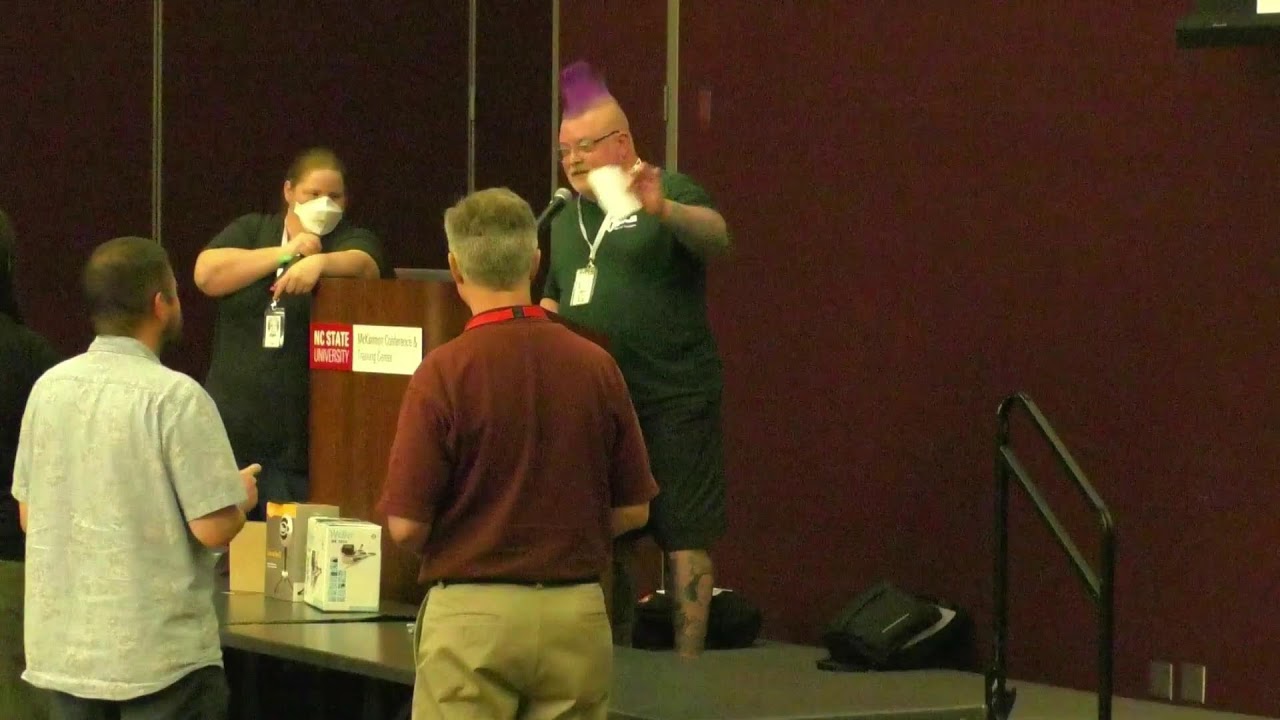 8:40:16
 8:30:57
 43:08
43:08