Round and Around We Go: Interviews, What Do You Know?

Show transcript [en]
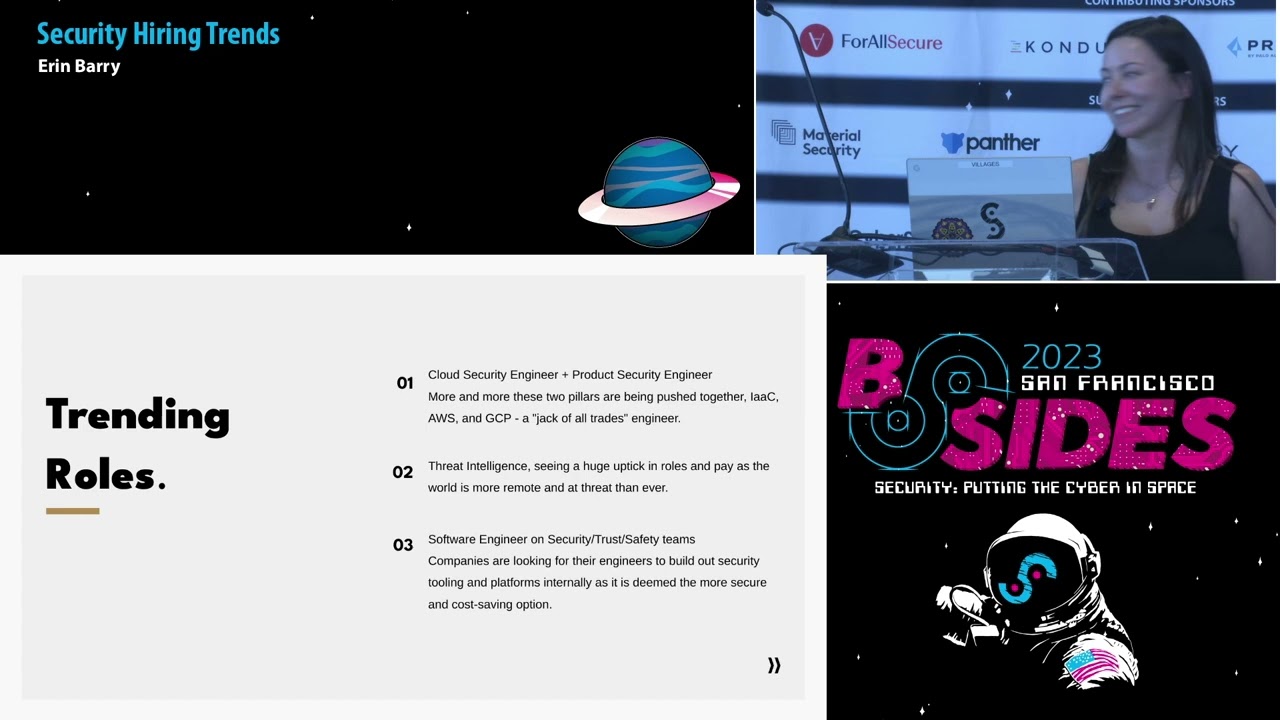
Good afternoon everyone. Thank you so much for attending. Besides closing out in theater 9 this afternoon is Aaron Barry with her talk round and around we go interviews. What do you know? For questions, please reference besides.org/q&A. Select theater 9. it'll drop the questions into the slidoh and we can discuss afterwards. Take it away Erin. Hello. Thank you everybody for coming on your Sunday evening um to listen to my talk. Uh I am a uh VP of security talent for a company called Code Red Partners. Um it's really just a fancy name for recruiter. Um some people also uh reference head hunting. Um but code red partners we do permanent direct hire security engineering and leadership
hiring. Um most of the work we do is going to be preipo companies. Um one public company we work with uh but most of the data will be pulled from preIPO San Francisco based companies. Um, but let's jump into
it. So, when I was trying to think of what I would compare the interview process to, um, I was thinking about some type of game. Is it Monopoly where we go around and around? Is it chess? Is it truckers? Um, but I ended up landing on Candy Land. Um, I'm not sure if anyone is familiar with this game. Um, but you can't get to the end of the rainbow until you pass through pretty much the whole board. Um, and it reminded me of the strenuous um, not so lovely, broken interview hiring process. So for today we are going to be these two lovely dragons and our candyland board is this abyss over here. So, just
um be a little imaginative. I'm trying to make interviewing interesting and it's not really like the most interesting topic. So please bear with me but keep in mind Candyland. So I want to start with types of interviews. Um usually in the interview process there are four different steps. Now do not be fooled that on-site interviews usually three to four different steps in one. Um that seems pretty extreme. But we can usually put things in four different categories. Number one's going to be that introduction call. Now, this can happen with a corporate recruiter, HR person, or a hiring manager. No matter who it's with, you need to um take it seriously. people will get declined all the time
for like a corporate recruiter call. Um, which is a bit ridiculous. That just means they've jumped on it, didn't think much of it. Um, but the whole goal is to like loosely assess the fit. Is this candidate a fit for the role and why? What would help them be successful in the role? What's their career aspirations? It's very like light, fluffy. Are is it loosely fit? Are you excited? Um then from there that technical interview. Um so this is where most people fail when they embark on an interview process. Depending on the role, it could be a coder pad style interview or take-home assessment. Now you should know about this before the interview. Um, if your
recruiter or HR person doesn't give you this information prior to your interview, they are not a good recruiter or HR person. They are setting you up to fail. It is their job to hire. So, please lean on them. Ask them for prep documents. Um, if they're being a nightmare to work with, it could be a big indicator that this company might not be a great place to work. Um, but please lean into these people. Their whole goal is to hire. Um, you failing a technical interview makes them look bad. So, ideally, they should help you a touch. So, after this technical interview and now coder pad style interview, sorry to circle back. Um, usually what we'll see is either leak
code or hacker rank. Um, now over the last few years there's been this like phenomenon of everybody wants a unicorn, software engineer turn security engineer turn security leader, but they better have stayed handson. Um, even like detection response engineers, hey, can you pass a medium lead code? I don't think that's a security engineer. I think that's a software engineer. But just be aware, companies are more and more looking for this unicorn. Really try to figure out what that technical interview looks like. A lot of the take-home assessments as well. Um they're time consuming. It could take you up to a week, two weeks, um on top of your day job as well. Usually a take-home assessment should be
open book. Um, but it's still you taking time away from your family, time away from your job. Um, I'd say the technical interview is like where most people will fall out of the process as well. Now, if you pass that technical interview, now it's time for the gauntlet on-site interview. So, ideally, the goal is to get a feel for working with the candidate. This is usually three to four parts. It will ask assess technical ability, role fit, company culture fit, great opportunity to fill the company and the people out. Make sure it's a fit for you both. Um, a lot of people will say like when you're going through the on-site interview, make sure you're interviewing
the people as much as they're interviewing you. Um, that's that's very real and it's actually good good practice and good advice because people want to hear like your excitement questions. Um, really take this on-site interview seriously. Now, if we get past the on-site interview, it's usually that one last stamp of approval. It's usually going to come from an executive um a founder seuite maybe the hiring manager one more time maybe a seeso um but the goal of this last conversation will be for the decision to hire or not. So it's important to know that this is four different steps. Um, if you fail the technical interview, you don't move on to the on-site. If you fail the
interview call, you don't move on to the technical interview. Um, I think it's important to not get ahead of ourselves in these steps. Um, and treat each step with equal importance.
So today we're going to be looking at some data um that I have pulled from hires made between March 2024 and 2025. Location of all hires will be United States. Um I will flag when I pulled non US hires into the data it skewed it greatly. anything outside of the US, it's going to be a much longer interview process. Um, and it's not going to pay as well. So, I wanted to keep things United States-based. Um, and this is 30 security engineering and excuse me, 30 security engineering and security leadership hires. Now like I mentioned before most of these companies are going to be tech preipo series A through public we have one public company so it's like very
much preipo um AI crypto fintech SAS insert buzzword here is usually what we are going to work on this year's AI last year cryptocurrency Maybe next year will be space, right? Um, but we'll see. And all of these candidates were placed by a team member of Code Red Partners, not just me. Um, I would be an extremely impressive head hunter if I placed 30 different people in a year. Um, so thank you so much to my team, the hiring managers we work with. um basically anybody that has helped me gather this data. And before we jump into the year in numbers, um how long do you think it takes from your first call with an
interviewer to signing your offer letter? Feel free to like shout stuff out. What would you think? 6 weeks, 3 months, 5 days, 10 hours, eight weeks. Okay. Honestly, you're all getting kind of close. Um, and I will say we had a lot of people that were tied. Um, like the base salary numbers, we had several people at these salaries. Um, but I'll dig into these numbers just a a little bit more and like break them down like where they're coming
from. So, the average length of time in days is 48 days, which is roughly 34 working days. That is roughly 7 weeks. Um that's brutal honestly. Um I thought when I was running the data we're maybe gonna look at like five to six week which isn't that different honestly but seven weeks that feels intense. Um shortest time to hire in days 9 days. Um, this at first I honestly thought that time to hire and base salary would correlate. Like if you did a really quick process, the base salary is going to be lower. I was wrong. Um, in 9 days we had a candidate pull in a 235k base salary. Longest time to hire in days
though 138 days. And guess what happened? that candidate left within six months. Is anyone shocked? I'm not. Um, and I will say though, longest interview process is through the winter holidays. If you interview through Christmas, um, New Year's, any like December, January holiday, it is going to take longer. Um, let's jump into some some base salaries though. Like what is all this interviewing for? Like what is the point? Usually the best way to get a bump in your base salary is to find a new job. So average base salary out of these 30 different hires um we are looking at 261K. And most of our packages will include a stock or equity package, cryptocurrency, tokens, a few other things. Now, lowest
base salary, we had about six different people hit this 150k mark. um they were different backgrounds, different um different companies, but I will flag low salaries were located in non and that's not a low salary in world view, right? Um but non tech locations, we had about five or six people sitting right at 150k base salary. It's literally not I don't think it's due to their work, but everyone loves um geotagging, uh looking at where people live. If you live somewhere where cost of living is low, chances are you're probably going to get a lower offer. Um but like I said, about five or six people were sitting at this 150k. Um on the flip side
though, highest base salary uh went to an individual contributor um located in San Francisco. Interview process took 44 days. So I'd say that's a a pretty good process. Now 150k 15-day interview process is what we saw for three or four different people. So, right at that two weeks, um, that's not bad. Two weeks of work for 150k base salary. Um, but still a lot of this has to do with where people are living, working remotely. Um, so it's a bit of a blend, but what we want to focus on here though is that 6 to 8 weeks. Um, if you feel like you're interviewing and it's taking forever, you're actually not alone. Some of the most talented engineers will
still be put through the most strenuous processes. Um, I don't love it. I think it's a really broken process. That's kind of why I wanted to present today about it. Um, but if it's taking you longer than seven weeks to get through the process, um, maybe bubble bubble some of that up. Now, I will say as well, smaller companies are more likely to hire quicker. Um, and that's just less layers to get through, less signoffs to go through. Um, but timing as well. If it's during the holidays, it's going to get pushed back. So, this is probably going to be the most important part of the whole presentation. Excuse my dramatic pause. Um, but these are our rejection
trends. So, it really doesn't matter how long the interview process takes if you're not sure why people are getting rejected. Um some things of course some things really surprise me though. So let's start with back to basics. Research the company and of course like that is a basic but you'd be very surprised how many people will jump on with the hiring manager. The hiring manager will say what do you know about the company? Nothing. Guess what? you're rejected. Make it up quickly. Google, take 15 minutes beforehand. Also, too, this works with a corporate recruiter. Even though it's just a corporate recruiter, they can still hit the reject button. So, research the company, what interests you in the company, latest
news. Of course, being in a quiet area without distractions, do not use AI. So, do you all think that people got caught using AI during their interview process this past year? Yes. And people that have insane backgrounds, computer science degrees from top schools still using AI. Um, you will probably get caught. Um, if it's a live interview, it's going to be better for you to absolutely bomb it than to try to to basically cheat by using AI. Um, and word gets around. Security is very small. People talk. Just don't do it, honestly. Um, yeah. And do not say you just Googled the company right before the interview. hiring manager hates to hear that. Um, so treat the janitor like the
CEO. Um, everyone's heard this quote, right? But if you're disrespectful to anyone in the process, no matter how low on the totem pole you may see them, like a corporate, like a recruiter, I'm one, so I can say it. Um, but if you are hard to work with or argumentative, you will be rejected from the process before you even meet a hiring manager, no matter your background. This past year, I saw several people get rejected by a corporate recruiter or a recruiting coordinator that is scheduling interviews. The hiring manager will never get to see your profile. if you act like a dick, honestly. Um, yeah. And two, like, um, recruiters remember you. I remember people that
were mean to me years ago. Is that petty? Maybe. But I don't think people's personalities change that much. If you treat people like people don't want to work with you. So, curiosity does not kill the cat. Everyone's heard this, right? You all hear this from hiring managers. Be curious. Ask questions. Be intrigued by the company problems the security team will face. Nobody likes to know it all. Um, ask questions. Say you want to investigate. If you see something off, um, don't let bias rule your decision making. So, people would rather hear I'm not sure than you just guessing or like making up an answer. Oh, I've been there, done that, I know it all. Um,
they don't like that. No company likes that. They want people that are curious, that want to learn. Um, and fake it till you make it. Like if you're not really curious about it, but you need a job, get curious. Um hold
on. So, no skips. Um, back to kind of like the Candyland thing. I know it's a very like loose theme. I won't like push it down your all's throats, but you can't skip ahead of the next interview. Like a lot of people will be like, "Oh, um, I'm so great. Like, I'm going to get a technical interview, but then they like can't get through the first interview, or they're banking on an executive interview, but they haven't yet gone through that on-site interview. Do not get ahead of yourself. take it one step at a time. Like an example, you must pass the technical interview before going on site and meeting the team. Now, every now and
then we could seem like a combo like they'll put the technical in the on-site. Um, but you're not going to be able to just skip rounds of interviews. Um, so be prepared to go through all of them. Even if you are a referral, even if the hiring manager worked with you at the company before, you're still going to have to jump through a few hoops. Um, and lastly, back it up. Um, this is a big one. I know some of the one of the panels I went to earlier, they were talking about like um skills to work on is like human skills. Communication is something people are getting rejected for more than ever. Um, they want good communicators.
They want soft skills. Back to kind of like this unicorn, right? Everyone wants a software engineer, security engineer, blogger speaker um, jack of all trades, do it all, know it all. Um, so anything you can do to kind of back that up, your communication, your soft skills, you need to be able to explain your resume. If they ask you about a project that you've completed and you can't explain it, do not put it on your resume. Um, something else I'll flag as well while I brought up resume is put everything that you do, even if it's not like technically for a company, if it's something you do in like your downtime, like if you built something in
like a home lab, um, add that on there. That still counts. Um, I saw a few people get hired this year from projects from school or projects on their downtime that wasn't even related to their day job. Like they're like, "Oh, it kind of sucks. They've been working at, you know, Amazon for forever. That like that's not great, but oh, they're the weekend. They've built all these things. They did this and this. Great. We'll take that. I'll act like I didn't see the Amazon Um, but not to like on one company, um, Tesla. Just kidding. Um, but you need to be able to explain your resume, the work you've been doing, the impact you've had. How have you made the
organization better? Um, if you can't explain that, maybe maybe do some studying before you interview. Um, at the end of the day, hiring managers want to hear about the positive changes you've made for the team and how you've contributed to the company's bottom line. Did you save them money? Did you make them money? If you cost them money, maybe skip that.
So, um, I'll close with a few tips and resources. Um, I am a big believer in a law or a theory. I have an anthropology degree and it's my way to to show people I've got it. Um, but I'm a big believer in Wilson's law. If you prioritize knowledge and intelligence, money will continue to flow. If you are not working, prioritize knowledge and intelligence, money will flow. Keep learning. Be curious. Um, one of the best things I did in my career, and it sounds so sus, is just like getting on LinkedIn and looking at other people's careers that I wish I had, and then being like, "Okay, how did they get there? What do they do? Where are they
working? What words are they using?" Um, you don't need to reinvent the wheel. Copy people. Like if someone has the career you want, take a look at it. Like you don't have to make up this great um like LinkedIn profile and resume. Like you can borrow from other people, borrow from people that work on your team, borrow from people that get promoted. Um we're all making resumes and LinkedIns at the end of the day. There's only so many buzzwords you can shove in these things, right? Um, so prioritize knowledge, intelligence, and then that money will continue to flow. Um, dazzle them. I kind of hate even saying it, but you need to go one level above the competition to secure
the interview and offer. It's tough out there, right? Interviewing sucks. People aren't getting offers. It's competitive. A lot of really talented people are interviewing against you. Companies look for any reason to say no. Um, some things you can do, create a portfolio, website, GitHub. I had somebody get an offer from submitting a vulnerability to the company. They fasttracked his interview process. Um, that's amazing. and then I had another person do that. If you can show a company that you've submitted a vulnerability to them, they're probably going to want to talk to you. So, get creative. Go to companies that you want to work for and see what you can do. Bug bounty vulnerabilities. If you can find a flaw,
they should hire you. Um, and then too, like everybody has heard like get on LinkedIn, do a talk, create portfolio, website, GitHub, do what you're good at. If you freaking hate LinkedIn, and I I actually do. It's the necessary evil of my job. Then like don't force your life on LinkedIn. Make make your little LinkedIn profile and then move along. If you like like GitHub, if you like a portfolio website, work on that. Um there are I'm about to use a quote that I hate, but it's applicable. There's several ways to skin a cat. Um, not everybody needs to be a linfluencer and like a speaker and a talker. If you're like the best damn
coder on the East Coast, show that GitHub. like dazzle companies in the way that makes sense for you. Um and then resume template I suggest simplicity is key. Use impact statements, use numbers, facts, figures. Um just Google University of Michigan resumeé resources. You don't have to have worked there. They have the freaking best selection of ré templates I've ever seen. they lay out like good action where it's phenomenal like shout out to University of Michigan um because that resume resource is fierce and really simplicity is key. Um use impact statements, use numbers, facts and figures, show growth and scope. We're not reinventing the wheel. Um but when in doubt, act like a new grad. like jump on resumeé resource it
use the content out there like you don't have to do it all by yourself. Um and that's really it for me everyone. Thank you so much. Um I hope to gather more data over the next year and hopefully see more correlations. Um I think right now like the main thing is just know that like you are not alone. the average is literally seven weeks to get an offer. Um, and then like don't forget about these rejection trends. Um, just remember we're in candy land, okay? Got to get through everything to get to the end. Um, yeah, that's it for me everyone. Thank you. Thank you Aaron. Thank you so much.
Related talks
 20:40
20:40 28:29
28:29 29:24
29:24 32:13
32:13 30:17
30:17 38:53
38:53