Lockpicking Forensics
Show transcript [en]
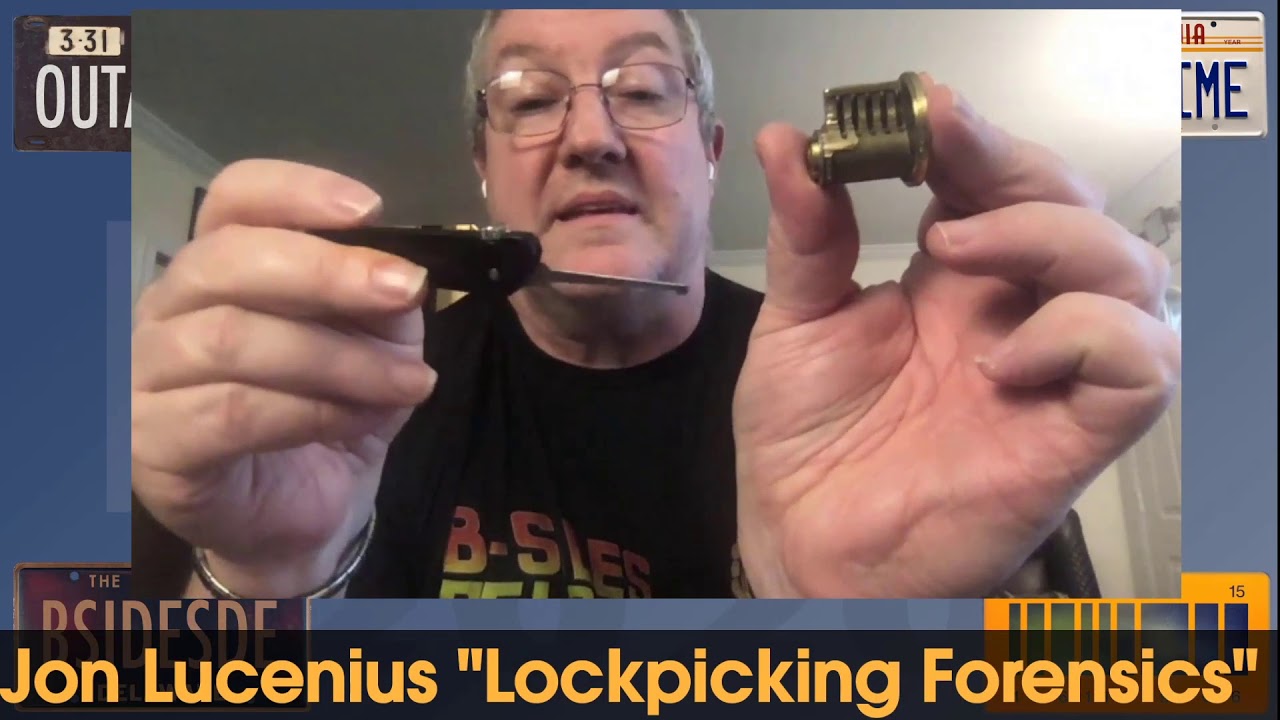
[Music] my name is john lucenius um i've been doing forensics probably since the early 90s i've been programming computers since this early late 70s in high school the um but this talking this talk is about forensics and it's particularly about lock picking forensics so what we're going to do is we're going to basically start from scratch here we're gonna we're gonna say if i need to do friends on a lock what do i need to do well first you need to understand what forensics is and then what a lock is how it works how to pick a lock and how to then how to what it looks like forensically afterwards so at the end of this presentation we
should just rip apart a lock and put it under a microscope and see what we see that's that's the end that's the end game here but to get there let's talk about forensics real quick i do have some slides the uh powerpoint discard aren't working together right now so oh well let me know if you will hopefully we'll get the uh the video screen up with the microscope here at the end and end of the show the um so forensics the uh the main principle in forensics no matter if it's if you're looking at a crime scene a murder scene looking at a hard drive looking at a lock is you can't enter some place
without leaving something behind you can't leave some some place without taking something with you that's the principle forensics you're gonna leave something behind and you're gonna and there should be evidence that you take out with you it's a little bit harder digitally when you hit a web server i understand that but the same principles still apply especially in lock picking right we're talking about physical locks here at least with traditional forensics on say a hard drive i can clone a hard drive i can clone a vm of a server and look at that i can i can use a right blocker to not alter the evidence with the lock you got one shot at it
right it's probably going to be inside of the door or let somebody cut it out for you or you have to you can't make a copy of the lock and then work on a pristine copy and not worry about the original evidence whatever you do that lock you're going to destroy the original evidence so it's important how to know how to know how a lock works before you even look at it it's important to know how lock picking works so you don't do the same thing the lock pickers potential lock pickers did to destroy their evidence and then you had to know how to take it apart in such a way where if you can prove
later what you did so that's what we're that's what we're going to look at here but first how does a lock work i really would like to share a screen here or something but you know what why don't we just look at a lock how far can we zoom in on this with the eyesight camera this this is a regular door pin lock you would find the lock it's probably more fun looking at a regular diagram anyway there how's that how's that coming uh rando okay so this is a lock as you see yeah you've seen them every day on doors and things like that wherever you go in you put the key in how's the lock work you put the key in
you lift the pins and then the lock turns so there's things inside that make that happen right these things generally look like that let me turn my light up see if that see if you can get some more light on this there we go so we have uh those shafts there or where the pins go up and down there's springs on the top that keeps the keeps the thing spring loaded and there's pins on the bottom there's pin there's two sets of pins the driver pins are on top near the springs they're they're they're up here let me see they're up here the um and then the the key pins are down here with the keys
let me let me get a different lock here so you can see a little bit more of what i'm talking about it's not open yet but up here are your springs and driver pins down here your key pins because they touch the key um this thing up here is called the outer cylinder the thing in the middle is called the plug this obviously is the key when it it's important to know what a key does when it goes into a lock and what it doesn't right the key doesn't have any choices it it has to go in straight and stay straight because the way the key is made and because the because of the size of
the keyway it will uh prevent the key from going side to side and up and down also when you use the key it's important to know that the key goes in the pins lift vertically usually without much friction against the walls and then the lock turns easily the um in lock picking it's rather the opposite here here's a practice lock from tool here is a uh one of the more modern lock lock pick sets comes with its own wrench
comes with an assortment tool assortment of tools i happen to like the uh the half round or the uh or the hook the small hook but either way
okay the um the slider basically texts what i'm talking about there's really not a whole lot more information on there than with what we're what i'm talking about here so if you want to put them up you can we can maybe share them afterwards here let me uh let me go ahead i i can do that real quick give me about 30 seconds here share a slide with our discord folks um we drop and drag these things on
now they're small i just gotta get these two on the same same screen that's all where's our discord at there we go upload failed yeah let's do it later man i don't i don't want to waste the time here okay so this is this is this is generally what a lock pick looks like it's got it's just a straight piece of metal it's got something on the end there's various lock picks there's wavy ones there's hook ones there's diamond one's pretty popular all designed to lift up the lock lift up the pins and then turn the lock note that's the different order than the regular key you put the key in and then you turn
there's no friction there's no tension the key also will hit the pins the same way every time by very nature when i put this when i put this lock this pick in sorry it wasn't it was off video there by very nature when i put this in i'm feeling around for the for the pins i have to know how many pins are in the lock i have to know which direction it turns i have to i have to know how much tension i need going in i don't know if there's pick pins i have to assess all that when i'm picking a lock unless i've done the same lock many times before the um so
all that's going to leave marks also notice how long the pick is versus how long the lock is even in the full size lock that we're going to take apart later you know off an actual door this pick is much longer than the lock i'll put it over here so maybe the background's a little better the pick is much longer than lock it's going to hit the back of the cylinder a key will never hit the back of the cylinder a key will never hit the sides of the cylinder the top of the cylinder the sides of the pin it'll always hit the pins in the same way and in fact over time it'll make them more and more dull they
come out of the factory very um shiny and with the tool marks on them the key is going to basically burnish those marks off if you google forensic lock picking forensics you're going to come across the paper by datagram and um you're going to come across he has the presentation at uh deathcon in uh a def con 17 it's called datagram lockpicking forensics that's a lot of that's a lot of what it's based on there's another guy um called french uh french key alexander fault he also has an excellent paper on this on on this lock picking forensics and if you go to lockpickingforensics.com or org let me see which one it is dot com
that is datagram site it is also on lock picking forensics so you'll see the effects that that a key that a key has but think about when you put the key in the same key in the same lock over and over again right it's going to wear the pins in the same way it's going to do the same thing if you find it in one mark that's not in the right place that's that's a sign somebody put something inside the lock to uh to try to manipulate it and that's and that sometimes could be enough normally in most in most cases because well look right these locks are made out of brass most locks quick sets and stuff like
that are made out of brass this is a quick set this one's an error it's all made out of brass or bronze or something soft these picks because you want them to last are made out of steel right most picks are made out of steel so they're going to leave marks every time every time you go up against the pins the uh because you have to put a force on them also in lock picking you don't
do what this does lift and turn you simply you simply you first you turn then you lift and then you keep turning and keep left until you open the lock basically the um you also need two tools for the most part unless you're up against a one pin lock which is called a latch by the way you put you put the pin in like this you have the feeler you got to get the get the thing up the shaft up the key way up to where the pins are right and eventually if you do this right and the courses will never work in a live show i should have taken most of the pins out
here which lock is this yeah and eventually it'll it'll it'll open like that if you if you uh put put the pins in the right position now what is that right position i have diagrams of this but apparently those aren't being shown right now can't be shown right now so we'll just look at this when the inner cylinder and we'll take this lock apart look look at it closer when the pins on the inner cylinder line up with what's called the shear line between the inner the plug or the inner cylinder in the outer cylinder the lock is going to turn the key obviously is designed to have the uh with the with the height with the
different um cutouts here see here here here here here is a five pin lock one two three four five so you can see where the pins are different heights those pins those key pins will form a straight line when the proper key is inserted and that's what's going to turn against turn against the outer cylinder close the plug to turn against the outer cylinder in lock picking you don't know which which pin is which length so you have to put pressure against the lock turn turn the lock with a wrench put pressure against it lift the pins up one at a time find out which pin is binding and continue down the line until until the lock opens it's a lot it's a
lot of work it's especially if you haven't seen the lock before it's you have to do a lot of testing and investigation i love in the movies when they just take two of these put them at the same time click click and you know the lock on the the slate the seven pin slaves lock with four pictons all automatically opens it's sometimes a little more difficult than that so i just said the word pick pins but what does that mean the um so most pins and locks are really smooth gosh i hope we can get the front the microscope going because holding up a pin an actual pin from a lock is probably not going to cut it
they're obviously they're quite small this this is not going to work um the presentation had it on there let me see if i can get the microscope going there miss mr um rando you were okay is it okay and the i guess the uh my video is pretty small so i'm not 100 sure but let's put the uh i do have a microscope here a handheld um 10 to 100 power microscope with the light and everything else so we'll take a look at that in a minute so so basically you have to know how a lock works what a lock pick is going to do to it how this pin how this goes in and what
the pins look like before this hits it it could be a new lock it could be something that's been open with the key and what and what the differences are so we've seen locks we've seen i'm sure you know what a spring looks like let me see here that's not gonna work doing it that way um hang on brando where does it look best here okay let me show you the other side actually so that is what a pin looks like as somebody described it it looks like a small bullet that's that's the key pin notice the end is round right the lock the key doesn't really care what shape the pin is in right it could
be pointed it could be round it could be squared off the key goes in straight the ping the the pin the key pin the driver pin go up straight against the spring and it turns if everything is in the right position for lock picking you really care about the shape of that bottom part of that pin this one happens to be round some are pointed somewhere thinner than others so if you're if you have your thin pick which we just saw right coming up against this pin you see how thin the picks are you see how thin the locks are you'll see then the pixar and you see how thin the pins are these two have to
marry up right as you're picking it so what's gonna happen is this is this lot is this pick is gonna hit the hit the uh this pick is going to hit the pins and it's going to slide back and forth right you're not going to get it right the first time it's not going to go in straight the first time because you're feeling around trying to figure out which pin is binding first so all that leaves marks that's that's the point the um these these pins came out of an american lock uh model 1 101 1101 in case you're interested i was in a lock picking contest this is the only lock i couldn't open
well actually i did open it i just didn't know i had it open so locks when they're in the door when when the lock's sitting here like this right it doesn't require much force to open it right as soon as the pins are at the right level it turns when a lock like this is in a door it has a mechanism on the back that you have to leverage to get the components of the rest of the components to lock to turn that takes effort so somebody's picking a lock on the real world it's going to take a little bit more effort than it does turning it wise than if it's simply something you're holding in their hand so in the real
world you should be able to find evidence of the lock being turned in such a way where the key would never turn it the um in the case of the uh the american 101 lock it's a padlock but this is the cylinder from the padlock okay no matter what the hardware looks like around it no matter how complicated they make or protective they make the hardened steel around it the past but whatever at the end of the day you're just picking in one of these things again right unless it's a wafer lock like on your car or something like that and those are different stories the um at the end of the day you're still picking this if you open up a
master lock usually it looks like this inside it may or may not have this big uh top part holding holding the keys but it has to have something holding holding the pins up here it has something holding the pins in the springs the um and looks in the in the door lock without that big piece will look will have to look something like that to hold hold the springs so you're gonna you're gonna do some if not damage the lock you're gonna do at least some marking up when you when you put your uh when you put your tools in there rando do we have any questions i had mentioned uh pickpins before the american lock that was having
trouble first picking and then opening because it required so much pressure turns out turns out it had i don't know if you can see that clearly or not but there's serrated edges there there's serrated edges on that there's there's one near the near near the uh closer to my head i guess the opposite of the bottom part of the pin those get stuck when you're trying to turn the plug versus the cylinder and those are called pick pins those will make the block feel like it's opening and then just locks up and that's that you can't turn anymore you have to start from scratch this block had five of those not only were the bottom pins
all pick pins of different varieties you have i really want to see if we can get this microscope going so i can show these guys up close but that's one of the pins there from from the from the uh from the lock that i took out you see the little serrations on on the right side there and then the driver pins on top of these which i thought was kind of extreme had these spool pins looked like like a spool thread this part called small pins these are troublesome you have to lift them straight up if you're going to different open the lock now if you though if you're going against a spool pin like this whether
it's in the driver pin or the key pin when you first start turning it it'll turn easily then lock up if you let off the tension and keep lifting it will generally keep picking but you have to know you're up against one of these first so that requires exploration you can test it out and stuff like that because i have a lot of different characteristics when you're trying to open the lock but this lock had five pick pins each key pin and driver pin was a different type type of pick pin and that's what made it that's what made the lock openable though it was it was uh there was there were it would none of the pins would buy
normally so as long as you kept putting pressure on it and you got to the end it would open almost almost every time it turns out at the end the problem was once you open the lock and got everything positioned the way the lock was made it took so much pressure to turn it you can never you can never turn it i lost the wrench you can never turn it with this enough to get the lock open that's why we didn't think we opened the lock but once i had once i had the key i realized i had how hard i had to turn it then i realized ah the lock was open so all that being said let's let's do some
uh let's do some forensics okay some actual forensics so we're going to pick this guy as our is our example so we want to so somebody says hey this is the lock off my door can you tell me if somebody picked pick their way open because my stereo is missing right so by the way if this is the only thing between you between the bad guys and something valuable you're probably lost already all right this is lock sport we're talking about here the thing of thing by bear this is i think mainly these days and intellectual exercises seeing if somebody picked open this lock to get inside because criminals have better ways of doing it
there's better ways of doing surveillance if you're thinking that way there's just there's just much there's a million different ways around the lock right and by the way if you've ever been in a situation where you had to pick a lock to get into a room and then get back out in an actual door it's much harder to pick the lock closed on the way out when you're using a hurry then on the way in just just saying okay if somebody breaks into your house and picks a lock they're hardly ever going to borrow to pick the lock closed on the way out okay so this is a just want to emphasize that this is an intellectual
exercise and also as you know tool would say you never pick locks that aren't your own that you're not authorized to and you never ever pick a lock you depend on because eventually you're gonna break the pins you're gonna screw up the springs and it's just not going to work that's how you can tell a lock's been overpicked because even the key won't work after a while but anyway let's take this apart and uh look at take it apart look at the pins see what they look like and stuff and see what's inside of it so in taking this apart before you take it apart one start taking pictures right take pictures of different lights take pictures at
different zoom levels make an exact copy of this as you possibly can without you know your material replicator which doesn't exist so take take and get as much information off the lock before you actually touch it with any of your tools you can find fingerprints you can find maybe traces of acid whatever whatever was used again whatever is used against this lock you're looking for tool marks how did they get the lock open in the first place right if they did it how did they do it what you don't want to do in lockpicking forensics is ever open the lock with the key you probably won't have the key in the first place but if you do don't open the
lock with the key and don't pick it open because that's the very thing you're trying to find you're trying to distinguish between key versus picking if you open it with a key or pick then you just destroyed all the evidence you're probably looking for because you have to assume that whoever picked this before you you're looking at knows a lot more about it than you do the um in in here let me well here's the uh here's the one that has been open before obviously you know somebody try this hand obviously somebody took a nice tool there and open this up just to show you how lock works but if you turn around this way at the
very top you can see initially where somebody took some type of dremel or whatever and open that open that top part up to get the to get to get the ball rolling here because without that you couldn't really do the rest but that was probably how it was initially opened most a lot of locks have screws on the back where you can open the locks generally those aren't available to a lock that's actually in an actual door you only see those in lock sport so anyway let's go ahead and take this lock apart if you've never taken a lock apart before they are spring loaded some some of them have really really powerful springs some
not so much but anyway with this one actually we've taken the requisite number of photographs and things like that and documented and dusted for fingerprints and all that kind of good stuff now we can start pulling things apart i'm just going to take the pliers and pull them this thing that was in red off like that so i'm opening up the lock but i'm not touching the front i'm not touching the pins i'm just going to pull this off and this lock does not have powerful springs and yes it's been open before so i know it so i pretty much know it's coming so let's uh if you are going to take apart a lock
i recommend you get something like this to put the pieces in or better yet with this because they they came in they came as a set get something like this where you can put the driver pin the key pins the springs and it holds six rows of each so you can keep everything really organized these things are invaluable when trying to open the lock the um also before we before we look at this on most locks in the back there is a uh kind of hard to see on i have this tape because i've already i've already done some work on this lock if i if i didn't if i took the tape off these pins would
come flying out um there's a cotter pin back here you slide the cotter pin out and then then the inner cylinder the plug can come in and out freely if you do that and you don't have a following if it's a full size lock with full size springs and you do that and you don't you pull the plug out the springs are going to shoot your driver pins down and you'll have a very hard time putting the lock back together that's if you're re-keying the lock and forensics doesn't matter the forensics your goal is not to put the lock back your forensics is to figure out what happened what you don't want to do and this is on
datagram site as well let me pick one of these is you don't want to cut the lock halfway and cut through all the pins if you're going to cut into the lock cut it above just maybe j just um a little bit below this line right here so you can not disturb disturb the pins as little as possible but i wouldn't recommend cutting into lock that's pretty just pretty desperate normally you can open it up some somehow like this like these these look sealed but you know with the dremel or whatever hacksaw fine tooth hacks or whatever you can eventually get to these get to these pins i remember you're not worried about putting it back together
for the most part so on here this lock has i'm just using
it's four of them one never came out and if you've been picking a lock for a while you take it apart you can probably discover why why it doesn't pick very nicely or why it did pick nicely either way the uh but so that's it's out it's empty everything's sitting here in my on my laptop and pieces i got four or five pins and four or five uh springs these are smooth well i'll put a microsoft microscope here for a second but it's the naked eye these are these are very smooth and these are very uh they're not they're not tech things is what i'm trying to say these are regular old pins this lock was quite easy to pick
the key pins are all different lengths as they should be that'll match the key and this lock the driver pins are all the same length driver pins are not always the same length sometimes if sometimes you'll get driver pins where they appear to be cut so there's three sets of pins there's a key pin and the driver pin is cut in half that's because there's a master key that's how a master key works so if you're looking at lock picking forensics and you see the driver pins cut in pieces into a certain pattern then you know the pattern of the master key you're looking for they may claim there's no master kit they might they might know there's a
master key but but that's one way to prove the existence of the master key that can be important sometimes and oh look at this i said no pick pins but apparently i was wrong that's a spool pin that's this pull pin in the driver pin so that will lock up every time you try to pick it that explains why i was having some trouble initially with that lock and it makes a big difference where this pin this this bull pin is in the front of the lock or the back whether or not the lock ticks from front to back or back to front but why would a lock tick front to back or back to front in the first place
because every time you see a diagram of a lock everything lines up perfectly here let's uh put this key back in this lock see now won't that won't open turn with the key there it goes what happens when you do this too much to the same lock so there's what a real lock looks like not a diagram the holes are see that very well but the holes are very messy the holes in the bottom are much much bigger than the ones on top by the way that's probably can get their drills and tools in because this this is one solid piece you'll just go all the way up into the uh the housing up there the upper housing
and the same holes are drilled through the plug and this is mass produced the um let's see if i can uh get this open real quick and we'll we'll take a look at this one as well since this is this one has all the little pieces and then we'll how much time we got left enough time to break out the microscope and see if i can share that there's a tool they make to do this and if i put the key in life will become a lot easier trying to open this up let me see if i can get this open real quick i think this is worth looking at uh randall any questions from the audience
okay so i just you can okay good so i just picked this so i just took the cotter pin out and now i'm just gonna pull this so that's one pin that just came out in my hand that's one pin that just came out and
like all the others in the lock it's serrated every single pin this lock has some type of serration to it
somebody observant might be saying hey you picked that lock earlier it has all these pick pins in it yeah well it only had one pin so but that's why it was so hard to use the key because i was trying to turn it and i was trying to turn it and put the key at the same time because the pick pins i had to put the key in straight make sure it was lifted and then turn it even more so with the pin with with the lock pick which is why i took a little bit of effort into the one pin lock here's the uh ring and here's the driver pin for that same set of pin key uh keep driver pin
combination this one's not focusing i can tell that one is completely serrated called a serrated pin for that reason it's like a whole bunch of spools all together that makes it very hard to pick normally if there's one if they're all like this like i said you can just jiggle the lock all the way open it's like putting all your uh it's like putting you know security appliance after security appliance in in in inside your infrastructure eventually you're gonna you're you're gonna there it's like a rubik's cube you're never not gonna be able to put everything together properly you're better off with one really good thing rather than just layering on a bunch of things
hoping things work but that's a different topic the um so this is what the plug looks like that was what we saw on the outside those are the holes on the inside i'm trying to zoom in here so you can see how messy they really are they're they're they're not in the line they're not um smooth they look like the mass produced because they have you see how they're they're crooked that's what makes a lock pickable that these pins were that these holes were perfectly aligned down the line on the cylinder you couldn't pick the lock because there wouldn't be any difference in pressure it's turning this inner turning the plug against this with the pins in the way
causing different pressures because the alignment that makes a lock pickable makes all locks pickable now you may think the more precisely it's a machine the harder it is to pick when actually the opposite's the case the more precisely this machine and the lower the tolerance is the more precise you can feel the mechanism easier it is to pick at least in my at least in my opinion and that this is what the uh outer cylinder looks like once once you pull it apart you see the holes there you can see the holes there that we saw before and there's the smaller ones on the inside that's i guess you can probably see something there again they're not lined up very well
at a you know at at a detail level they're not extreme they're not completely round so that's um that's what makes a lot like this pickable they're mass produced that's that's basically it so let's see if we can get this camera rolling somehow
if you do buy a usb camera wondering how to get the image to come up on your mac um photobooth is the answer to your problems believe it or not can you guys see that looks like you can all the problems we have a powerpoint this thing comes on automatically fantastic okay good so let's see here let me leave it there for just a second that's the cord by the way you're looking at i want to clear off a space here i have p lock pieces all across my uh laptop track pad which i don't need the trackpad but i do need the space and then we'll uh take a look at some of these and see if we can't do the uh
complete the forensic task here saying hey did somebody pick this lock and lord i hope so we can tell that because that's we just i've been picking that lock forever let me put something to keep the pins and stuff back on here give me 30 seconds uh rando if you have any drum roll music now would be an appropriate time since we're finally gonna see all the pins and stuff we've been talking about also take a closer look at the uh shaft and the cube okay i believe okay good enough for me okay i had something planned where i can have this on the stand that didn't work out give me just a second here to get this thing focused i
want to focus it from a distance first then we'll work on getting it and i do apologize for this portion of the focusing okay let's uh see here i had something earlier that worked
let's focus on that's a spring
and that's what one of the
pins look that's what one of the pins looked like let me focus in here real quick that's a key pin next to it we have a driver pin the um so let's look at the key pin a little closer to see if we can tell what's been done to it before we do that rando i need about 30 seconds to get something to hold this microscope skill that kind of missed the plans there one second [Music] i tried this yesterday and it work pretty well i was trying to come up with something better overnight but you know life happened work forensics all that kind of good thing so let's see here
very little you can solve with velcro and duct tape
one more this microscope has different light modes and while they uh looked nice they did warn you they're just faking it especially the blue light so that's the blue light on the blue cloth there's the actual light okay now we can center it on this unique thing now i can do this
yeah do this and now
a little bit of focus and we should be good to roll good to roll here
there you go
okay that's the working end of a key pin so let me see if i can find a little pointier pointer the um
these vertical lines here those are all from pic picking the lock the um let's see here let me uh
those let's turn this thing on its end so we can see down the line but just on the shaft here you can see the um right here all the damage that picking this lock has been doing because you're testing the lock you're pushing your your steel picks against the brass lock those are all signs this lock has been picked and obviously more than once but if you ever see things that are going up the shaft at all on a one on a pin for a lock it's been picked it's been it's been attempted to some degree now if you're looking at a new lock that's been picked once you're looking for very slight variations
hang on let me get a different uh
let me get a different one there so
there and let's see here when i move the focus that's when we're losing this
let me adjust the focus then i'll get it back
see how damaged these things get when
this is the end that it pushes the driver pin the top pin this is the working end where the key hits the lock the um
just took it away let me uh visually i can't tell the difference hardly between the two ends but as soon as you put it under the microscope it becomes very apparent because the key is going to do work against the pins as well if you look at datagram's presentation he shows you what a what a pin looks like after it's been used you know with a regular key usage after 500 five thousand times and it just gets smoother and smoother over time because key's hitting in the exact same
way
from the bottom of that lock it's focused enough you can see the uh the many scratches the many scratches coming up and the effect of the key is those circular ones as as the pin rotates as you're putting the key in and out but everything else on that lock on this sorry on this pin is from the picks let's look at it let's look at a different one let's look at one from the six pin lock that i the five pin lock from before and i'm gonna keep it inside yeah get rid of this cloth that's part of the problem is this cloth that obviously isn't very stable let me put it inside something else
that's a little more stable i know somebody in the back of their head is thinking microscope stand it came with one and i can't find it but this should work
this came off let me adjust the light a little bit here too it's a little bright
one second let me get the focus back then we'll get the
there we go again the circular the circular ones are or the or the key anything that's not circular going around that lock is picking so the um
on the top on the top part of the lock you can see that vertical line that's a sign that's been picked toward the center there's one that's going pretty much horizontally against the circular stuff that's also been as a sign of picking on the bottom portion of the lock around five o'clock there's a harsh mark there that's that's a pic that was rammed against it probably trying to figure out which lock which pin was the loosest in the picking process and even on the uh like at the nine o'clock position you can see a vertical a horizontal line going out a key would never do that a a key this is a relatively new lock too which
is why those concentric lines those are machining not that's not all key those are machining the key is going to smooth those out over time but you can see how the lock picking goes completely against the machining and the key and the key work the um so that's what a pin looks like that's been that's been picked and not and not a whole lot of times i haven't done a whole lot of picking on on on this on this particular lock but the um you can see it in the mark and then the marker too the driver pins aren't gonna have as many marks the um you know let's look at a uh this is again this is a obviously a
key pin the uh even here the top of that lock and the flat part and the cylinder part not not not the bevel part you can see that mark there that's a sign that that lock is that pin was manipulated with with the lock pick but the key would never go into that position that's what we're looking for in forensics right the things that could not happen normally under normal wear and tear you understand a lot normally works you know that mark is basically impossible to do with the key so somebody's been inside that lock doing something with something and earlier i was saying about the serrated parts of the lock that's the bottom two things down
there and yeah it looks like a little bullet the um the uh you're gonna find also as you as you look at these that the pins closer to the front generally receive more force from the key so those will be smoother than the ones in the back so you can almost tell which ones go in the back and which ones go in the front the um the one i took out last that had the that is a that's what a serrated pin looks like you can imagine as you're picking that with the two cylinders going back and forth how how much friction that creates or in the case of this lock too much too much um friction that's constant and
you can kind of force the lock open that way the there's also i mean there's more there's more to locks than just this right you have the uh the key um that one uh presentation i mentioned earlier by french key he uh he goes into the key marks and if you can tell if a key has been duplicated if the key has been impressioned if a key has been used in a manner and then otherwise prescribe basically so that's pretty much what i wanted to share on the lock picking in forensics it's basically good friends to practice apply apply the locks knowing how locks work knowing how lock picking works is all very valuable and knowing what is normal and what is
not is the most critical part of of lock picking
so thank you thank you very much
and the thing says share my screen i'm not even sharing the screen it's just the video okay so that's pretty much what i have to share is there any questions
okay i mean it's pretty simple stuff i mean if you have locked if you want to know a locksmith picks you look for things with you look for marks that the key can't make that's a sign that something happened now what's not clear at this level is which pick which picked which lock right so different picks will leave deposits on those lock microscopically and those can be analyzed on a certain pic pick set those picks will take parts of the lock with it so you can analyze the picks also metallurgically to figure out which lock it picked people have postulated using have come up with carbon fiber picks that don't do any damage to the locks
when you're picking it for anti-forensics but it turns out that they pick up more from the from the lock you picked rather than leaving it so you can tell exactly what lock they picked if you have the right tools and instruments and determination so that's what i wanted to share
Related talks
 31:02
31:02 28:25
28:25 48:45
48:45 57:35
57:35 22:25
22:25 40:35
40:35