History of E-waste Recycling
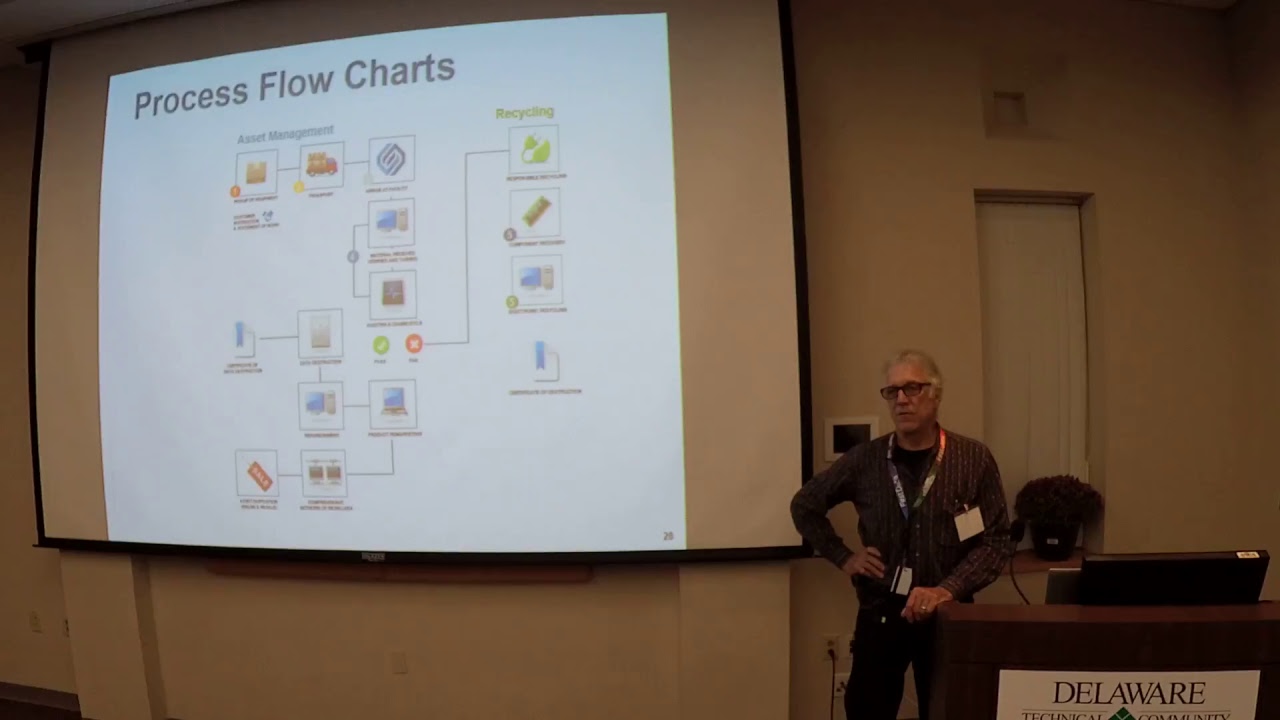
Show transcript [en]
history which goes back to just after World War two believe it or not most people think it's a much more recent thing bringing to mind the picture of the Steve needs a new age but after world war two the military had tons and tons of which wasn't returned to the US including ships so Taiwan at that point was kind of the the China of today in the poor country it was in Southeast Asia they started taking the ships and all this other material that was left from the wars or the processing for for the mental content
most like that point for the steel but it was also it was copper there was gold and platinum and palladium in the radio equipment microwave radar etc so it turned into quite a bustling industry both for the metal content and as time went on reuse of materials also both both the steel in other countries and use it grew into recovering not only the metals but but pieces and parts of the radios navigation equipment cable etc mom-and-pop shops and some larger industries but pollution became an issue and also late labor issues so the government decided it was going to crack down on this and started passing regulations and also as the economy grew into the warm kind of labor costs were
rising at the same time and what happened was these these process was essentially got relaxed better were forced out of Taiwan and they were looking for another place where labor was cheaper and regulation was was less onerous so in the late 80s and early 90s quite a few Taiwanese who owned these in the Shanghai area and set up shop for the cheap labor the lack of regulation and also it was China had begun to become the exporter china has no sense of no copper minds of the role of copper so to them at that point being the poor country they didn't was with tons of labor but but now we're 20 they didn't want to go and buy LME copper
cast on the open market when you can buy low-grade scrap that required a lot of labor to recover that copper so at the same about that point was when the telecoms were switching out from the old mechanical switching to the digital the current digital switching the old mechanical switches were each ten thousand lights which contained apart from the steel just the kind of the relays and the circuit boards that are probably 100 metric tons for every 10,000 lines so you start you start freaking that out both you know worldwide its immense material and it required tremendous amount of labor to process so the material coming out of Europe it was expensive there they got shipped to China material coming out of
the United States same thing that shipped to China and even in South America where the labor was marginally cheaper than here who's still more economical to send to China so millions of tons of telecom scrap got sent to China which essentially is what got tried to really set in the Hewitt's business there were scrupulous operators and I spent many years going over there every year the places that I said material to but there were unscrupulous operators who had an important permits facilities and they were essentially import material and literally just take the container out on the street and open the back doors and just auction it off to literally wheelbarrows and I've seen I've seen it with my own eyes this is
this is where the bad reputation came from China for the pollution because people who were buying this way and they were just subsistence peasants had probably even had no concept they're just processing this dimension to make these things pay the legal operators of which they had to compete
of course along with that China was famous for for bribery so the entire entire system was based on I'm paying officials to get the permits and to get the quotas to pass inspections
around run mm even just just like Taiwan the Chinese government got tired of the pollution and labor exploitation and incrementally they started closing off the markets for particular things CRTs the first item that they banned as time went on they used to be a big market for was the catch-all it's called mixed metals scrap and people would just throw literally pile up anything in the container and send it off and then when they're very in that pile hazardous waste whatever so what the government did is say okay there is no more mixed metal scrap now you have to say you can't send more than two types of commodities in a container it has to be
circuit boards it could be motors but you couldn't just could just throw whatever in there so what happened at that point was people started sending to Hong Kong and to the northern territories of Hong Kong and then literally like ants the stuff was carried across the board China to be processed this is a picture I actually took myself in northern territories that Shin Jen in the background and they were they were carrying this stuff and sacks on the backs for four years eventually even even that was that was the stuff but that was only very recently we're talking in the last couple of years it really stopped all importation of waste into China so what's kind of backing up
a little bit is so what what else has been happening with this both the US and Europe have past producer responsibility laws that require producers of equipment to pay fees to recycling in Europe is why for the United States it's on a state-by-state basis and it's so there's still a lot of equipment in the US it's not where it's supposed to go this is a picture of a pilot project that I did to the state of Maine before before they broke the law I wanted to see what was actually collected whose materials and how actually work this is how the producer responsibility laws supposed to work some some states have it where they pay you know the collector actually has
to audit every piece of equipment can make model serial number send it back to the manufacturer to verify and then they get paid based on that report it's pretty cumbersome system a lot of producers have an incentive to reject claims the European system is a little more functional in that they will they will have different collectors audit there they will audit their streams on maybe for a few weeks a year or a rolling basis take those averages and then the government actually bills the producers based on those figures so it's not quite as it's not as costly for the people that have been the collection to get paid so there's an incentive to collect the materials as of now still
only half the states have have some type of laws but they're all over the place they're not there's nothing nothing unified and unfortunately the US and a few other small countries in the world have not signed the Basel convention you had entreaty and trans boundary movement of hazardous waste and while it's a it's a treaty unlike other treaties it's when they cited you've also reserved the right to modify for your own country you can't make it less trip but you can make it more straight so kind of like what's happened in the United States while people say well yes we comply with the Basel convention it's it's still difficult to send material from from one
country to another for example you may be able to descend from I use Colombia as an example you can set up in Colombia to the EU even send circuit boards to a smelter there and all it requires is the context 7 notifications it's a piece of paper the travels of the shipment you don't get a permit you don't have to stuff you know it's perfectly fine of course it was called green list material but they are listed on the Basel convention other countries for example Chile if you want to send certain for city you you have to get a contract with the smelter for a year then the smelter has to contact the competent authority
in Chile to verify the you are a licensed recycler and then that the authority of Chile has to give the authority in the EU to say the decima smelters can take anywhere from weeks to two months the only exception to this is they always see these countries even if they are Basel they they have the remove materials so this is a 20-17 map but it's it's indicative of what's what's happened today when the material stopped going to Hong Kong and being smaller than China it was there was still a need to do something with these materials and they started going to Thailand to Vietnam to Malaysia to Indonesia and a lot of the same type 1yz that have the
kind of companies in in China are trying to open companies in these countries but in this day and age is it's not working out because these countries while they they may be corrupt they've seen they've seen what's happened in Taiwan in China and some African countries so they're very cautious there's not a lot of the to go going I know a lot of its processors like the floodgates of opens to send material so at the end of the day what's happened is it's come to the point where it's even with expensive relatively expensive labor it's it's worthwhile to actually process material on the local level because you're avoiding shipping costs all around the world which it become expensive your
commodities prices have dropped so the incentive to send it somewhere else than the high for a high price and the buyers are not paying much because they're having to pay so much bribes in the building new factories expensive so this is not the demand for it the last 10 years or so I spent on Latin America and setting up responsible recyclers in almost every country in Latin America this is one of them in Guadalajara the dismantles the equipment [Music] as proper destinations and this was this was in 2011 there's no business there making a profit there's one Colombia that I set up you know later than that the largest recycling coffee is 125 employees they're making a good profit this is one
Panama Brazil these companies they're all making money doing this the United States now when trying to shut off everything this past year companies here now we're actually started to process the material themselves so this to this this is a little different here but he knew that called a scrap they called we waste electrical electronic equipment which includes everything including vacuum cleaners and toasters Telecom they've also best thing you've probably seen online equipments as rows it's it's a standard it's not why this is a European standard but kind of like the California regulations here it kind of forced the hand of manufacturers worldwide to use lead-free solder to not not have mercury switches to limit the
use of cadmium and chromium and completely tardis in the plastics because you can't you know has to be grossed certified to be able to sell part of that was also nominee made a little bit easier to dismantle fewer screws plastic which was marked a big plus because for many years the plastic didn't have the number on a lot of this plastic would go to China and they would literally have people burning little pieces of it smelling the fumes to tell what kind of plastic it was yeah it's unbelievable but but it's true so all these you know all these things have helped CRTs were were and to add emission we never be one of the biggest
issues in the industry hey just because of the shoe the five of them can be because of the lead content of the glass see a chart damage somebody's the funnel glass the back part of the contained by the way that's a 25% LED so although it wasn't the heaviest part of the model the front part of the panel was the head of his part so a lot of systems were developed to process these we cut the front off then you just had plain glass that could be used as crush double uses an aggregate the lint containing part was high in the high lead content if you actually get sent less smelters they used it as a flux and could recover the
led this is system I work for Senator recycling for a few years not too distant past they'd built a huge plant up in Canada just across the process monitors to separate them they didn't cut the glass off they used they just crushed it up good dust collection there was no contamination they crushed it up in the used a XRF x-ray florescence technology as the glass passed over sensors in the air jets and would actually separate the glass two types of glass and a magnum bang off the shadow mask and electronic gun so while it worked very well it was a very expensive system and the Canadian particularly from Canadian market because they had a very strict
law the government set rates were not sufficient to to cover the costs of this and so after that for two or three years this was a four billion dollar plan that they had to shut down at this mantle because they couldn't even break even with the rates that room so right and there was I mean while it worked I mean there were some issues and there was it was difficult if you threw in TVs that wouldn't wooden casing but still we had to do something with it and what's ended up happening I'm sure you've all seen in the news or trade journals there's the taking most of this material because no matter what you do
there's a charge there's a there's a cost to get rid of this no regardless of the lead has any value anything electronics that have some but the end of the day there's a cost of at least 10 cents a pound to get rid of a monitor or a TV so even if your basic like set of 15 or 17 of CRT there's no way 25 or 30 pounds that's two or three dollars plus the free to get rid of it so the unscrupulous operators the civil will take it for free or lowering the charge you five cents or just less than we've been going ready to do it so what would they do they would they would rent rent
but she old warehouse they bring this material and they were strip out the degaussing coil which is a copper coil it would strip out the electron gun they'd strip out the circuitry English which in this these cases would why not worth much but they're worth something and then 50,000 square-foot warehouse to the roof with leaded glass they would just beat feet and leave the landlord with to saw his hands I mean this happened within the last year there was a it was in Kentucky there was one company that I mean it seems like science fiction but this was a you know a real company that supposedly was doing the right thing they rented an excavator in the owner's
name they took it out to a piece of land that he owned so you know in the would simply dug a giant pit and buried you know hundreds of tons of monitors below and then he was surprised when he got caught his name all so there's two ways of processing this material you can take everything apart by hand screw by screw the spawn camera which is really might be the preferred method because who you really recover everything and you're supplying employment to somebody no the other the other system is these giant shredding machines work force inside manage the plant in Australia was this mission but it was essentially the same machine giant 400-horsepower shredders that will shred the material
down to more or less like a three-quarter inch particle size and what I mean you couldn't throw an engine block in there but you can throw this podium in there you can throw the chair you can throw coral copy and whatever and then we'll eat up about 16,000 20,000 pounds an hour whatever goes in there the the ferrous material gets taken off by magnet not only there's still some plastic or copper attached to it picking line we've got a couple of people that will pull that off we process the super screen that goes over then it's about a quarter of an inch and the final turn of those through it's going to be mostly glass wood things
things that got pulverized very easily and some some copper fine cables go through copper hopefully to get copper recovery from that the rest of it you know that goes up what's called any current magnetic separator it's a rotating magnetic field which actually rather than attracting the transformer uses a current non-ferrous metals such as aluminum and copper so that should be Pels these and because they're similar amounts that would cause them to different rates so depending on the speed of the belt that feeds it the rotational speed of the magnet and we put a splitter so they go there's a stream coming off here it hits this broader LZ the aluminum will fly further in justice aluminum goes this side and
the copper goes decided mister splitter the plastic and certain points fall down they just fall down okay pal now that material contains plastic and circuit boards not was left because another belt that's kind of probably five or six feet wide it has induct ducted coils or very small ones all the way across probably 100 across five or six foot white belt the circuit board goes across there it has mendler small amount of gold copper whatever it senses that at the end of the belt it's time such that it detects metal back at three feet there's another air jet that will blow that piece one way and then all the plastics
for recovery and I'll explain that the plastics that went on to another XRF machine which was distorted by my composition and then to optical sorting that was sort of my color but at the end of the day all of these streams were were content is that it's not a perfect system the circuit board part worked fairly well the finds were most had no value the plastic part worked well up until a few years ago while prices low and you couldn't compete with virgin materials because the content was too difficult to get rid of the contamination and even 1% contamination in plastic not suitable for reprocessing plus if you melt at different temperatures so if you got one
one type to another machine it's got another metallic components jams up machine hundred thousand dollar machine so this is this is the basic scheme of the shredding system those are the outputs and this is a kind of the scheme of how hopefully the best use of recycled would be were actually reuse material that comes in so if you've got the computers we've got routers you've got telecom equipment it's still viable to sell the spare parts to companies that still have legacy equipment if that's not feasible you can still pull a memory or processors or equipment that's for spare parts and then what's left over goes the the circuit boards is its own very few places in the world that actually
process circuit boards the what's called secondary copper smelters of which there's none in the u.s. is one in Canada Miranda there's three in Japan there's two in Germany there's one in Belgium and there's one in Sweden that's really it for the entire world so these are important to go there they burn now they burn them yes and introducing completely closed reducing atmosphere so it's not to make oxides they get rid of the organic compounds they scrub the gases that are all very tightly regulated what's left over goes is essentially the metallic components don't take off with the magnet in steel that residue goes into their smelter gets mixed with copper or indoor copper scrap to make copper anode
then end up goes to the called tank house or the electrolytically refined copper to make copper cathode which is kind of the standard 99 pure copper the precious metals that have been circuit board now to fall out of that into the bottom of the bath and they're taken to the laboratory with acids and reagents they can extract the precious metals this I know today any questions so but my question is always like if this is actually really cool which so you have all this material at the end that you just keep you drain what where does this happen at that I'm assuming is the stuff that alternates what should be going in landfills are they finding other ways I said I said
you know at this point that is probably very little is actually getting to landfills there's still a significant amount it's not being properly just just post up there's still people off in the United States not so much in Europe because they couldn't find scheme but certainly Southeast Asia a lot of material is still process come on a basis when people will extract the valuable part and just Chuck after plastics with things no no economic ties but we think it should definitely improve it's not there is anomaly of value even in plastics if you take the time to do it correctly so paper people are giving up on recycling the real fact is that even though the
plastics may not have they may not pay anymore they were used to selling the plastics for expert time right now this thing will take the plastics but we can't pay you to do that but the fact is you have to do something so it's if you have a company's willing to take it for free and can actually make a product out of it that's everybody paying something to put it in the landfill but it's pretty hard to get across or something the minute they cost to it but but worldwide things are really improving this thing with China in the last really the last year they stop they stop taking he wastes years ago there were still
things being smuggled in they really stopped and now it's when they stop taking carbon paper office they just stop taking everything I know my trash I went out and so I mean there was still and the reason they did this was while it made strides in managing the corruption in China it's you know it's it's kind of so ingrained that there was still material being smuggled in and the government just finally said you know what we are in there just like that in Taiwan there [Music] the u.s. standard of living is such that they don't feel compelled to provide a slow way to mean the jobs to everybody just the manufacturing sector has picked up the the rule of law to us me may
still secret movement or is allowed is a lot better than it was so they didn't see they weren't compelled to to get this this low-grade polluting material and people were world were in are arising up about the boat about the pollution in the corruption so for the Communist Party to stay in power you know while they are though the power was taught they still not listen to to what people were saying in a mechanic
[Music]
but they all make a big show any manufacturing over run really is a new product right a new router switch rather than no absolutely they will send it to a company like sales recycling for guaranteed destruction brand-new boxed product that they now have to pay something to take out of the box and you know throw away all of them you know open up all the little bags and screws and all these things and absolutely forbid any useless material just to protect their brand and their profits so I mean I can understand their rationale its it's still it's still great so it's a hard pill to swallow in your business but when the customer says this is what
you have to do what you want that business you want HP's business what happens what Microsoft this was just this past month within the last 30 days has been court cases going on for a number of years comes out of reuse but it's really about repairing you the right to repair your own equipment so a lot of companies of this Apple being one of the biggest offenders basically with going through warranty if you if you worked on it or put in a third party but there was also binkham in John Deere a lot of other big companies caught even cars now that there's somewhat you know their cars run by a computer so if if
you try to go in and change and computer before they were saying this is a violation of our Terms of Service and agreement you bought the car but it's not just like the iPhone this time it's not really yours the court has decided that you now have the right to warranty and they can't deny access in charge or I'm sure that I'm free but at least that's moving in the right direction have you seen the separation yeah how its processed so again I'm gonna run this plan in Sydney for six months what what I came to learn is the manufacturers of equipment will tell you oh yeah just just take out a bucket loader and scoop up this big pile of
whatever throw it in the air just management things coming up well you know it doesn't really work what what works is if you take triage the stuff to do a couple of things one is distinct gated by by type so as if you if you've got all four but all the photocopies over here wait till you have you know a hundred tons of photocopies PCs routers things that contain precious metals and those things nominally is worth to open them up and take off whatever steel on plastic whatever extremely stuff you can you can easily before you throw it in two reasons one is it's it's taking up you know the time value with the machine
to grind up things that have no value essentially number two is the real recovery on August I mean the values is a little bit out of the cop remove the real value of the communities these recovery things is the precious metals as you probably all know precious metals are soft gold silver platinum palladium so what happens when you run through a shredder it's grinding all the stuff up it wipes off the gold to silver self on the other the other components so if you just throw a whole PC in there you're going to lose thirty to thirty five percent of the pressure content on the steel because it's it's God there's no there's no way to
recovery so while there's a nominal cost to pre-processing it you more than cover that at the other end so and even when I ran this plan eight years ago now there was still companies were resistant to put that labor into it because you're competing against the you know exporting the stuff to country were they in the process that's looking long if we if we just run it through the shredder or split it and get X and we're still going to be ahead of you know if you put the labor into it were really going to be you know behind that really gained anything now the market has changed where you can't just willy-nilly should this there is no you know she poems and
the stuff anymore so I think it is you know I think that this type of machinery is going to become more more valuable and more it is productive but you gotta you know you've got to put some effort into it to get to get a good product out of it and now it's becoming I think economically viable to do that costas is higher so is there a significant enough cost difference between shredding things and picking specific materials out of things because that one is I think a lot of it has to do with knowledge and training my experience is it's if you have the knowledge of what's really worthwhile in products and you take the time to to train people and pay
them enough to stick around that that's you know that that is probably the best solution because again it provides wages the problem the big machines is a they require big volume and you're talking about you know several million dollar investment and they use significant you can imagine a four hundred horsepower motor running you know eight or ten dollars a day so and the maintenance so I've seen quite a resurgence worldwide not just people physically taking things apart by hand which to me is a good thing because when you take the part and now you're also recovering some more reusable product products that you do instead of losing a piece of memory that may be valuable
now that was coming back to the market now you know a lot of the stuff the prices of new stuff are so cheap to importing a lot of things that what you want to reuse it is by the time you take it out and test it and all these things you know it's doable but at least it's the opportunity
Related talks
 31:02
31:02 28:25
28:25 48:45
48:45 57:35
57:35 22:25
22:25 40:35
40:35