Certs vs Degree vs Experience. Which one is the winner?
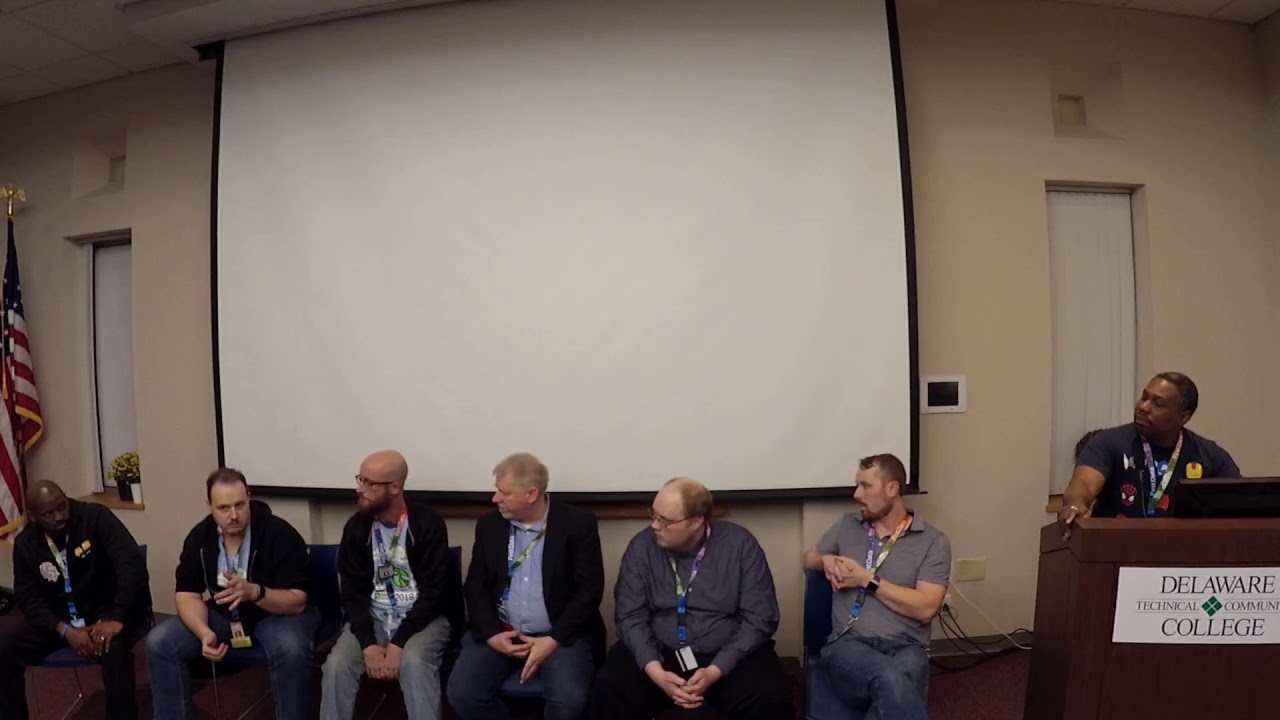
Show transcript [en]
all right since I'm the last one and I am in the one stopping everybody from either going home Josh prizes exedra we'll get started my name is Bruce Dennis I've been limping around I'm going to tell you all now I have no idea he was with my knee basically father time has come back and said like yeah there's a reason undefeated sleep I honestly my primary mode is testosterone I've already set the date of feel better the doctor will be called so you know it's actually yeah it hurts so some people that are all much but what I wanted to do or the community was we all talk about this okay this sir versus the college degree
versus experience what is the best option for everything and we all hear this all so I actually wanted to have a conversation with community on what's really the best choice for something so add out of here first we have Chris Rossi Chris is from the Philadelphia area CIO so has some certifications as a degree next Freddie Keith from the PA area leads cyber practice has a degree next up is I really like to look at this to do want to make a comment there is no certification Oh
a new certification body I see some for my you know other results very let's take off the table the ones that you know we started with this sir and may 27 other search after that to try to make ourselves relevant I am NOT talking about something like oze G that you paid us and you continue to pay $40 for our search every year I want to talk about something that is well known has some kind of value to it yeah college degree we at this point we're going to say a bachelor's master's PhD so how important is that to life in general and then work experience like the limited to at least worthy MIT most people have held some
kind of job I'm not talking about the wand that well I worked at Target I worked at these bake shop I was a short-order cook let's go with something that you know my computer might be done with on Security Administration development so let's keep it into that that range so think of this what I'm really trying to do is three different people and what I'm looking for is the panel and everybody here what is really something that's important so the first person we have this mark mark is a recent college graduate so obviously check the mark Lucky's got a college degree does not have real experience does not have a certification next we have Mary Mary has four or five
years of some IT work so there is a resume that she can put out there and then we have thee that has 10 years of experience does not have any certification does not have a degree so what we're looking for is like in these three cases okay how would we help Mary who the poleward the abus talking about he wants to do something else and which cert is the best for me something of that nature so you only have three States you actually should have nine state to deal with all the variations
one of which is I really want to take away from the discussion and apparently underneath the counter to what I kid
[Music] first up let's people marry just because I felt like doing so what a panel who would like to start first when they start posing some questions experience but no certain no degree so now looking at movie cybersecurity is Mary see I have to ask follow-up questions because this is actually a very complex subject in my opinion um I'll just preface before I address Mary specifically that I moved over from non security IT into security over the course of many years and received a lot of different advice from a lot of different people on these exact topics and have since discovered that some certs are valuable to some people and some aspects of the industry
some aren't some some value education some don't so it actually is it very much an it depends to give Mary a good answer you know does she already work in securities to 90 is she interested in furthering her career in the vertical she's and her transition to another area of security is all these things would have to be answered before you could really give her good advice because there is no a in my opinion there's no concrete answer for certs are good at this cert will help you education is good in this degree will help you because it'll really depends on on what you're looking to do I'm going to add to that by Logan's okay from the education
standpoint there's actually two types of universities out there to train don't answer is one is specifically meant for deep dive one is to create analysts okay which even going to university puts you in two different situations you know if you're an analyst some contracts some contractors some people will hire you if you're a deep dive into a specific topic it becomes really difficult just one
aspect of what job is she looking for because in purity if you're going towards something that's going to do federal contracts you have to have certain service versus other aspects of security where you don't need certain sort experience so there's a lot of and ironically some of the search that are required in one area may actually keep looking down have to room probably noise actually for example that love is d squared nothing against them I'm not saying anything bad C is if you're looking for a higher level technical or a management position that involves at all a federal spaces almost requirement however a lot of clearly commercial places look at it and say yes just like
advertised it's a mile wide an inch deep but we want something more than an inch deep this doesn't really mean much to us this is a management level position in you're looking for tech career so I mean not say anyone cert is good or bad but depending on what you want to do you honestly might be wasting your money and time getting something that's not going to apply towards what you want to do the other thing is we have more software-defined technologies so yesterday you used to be hey very good about if you're doing network security get very good about learning how to do network security now from the network security standpoint if you don't know
Python and define you can use software-defined networks therefore essentially you're out of a job until you actually learn that so she was in that career or moving into that career that's a different change different perspective same thing with pen testing for pen testing the low-end it used to be press button point and go same thing with assessments now they're expecting a lot more getting out there so again it's very very specific fact even assessments are now down to the type of technologies they assess we know I think that my thoughts in general on service are you know folks should be looking to get certs that indicative of the skills that they have not the skills that they want
say I want to be an expert in acts certainly the reality is you can study for that most the time you know for the vast majority of search should we get that certify study and now you've got that certain but you're probably not representing that certain yeah to the way that you in the way that you should and so my advice to probes has always been you should be looking to get experience in the area that you want to serve in so that we get this earlier you're at the appropriate level of expertise for that service you're representing it appropriately so when you say yes I am and I am a no SCP now that's a good a bad example because it's
really hard to get the osep but like say you want to you know you want to networking sir you should be able to should have the experience working with those networking technologies to the point where getting that certain is relatively easy of course there's going to be studying the nuances but but relatively easy and that's the approach I take personally is to say hey I want to be able to represent that so someone comes to me and says oh Europe whatever I would expect to be able to speak eloquently on that topic and that's the advice that we devour our team as well as a saying you should be driving towards an expert level search you
should be driving towards it by focusing on getting experience in that area so that when you do finally go get that certain you can I think from Mary you know Mary I want to get I want to get married some advice here when you're looking has been stated depending on the job opening there's gonna be certain certs or maybe a job opening or for whatever reason that company or that HR department is filtering by you have to have a bachelor's degree or you have to have a master's degree there's some little homework from married on what she wants to do but in cybersecurity I like to tell people you can get a degree but you can also get into this field without
it it's not necessarily required but that may require a little bit more work for you to stand out when people are looking at your resume if I see a resume and you know it says hey I contribute to this open source and penetration testing tool or this project you have something on there hey I contribute to security onion and one of these other projects I do these get pulls all the sudden that's way more valuable than any degree or sir that is in any of this other stack of resumes I'm throwing the rest of them off my desk will call on this guy tomorrow actually can we get him in today and I think that's the challenge
that I just say to Mary so if you have a bachelor's degree of a master's do you ever get these certs that these people are looking for yeah you check all their boxes so you might get a more phone call so it's more about how do I stand out from the crowd and get that job that dream job I want cuz I think a lot of people who are here we're here because we're and even the people who are here in this room learning want to get into cybersecurity there's step up and those people as was spoken earlier who just want a job and security for pay or something else people work here really won a career I
wanna make a difference and that in itself is a difference so that's why I would tell Matt she needs to do some do some research on those career pills when Mike and Joe stop look at cyber seat see what these careers are looking for and then get those certs tour to get in that position okay alright so let's pick wouldn't work the college graduate so Marcus just recently graduated with you know we're going to say a bachelor's degree has a leaving University blah blah blah use of GPA eccentric center in his case was pickle new person it's useful glass what kind of Mark is recent college graduate wants to get into information security that's correct
no college degree I would say look into screen operation centers they typically have a junior analyst rumor that he can get into and then come there he can figure out what he wants to do next this is very similar to me because I started in a screw Operations Center and then from there I went to incident response team most decorated okay that's that's kind of cool I want to do that so that's the kind of advice I'd give to him is fine fine into your position and then from there to see when you want to go next
in that particular case I would say if you're not participating in the community you can't ask other people hey what do you do every day some of you I walked around and ask those questions about already you know what do you do every day do you like your job what what are the challenges you know tell me about something about this plus you avoid the whole HR framework you basically can talk to the people directly that are looking to hire and not the HR therefore maybe a degree doesn't matter maybe surf doesn't matter in this case the search may not matter because you have the experience programming doing whatever with the degree it allows you to drive yourself
in to succeed and then once you're in that position then it's time to look at that position in other positions you want to jump into from a career standpoint that makes sense yes Chris I think a lot of times if you're college grad the kind of jobs you're going to be applying for the people that are looking to hire college grads they're not always expecting you that a lot of times you're not expected ever cert at all they may require that you get a cert over a period of time but what they're looking for are you know maybe maybe they need to have a college degree for some requirement but you know whether or not
that's true with for is that there are those different differentiators greatly okay well what do I do how can I truly show someone that I have the skills that they need and sometimes that's not you know not always a technical skill right sometimes it's a Maya culture fit and do I have the right attitude and can I show that I can learn and how do i express those things to the right organization you know what I would suggest is anybody that's recently a college grad is to do put in the work to figure out where you want to try to find to have opportunity try to find what kind of organization or role you think
would be interesting don't just take a shotgun approach and take the first job that you find try to figure out what's interested in me and how do I differentiate differentiate myself to that to that organization and if you had the opportunity do some internships I think one of the biggest advantages of going to a college and I don't berate college because I'm still going even now so sometimes I make fun of it but yet I'm a bit of a hypocrite there is that you build a lot of connections just like when you go to these events I've met with lots of great connections that made you know traded business cards meet new friends for life you do that in college
too and I don't just mean you know people we'd hang out with them and drink with or the frat house I mean actual business context and if you spent forty thousand fifty thousand dollars in it on a degree you should be taking full advantage of all those alumni benefits that come with it in the degree I went for I now have Pluralsight of her life and I take full advantage I'm sure they're like this branding guys racking up the bill but those are the things if you spent the money to do that take advantage of that when I bring in a new someone who has a college degree to me education is about sparking that
imagination and interest and that's the same thing with a certification right so maybe you were you were taking this certification and part of that what you learned about Wireshark and you've no more into it he started studying the tcp/ip protocol that's the way that that's where that education led you and if that's where that degree led you that you don't more into it unfortunately in this industry and even other fields and industries you can go and get a degree or you can get a cert and you can just learn and then brain dump right as soon as you are done using it and you have to use it in order to keep and that's the first thing I ask
people we got agree so what did you do in school what are the projects that you did I wanna know what you've done don't tell me the same thing that's on this piece of paper you said if you can have a conversation with me for 15 25 minutes about what you've been doing the home lab you've set up what you did you got that education spoon-fed from you from one instructor you had multiple viewpoints from people in the field you are forced forced to read a lot of large textbooks I know because I have to read all tell me what you learned from that experience if you didn't learn anything from that I don't know if there's
anything that's gonna spark your passion for this field so that that would be my advice that yeah what say you I actually was very similar but I want to build on it a little bit you mentioned that one of the benefits of getting a degree is the fact that you make a lot of very connections with people one of the other benefits of getting a degree whether or not you like it or not you were forced to deal with different aspects of the topic in different aspects of Industry if you come in from I was adjacent to this in a previous job now I'm interested in it you're coming in on a red teaming side or a blue
teaming side or you you have a very specific entry point weird when you get a degree you're going to school for four years you little bit of everything that gives you the opportunity to figure out what you're more passionate it as opposed to coming in on route a and never realizing for 10 years that this is what you actually want to do and that gives you the opportunity to not just explore what you learned in school but know what it is you want to build your home lab for and what it is that you want to actually dive into and it gives you a better idea of where you want to approach the industry and you have a better
opportunity to go in where you really are passionate and be able to impress somebody a little better and be able to show them what it is do you care about and that'll sell you better than words on a resume any day as long as you can get passed HR Jason signed up two things first of all your pressure on college you've already got a learning mindset you've been doing this for years mm-hmm keep it going keep learning get into whatever you can whatever you're passionate about learn what you can thorough site free sites online you know go dig into Stack Overflow whatever it is learn those skills and keep working on those skills the other thing is and
it was touched on a little bit networking is in my opinion way better than you know blasting your your CV everywhere and expecting to get through the HR barrier I've met more people and gotten more opportunities to talk to hiring managers coming to besides dirty Colin and other conferences then then callbacks I've ever got just blasting out resumes right so every actually probably every professional job at that is from not from not from sending out I mean the resume came after of it every one of them was an opportunity that I got because I was talking to people and that's what that's to me that's way bigger than then trying to make sure you have the alphabet soup to get through an
HR block all right last up we have dave dave has the experience does not have the degree does not have any certifications so let's just say dave has some decent skills he's he's made some contributions to some software basically gave should be able get a job Jason what kind of advice would you give be if he's looking at moving forward his career honestly it's the same thing at that point already established he's probably in the industry already if he wants to jump to a different job at that point it may be worth looking at getting a server to to get through those barriers but that networks I think is really still keep picking up you know CISSP if that's the
sort of track these are you know going for some of the harder search is path powers I the hiring that I've done is not in security it's outside of it service to me are sort of just letters they will get later but when you're hiring and when you're in the industry you learn which certs are actually worth looking at so for me it's you know like I was looking for engineer I'd be looking at OSI CIA for you know systems guys I'm looking for things like rhce er HCA those serves I know from experience are tough to get and those people that get those search really know what they're talking about but that's that's sort of a icing on the
cake when I'm talking to somebody and I'm looking to hire I'm more interested to see their passion I'm more interested to see that making the comments about a technology we're using sparks of conversation where we've sort of gone off the reservation of doing an interview and now we're just coming around and figure out what we know that gets people further in my interview process then looking at it going okay we got a degree oh look we've got two degrees and here's these twelve service [Music] and twelve service Brendan I think when you're talking about experience the biggest thing I run into and I actually get this a lot from people who have all these years of experience why am I not
getting a job and I think some of it is again we touched on a little bit networking is super important but some of it is how you present yourself to you know de pata know your audience if you're going in to work for a job that you know you know that it's a suit and tie affair don't show up in shorts on a t-shirt that's not a good idea here when depending on where you're going and where you want to fit into the company understand that all companies have different cultures or for different people and you're selling yourself to these people whether it be HR even the IT people you know I tell people all the
time if you're going if you're going to a conference specifically to look for a job you can dress in a nicer poll it's not it's not that much harder right and just be professional and you're like would you know some of the people you're talking to because you never know when that other person on the other side you might be the IT director that could be the next guy to hire you so you want to make sure in your language and everything you're displaying you display that professional manner when you're doing that because you can't just feed your resume in and say well I have degrees I have certs I'm gonna check all the boxes so I don't
have to do any of the like you have to make sure you're doing the light work because that despite what we know in the industry we can look at skill and tell us and tell skill HR people don't they look at the degrees they look at the sense they're given this list you know and I talked to the recruiters all the time the like brand you know anyone with this UPD tpc thing you know it's I was like what oh oh oh my goodness have no idea right these people aren't in it every day like we are so we have to tell a story you have to make sure you craft that story properly to get hired in in
potentially the job that junior yeah well first thing someone has ten years of service retreat experience they think they have a job regardless if they don't have certs and degrees but if he wasn't before a job like you said Pete's trying to get past when the HR box was the best route to get me hired and since he doesn't have a degree he doesn't have the agreed search will be quicker to obtain certifications is something here he has experience in so he would I would recommend him go to certification route geared toward what he wants to do it is career that oh yeah ten years of experience you already know where you are and if you want to if
there's if you're looking for a job after ten years experience it's pretty much you're wanting the goal of one of two places either upwards in which case with no service no degree my cert might be useful because if you're trying to move into management they're looking for something more than just I've got experience and if you're trying to make a lateral movement to some area some other area of cybersecurity then it's the same thing sir I agree it would be the best way to go because I already know this I've been researching this and I want to work I've been working on it in my own time and this is where I want to go so let me do a little bit of work
at home let me do you know build a home lab and do subscribe and get assert in it and now it's a lot easier to transition over laterally to that because with 10 years of experience if you're not doing anything you just go to work every day that's fine and you'll get your annual raises and maybe a bonus and you'll be the exact same place you were at 10 years put some effort into it you had a question
degree doesn't matter too much where it comes from well you see them get a bachelor's from like say oh that's a really personally um I don't do a lot higher cuz I work a pretty small company right now but I don't care if you have a degree or not personal I will say there are people above me in my company who do care that you have a degree and they prefer it I don't care where it's from I want to come in and when you come in and sit down and ask you what did you learn at school what was interesting what did you take out of it where did you go with it I could care less if it was an online
thing that you did two hours a week over the course of the last five years or if you busted your ass to get a four-year degree in two years doesn't make a difference is what you got out of it not where you got you know what's important is that purpose is by saying you know in the past we you know I we hired and said okay well minimum requirement have to have agreed and over time we've evolved and decided that that's not really so important it's a piece of the puzzle but it's no of a requirement in our industry it's actually a deterrent for us to put that requirement out there are really hurts our ability to hire what you know
what I care about is if you did get a degree what I'm looking at is the fact that you finished something I know you could have an English degree for all I care much less where it's from what I care about it work with our English degrees there and not to do something which I'm just saying in the context of the philosophy minor now is my first degree I was in the industry for ten years before I got my first IT degree exactly it's like there's so many such a common story right it's just that the value that I see from someone that padded has a degree is that they completed when is oftentimes a very
challenging process it's a long challenging process whether it's whenever and that's what I care about
[Music]
so I do consulting so we hire a lot of folks in kind of hire a college grad to a few years experience Ranger mode because we need to mold them into how we do things we don't often hire very experienced people it's rare because it's very challenging to create a culture fit and we do things we are you might say are different than it just hasn't worked well for us so we've not run into that but I think there is a weld-on person is going to even if it's not true but that person is going to expect more than we can pay them or they're not going to function in our environment because they're an academic
or whatever it might be but definitely says I've never seen a pH never shown up on a resume in which case they are more research minded unless you PhD is not very technical degree or they went straight through and they got a bachelor's followed by a master's followed by a PhD and that's a red flag for me because just by the nature of academia by the time something becomes curricula man becomes of course this take care of it is going to be out of date such a fast-moving industry so now we've got people who if they go straight from one degree to another to another yeah not saying it's a bad thing but that's a red flag for me just the more
technical stuff they learned in their bachelor's is now ten years out of date bothered by the time they've no much six years of school and they've better be able to show me that there they are more up-to-date than their degrees and it depends on what job they're applying to so if you're looking at PhDs that are applying to senior level positions that's the more reasonable the one experience I had where we interviewed a PhD it wasn't it was essentially an entry-level position and it was sort of a red flag and he came in for the interview and by the time we're done with the interview were like why is this guy here he expects something that this job is
not even remotely possible so part of that is you know what you're applying for and the other piece is inserts as well do you want about that that's it that's great know what you're applying to you don't have to put every cert on that right you don't have to put down every single bit of schooling don't lie and put things that you don't have I'm sure that happens but if you if you think that you're going to present too much experience for a job you're actually looking yet tone it down a little that's allowed you can do that that's fine and then go in and explain yourself and you don't have to go in and go well I didn't
put all the stuff on the application of it I'm also good at all these other things because then that mean backfire on you as well but you know go in and sort of you're gonna present yourself to the job that you're applying for and it's interesting you say that we have associates but I've taken dozens of degree of courses for Sarah and everything else I read 50 books a year and have for years you know basically I just love learning honestly they wanted me to learn COBOL and I was helping me write a C++ interpreter you know and it's basically where that when I win you want me oh one OS - okay so you know technology that's
so you know honestly sometimes it's you know I presented her I've done some deep dive research you know I'm now at the point that I have to come in and give an hour to to our presentation on a topic that I'm passionate about a deep dive and I have to then show documentation and references and everything else when I get up and speak and let's see one of them was how to disable the yeah that was pretty fun and the other one was how their abilities are actually driven into the system both accidentally and purposeful based on the process from the very beginning to the very end and some processes we could use to actually fix
that but that took it took hundreds of hours to do the research and make the calls and you know discuss langsat and discuss you know standards bodies and things like that so you know sometimes people do the deep dives into this stuff and sometimes you can include a few of those Coursera or you know whatever certifications honestly a really loving Safari Books and guessing Safari Books great classes great hands-on great demos they're all current information it's not old and moldy there is no COBOL that's all I'll say but it's is really good stuff and that's that's what you know people that didn't agree that could be their choices just we learned experience attend you know
things like that as someone who's actually pursuing a doctorate degree right now this is something that touches home for me a lot I actually have a lot of friends who have gotten doctorates in various fields especially in IT and I talk to them a lot and one of the things I think there's there's a disconnect between some of the people who have Doctorate degrees and some people who are connected to some things community about some of them you see involved in the community and some of them you do not and there's this big shift and I'm hoping to be part of the people trying to change them because we really should be connecting and utilizing those
resources in universities we're leaving in a university today and empowering these our research centers built to do research and the phd's if you went through ten years of school I'm going I'm already in the field I don't know how you make it to that level without building and have being a part of the field I think that's part of the problem our definition of education is changing so much you can be educated and that education can come from Coursera can come from different areas it doesn't necessarily mean we're doing the same style as we did in the 1900s sitting in a classroom being lecture to you know so if you pursue if you want the people who
is pursuing a doctorate I think we can the people that do pursue that can be agents of change in the universities and academia to make it more part of the community be more inclusive I think the people that get PhDs and are just pompous pricks about it that think I spent you know all this money and time absolutely there's a lot of people that have master's degrees that same way and I'm like calm slow your roll stop you know
when you learn you learn some good research skills right because you're force-fed to do it you have to do it and you're paying five grand a class to do it so you better do it or it's gonna it's gonna cost you but if if you're gonna be part of that I think the other big disconnect with the PhD is often you'll see a huge average and salary if you look up the average salary like in IT security for a PhD it's about $60,000 if you look at it for a master's degree it's over $100 so in general if you look at now this isn't the reason for this is because what do you think the starting
salary is for a teaching assistant or professor at a university that's where that salary is that so what if again if you're involved in the field I know several agencies are in the field of doing things are doing things with data science and they're doing some great things the difference is are you passionate about what you're doing are you involved with the community are you really learning this stuff or are you learning it enough to pass a test full professors in the passing your papers and just getting it together and that's the difference I would also notice that there's one other issue there's a lot of times they'll present it I Triple E but they won't actually
show up here yeah yeah man they won't show up here and it's really interesting because you know I listen to or participate in law those type of events and I keep on saying this would the the practitioners would really enjoy this particular presentation anyway well you know that's below me that's this that's that I'm not interested in attending a bunch of hackers that don't have their degrees when they applied that job and the CEO was a hacker who doesn't have really going to be Asajj they're gonna have a hard time finding a job trying to get to previously Chris who said that I should only get a certain when he pretty much very own material and you're just
validating then later on I heard before the guy had a ten year experience you need to fill the gap for him to move to something else get the surface Dillards gap so you don't have to be working in that area to understand the material though if you want to make that lateral move I was talking about figure out where you want to go learn the material set up a lab at home take some courses online read some books learn the material then you get to surf because I agree you should not get a serve just because you can memorize questions and bring [Music] problem is you can get the practical experience by spinning up you don't have
to do it prepare yet for a while we had what we call papers and talk to them later no that was those are just for the test I really don't know any of this stuff I just want to pay the problem is that you you can get certs and not know the material are too many people with service you get a Serb and you're going for interviews for I mean if we're gonna get a certain general you should be able to talk about that material even death and that's where that comes from is it is many sorts not every sort of people as we talked about difficult no SCP is a great you know just based on how
challenging is hands-on but vast majority of them if you're gonna take you to have I'm very good at taking tests great you know what an awesome skill its certs are easy so I know how not useful they are because I got a lot of them at certain points as I was going through my career and I realized like these are not really indicative of actual experience so that's you know I am I am a poster child for how you know they can be and we want to try to avoid that because you can walk into it the scenarios we're going to challenge you on that and the worst thing you can do is go out and get us or
not know the material go interview someplace and then not be able to speak on if I can tell you this back action is something who said earlier when it was mentioned you don't always have to put everything on your resume a lot of people interview your hiring managers if you even if you actually got say 12 certs and you do understand me you know one of the benefits of only putting a couple on your resume we are going for a job someone sees 12 search alphabet-soup a lot of people their first thought whether it's true or not is this is somebody who just took certs and brain come to me and and they are paper starts because when the right mind
actually takes the time to learn all 12 will be stupid but it's the assumption that you're one of those papers are people when you do put everything on your resume and there's a bunch of companies around that do just that you know $12,000 mean get a service so you can actually read material that doesn't say that you have to take a surfboard there are so garbage certs that straight up I would read the material I have no intention of ever taking that test because it has no value for where my career is going where I think I'm going to go right but there might be something useful out of their material that pay for something else so
there's no requirement for certain does not mean that you so there's also some things and everyone is when a panels really said it has an experience so you're marrying your experience with the study going in for the certs I always did some physical work then actually start studying for the test even though it's under the studying I learned material that had to do with the test you know something's interesting whatever here that I came back and at the very end then I started actually studying for the test you need to have some of both just going in and I still can test and I figured out how to do it I think good job don't don't not go this goes back to you
don't have to put the syrup on your resume but you can use that as a launching point no one say really don't worry about switching but my job is going to pay for it so I'm gonna go do that CCNA bootcamp and of course my my job wants to know that I did the camp and good at it so I have to get served at the end you can still get the serve and continue learning it later you can feel that you have the knowledge and you can talk about it you know in depth that start using the serve on your resume don't don't throw away an opportunity to go learn something just because you
don't want to have a cert that you can't talk about that never turned out free training or I found interesting oh this is a common mistake this is a vulnerability oh this is wonderful I love it when they do this they were actually teaching based on it specific vendors product that were processes that would cause security problems so that's how I turned it it I finished the service but then I found all these really cool yeah so when you're a security expert probably a little bit different but if you go through something like CCNA CCNP and some of the earlier certs what you learn there is technically correct please don't do that in a live
environment no but these are a vendor specific service you can go in there and pass that is incredibly challenging and that's with always GPS but a lot of people look at is you can't pay for certain because it's hands-on it's a lab rest and probably any time you can get your hands on training her cert that has any kind of a lab component it is going to be less apt to be looked down on by our manager somewhere because great advice you had to do something not just memorize something I forget I'm fortunate ly I'm getting flatly I've got two minutes left unfortunately
Related talks
 35:42
35:42 31:02
31:02 28:25
28:25 48:45
48:45 57:35
57:35 22:25
22:25